Custom Options for Single Girder Gantry Cranes
Explore cantilever setups, lifting attachments & travel speed adjustments to optimize gantry crane efficiency, safety & performance for your operations.
Introduction
Single girder gantry cranes are widely used in workshops, warehouses, and outdoor yards for lifting and moving loads efficiently. They are valued for their simplicity, cost-effectiveness, and flexibility in a variety of industrial settings. But no two operations are exactly the same, and a standard crane may not always meet every requirement.
Custom options allow buyers to adapt a crane to their specific workflow, facility layout, and load types. From adjusting the reach with cantilevers to choosing specialized lifting attachments and setting travel speeds, these modifications can make a real difference in daily operations.
The goal of this guide is to help crane buyers understand the most practical custom options available. By considering these features upfront, you can improve efficiency, safety, and overall productivity without running into costly adjustments later.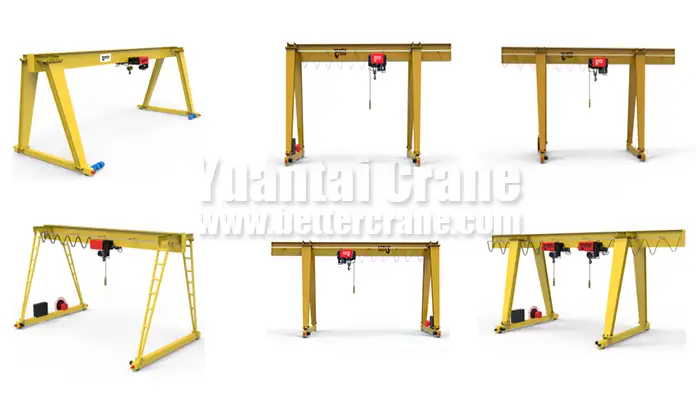
types of single girder gantry cranes for sale
Key Points Covered in This Guide:
- How cantilever options affect reach and stability
- Choosing the right lifting attachments for your loads
- Adjusting travel speeds for safety and productivity
- Practical advice for planning and budgeting custom features
Cantilever Options
Cantilevers extend the reach of a gantry crane beyond the main girder, allowing it to handle loads in areas that would otherwise be out of reach. Choosing the right cantilever setup is crucial for both operational efficiency and safety.
Single vs. Double Cantilever
Cantilever designs come in two main types: single and double.
A single cantilever extends only on one side of the crane. It’s simpler and often less expensive, making it a good choice for operations with predictable load paths or where space is limited. However, it may not provide enough reach for certain tasks, and the load distribution is uneven, which can affect crane balance.
A double cantilever extends on both sides of the crane. This design allows for a wider operating area and better load distribution across the girder. It’s ideal for handling longer or irregular loads. On the flip side, double cantilevers require a stronger structure and may increase installation costs.
Pros and Cons:
Single Cantilever:
- Pros: Lower cost, simpler design, easier installation
- Cons: Limited reach, uneven load distribution
Double Cantilever:
- Pros: Extended reach, better load balance, handles larger or irregular loads
- Cons: Higher cost, stronger structure required
Practical Considerations
Even with the right cantilever design, you need to pay attention to practical limits. Overhanging too far with heavy loads can compromise crane stability and safety. Each crane has manufacturer-specified limits on how far the cantilever can extend, based on the crane’s lifting capacity and structure.
Other considerations include:
- Ensuring proper counterweights if required for longer cantilevers
- Assessing floor and runway strength to handle off-center loads
- Checking facility clearance for extended cantilevers to avoid collisions
Choosing the right cantilever option is about balancing reach, load capacity, and safety. Getting this right upfront prevents costly modifications and keeps daily operations smooth.
Lifting Attachments
Lifting attachments are what connect your crane to the load. Choosing the right attachment can make lifting easier, safer, and more efficient. The wrong choice, on the other hand, can slow down operations or even create safety hazards.
Common Lifting Attachments
There are several types of lifting attachments commonly used with single girder gantry cranes:
- Hooks: The most basic and versatile attachment. Ideal for general-purpose lifting of chains, slings, or simple loads.
- Electromagnetic Lifts: Best for handling steel plates, billets, or scrap metal. They allow quick lifts without slings, but only work with ferrous materials.
- Grabs: Often used for bulk materials like sand, gravel, or scrap. They open and close around the material for secure lifting.
- Clamps: Useful for irregular-shaped or slippery loads, such as pipes or steel sheets, providing a firm grip during movement.
Practical tip: Match the attachment type to both the material and shape of the load to avoid accidents and increase handling speed.
Attachment Selection Criteria
Choosing the right attachment depends on several key factors:
- Type of Load: Consider weight, shape, and material. Flat steel sheets require different attachments than bundles of pipes or loose scrap.
- Frequency of Lifts: Heavy-duty attachments may be better for frequent lifting, while lighter attachments can suffice for occasional use.
- Operational Environment: Outdoor, dusty, or wet conditions may require more robust or corrosion-resistant attachments.
Tip: Always assess your specific workflow to ensure the attachment improves efficiency without compromising safety.
Safety and Compatibility
Attachments must be compatible with your crane and meet regulatory standards. Installing the wrong attachment or using it improperly can lead to accidents, crane damage, or regulatory violations. Regular inspection is also critical to ensure that hooks, clamps, and electromagnets remain in safe working condition.
Safety and compatibility checklist:
- Verify attachment meets crane lifting capacity and manufacturer recommendations
- Confirm regulatory compliance for your region or industry
- Inspect attachments regularly for wear, cracks, or other damage
- Train operators on proper attachment use
Selecting the right lifting attachment ensures safe handling, protects your equipment, and keeps operations efficient.
Travel Speed Customization
Travel speed is one of the most overlooked but important custom options for single girder gantry cranes. The speed at which the hoist, trolley, and bridge move can greatly affect both productivity and safety. Choosing the right balance is key.
Hoist Travel Speed
The hoist controls how fast the load is lifted or lowered. Standard speed hoists are sufficient for most operations, but high-speed options are available for facilities that need faster cycle times.
The challenge is balancing speed with load control. Moving too quickly can create swing or instability, especially with long or uneven loads. On the other hand, moving too slowly can reduce productivity.
Practical points:
- Choose hoist speed based on load type and lifting frequency
- Consider safety when lifting tall or long loads
- Test different speeds to find the optimal balance for your workflow
Trolley and Bridge Travel Speeds
The trolley and bridge determine how fast the load moves across the workspace. Adjustable travel rates allow operators to control speed precisely, which is especially important in tight spaces or when aligning loads with machinery.
Key considerations:
- Higher speeds improve productivity for long, unobstructed runs
- Lower speeds increase accuracy and reduce the risk of collisions
- Speed adjustments help accommodate different operators’ skill levels and facility layouts
Practical Tips
- Match travel speeds to your facility layout and workflow requirements
- Ensure power supply and motors can safely handle high-speed options
- Implement variable speed drives if precise control is necessary
- Train operators on using speed adjustments effectively
Benefits of Customization
Custom options like cantilevers, lifting attachments, and travel speed adjustments offer tangible benefits beyond just convenience.
Key benefits:
- Improved efficiency and workflow: Custom features allow operators to move loads faster and more accurately.
- Enhanced safety and load handling: Proper attachments and travel speeds reduce accidents and load damage.
- Longer crane lifespan and reduced wear: Matching crane components to actual workloads prevents over-stressing motors, hoists, and structure.
Customizing your crane to your facility and operations ensures smoother daily work, safer handling, and better long-term value.
Conclusion
Customizing a single girder gantry crane can make a real difference in how efficiently and safely your operation runs. Cantilevers extend your reach and improve load handling, lifting attachments ensure the right grip for every type of material, and travel speed adjustments help balance productivity with control.
Before making a decision, it’s always wise to consult your crane supplier. They can provide guidance on what options work best for your facility, load types, and workflow.
Planning custom features based on real operational needs—not just theoretical specifications—helps avoid costly mistakes and ensures your crane delivers long-term value. A well-planned, customized crane is safer, easier to operate, and built to last.