Checklist for First-Time Gantry Crane Buyers: Key Considerations
A practical guide for first-time gantry crane buyers covering lifting capacity, span, height, safety features, and budget planning.
Checklist for First-Time Gantry Crane Buyers: Capacity, Span, and Safety Standards
Introduction
Gantry cranes are one of the most common and versatile lifting solutions used in workshops, factories, and storage yards. They help move heavy loads across short or long distances efficiently and safely. From lifting steel beams to moving containers, gantry cranes play a practical role in daily industrial operations. For anyone buying one for the first time, the variety of types, capacities, and configurations can feel overwhelming.
Making informed decisions is essential. A crane that doesn’t match your operational needs can cause delays, increase maintenance costs, and even create safety risks. First-time buyers often underestimate factors like lifting capacity, span, or the crane’s suitability for indoor versus outdoor use. Paying attention to these details early can save time, money, and headaches down the line.
This checklist is designed to guide you step by step. It highlights what to look for when choosing a gantry crane, from capacity and span to safety standards. Following this guide can help you avoid common mistakes, select the right crane for your operations, and keep your team safe while maximizing efficiency.
Key points covered in this guide include:
- How to determine the right lifting capacity for your loads
- Calculating the appropriate span and lifting height
- Understanding different crane types and configurations
- Checking safety standards and compliance
- Considering installation requirements and budget
By the end of this checklist, you’ll have a clearer picture of what matters most when buying your first gantry crane, and you’ll feel confident making a choice that works for your workshop or yard.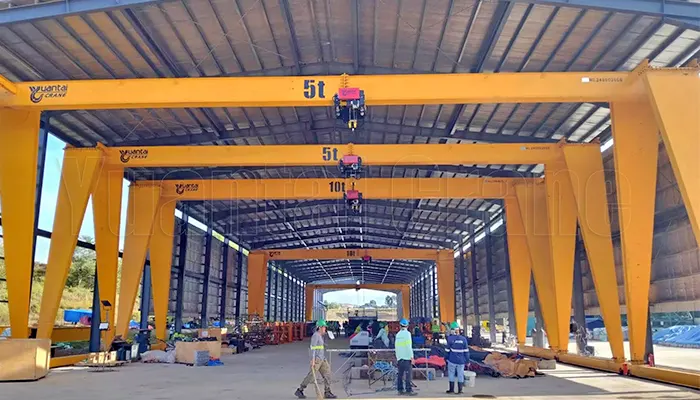
single girder gantry crane for sale
Assessing Your Load Requirements
Before you even start looking at crane models, you need to know exactly what you’ll be lifting. This isn’t just about picking a number out of thin air—getting it right ensures your crane works efficiently, lasts longer, and keeps your team safe.
Lifting Capacity
Choosing the correct lifting capacity is the first step. Ask yourself: what is the heaviest load my crane will need to handle on a regular basis? Keep in mind, this isn’t just about today’s operation. You also need to think ahead. Will your loads get heavier in the future? Planning for possible growth can prevent costly upgrades later.
- Determine the maximum weight per lift based on your current operations.
- Include a safety margin of 10–20% to account for unexpected load variations.
- Consider future expansion or any heavier equipment you may handle later.
Load Type
Not all loads are created equal. The shape, size, and material of your loads affect the type of crane and lifting attachments you’ll need. For example, handling long steel beams is different from lifting bulky machinery or stacked containers. Irregular shapes or fragile items may require special hooks, clamps, or lifting slings.
- Identify whether your loads are uniform (like standard containers) or irregular (like machinery or bundled materials).
- Consider the material type: steel, concrete, containers, machinery, or mixed loads.
- Factor in any special handling requirements for fragile or sensitive items.
Lifting Frequency
How often your crane will lift loads matters just as much as the weight. Light-duty cranes that operate only occasionally can be less expensive and require less robust construction. Heavy-duty cranes, on the other hand, need stronger components and more frequent maintenance.
- Determine if operations are light, medium, or heavy-duty based on daily lifting cycles.
- Understand that frequent lifting increases wear and tear on components.
- Use lifting frequency to help select the right motor, trolley, and bridge design for durability.
Determining the Right Span and Height
Once you know what you’ll be lifting, the next step is figuring out how far and how high your crane needs to reach. Getting the span, height, and travel distance right is critical for smooth operations and safety. A crane that’s too short or too low can be frustrating, while one that’s oversized may cost more than necessary.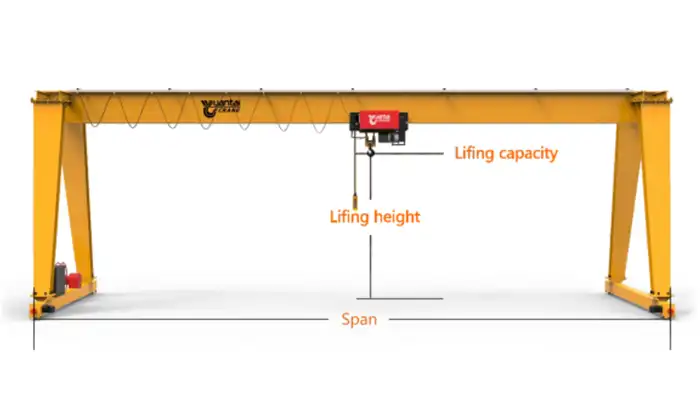
Crane Span
The span is basically the distance between the two runway rails that your gantry crane will run on. This measurement is important because it determines how wide an area your crane can cover. Don’t just go by your current workshop width—consider any future changes in layout or equipment placement.
- Measure the exact distance between the runway rails in your workshop or yard.
- Ensure the crane can cover the full operational width needed for your loads.
- Factor in any potential future expansion or layout changes that may require a wider span.
Lifting Height
Lifting height refers to how high the hook or lifting device needs to go to safely pick up and place your loads. Always check for clearance with ceilings, beams, lights, or other overhead obstacles. It’s easy to overlook small structures that can interfere with crane operations, so measure carefully.
- Determine the required hook height based on your tallest load plus clearance.
- Check for any overhead obstacles such as beams, pipes, or lighting fixtures.
- Add a safety margin to prevent accidental collisions.
Travel Distance
The crane’s travel distance is the total length it needs to move along the runway. This affects how fast the trolley and bridge motors need to operate. For longer runways, consider whether higher travel speeds are necessary to maintain efficiency, or if multiple cranes might be a better solution.
- Measure the total runway length or operational area your crane will cover.
- Consider how travel distance affects trolley and bridge speed requirements.
- Evaluate whether one crane can cover the entire area efficiently, or if multiple cranes are needed.
Choosing Crane Type and Configuration
Once you’ve figured out your load requirements and the right span and height, it’s time to choose the crane type and configuration. This step is crucial because it affects not only cost, but also efficiency, safety, and how well the crane fits your workshop or yard.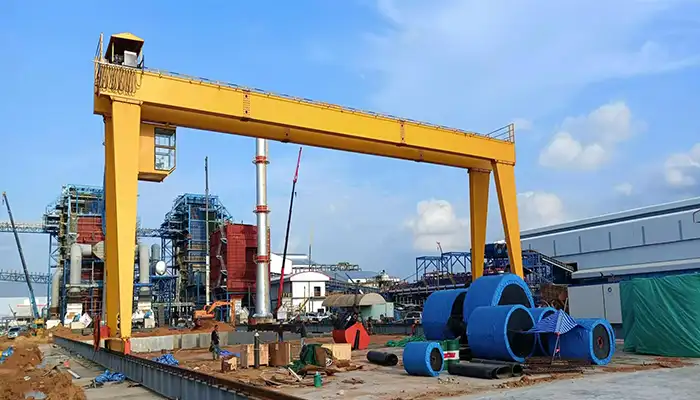
double girder gantry crane for sale
Single vs. Double Girder
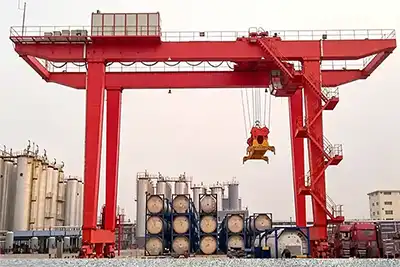
One of the first decisions is whether to go with a single girder or double girder design. Single girder cranes are lighter, simpler, and usually less expensive, making them a good choice for lighter loads or smaller workshops. Double girder cranes can handle heavier loads, provide better stability, and allow higher lifting heights, but they also cost more.
- Compare costs: single girder is more budget-friendly; double girder is stronger but more expensive.
- Consider your load capacity needs: heavier and frequent lifts usually require double girders.
- Match the crane type to your workshop layout and operational requirements.
Full Gantry vs. Semi-Gantry
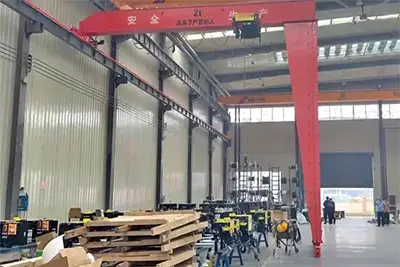
Another key choice is between full gantry and semi-gantry designs. Full gantry cranes have legs on both sides and are great for outdoor yards or large industrial spaces. Semi-gantry cranes have one leg, saving space and fitting better in workshops with height or space constraints. Portability is also a factor—full gantries can be moved around more easily outdoors, while semi-gantries are better suited for fixed indoor operations.
- Check your available space and floor layout to choose the right design.
- Determine if the crane needs to be portable or fixed.
- Consider indoor versus outdoor use, factoring in weather protection and environmental exposure.
Electric Hoist Options
The type of hoist you choose can greatly affect performance. Wire rope hoists are robust, ideal for heavy loads and frequent use. Chain hoists are more compact, easier to maintain, and suitable for lighter loads. Additionally, some operations require explosion-proof hoists for hazardous environments, while standard hoists work fine for most workshops.
- Decide between wire rope and chain hoists based on load weight and lifting frequency.
- Consider special requirements like explosion-proof hoists for chemical or flammable environments.
- Check compatibility with your crane’s lifting height, span, and trolley system.
Safety Standards and Compliance
Safety should never be an afterthought when buying a gantry crane. The right standards and safety features protect your team, reduce downtime, and help you avoid costly fines or accidents. First-time buyers sometimes focus too much on price or capacity, forgetting that a crane must meet strict safety requirements to operate reliably.
National and International Standards
Check that the crane meets relevant national and international safety standards. These standards ensure that the crane has been designed, tested, and manufactured to prevent failures. Depending on your location and industry, look for certifications such as ISO, OSHA, CE, or other regional requirements. These certifications are more than paperwork—they confirm that the crane meets minimum safety and operational benchmarks.
- Verify that the crane has proper certifications before purchase.
- Understand which standards apply in your country or industry.
- Ask suppliers for documentation to confirm compliance.
Safety Features
Modern gantry cranes come with a variety of safety features that protect both operators and equipment. These features help prevent accidents, reduce wear and tear, and give you peace of mind. Common safety systems include:
- Overload protection: prevents the crane from lifting more than its rated capacity.
- Emergency stop systems: allow operators to immediately halt crane operations in an emergency.
- Limit switches and anti-collision devices: stop the crane at predefined points to avoid collisions with structures or other cranes.
Inspection and Maintenance Requirements
Even the safest crane needs regular inspections and maintenance. A first-time buyer should plan for a routine schedule to keep the crane in top condition. Proper inspections prevent unexpected failures and extend the crane’s lifespan.
- Determine the frequency of inspections based on manufacturer recommendations and operational load.
- Perform routine checks on critical components such as wire ropes, hooks, and control systems.
- Document maintenance and inspections to comply with regulations and ensure accountability.
Prioritizing safety from the beginning makes your crane investment more reliable and protects your team.
Installation and Site Considerations
Before your gantry crane even arrives, it’s important to make sure your site is ready. Poor planning here can lead to installation delays, extra costs, or even unsafe operations. A crane must fit perfectly with your space, power supply, and floor conditions to operate efficiently.
Runway Beam Requirements and Structural Strength
The runway beams must be strong enough to support the crane and its maximum load. If the beams are undersized or weak, you risk structural damage or even accidents. Check whether your existing beams meet manufacturer specifications or if new beams are needed.
- Verify the structural capacity of your runway beams for the crane’s full load.
- Ensure beams are level and properly aligned to avoid uneven wear.
- Consider professional inspection if modifying or installing new runway structures.
Power Supply Compatibility
Your crane’s electrical requirements need to match your site’s power supply. Incorrect voltage or phase can damage motors, reduce performance, or void warranties.
- Confirm voltage, phase, and frequency requirements with your supplier.
- Plan for any electrical upgrades or dedicated circuits if necessary.
- Include surge protection and grounding to protect equipment and personnel.
Floor Conditions and Grounding
A solid, level floor is essential for safe crane operation. Uneven floors can cause instability, while poor grounding can create electrical hazards.
- Inspect floor strength and levelness, especially for semi-gantry cranes.
- Ensure proper grounding to prevent electrical shock or equipment damage.
- Consider floor reinforcement if heavy loads will be lifted regularly.
Environmental Factors
Think about the environment where the crane will operate. Indoor, outdoor, or corrosive environments affect the crane’s design, materials, and protective coatings.
- Indoor cranes may need dust or humidity protection.
- Outdoor cranes require weatherproofing, corrosion resistance, and sometimes heating for extreme climates.
- Corrosive environments (chemicals, saltwater, etc.) may require specialized coatings or stainless steel components.
Budgeting and Cost Considerations
Buying a gantry crane is a significant investment. Understanding costs upfront helps you balance initial purchase price with long-term expenses. Don’t focus only on the lowest price—you want a crane that will perform reliably for years.
Initial Purchase Cost vs. Long-Term Maintenance
While a cheaper crane may save money initially, high maintenance costs or frequent downtime can make it more expensive over time. Consider both upfront and operational costs.
- Compare quotes from multiple suppliers.
- Ask about expected maintenance intervals and costs.
- Factor in potential repair or replacement of components over time.
Optional Features vs. Essential Requirements
Optional features can improve efficiency or safety but can also add significantly to the cost. Identify which features are truly necessary for your operations.
- List must-have features versus nice-to-have options.
- Avoid paying for features you won’t use.
- Ask suppliers to explain how optional features impact performance.
Supplier Reputation and Warranty Coverage
A reputable supplier can make a huge difference in installation support, spare parts availability, and long-term reliability. Check warranties carefully—they indicate the manufacturer’s confidence in their product.
- Verify supplier reputation and past customer experiences.
- Review warranty coverage for motors, hoists, and structural components.
- Confirm availability of local support or service technicians.
Final Checklist Summary
To make things simple, here’s a quick-reference table for first-time gantry crane buyers. Use it as a practical guide while consulting suppliers or making decisions.
| Checklist Item | Key Considerations | Notes / Your Details |
|---|---|---|
| Lifting Capacity | Maximum load per lift, future growth, 10–20% safety margin | |
| Load Type | Uniform vs. irregular shapes, material type, special handling needs | |
| Span | Distance between runway rails, workshop/yard width, future layout changes | |
| Lifting Height | Hook height, overhead clearance, safety margin | |
| Travel Distance | Runway length, operational area coverage, required trolley/bridge speed | |
| Crane Type | Single vs. double girder, full vs. semi-gantry | |
| Hoist Type | Wire rope or chain, standard or explosion-proof | |
| Safety Features | Overload protection, emergency stop, limit switches, anti-collision devices | |
| Installation Requirements | Runway beam strength, floor conditions, power supply compatibility, environmental factors | |
| Budget & Costs | Initial purchase vs. maintenance, optional vs. essential features, supplier reputation, warranty |
Practical Tip: Always review this checklist with a trusted supplier or engineer. They can provide insights specific to your facility, helping you choose a crane that fits your needs safely and efficiently.
Conclusion
Buying your first gantry crane doesn’t have to be overwhelming. The key is thorough planning. Start with understanding your loads, span, and lifting height, and then focus on crane type, safety standards, and installation requirements.
Balancing operational needs, safety, and cost ensures your crane will be reliable, efficient, and safe for years to come. Following this checklist step by step gives you confidence in your decision and helps avoid common mistakes.
In short, take your time, measure carefully, and consult experts when needed. Your first gantry crane can become a trusted partner in your operations rather than a source of headaches.