10% Slope? Fully Loaded? Straddle Carrier Handles Any Slope Efficiently
Straddle Carriers on Sloped Yards
Most Important Takeaway
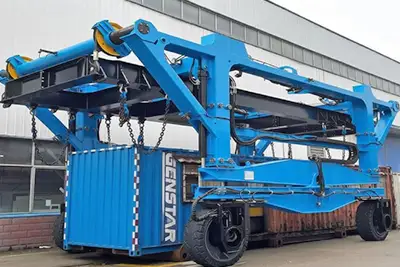
Straddle carriers equipped with powerful engines, anti-slip wheels, and precise 4-wheel steering can safely and efficiently transport containers even on 10% inclines, eliminating operational delays and improving yard productivity.
- Straddle carriers can climb slopes up to 10% fully loaded without slipping.
- Upgraded engines provide the necessary power for smooth uphill movement.
- Wear-resistant, anti-slip wheels enhance traction and safety.
- 4-wheel precision steering allows sharp turns on inclined surfaces.
- Custom operational path planning ensures optimal workflow in sloped yards.
- One-on-one training ensures your team can operate efficiently and safely.
- Reduces the need for extra repositioning or manual adjustments.
Frequently Asked Questions
A: By using a slope-ready straddle carrier with proper operator training, you can move fully loaded containers safely on inclines.
- Ensure the carrier has sufficient engine power and anti-slip wheels for traction.
- Plan your operational paths to avoid sharp turns and high-risk areas.
- One-on-one training allows operators to handle inclines confidently, reducing accidents.
A: Upgraded engines, wear-resistant wheels, and precision 4-wheel steering enable carriers to manage heavy loads on slopes.
- Anti-slip wheels maintain traction on 10% or more inclines.
- Enhanced horsepower ensures smooth uphill and downhill movement without stalling.
- Precision steering helps maneuver containers accurately in tight or sloped areas.
A: Proper planning of operational paths and yard layout minimizes unnecessary repositioning of straddle carriers.
- Identify the safest and most efficient routes before moving containers.
- Assign dedicated uphill and downhill lanes to streamline traffic flow.
- Organize storage locations to reduce repetitive movements in sloped areas.
A: Combining slope-aware workflows, careful container positioning, and trained operators ensures efficient and safe operations.
- Balance container loads to prevent instability while moving uphill or downhill.
- Schedule moves considering yard traffic and slope difficulty.
- Maintain clear sightlines and follow standard procedures for handling containers.
A: Focused hands-on training and slope-specific guidance allow operators to adapt quickly and work confidently.
- Start with short runs on various inclines to build experience.
- Teach operators how to use vehicle power, brakes, and steering efficiently.
- Reinforce best practices for safety and minimize wear on equipment during daily operations.
Challenges of Sloped Yards
Operating container transport vehicles in yards with inclines is more complicated than most people think. Even a small slope can affect safety, efficiency, and the overall workflow. In practical industrial projects, yards are rarely perfectly flat. Steel yards, port terminals, and logistics depots often have slight to moderate inclines, and if not properly accounted for, these slopes can slow down operations significantly.
When a yard has a slope, every movement of a container requires extra care. Trucks, straddle carriers, and other transport vehicles have to work harder to maintain stability. This increases fuel consumption, operator effort, and time per lift. Over the course of a day, these delays can add up, lowering overall productivity.
Practical consequences of inclines:
- Increased time to load and unload containers due to slower movement.
- Higher risk of accidents if operators are inexperienced with slope handling.
- Greater wear and tear on vehicle engines and braking systems from constant uphill or downhill pressure.
Moving containers on sloped surfaces introduces a number of operational risks. Slipping, for example, is a real concern. Even small inclines can cause a fully loaded transporter to skid if the wheels or surface are not designed for traction. Load instability is another issue. If the load shifts while moving uphill or downhill, it can lead to accidents or damage to the container and goods inside.
Other risks include:
- Vehicles requiring multiple repositioning attempts, which wastes time.
- Increased strain on brakes and motors, leading to more frequent maintenance.
- Difficulty in making sharp turns, which slows down operations in tight yards.
Most container transport vehicles are designed for flat, stable surfaces. When these vehicles encounter a slope:
- Standard engines may not provide enough torque to move fully loaded containers uphill.
- Regular wheels may not grip properly, increasing the chance of slippage.
- Steering systems not designed for slopes can make sharp turns difficult, requiring back-and-forth adjustments.
In practical terms, using a standard vehicle in a sloped yard often means slower lifts, higher safety risks, and more operator fatigue. That's why specialized straddle carriers with upgraded engines, anti-slip wheels, and precision steering are essential for industrial yards with inclines.
Key Features of Slope-Ready Straddle Carriers
To handle container operations on sloped yards efficiently, not all straddle carriers are created equal. Standard models often struggle with inclines, especially when fully loaded. Slope-ready straddle carriers are designed with features that directly address the challenges of hilly or uneven surfaces, making container handling safer, faster, and more reliable.
A strong engine is the backbone of any slope-ready straddle carrier. On inclines, a fully loaded carrier needs enough torque to move steadily without stalling or overworking the motor. Upgraded engines deliver the power necessary to climb up to 10% slopes with consistent speed and minimal strain.
Practical benefits:
- Maintains steady speed on uphill movements, reducing operational delays.
- Reduces engine strain, extending the life of the vehicle.
- Allows fully loaded containers to be moved safely without stopping or reversing.
- Improves fuel efficiency compared to repeated start-and-stop movements on slopes.
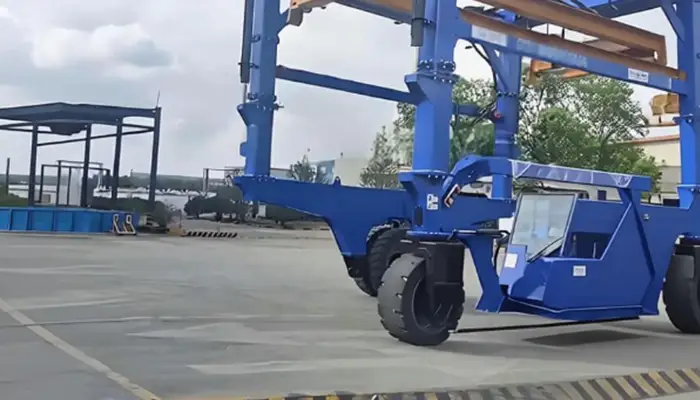
Even the most powerful engine is ineffective if the wheels cannot grip the surface. Slope-ready carriers come equipped with anti-slip, wear-resistant wheels, designed to maintain traction under heavy loads. These wheels are ideal for yards with inclines, rough concrete, or slightly uneven surfaces.
Practical benefits:
- Prevents slippage when moving fully loaded containers uphill or downhill.
- Reduces downtime caused by wheel or surface adjustments.
- Minimizes wear and tear, lowering maintenance costs over time.
- Ensures safer operations, protecting both operators and cargo.
One of the biggest challenges in sloped yards is maneuvering, especially around tight corners or narrow lanes. Standard two-wheel steering often requires multiple repositioning attempts, which wastes time and increases the risk of accidents. Slope-ready straddle carriers feature 4-wheel precision steering, allowing smooth and accurate turns on inclines.
Practical benefits:
- Sharp turns without multiple back-and-forth adjustments.
- Smooth navigation on narrow or congested yards.
- Reduced operator fatigue because maneuvering is more intuitive.
- Consistent alignment when picking up or placing containers, improving workflow efficiency.
- Upgraded engines provide consistent power on slopes.
- Anti-slip, wear-resistant wheels maintain traction even fully loaded.
- Precision 4-wheel steering allows accurate, safe, and efficient maneuvering.
These features together ensure that a slope-ready straddle carrier can handle industrial yard inclines with fully loaded containers reliably and safely, saving time and reducing operational risk.
Operational Strategies for Sloped Yards
Even with the right equipment, slopes in container yards require smart operational planning. Without proper strategies, fully loaded straddle carriers can still encounter delays, accidents, or inefficiencies. Implementing the right operational practices ensures safety, efficiency, and smoother container handling in any inclined yard.
Before any container moves, it's important to map out the best routes through the yard. Not every path is equal—steep sections, uneven pavement, and tight corners can affect speed and safety. By planning the most efficient uphill and downhill paths, you minimize strain on the carrier and reduce the risk of accidents.
Practical tips:
- Identify the flattest possible routes for heavy loads while still reaching all storage locations.
- Use markers or painted lines to guide operators on the safest paths.
- Take note of areas where water, oil, or debris could reduce traction and plan alternate routes.
- Consider container stacking locations to minimize uphill or downhill trips whenever possible.
Correct positioning and careful loading are critical on slopes. Even a small shift in a container's weight can affect stability. Following best practices reduces accidents, vehicle strain, and the chance of slippage.
Practical tips:
- Always center containers on the carrier to distribute weight evenly.
- Avoid sudden stops or starts while moving uphill or downhill.
- Check for loose cargo and secure containers before any incline operation.
- Keep a safe distance from other vehicles and obstacles, especially on steeper slopes.
Repositioning vehicles multiple times wastes time and increases the risk of accidents. Adjusting the workflow for sloped yards can streamline operations and reduce unnecessary effort.
Practical tips:
- Organize container storage so heavier loads are picked up from lower points when possible.
- Assign dedicated lanes for uphill and downhill movement to avoid cross-traffic.
- Use slope-aware scheduling: plan moves when the yard is less crowded.
- Train operators on anticipating turns and braking needs specific to the incline.
- Plan the safest and most efficient paths for uphill and downhill movement.
- Position and load containers carefully to maintain balance and prevent accidents.
- Adjust workflow to reduce repositioning, save time, and improve overall efficiency.
Training and Support for Operators
Even the best equipment can't reach its full potential without trained operators. Proper training ensures that straddle carriers operate safely, efficiently, and confidently, especially on sloped yards where challenges like traction, balance, and maneuvering are amplified.
Hands-on training is essential for mastering straddle carrier operations. One-on-one sessions allow operators to learn the vehicle's capabilities, practice on real slopes, and understand how to handle fully loaded containers without risk.
Practical training tips:
- Start with short, controlled runs on different slope angles to build operator confidence.
- Focus on real-world scenarios, like uphill turns and downhill braking with full loads.
- Allow operators to familiarize themselves with the vehicle's steering, braking, and acceleration responsiveness.
- Provide continuous feedback and correction to reinforce safe habits.
Proper maintenance is crucial to keep the carrier reliable and safe, especially when operating on inclines. Sloped operations put extra strain on engines, brakes, and wheels, so preventive measures reduce downtime and accidents.
Maintenance tips for slope operations:
- Inspect wheels and tires regularly for wear or traction loss.
- Check hydraulic and braking systems before every shift.
- Monitor engine performance for signs of strain during repeated uphill runs.
- Keep the surface of the yard clean and free of debris that may reduce grip.
Operator training directly impacts both safety and efficiency. Experienced operators can anticipate challenges and handle containers smoothly, reducing the likelihood of errors, accidents, and unnecessary delays.
Benefits of effective operator training:
- Fewer accidents and damaged containers.
- Reduced vehicle wear and longer lifespan of components.
- Faster, more predictable operations with less repositioning.
- Increased confidence for operators handling fully loaded carriers on slopes.
- Hands-on, one-on-one training builds confidence and operational skill.
- Proper maintenance tailored to slope operations keeps carriers reliable.
- Trained operators reduce errors, improve safety, and maximize yard productivity.
With the right training and support, straddle carriers can perform efficiently on slopes up to 10% fully loaded, keeping yard operations smooth and predictable.
Conclusion
Handling containers on sloped yards doesn’t have to be risky or inefficient. With powerful engines, anti-slip wheels, precision steering, and smart operational planning, straddle carriers can safely manage fully loaded 10% inclines. Investing in slope-ready straddle carriers and proper operator training ensures your yard operates safely, efficiently, and profitably, no matter the terrain.