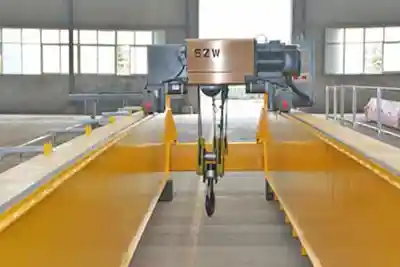
Upgrade or Replace Your 10-Ton Double Girder Overhead Crane?
Evaluate whether to upgrade key parts or fully replace your 10 ton double girder overhead crane by comparing cost, downtime, efficiency, and future needs.
Introduction
The double girder overhead crane is one of the most common lifting solutions in medium-duty industries like steel fabrication, machining, machinery manufacturing, and general warehouse handling. It’s strong, stable, and designed for regular use in demanding environments. In many factories, it runs daily—sometimes round the clock—moving everything from metal plates to production molds.
But no crane lasts forever.
As the years pass, even the best-built systems show signs of aging. You may notice slower operation, increasing downtime, higher repair costs, or outdated controls that no longer meet current safety standards. Sometimes the structure is still solid, but the motor or hoist is giving you trouble. In other cases, your entire production line has evolved, and the crane just can’t keep up anymore.
This brings up a practical question many crane owners face sooner or later:
Should I upgrade some components and keep the crane running?
Or is it smarter in the long run to replace the entire crane?
This guide is made to help you think that through—not in vague theory, but based on real-world conditions, actual costs, and what kind of disruption you can afford. We’ll look closely at:
- What kinds of wear are normal for a 10-ton double girder crane and what’s worth fixing
- Typical upgrade options and what they cost in terms of time and money
- When it’s no longer practical to patch things up and it’s time to invest in a new crane
- How to balance initial cost, downtime impact, and long-term operating savings
By the end, you’ll have a clearer idea of which path makes the most sense for your workshop or plant—not just today, but in the years to come.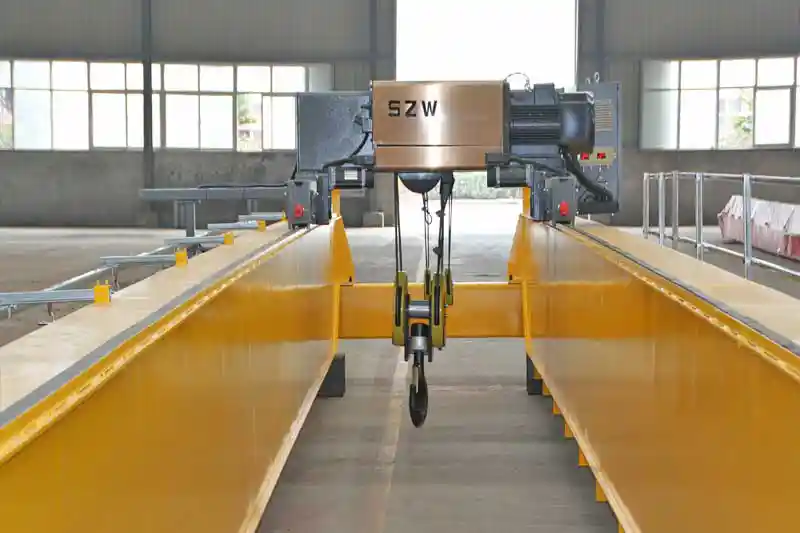
10 ton double girder overhead crane
When an Upgrade Makes Sense for Your 10-Ton Crane
If your 10-ton double girder overhead crane still has a strong structure and the main problems are mechanical or electrical, an upgrade can be a practical and cost-saving solution. Many crane owners stick with what they have—not because they’re avoiding change, but because upgrading the right components gives the crane a second life without disrupting operations or investing in a whole new system.
Here’s when that choice makes sense.
Common Signs You Can Stick with an Upgrade
Before jumping into a replacement, take a close look at your crane’s condition. In many cases, upgrading makes sense if:
- The main girders and structure are still in good shape. If there are no cracks, severe corrosion, or bending, the steel structure can likely support many more years of use.
- The problems are mainly with the hoist, control panel, motor, or drives—not the crane’s frame or wheels. These parts wear out faster and are designed to be replaceable.
- Your lifting needs haven’t changed. If you're still lifting the same loads in the same workspace, and the 10-ton capacity still covers your operations, there’s no urgent need for a bigger or different crane.
- The crane still fits your building and workflow. If the hook approach, runway span, and clearances are still ideal for your operations, it’s more efficient to upgrade than redesign everything.
Practical Upgrade Options for a 10-Ton Double Girder Crane
Upgrading specific systems can restore performance, improve safety, and reduce energy use—all without replacing the whole crane. Here are some common upgrade options:
- Replace the wire rope hoist with a newer model that includes smoother operation, better speed control, and built-in safety features like overload protection and upper/lower limit switches.
- Install variable frequency drives (VFDs) on the hoisting and travel mechanisms. This allows for smoother starts and stops, reduces mechanical stress, and helps control load swing.
- Retrofit the crane with a wireless remote control system. Operators gain mobility and a better line of sight to the load, improving both safety and precision.
- Modernize the electrical panel and wiring. Old systems can be inefficient, difficult to repair, or even unsafe. Replacing outdated contactors, relays, and wiring improves reliability and makes future troubleshooting easier.
Why an Upgrade Might Be the Better Call
Choosing to upgrade rather than replace offers some clear benefits, especially when the core structure of your crane is still reliable.
- Upgrades usually cost much less than a full replacement. You only pay for the parts and work that are actually needed.
- Most upgrade work can be done without major downtime. Often, the crane structure stays in place and only certain systems are swapped out.
- Delivery and installation of hoists or control kits are typically much faster than manufacturing a new crane. This helps minimize production delays.
Important Limits of Upgrading
That said, upgrading does have its limits—and they’re worth understanding before making the call.
- The steel frame stays the same. If the crane structure is old, it won’t gain any added life or load capacity just because you changed the hoist or electrics. It’s still subject to fatigue and long-term wear.
- Old mechanical systems that aren't upgraded may still fail. If your gearboxes, wheels, or couplings are already worn out, partial upgrades may not stop the breakdowns.
- Upgrades might not bring the crane up to current safety codes. If your industry now requires anti-collision systems, automated controls, or enhanced safety margins, some upgrades may fall short of those standards.
In short, if your 10-ton double girder overhead crane still has good bones, upgrading it can be a smart and efficient way to keep it running well for years. But don’t guess—inspect. Get a proper technical evaluation and compare the cost of upgrading versus replacing. Sometimes, all your crane needs is a few key improvements. Other times, it’s better to start fresh.
When to Replace the Entire 10-Ton Double Girder Overhead Crane
There comes a point where upgrading parts just won’t cut it anymore. If your crane has reached that stage—where repairs are frequent, safety is questionable, or it simply can’t support your operations—it may be time to replace the entire system. While a full replacement is a bigger investment, it can deliver better long-term performance, reliability, and peace of mind.
So, how do you know when it’s time to move on?
Clear Signs It's Time for a Full Replacement
Replacement becomes the logical option when the crane’s condition or your operational needs have moved beyond what upgrades can fix. Here are the most common triggers:
- The girders or end trucks show visible fatigue, cracks, or deformation. These are structural red flags that can’t be ignored or patched safely.
- You’ve already invested in upgrades, but the crane continues to break down. If repairs are becoming more frequent and expensive, the system may be at the end of its usable life.
- Your production demands have changed. Maybe you’ve added faster production lines, or your process requires more precise lifting and better control. If the current crane slows you down, a new system may be the only way forward.
- The installation layout has changed. If the crane's runway span, hook path, or clearance doesn’t match your new workspace or building layout, it may be too limited to modify efficiently.
Benefits of Replacing the Whole Crane
Yes, it’s a bigger decision—but full replacement has its rewards, especially if you plan to stay in the same facility for years to come.
- You start fresh with a crane built exactly to match your current and future operations. Whether that means extra lifting height, more precise controls, or smoother operation, everything can be tailored.
- New double girder overhead cranes often come with energy-efficient motors, automated controls, and built-in diagnostics. These features reduce your operating costs and help you spot issues before they become problems.
- A new system is a chance to optimize your workflow. You can reduce dead zones, increase hook coverage, improve lifting speeds, or add features like tandem hoisting or anti-sway technology.
Challenges to Be Ready For
Of course, replacing a crane is not something you do casually. Here are a few practical challenges that come with the decision:
- The initial cost will be higher than upgrading. You’re paying for the steel structure, new components, engineering, and installation.
- Depending on your site, you may need to realign runway rails, reinforce columns, or handle civil modifications like adjusting electrical connections or control rooms.
- The downtime must be planned. Removing the old crane and installing a new one can take days or even weeks depending on your facility setup, so scheduling is critical—especially if your crane is essential to daily production.
Replacing your 10-ton double girder overhead crane isn’t just about buying new equipment—it’s about making sure your lifting system supports the way your business operates today and tomorrow. If your current crane is holding you back or costing more to keep running than it’s worth, it may be time to start planning a replacement. Done right, it’s an investment that can pay off for the next 15–25 years.
Decision Checklist: Upgrade or Replace Your 10-Ton Double Girder Crane?
Still unsure whether to invest in upgrades or go for a full replacement? This side-by-side checklist will help you evaluate based on the current condition of your crane, your production goals, and your available resources. It’s a practical way to match your decision with what really matters on your workshop floor.
Compare These Key Factors Before Deciding:
Structural Condition
- Upgrade: The girders and end trucks are in good shape with no signs of fatigue, cracks, or major wear.
- Replace: There are visible signs of structural fatigue, misalignment, or corrosion that compromise long-term safety.
Hoist and Motor Status
- Upgrade: Existing hoist or motors are still serviceable or can be replaced individually without changing the crane structure.
- Replace: Equipment is outdated, unreliable, and no longer supports consistent operation—even after previous repairs.
Budget Availability
- Upgrade: You need to control costs and prefer a phased or lower investment option.
- Replace: Your budget allows for a complete overhaul, and you’re willing to invest in a long-term solution.
Downtime Tolerance
- Upgrade: Your crane is in daily use and extended shutdowns are not feasible; quick installation is a must.
- Replace: You can plan around production downtime—such as during plant maintenance shutdowns or off-seasons.
Capacity Requirements
- Upgrade: Your lifting needs haven’t changed, and the 10-ton capacity still meets daily demands.
- Replace: You need higher lifting capacity, faster speeds, or better hook coverage to meet new production requirements.
Control System Needs
- Upgrade: Controls need minor updating—perhaps a new pendant or VFDs, but the core system still works.
- Replace: You require full modernization—new panels, smarter automation, and advanced safety features.
Long-Term Efficiency Goal
- Upgrade: You're looking for some improvement in performance, energy use, or handling—but within existing limits.
- Replace: You want to redesign for better efficiency, smarter controls, and easier future expansion.
This checklist is not about choosing the cheapest or the newest—it’s about choosing the most cost-effective, reliable, and future-ready path for your operations. If more than half of your answers fall into the "replace" category, it’s probably time to start planning a new crane investment.
Need a second opinion? A crane inspection and budgetary proposal can give you a clear comparison based on real numbers and site-specific conditions.
| Factor | Upgrade | Replacement |
|---|---|---|
| Structural Condition | Good | Worn or Fatigued |
| Hoist and Motor Status | Repairable or replaceable | Severely outdated |
| Budget Availability | Limited | Sufficient for full investment |
| Downtime Tolerance | Must be minimal | Can plan for extended downtime |
| Capacity Requirements | Unchanged | Increased or significantly changed |
| Control System Needs | Minor updates needed | Needs full modernization |
| Long-Term Efficiency Goal | Moderate gain | Significant upgrade possible |
Real-World Example Scenarios
Sometimes the decision to upgrade or replace isn’t just about theory—it’s about what’s happening on your workshop floor. Below are a few common situations that crane owners face, showing how different conditions lead to different decisions. These examples can help you visualize your own case and what kind of solution might fit best.
Scenario 1: Aging but Structurally Sound Crane
- Crane Details:
A 10-ton double girder overhead crane that’s 15 years old. The girders and end trucks are in good condition. However, the wire rope hoist is slowing down, and the controls are starting to fail intermittently. - The Problem:
Lifting performance is inconsistent, and operators are complaining about jerky movement and outdated push-button controls. However, the crane still fits the production layout, and lifting needs haven’t changed. - Recommended Action:
Upgrade the hoist and install a new control system with variable frequency drives (VFDs) and a wireless remote. This improves lifting speed control, reduces downtime, and extends the usable life of the crane without a full replacement.
Scenario 2: Crane at the End of Its Lifespan
- Crane Details:
A 10-ton double girder crane over 20 years old, operating in a fabrication workshop. Inspection reveals fatigue cracks on the girders and misalignment on one end truck. - The Problem:
Despite previous component replacements, the crane is now frequently down for maintenance. Safety concerns are growing, and structural wear is no longer minor. - Recommended Action:
Full replacement. A new 10-ton crane can be engineered to the current runway layout and production needs, with updated safety features and energy-efficient motors. The investment pays off with improved reliability and lower long-term maintenance.
Scenario 3: Upgrading Performance for Precision Handling
- Crane Details:
A manufacturing facility handling plastic molds has a 10-ton crane that is mechanically sound but lacks speed control and precise positioning. - The Problem:
The crane needs to lift and place high-value molds gently and accurately. Current lifting speed is too fast, and manual controls are hard to fine-tune. - Recommended Action:
Replace the current crane with a European-style 10-ton double girder model equipped with dual-speed hoisting, inverter-controlled travel, and anti-sway features. This improves positioning accuracy, minimizes mold damage, and supports faster, safer workflow.
Each of these cases shows how different factors—age, structural health, production needs—lead to different solutions. A proper crane assessment and load handling review can help determine what fits your situation best. Whether it’s a smart upgrade or a complete rebuild, the right move depends on your goals, not just the age of the crane.
Expert Tips for Crane Owners
Making the right decision about whether to upgrade or replace your 10-ton double girder overhead crane isn’t just about budget—it's about planning smart and thinking long term. Before you commit to any path, take these practical tips into account:
- Start with a proper structural inspection
Don’t guess about the condition of your crane's steel structure. A certified crane inspector can identify fatigue cracks, corrosion, or misalignments that aren’t visible to the untrained eye. This is especially important if your crane is more than 10–15 years old or has been operating in demanding environments like steel or foundry plants. - Look beyond the purchase price
The cheapest option today isn’t always the most cost-effective over five or ten years. Factor in power consumption, maintenance intervals, operator productivity, and spare parts availability. A modern crane with better efficiency and fewer repair needs often pays for itself in reduced downtime and lower operating costs. - Time your upgrades or replacement wisely
Whether you’re swapping out a hoist or installing a brand-new crane, it’s best to schedule work during plant shutdowns, holidays, or slow periods. Unplanned downtime can throw your entire production schedule off, so plan ahead and coordinate with your suppliers to avoid unnecessary delays.
These small steps can save you from big headaches—and help you get the most from your investment, no matter which route you take.
Conclusion: Make the Smart Move
The 10-ton double girder overhead crane is a workhorse—and with the right care, it can serve your operations reliably for 20 years or more. In many cases, targeted upgrades like a new hoist or modernized control system are all it takes to restore performance and extend its working life.
But not every crane is worth saving.
If your structure is failing, if repairs are piling up, or if your production demands have outgrown what the crane can handle, a full replacement could be the smarter—and safer—move. Yes, it’s a bigger investment upfront, but the return often comes in the form of lower running costs, better safety, and smoother operations.
In the end, it comes down to this:
Know the condition of your crane. Understand what your plant needs. And don’t be afraid to ask for professional input.
Whether you choose to upgrade or replace, making the decision with all the facts on hand puts you in control—and helps you avoid costly mistakes later on.
Send Us An Inquiry to Get Your Tailored Solution
Still unsure whether to upgrade or replace your 10-ton double girder overhead crane? Let us help you make a confident, informed decision.
- Request a free technical evaluation of your crane’s current condition—structure, hoist, controls, and electrical systems
- Get side-by-side quotations for both component upgrade kits and complete crane replacement, so you can compare total cost and value
- Consult directly with Yuantai Crane engineers for expert advice tailored to your facility, your budget, and your long-term production goals
Whether you're trying to reduce downtime, improve efficiency, or prepare for plant expansion, we’ll help you plan the most practical solution. Reach out today and take the first step toward a better-performing lifting system.