Why Portal Cranes Are Ideal for Outdoor Energy Projects
Discover how portal cranes handle heavy loads, adapt to rough terrain, and withstand harsh weather, making them essential for wind, solar, and hydro energy projects.
Introduction
When it comes to outdoor wind energy projects, not all cranes are built the same. You might think a standard overhead crane could handle the job—but once the ground gets rough or the weather turns, those cranes quickly hit their limits. Portal cranes, on the other hand, are designed for these challenges.
Think about it: wind farms, solar arrays, or hydroelectric installations often sit on uneven terrain or in remote areas. Components like turbines, transformers, and large panels are heavy and awkward to move. That’s exactly where portal cranes shine—they combine strength, stability, and mobility to keep your project moving.
Here’s why portal cranes matter for your project:
- Adaptable to terrain: Move over uneven surfaces or temporary tracks without major site preparation.
- Built for weather: Rain, wind, or heat won’t stop them from lifting safely.
- Heavy lifting made practical: Lift large, bulky components that would challenge other cranes.
- Time and cost savings: Reduce delays, minimize extra equipment, and lower labor risks.
If you’re managing an outdoor energy project, knowing the difference between a portal crane and an overhead crane isn’t just technical—it directly impacts your schedule, safety, and budget. By the end of this guide, you’ll see clearly when a portal crane is the smarter, more practical choice.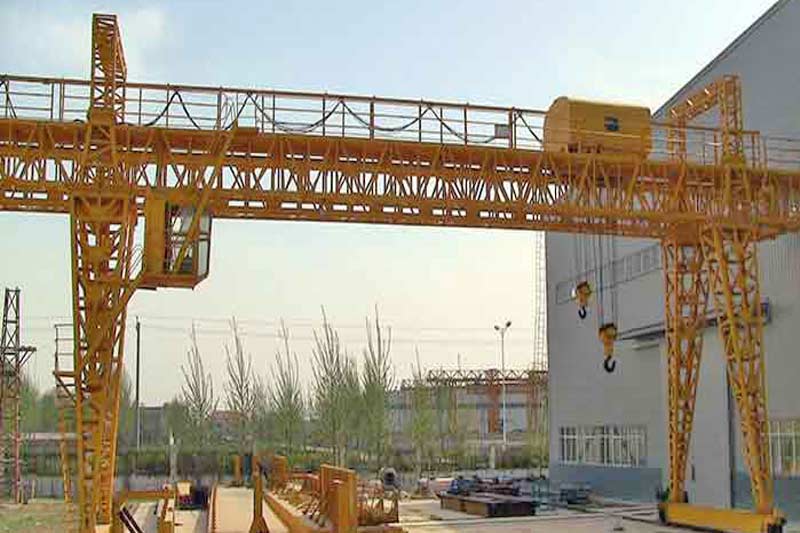
high wind resistance truss girder portal cranes
Overview of Portal Cranes
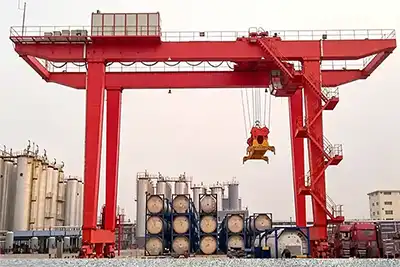
Portal cranes are specialized lifting machines designed for outdoor projects where mobility, stability, and heavy lifting are critical. Unlike overhead cranes, which require fixed runways and are mainly suited for indoor or sheltered environments, portal cranes operate independently and can navigate uneven ground or temporary tracks. This makes them ideal for energy projects like wind farms, solar farms, and hydroelectric installations.
Basic Components of a Portal Crane:
- Portal frame: The sturdy, vertical structure that forms the “legs” of the crane, providing stability and supporting the load.
- Trolley: Moves along the horizontal beam of the portal frame to position the hoist precisely over the load.
- Hoist: The lifting mechanism, often wire rope or chain type, responsible for raising and lowering heavy components.
- Wheels or tracks: Allow the crane to move across the site, either on permanent tracks or temporary rails, offering site flexibility.
Key Advantages of Portal Cranes:
- Mobility: Can easily move around uneven terrain or temporary construction areas without extensive groundwork.
- Outdoor operation: Built to withstand rain, wind, dust, and temperature changes.
- Heavy lifting: Capable of handling oversized or high-capacity loads that would challenge conventional cranes.
- Versatility: Suitable for multiple types of outdoor energy projects, from transporting turbine components to installing transformers.
In short, portal cranes combine mobility, durability, and lifting power in a way that other cranes simply cannot match for outdoor energy projects. Choosing the right type ensures your project moves efficiently and safely, without unnecessary delays or extra equipment.
Terrain Adaptability
One of the biggest challenges in outdoor energy projects is dealing with uneven or unpredictable terrain. Many cranes struggle when the ground isn’t perfectly level, slowing down work or even risking safety. Portal cranes, however, are built to handle these conditions with ease.
Versatile Mobility:
- Can move across rough, uneven surfaces without compromising stability.
- Navigate construction sites where temporary tracks or partial roadways are in place.
- Ideal for remote areas where full groundwork isn’t feasible.
Site Preparation:
- Unlike fixed overhead cranes that need carefully leveled foundations, portal cranes require minimal groundwork.
- Can often be installed quickly on temporary tracks or simple concrete pads.
- Reduces preparation costs and speeds up project timelines.
Practical Example:
- On wind farm projects, portal cranes lift and position turbine components such as nacelles and rotor blades directly on uneven hillsides.
- They can move large loads between turbines without needing major site adjustments, saving time and labor.
- Their ability to adapt to terrain makes them far more flexible than traditional overhead cranes for outdoor energy applications.
Portal cranes’ terrain adaptability ensures that lifting heavy components is not slowed down by site conditions. This makes them a reliable solution when speed, safety, and efficiency are critical.
Weather Resistance and Outdoor Suitability
Outdoor energy projects don’t wait for perfect weather. Rain, sun, high winds, and extreme temperatures are all part of the job. Portal cranes are specifically designed to handle these conditions, keeping your project moving safely and efficiently.
Robust Design:
- Built with materials that resist corrosion, rust, and sun damage.
- Protective coatings and paint help the crane withstand long-term exposure to harsh outdoor conditions.
- Components are engineered to maintain performance even under extreme temperatures, whether hot or cold.
Wind and Storm Tolerance:
- Portal cranes offer superior stability compared to many other crane types.
- Can safely operate in higher wind conditions, which is especially important when lifting large or tall loads.
- Features like counterweights and reinforced frames improve balance during gusty or stormy weather.
Maintenance Considerations:
- Weather-resistant design reduces the frequency of repairs and replacements.
- Less downtime due to environmental exposure means projects stay on schedule.
- Regular inspection is still important, but overall maintenance is simpler compared to cranes not built for outdoor conditions.
By combining durability with operational stability, portal cranes give you confidence that lifting heavy components won’t be interrupted by rain, wind, or temperature swings. For outdoor energy projects, this resilience can save both time and money.
Large Lifting Capacities
Outdoor energy projects often involve some of the heaviest and most awkward components in the industry. From wind turbine nacelles to massive transformers, these loads require cranes that can not only lift the weight but also position it safely and precisely. Portal cranes are specifically designed to meet these challenges, offering both strength and flexibility.
Key Advantages of Portal Cranes in Lifting:
- Heavy Components Handling: Can lift wind turbines, large transformers, and substation equipment safely and efficiently.
- Height and Span Flexibility: Designed to accommodate oversized loads, allowing precise placement even across wide spans or elevated positions.
- Comparisons: Portal cranes often outperform mobile cranes and overhead cranes when it comes to lifting capacity and span, especially in outdoor or uneven terrain.
Using portal cranes for these demanding lifts reduces the need for multiple smaller cranes, extra equipment, or repeated lifts. This not only saves time but also improves safety on the site. For any outdoor energy project, having a crane that can handle heavy loads reliably is essential for keeping schedules on track and avoiding costly delays.
Applications in Outdoor Energy Projects
Portal cranes aren’t just powerful—they’re practical for a variety of outdoor energy projects. Anywhere you need to lift heavy or oversized equipment in challenging conditions, these cranes are up to the task.
- Wind Energy- Erecting wind turbines is no small job. Portal cranes handle nacelles, rotor blades, and other components even on hilly or uneven terrain. Their mobility means fewer site adjustments and faster installation times.
- Solar Energy- Installing large solar panels or tracking systems requires precision and care. Portal cranes can lift and place these components accurately, helping prevent damage and speeding up the construction process.
- Hydropower and Substations- Heavy transformers and electrical components need stable handling. Portal cranes provide the strength and balance to move these items safely, even in outdoor or rough-ground settings.
On a recent wind farm project, portal cranes lifted multiple 70-ton turbine nacelles across uneven terrain. They moved components efficiently between turbines with minimal setup and completed the project ahead of schedule. This shows how their combination of mobility, lifting power, and stability makes them ideal for outdoor energy applications.
In short, wherever heavy equipment must be moved outdoors, portal cranes make the job smoother, safer, and faster. They adapt to terrain, handle large loads, and reduce the need for extra equipment or labor.
Why Clients Often Underestimate Portal Cranes
It’s common for clients to assume that a standard overhead crane can handle almost any lifting task. After all, they’re widely used and familiar in many industries. But outdoor energy projects present unique challenges that these cranes simply weren’t designed for. Portal cranes are often the smarter choice, yet many buyers don’t realize it until they face practical limitations on site.
Common Misconception:
- Overhead cranes are thought to be capable of handling all lifting needs, both indoors and outdoors.
- Some clients assume they can simply extend overhead cranes to outdoor projects without considering site conditions.
Reality Check:
- Overhead cranes are mainly suited for indoor workshops or facilities with fixed runways.
- They cannot operate effectively on uneven terrain, temporary tracks, or rough outdoor conditions.
- Weather exposure—rain, wind, or temperature extremes—can further limit their effectiveness and safety outdoors.
Key Decision Factors:
- Terrain: Is the site uneven, hilly, or temporary? Portal cranes move across challenging surfaces with ease.
- Weather: Outdoor projects need cranes that can withstand rain, wind, and temperature changes.
- Load Size: Portal cranes handle oversized and heavy components that may exceed mobile or overhead crane capacities.
- Mobility Requirements: Projects requiring movement between multiple points on the site benefit from portal cranes’ flexible design.
By understanding these limitations and considerations, clients can make more informed decisions. Choosing a portal crane instead of relying solely on an overhead crane can save time, reduce risk, and improve overall project efficiency.
Choosing the Right Portal Crane
Picking the right portal crane isn’t just about the maximum weight it can lift. It’s about matching the crane to your site, your components, and the conditions it will face. The right choice makes operations smoother, safer, and faster.
Capacity & Span Selection
- Ensure the crane can handle your heaviest loads comfortably.
- Check the span and lift height to reach all critical points on site.
- Always plan for occasional maximum lifts plus a safety buffer to avoid overloading.
Track vs. Wheel Options
- Track-mounted cranes: Precise movement along a fixed path, perfect for repetitive lifts in defined areas.
- Wheel-mounted cranes: Flexible, can move across uneven or temporary ground, ideal for multi-point outdoor projects.
- Choose based on your site layout, terrain, and how often the crane needs to move.
Safety Features
- Load limiters prevent lifting beyond the crane’s safe capacity.
- Anti-collision systems protect personnel and equipment during operation.
- Weather monitoring systems help operators know when wind or storms could make lifting unsafe.
Choosing the right portal crane upfront avoids unnecessary downtime and operational risks. When capacity, mobility, and safety align with your project needs, you get a crane that not only lifts but keeps your schedule, budget, and team safe.
Conclusion
Portal cranes are more than just lifting machines—they’re a practical solution for outdoor energy projects. They combine heavy lifting power with mobility, terrain adaptability, and weather resistance, making them ideal for wind farms, solar arrays, and substations.
For project managers and engineers, understanding the benefits of portal cranes can make a real difference. Choosing the right crane can prevent delays, improve safety, and keep your project running smoothly.
Next Steps for Clients- Send Us An Inquiry
- Consult with crane suppliers to find a portal crane tailored to your specific site and lifting requirements.
- Discuss capacity, span, mobility, and safety features to ensure the crane meets your operational needs.
- Consider practical factors such as site layout, weather conditions, and component size before making a decision.
By selecting the right portal crane, you can lift heavy components safely, reduce operational risks, and increase efficiency across your outdoor energy projects. A well-chosen crane isn’t just equipment—it’s a key partner in your project’s success.