Maximizing Indoor Floor Space with 15 Ton Bridge Cranes
Optimize warehouses & factories by lifting heavy loads overhead with 15 ton bridge cranes, improving safety & workflow efficiency. Get 15 ton bridge crane!
Introduction
Indoor Space Challenges
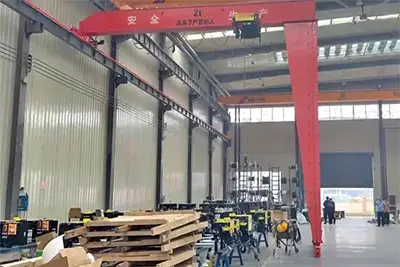
Warehouses, factories, and storage facilities often face tight indoor spaces. Forklifts navigate narrow aisles, pallets are stacked high, and heavy equipment takes up valuable floor area. When you need to move large or heavy items, things can get crowded quickly, slowing down operations and creating safety risks.
Why Overhead Cranes Help Indoor Material Handling ? Overhead cranes lift materials above the floor, keeping the ground area free for forklifts, trolleys, and workers. This means you can move heavy loads without blocking aisles or rearranging storage. Unlike forklifts or mobile hoists, the crane creates a dedicated overhead path for materials, improving efficiency and safety.15 Ton Bridge Cranes for Heavy Loads
For operations that handle heavier items like machinery, steel sheets, or large pallets, a 15 ton bridge crane is a practical solution. It can move heavy loads smoothly across the workspace without interfering with daily operations.
Practical advantages at a glance:
- Lifts up to 15 tons safely.
- Frees floor space for forklifts and personnel.
- Works across warehouses, storage facilities, and factories.
- Reduces manual handling and temporary lifting setups.
A 15 ton bridge crane isn’t just about lifting heavy objects—it’s about making your facility safer, more organized, and easier to manage. In the following sections, we’ll explore how these cranes improve workflow, handling, and overall space utilization.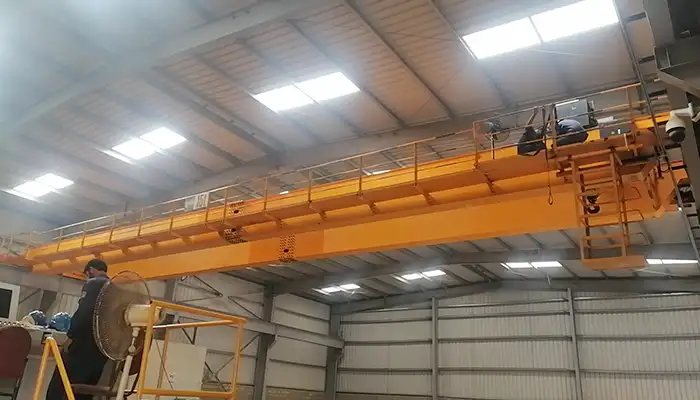
double girder overhead crane 15 ton for sale
Benefits of Using 15 Ton Bridge Cranes
Maximized Floor Space
One of the biggest advantages of a 15 ton bridge crane is that it keeps your floor clear. By lifting heavy loads overhead, forklifts and workers can move freely below without constantly navigating around obstacles. Pallets, machinery, and other equipment no longer need to be shuffled around just to make room for lifting operations.
- Frees up valuable floor space for vehicles, storage, and personnel.
- Reduces congestion in busy aisles and work areas.
- Improves overall material flow and operational efficiency.
Efficient Material Handling
Bridge cranes are built to handle heavy and bulky loads that would otherwise slow down day-to-day operations. Whether it’s steel sheets, large pallets, or heavy machinery, a 15 ton crane can transport items across the facility quickly and precisely. This makes loading, unloading, and moving materials much faster than relying solely on forklifts or manual handling.
- Lifts heavy materials safely and accurately.
- Speeds up loading/unloading of trucks or storage areas.
- Facilitates smooth intra-facility transport with minimal delays.
Safety Improvements
Keeping workers out of the immediate lifting zone is a key safety benefit. Overhead cranes reduce the need for personnel to manually lift or move heavy loads, lowering the risk of accidents. In busy warehouses or factories, this also decreases the chance of collisions with forklifts, stacked pallets, or other equipment.
- Reduces worker exposure to heavy or dangerous loads.
- Minimizes risks of collisions with moving vehicles or stacked goods.
- Supports safer overall workflow in busy industrial spaces.
Typical Sectors and Applications
Warehouses
Warehouses need to move materials fast and safely. A 15 ton bridge crane makes this easy. Instead of forklifts weaving around pallets and boxes, the crane lifts heavy loads overhead, keeping aisles open.
Key uses in warehouses:
- Moving pallets of all sizes quickly.
- Handling bulk storage units without blocking pathways.
- Streamlining order picking and inventory handling.
Storage Facilities
Storage facilities often deal with large, heavy, or awkwardly shaped materials like steel sheets, pipes, and industrial components. Bridge cranes allow these items to be lifted and transported without relying on multiple forklifts or manual labor.
Practical points for storage facilities:
- Safe handling of long or heavy items.
- Precise placement in racks or staging areas.
- Minimizes risk of damage and improves efficiency.
Factories and Production Plants
In factories, production lines and assembly areas require moving heavy equipment and molds regularly. A 15 ton bridge crane moves these items safely across the floor without interrupting workflows.
Benefits for factories:
- Smooth transport of machinery and tools between workstations.
- Supports maintenance and assembly tasks.
- Reduces downtime caused by manual or temporary lifting methods.
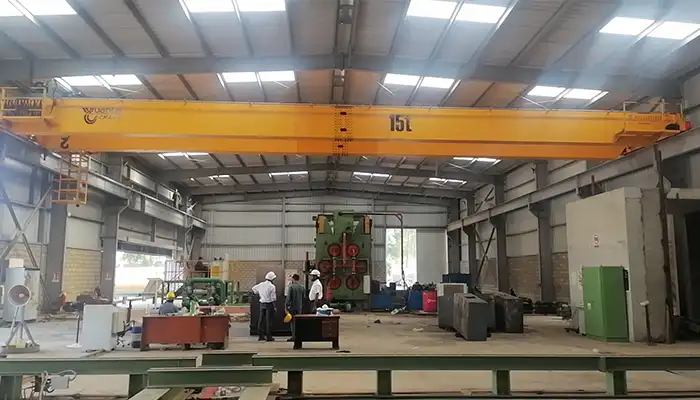
Typical Loads and Lifting Scenarios for 15 Ton Bridge Cranes
A 15 ton bridge crane is designed to handle heavy indoor lifting efficiently. Understanding the types of loads it can manage helps warehouses, factories, and storage facilities optimize workflow and improve safety. This crane is perfect for lifting pallets, steel sheets, machinery, and irregular loads without interfering with daily operations.
Pallets are a common load in warehouses and production facilities. A 15 ton bridge crane can lift both standard and oversized pallets safely overhead, freeing up valuable floor space for forklifts and storage.
- Ideal crane type: Single girder bridge crane with electric hoist for standard pallets; double girder bridge crane for heavy or stacked pallets.
- Ensure hoist and sling match pallet dimensions.
- Keep lifting paths clear to prevent collisions.
- Can handle multiple pallets if within the 15 ton capacity.
Steel sheets, metal plates, and similar materials are heavy and often stacked tightly. A 15 ton bridge crane with a magnetic or clamp attachment can lift individual sheets or full stacks efficiently, reducing manual handling.
- Ideal crane type: Double girder bridge crane with magnetic lifting or spreader beam attachments.
- Confirm the total weight of stacked steel sheets before lifting.
- Stabilize stacks to prevent shifting during transport.
- Supports safe and precise placement onto racks or workstations.
Heavy machinery, motors, presses, and assembly components require careful handling. A 15 ton bridge crane allows precise movement across production floors without disrupting workflows.
- Ideal crane type: Single or double girder bridge crane depending on load weight and span.
- Use suitable slings, hooks, or custom attachments.
- Plan lifting routes to avoid collisions with forklifts, pallets, or other equipment.
- Check load balance and center of gravity for safe lifting.
Some loads don’t fit standard shapes, such as molds, oversized tools, or large industrial components. A 15 ton bridge crane can handle these safely with specialized attachments like spreader bars or lifting beams.
- Ideal crane type: Double girder bridge crane for heavy, irregular loads; gantry crane for mobile lifting needs.
- Assess the load’s center of gravity and weight distribution before lifting.
- Always perform test lifts for unusual or heavy items.
- Custom attachments ensure stability and reduce the risk of damage.
Summary: A 15 ton bridge crane is highly versatile for indoor lifting tasks. It can handle pallets, steel sheets, machinery, and irregular loads efficiently while optimizing floor space and improving workplace safety. By selecting the right crane type and attachments for each load, facilities can increase productivity, reduce risks, and make full use of available indoor space.
Key Considerations for Maximizing Floor Space with a 15 Ton Bridge Crane
Optimizing indoor floor space is one of the main reasons facilities invest in a 15 ton bridge crane. Proper planning ensures safe operations, smooth material flow, and maximum utilization of your warehouse, factory, or storage area. Here’s what to consider:
Crane Design & Layout
Choosing the right crane design is critical. Single girder bridge cranes are ideal for lighter or medium-duty lifting and shorter spans, while double girder bridge cranes are better for heavier loads, longer spans, and higher lifting requirements.
- Single girder bridge crane: Suitable for standard indoor applications with moderate load demands.
- Double girder bridge crane: Handles full 15 ton loads safely and provides extra stability for wide or long spans.
- Plan the span, lifting height, and runway positioning carefully to maximize floor space and avoid interference with existing equipment.
- Consider the crane’s travel path to ensure it covers all required work areas efficiently.
Integration with Other Equipment
A 15 ton bridge crane must work seamlessly with other machinery and traffic on the floor. Poor planning can block forklifts, pallets, or workstations, which defeats the purpose of overhead lifting.
- Map forklift routes and storage areas before finalizing crane layout.
- Ensure sufficient ceiling height and structural support for safe crane operation.
- Avoid installing crane rails too low, which can limit headroom for equipment or personnel.
- Coordinate with lighting, sprinklers, and other ceiling-mounted systems to prevent obstructions.
Load Handling Efficiency
Efficiency is not just about lifting heavy loads; it’s about moving them quickly and safely with minimal downtime. Proper selection of hoists, trolleys, and attachments improves productivity and reduces wasted motion.
- Choose hoists that match your typical load types (e.g., electric hoist, magnetic hoist, or hook).
- Use trolleys or automated travel systems to reduce idle movement.
- Ensure the crane’s lifting speed and travel speed suit your workflow requirements.
- Plan for future expansion or heavier loads to avoid redesigning the crane later.
Summary: Proper design, equipment integration, and load handling strategies are key to maximizing floor space with a 15 ton bridge crane. Thoughtful planning allows heavy lifting overhead while keeping forklifts, pallets, and other operations moving smoothly on the floor.
ROI and Operational Impact of a 15 Ton Bridge Crane
Investing in a 15 ton bridge crane isn’t just about moving heavy loads—it’s also about improving efficiency, safety, and long-term operational costs. Facilities that implement overhead lifting strategically can see measurable returns on investment.
Reduced Dependence on Ground-Based Equipment
By lifting materials overhead, a 15 ton bridge crane reduces the need for forklifts, pallet jacks, or temporary hoists for heavy items. This frees up the floor for other operations and decreases congestion.
- Fewer forklifts needed for routine material transport.
- Less wear and tear on ground-based equipment.
- Minimizes operational delays caused by obstructed pathways.
Improved Workflow Efficiency
A 15 ton bridge crane enables smooth, precise, and rapid movement of materials across the facility. Heavy loads like steel sheets, pallets, or machinery can be transported directly from one workstation to another without waiting for multiple handlers or equipment.
- Reduces loading and unloading time.
- Keeps production lines or warehouse operations running continuously.
- Improves coordination between storage, assembly, and shipping areas.
Long-Term Cost Savings
Overhead lifting allows facilities to make better use of floor space and streamline processes. This translates into significant savings over time. You can store more inventory in the same area, avoid costly equipment duplication, and reduce labor costs.
- Maximize indoor floor space without expensive expansions.
- Reduce downtime and operational bottlenecks.
- Lower overall handling and maintenance costs.
Summary: A 15 ton bridge crane delivers clear ROI by reducing reliance on forklifts, boosting workflow efficiency, and optimizing indoor space. For warehouses, factories, and storage facilities, this investment improves productivity, safety, and long-term cost-effectiveness.
Conclusion
A 15 ton bridge crane maximizes indoor floor space, improves safety, and streamlines workflow in warehouses, factories, and storage facilities. By lifting heavy loads overhead, it frees aisles for forklifts and personnel, reduces congestion, and speeds up material handling. Consulting experienced crane suppliers ensures a customized solution tailored to your facility, load types, and operational needs.
Key points:
- Frees floor space for smooth operations
- Enhances workplace safety
- Speeds up loading, unloading, and transport
- Suitable for warehouses, storage facilities, and factories
- Customizable to specific facility requirements