China Overhead Cranes in Brazil – Buyer’s Guide for Industrial Use
Core Takeaway
Chinese overhead cranes are gaining recognition in Brazil due to cost efficiency, customization options, and local support—but buyers need to assess facility conditions, load requirements, and after-sales services carefully.
- Understand the Brazilian industrial crane market and opportunities for Chinese brands.
- Learn which types of overhead cranes suit Brazilian workshops, factories, and infrastructure projects.
- Identify practical factors such as crane capacity, lifting heights, span, and environmental conditions.
- Evaluate cost-benefit, service support, and long-term maintenance when choosing imported cranes.
- Avoid common pitfalls related to installation, power compatibility, and local regulations.
- Solutions provided for questions like: Which crane type is best for heavy slabs or machinery? How to ensure reliability and safety with imported cranes? How to select cost-effective options without compromising performance?
Introduction – Why Brazil Is a Key Market for Chinese Crane Manufacturers
Brazil's industrial sector is growing steadily, and with it, the need for heavy lifting equipment like overhead cranes. From steel mills in Minas Gerais to container ports in São Paulo, factories and logistics hubs rely on cranes for daily operations. Chinese crane manufacturers are increasingly stepping in to meet this demand, offering cost-effective and customizable solutions.
The country has seen continuous investment in infrastructure, which keeps the demand for heavy machinery high. Large projects—highways, metro systems, power plants, and ports—require cranes that are reliable, durable, and able to handle high loads.
- Mining operations, especially iron ore and bauxite, depend on cranes to move tons of material efficiently.
- Industrial modernization drives factories to replace old equipment with higher-capacity cranes.
- Ports need cranes capable of handling containers, bulk cargo, and heavy equipment under demanding conditions.
- Urban construction projects use smaller workshop cranes for assembly lines and material handling.
In short, wherever heavy materials are moved in Brazil, cranes are essential.
Cranes are not just machines—they are central to productivity and safety. Selecting the right crane can reduce accidents, improve workflow, and prevent costly downtime.
- In steel mills, cranes lift and transport slabs, coils, or machinery efficiently, directly affecting production output.
- Ports and logistics yards need cranes that can handle large containers while withstanding humidity, dust, and coastal winds.
- Workshops benefit from lighter, single-girder cranes that save space and streamline operations.
- Industrial facilities look for cranes that combine lifting capacity with long-term reliability.
Practical tip: understanding the facility layout, load types, and operating environment is critical before choosing a crane.
Over the past decade, Chinese crane manufacturers have steadily built a presence in Brazil. Initially, buyers were cautious about quality and after-sales support. But improvements in reliability, local service networks, and competitive pricing have increased their acceptance.
- Chinese cranes now cover a wide range of capacities: from small 2–5 ton workshop cranes to large 50–100 ton industrial units.
- Local service centers and partnerships help reduce downtime and improve trust with buyers.
- Custom options like weatherproofing, corrosion protection, and voltage compatibility make Chinese cranes suitable for Brazilian conditions.
- Today, Chinese cranes are used in both private industrial operations and public infrastructure projects, proving their practicality.
One of the most noticeable differences between Chinese and European cranes is initial purchase cost. Chinese cranes often offer lower upfront prices due to large-scale production and efficient supply chains, while European cranes typically include premium components and advanced automation, which raises the cost. Brazilian buyers should consider total cost, including installation, import duties, and maintenance, not just purchase price.
Performance differences are often related to design philosophy and system integration. European cranes emphasize precision motion control, advanced frequency converters, integrated automation, and high-efficiency hoists. Chinese cranes provide reliable hoisting systems, standardized components, and flexible configurations. For many steel handling and general manufacturing applications, modern Chinese cranes deliver satisfactory performance at a lower investment.
Brazil's industrial environments can be challenging: high humidity, coastal corrosion, dust from mining, and heavy-duty lifting cycles. European cranes often use high-end gearboxes, motors, and proprietary systems for durability. Chinese cranes focus on robust mechanical structures and widely available components, simplifying maintenance. For many operators, ease of repair and part availability outweigh highly specialized systems.
Maintenance and technical service are critical for long-term crane performance. Buyers consider spare parts availability, service response time, local technical support, and component standardization. European brands may rely on proprietary parts, while many Chinese cranes use standard components that Brazilian technicians can source locally. Additionally, suppliers now provide on-site commissioning, remote support, and training, making service responsiveness a key factor for operational reliability.
Brazilian Crane Market
Brazil's industrial and infrastructure sectors create a consistent demand for cranes. For buyers, understanding the market landscape helps make informed decisions about crane type, capacity, and supplier.
Cranes are needed in almost every heavy-industry sector in Brazil. From construction sites in major cities to mining operations in inland regions, overhead and gantry cranes play critical roles.
- Construction: Large bridges, highways, and urban projects require cranes that can lift beams, prefabricated concrete, and other building materials.
- Mining: Iron ore, bauxite, and other bulk materials need cranes with high load capacity and long service life.
- Ports: Container handling, bulk cargo, and general logistics demand cranes that can operate efficiently in humid, dusty, and sometimes coastal conditions.
- Energy: Hydroelectric and thermal power plants use cranes for heavy turbines, transformers, and construction equipment.
- Manufacturing: Steel mills, automotive plants, and machinery workshops rely on precise lifting to keep production smooth.
Practical insight: Buyers should assess the specific material types, lifting frequency, and environmental conditions before selecting a crane.
Brazilian companies often choose between purchasing cranes outright or using rental services. Each approach has practical advantages:
- Direct Purchase: Favored by large industrial plants and long-term projects. Provides control over maintenance, customization, and operational scheduling.
- Rental Market: Common for short-term construction or infrastructure projects. Allows access to heavy cranes without the high upfront cost.
Tip: Even when renting, understanding the crane specifications and local service availability is crucial to avoid downtime or delays.
Different sectors require cranes with varying lifting capacities and spans. Knowing these ranges helps buyers match their operational needs with the right crane:
- Workshop and light industrial cranes: 1–10 tons, spans up to 20 meters, mainly single-girder designs.
- Medium-duty industrial cranes: 10–30 tons, spans 20–35 meters, often double-girder for higher stability.
- Heavy industrial cranes: 30–100 tons, long spans over 35 meters, used in steel mills, mining, and ports.
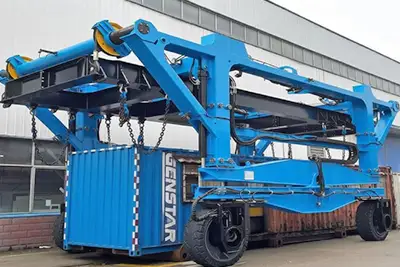
- Gantry and container-handling cranes: Designed for outdoor yards, spans vary widely; must handle environmental challenges like wind and corrosion.
Practical insight: Always account for maximum load plus safety margin when specifying a crane for Brazilian facilities.
The Brazilian market includes a mix of international and local suppliers, which affects pricing, availability, and buyer perception:
- European and Japanese cranes: Highly recognized for durability, precision, and advanced features. Often preferred for high-end, high-load operations but come at a premium.
- Chinese cranes: Gaining strong acceptance due to competitive pricing, customization options, and improved reliability. Increasingly used in workshops, steel mills, and ports.
- Buyers are gradually trusting Chinese cranes for medium to heavy-duty applications, especially when supported by local service networks.
Tip: Evaluate after-sales support, spare parts availability, and warranty terms alongside price when choosing between suppliers.
Types of Overhead Cranes for Brazilian Facilities
Choosing the right type of crane is critical for smooth operations, safety, and long-term efficiency. In Brazil, industrial facilities and construction sites use a variety of cranes depending on load, space, and operating environment. Understanding these types helps buyers make informed decisions.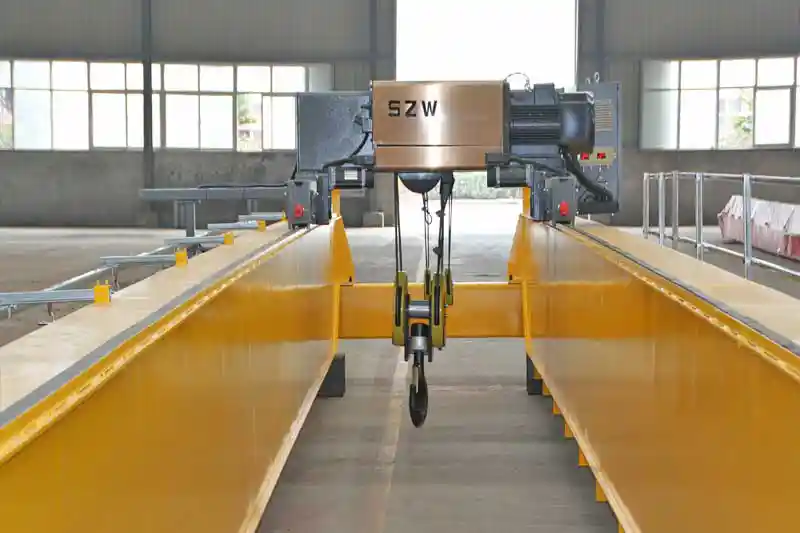
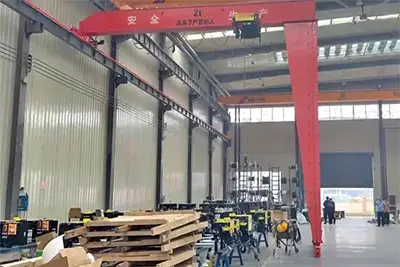
Single girder cranes are ideal for workshops, small factories, and maintenance facilities where loads are moderate and lifting heights are limited. They are simple, cost-effective, and easy to install.
- Typical load capacity: 1–10 tons
- Span range: 5–20 meters
- Applications: Assembly lines, small-scale manufacturing, light material handling
- Advantages: Lower installation cost, smaller footprint, easier maintenance
- Practical tip: Ensure the workshop ceiling height and runway beams can support the crane, and consider electrification options (hoist type, voltage compatibility) for optimal efficiency.
Double girder cranes are designed for high-load, high-frequency operations such as steel mills, large manufacturing plants, and heavy machinery handling. They provide greater lifting height, better stability, and longer service life.
- Typical load capacity: 10–100 tons
- Span range: 15–40+ meters
- Applications: Steel mills, foundries, heavy equipment manufacturing
- Advantages: Can handle higher loads, long spans, and heavy-duty operations with precision
- Practical tip: Verify runway beam strength, hook height, and lifting speed to match operational needs. Maintenance accessibility is crucial for high-frequency use.
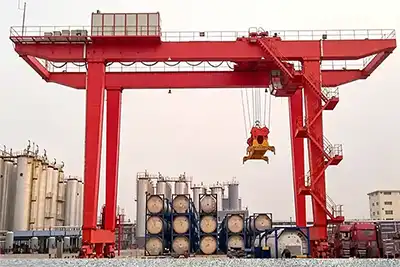
Gantry cranes are often used in ports, storage yards, and open construction sites where flexibility and mobility are key. They can handle large objects outdoors and are suitable for variable load patterns.
- Typical load capacity: 5–100 tons
- Span range: 10–50 meters or more
- Applications: Container handling, heavy machinery, large prefabricated components
- Advantages: Mobile, adjustable span, can operate on uneven surfaces
- Practical tip: Consider environmental factors like wind, rain, and corrosion. Outdoor gantry cranes may need weatherproofing or anti-corrosion coatings.
Certain industries require cranes customized for unique loads. In steel mills, coils and slabs may require magnetic or clamp hoists. In chemical plants, explosion-proof cranes ensure safety in hazardous zones.
- Applications: Steel slabs, steel coils, heavy machinery, chemical tanks
- Key considerations: Load shape, weight distribution, lifting frequency, environmental hazards
- Advantages: Tailored to specific material handling challenges, improves efficiency and safety
- Practical tip: Clarify load dimensions and lifting method with the supplier. For chemical handling, check ATEX or IECEx certifications and verify insulation and protective covers.
Practical takeaway: Selecting the right crane type is not just about load capacity—it's about matching crane design to your facility layout, operating environment, and the specific materials you handle. Proper selection improves efficiency, safety, and long-term performance of your operations.
Evaluating Chinese Overhead Cranes
When Brazilian buyers consider importing an overhead crane, Chinese manufacturers often come up as a practical option. Over the past decade, many factories, steel plants, and logistics facilities have started using cranes from China because they offer a balance between price and performance.
Still, buyers usually want clear answers before making a decision. Questions about durability, service support, and supplier credibility are common. Looking closely at both the advantages and the challenges helps buyers evaluate whether a Chinese crane fits their operation.
For many facilities in Brazil, the main attraction is value. Chinese crane manufacturers typically provide a wide range of lifting solutions with flexible configurations, which allows buyers to match equipment closely to their operating needs.
Common advantages include:
- Cost efficiency for industrial operations: Compared with many European or Japanese cranes, Chinese overhead cranes usually come with a lower upfront price. For workshops installing several cranes or large plants equipping multiple bays, the cost difference can be substantial.
- Flexible customization options: Manufacturers often adjust crane parameters to match the facility. This can include span length, lifting height, hoist speed, control system, and protective features for outdoor or humid environments.
- Faster production and delivery cycles: Many suppliers maintain streamlined production lines and standardized components. This can shorten lead times, which is helpful when projects have tight construction schedules.
- Wide capacity range: Buyers can source everything from small workshop cranes to large industrial lifting systems from the same supplier.
Typical capacity ranges offered include:
- 2–10 ton overhead cranes for workshops and light manufacturing
- 10–30 ton cranes for general industrial production lines
- 30–100 ton cranes for heavy industries such as steel plants or equipment manufacturing
Practical note: Even when price is attractive, buyers should still evaluate operating costs, maintenance needs, and service availability.
Although Chinese cranes have gained wider acceptance, some buyers remain cautious. Most concerns focus on long-term performance and technical details rather than basic functionality.
Typical concerns include:
- Brand recognition in high-end industries: In sectors like heavy steel production or precision manufacturing, some companies still prefer long-established European brands because of their reputation for durability and engineering precision.
- Long-term reliability under intensive use: Facilities that run cranes continuously—such as steel mills operating multiple shifts—often want strong assurance that the equipment will handle heavy duty cycles over many years.
- Precision and control performance: Certain operations require highly accurate positioning, synchronized lifting, or advanced automation systems. Some buyers worry about whether lower-cost cranes provide the same level of control accuracy.
These concerns do not necessarily mean Chinese cranes are unsuitable. But they highlight why buyers should review technical specifications and operational requirements carefully.
Practical tip: When evaluating a crane for heavy-duty applications, check duty classification, motor quality, gearbox design, and control system stability, not just lifting capacity.
Assessing Chinese Crane Suppliers for Brazilian Buyers
Choosing the right manufacturer is often more important than choosing the crane model itself. A reliable supplier should provide clear technical information, certifications, and strong service support. Buyers usually review several areas before confirming a purchase.
Certifications show that the crane design follows international manufacturing and safety standards. Look for documentation such as:
- CE certification for equipment compliance
- ISO quality management systems
- Inspection reports from independent third-party agencies
These documents help confirm that the crane meets recognized safety and production standards.
A good supplier should be able to adjust the crane design based on the facility layout and operational requirements. Questions buyers often ask include:
- Can the crane match the building span and runway beam layout?
- Is the hoist suitable for the lifting frequency and duty cycle?
- Can the crane be adapted for high humidity, dust, or outdoor operation?
Suppliers that ask detailed technical questions before quoting usually provide more reliable solutions.
Reliable service is essential for long-term crane operation. Buyers typically want to know how quickly spare parts can be delivered and whether technical assistance is available. Important service considerations include:
- Availability of spare parts for hoists, motors, and electrical systems
- Remote technical support or local service partners
- Clear maintenance documentation and inspection guidance
Practical tip: Ask suppliers how they handle critical component replacement and whether they keep spare parts stock for international clients.
Chinese overhead cranes can be a practical solution for many Brazilian facilities, especially when cost control and flexible customization are priorities. However, selecting the right supplier and reviewing technical specifications carefully makes a big difference in long-term performance.
Before making a purchase, buyers should:
- Compare crane specifications with actual load requirements
- Review certifications and inspection documentation
- Confirm service support and spare parts availability
- Evaluate whether the crane duty class matches the intended workload
Taking these steps helps ensure that the crane not only fits the budget but also operates safely and reliably for years.
Practical Buying Considerations for Brazilian Buyers
Buying an overhead crane is not only about choosing a lifting capacity. For many industrial buyers in Brazil, the real challenge is making sure the crane fits the building, the workload, and the operating environment. A crane that looks perfect on paper may not perform well if the facility conditions or power supply are overlooked. Before requesting a quotation, it helps to review several practical factors.
The physical structure of the building plays a major role in crane selection. Many workshops or warehouses already have structural limitations that affect crane installation.
- Ceiling height and available hook travel: Ensure enough vertical space for lifting operations, especially for tall equipment or stacked materials.
- Runway beam strength and alignment: Beams must support the crane structure, trolley, and maximum lifted weight.
- Building column spacing: Determines the possible span of the overhead crane.
- Floor load capacity: For gantry cranes or support columns, the floor/foundation must handle the load safely.
Practical tip: Evaluate both crane and building structure at the same time to prevent installation issues.
Understanding what the crane will actually lift is critical. A crane lifting heavy loads occasionally has different requirements from one operating continuously on a production line.
- Maximum lifting capacity: Crane should handle the heaviest load with a safety margin.
- Lifting frequency: High-cycle operations need stronger motors, gearboxes, and higher duty classifications.
- Type and shape of the load: Different objects require different lifting devices.
Typical Brazilian industrial loads include steel slabs, coils, machinery, and containers.
Practical tip: Clarify maximum combined weight for irregular or bundled loads.
Brazil's climate varies, and environmental conditions can affect crane performance and lifespan.
- High humidity or coastal air: May require corrosion-resistant coatings and sealed electrical components.
- Dust and particles: Mining and cement plants need well-protected motors and controls.
- High temperature environments: Steel plants may need heat-resistant components and specialized hoists.
- Chemical exposure: Some facilities require explosion-proof or insulated equipment.
Practical tip: Environmental protection features extend service life and reduce maintenance costs.
Electrical compatibility is critical. Brazilian industrial facilities often have:
- 220V or 380V systems
- Three-phase industrial power
- 50 Hz or 60 Hz frequency depending on equipment
Important checks:
- Main power supply voltage
- Frequency compatibility
- Control system requirements
- Emergency stop and safety circuits
Practical tip: Confirm electrical specifications early to avoid installation delays.
Even the best crane needs routine maintenance. Spare parts availability is critical for minimizing downtime.
- Availability of motors, gearboxes, and electrical system components
- Lead time for replacements
- Local service partners or technicians
- Maintenance manuals and inspection guidance
Practical tip: Establish a preventive maintenance schedule and keep critical spare parts available.
Successful crane installations result from careful planning. Consider facility structure, workload, environment, and maintenance.
- Building dimensions and runway beam capacity
- Maximum load and lifting frequency
- Environmental conditions
- Electrical compatibility
- Spare parts availability and service support
Taking these steps helps prevent delays, reduces maintenance costs, and ensures safe, reliable operation over the crane's service life.
Conclusion
Brazil continues to be an active market for industrial lifting equipment. Growth in manufacturing, mining, logistics, and infrastructure keeps demand for overhead cranes steady. For many buyers, Chinese crane manufacturers have become a practical option because they offer competitive pricing, flexible configurations, and a wide range of lifting capacities.
At the same time, choosing the right crane requires careful evaluation. A crane must match the facility structure, the type of loads handled, and the operating environment. Without these checks, even a well-built crane may not deliver the expected performance.
Key Points to Remember
When evaluating cranes for Brazilian facilities, buyers should focus on several practical aspects:
- Value and flexibility
Chinese overhead cranes often provide cost-efficient solutions and allow customization for different spans, lifting heights, and operating conditions. - Technical suitability
The crane should match the actual load requirements, lifting frequency, and duty classification of the facility. - Facility compatibility
Ceiling height, runway beam strength, and electrical supply must be verified before installation. - Environmental protection
Humidity, dust, coastal air, or chemical exposure may require special coatings, sealed components, or explosion-proof equipment. - Service and spare parts availability
Reliable maintenance support and quick access to replacement parts are essential for long-term operation.
Before making a purchasing decision, it is wise to gather detailed technical information and discuss the project with experienced crane suppliers.
Buyers are encouraged to:
- Request detailed quotations with clear technical specifications
- Provide facility drawings or layout dimensions for proper crane design
- Confirm power supply requirements and installation conditions
- Ask for engineering recommendations based on the specific loads and applications
A short technical consultation at the early stage can often prevent installation problems later.
In the end, the goal is simple: choose a crane that fits the facility, handles the workload safely, and operates reliably for many years. Careful planning and open communication with the supplier make that possible.
FAQ – Practical Buyer Questions (Brazil Market Focus)
Industrial buyers in Brazil often have very practical concerns when sourcing overhead cranes, especially when considering imported equipment. The questions below reflect common issues discussed during project planning, technical consultations, and supplier negotiations.
The most suitable crane depends on facility layout, load capacity, and operating environment.
Single girder overhead cranes are widely used in workshops and assembly plants for moderate loads. Double girder overhead cranes are more common in steel mills and heavy equipment plants. Gantry cranes are ideal for outdoor areas like ports and construction sites.
Typical applications:
- Workshops and production lines lifting machinery components
- Steel plants handling slabs, billets, or coils
- Logistics yards moving heavy equipment or containers
- Mining support facilities handling bulk materials
Choosing the right crane type starts with understanding load weight, span, lifting height, and daily operating cycles.
Yes, when designed correctly, Chinese cranes can handle heavy loads such as steel slabs, coils, or mining components.
Key reliability factors include:
- Crane duty classification
- Quality of motors, gearboxes, and brakes
- Proper lifting attachments (magnetic lifters, clamps)
- Structural strength of the main girder and trolley
Practical tip: Provide accurate load dimensions, weights, and lifting frequency to the supplier.
Maintenance planning is critical, especially for imported equipment.
- Availability of spare parts for hoists, motors, gearboxes, and electrical systems
- Estimated delivery time
- Access to technical documentation and manuals
- Remote assistance or local service partners
Routine maintenance includes inspecting wire ropes, hooks, brakes, motors, and electrical panels.
Yes. Cranes must comply with Brazilian workplace safety regulations and engineering standards, including:
- Load safety and structural integrity
- Electrical safety and grounding
- Routine inspections and maintenance
- Operator training and safety controls
International standards like CE and ISO can guide imported crane selection, but local compliance is mandatory.
Practical tip: Check the required inspection and certification process before commissioning.
Decision factors: load weight, span length, operating environment.
- Single girder: Light loads, shorter spans, cost-effective, ideal for workshops.
- Double girder: Heavier loads, higher lifting heights, better stability, suitable for steel plants and large warehouses.
- Gantry: Outdoor use, flexible across open ground, ideal for ports and construction sites.
Review facility drawings, runway beams, and material flow when planning a crane system.
Brazilian industrial sites may need cranes adapted to humidity, coastal air, dust, or heat.
- Corrosion-resistant coatings
- Sealed electrical components
- Weatherproof covers for hoists and motors
- Heat-resistant components for steel plants
- Explosion-proof designs for chemical or hazardous areas
Correct protection measures reduce maintenance and extend service life.
Total project cost is more than just equipment price. Key elements:
- Equipment price and configuration
- Shipping and logistics
- Installation and commissioning
- Structural work (runway beams, supports)
- Spare parts and maintenance planning
- Technical support or service contracts
Practical tip: Request a complete project quotation including specs, delivery, installation guidance, and service support.