Gantry Crane Selection Guide for Space Optimization and Layout Planning
A Frame vs U Frame vs L Frame Gantry Crane Selection Guide for Space Optimization and Industrial Layout Planning
Compare A frame, U frame, L frame gantry cranes for space optimization, workshop layout, yard logistics, container handling, and industrial crane selection.
Most Important Takeaway
In real gantry crane selection for sale, frame structure is not a secondary option. It is a core decision that directly affects industrial crane layout planning, workshop space utilization, and outdoor yard lifting efficiency.
If the gantry crane frame type does not match the site space conditions, factory layout design, and material flow direction, even the correct gantry crane capacity (tonnage) will lead to poor performance, installation issues, or limited working reach.
Key Takeaways
- Gantry crane frame selection is driven by space optimization and layout design, not only price or tonnage
- A frame, U frame, and L frame gantry cranes are designed for different industrial lifting environments and material handling systems
- Wrong selection often leads to space interference, reduced working clearance, and inefficient material flow in warehouse or yard operations
- Proper frame selection improves loading efficiency, container handling performance, and workshop production flow
- Frame structure directly impacts gantry crane installation planning, site engineering layout, and long-term operational safety
Questions This Guide Solves
In real gantry crane selection for sale, most buyers are not only looking at technical specifications. They are trying to solve practical site problems like layout limitation, loading direction, and working space usage. This section summarizes the most common buyer questions from real industrial projects such as warehouse material handling systems, steel fabrication plants, logistics yard operations, and construction lifting sites.
If you are planning a factory gantry crane installation or outdoor yard lifting system, these questions usually come up first during decision making. So, it is worth going through them one by one.
This is usually the first question in any industrial gantry crane selection process. The answer depends on your actual site space and working environment.
- A frame gantry crane → suitable for general indoor workshop and outdoor yard use with standard layout conditions
- U frame gantry crane → suitable for container yard and logistics handling systems with high clearance requirements
- L frame gantry crane → suitable for narrow, irregular, or space-restricted industrial layouts
In practice, the decision is not about price first. It is about matching the crane structure to your real working space.
In real gantry crane engineering projects, this comparison is mainly about space and material flow direction.
- A frame → balanced solution for general factory lifting and warehouse material handling
- U frame → open clearance design for container handling and logistics yard operations
- L frame → special layout solution for restricted outdoor or irregular working spaces
Simple way to understand: A frame is general use, U frame is open yard logistics, L frame is space problem solver.
Different industries require different industrial gantry crane systems. Load type and working frequency decide the structure more than anything else.
- Container handling → U frame gantry crane or RTG/RMG systems for logistics yards
- Steel fabrication → double girder or box girder gantry crane for heavy-duty lifting operations
- Workshop lifting → A frame or single girder gantry crane for medium-duty daily operations
In real projects, matching crane type with industry application is more important than choosing the highest specification.
In gantry crane installation planning, space limitation is one of the most critical factors. Many selection mistakes happen when this is ignored.
- Narrow workshop space may require L frame or compact single girder systems
- Open yard space allows full gantry or U frame design for better movement flexibility
- Container or logistics flow areas need clearance-focused designs to avoid blockage
In simple terms, if space is not checked first, even a correct tonnage crane can fail in real operation.
This question is common in industrial material handling system planning. The correct answer depends on the working environment.
- Warehouse material handling → A frame gantry crane or single girder system for daily lifting operations
- Logistics yard operation → U frame or RTG gantry crane for container and bulk cargo handling
- Construction site lifting → L frame or truss girder gantry crane for temporary and flexible installation work
In real applications, the working environment decides the frame type more than the load alone.
Gantry Crane Frame Types in Industrial Space Optimization and Layout Design
In modern industrial material handling systems, gantry crane frame structure is mainly used to solve one key engineering problem: how to improve lifting efficiency while still matching real factory layout design, outdoor yard space conditions, and material flow direction.
In practical projects like warehouse logistics systems, steel plant production lines, port container yards, and construction lifting sites, frame selection directly affects how the crane actually works on site. And honestly, this is where many buyers first feel “something is not right” if the frame type is not properly matched.
In real industrial projects, gantry crane frame structure is not just a drawing detail. It has a very direct impact on site operation. You can think of it like this: the crane may have the right tonnage, but if the frame does not fit the space, it simply won’t work smoothly.
It is closely connected with industrial layout planning, workshop space utilization, and outdoor yard logistics efficiency.
Typical real applications include:
- warehouse loading and storage zones
- steel fabrication and heavy manufacturing workshops
- port container yards and logistics terminals
- construction material lifting and temporary working sites
In actual gantry crane installation projects, frame type selection will directly influence daily operation. This is not theory. It is something you see immediately on site, sometimes only after installation starts.
Main factors affected by frame structure in real projects:
- Crane travel clearance and working space usage
If the frame type is not suitable, the crane legs or structure may block truck access routes or reduce usable working area in warehouse or yard operations. This is a very common issue in tight layouts. - Loading and unloading efficiency in daily operation
In logistics yard gantry crane systems, wrong frame selection can slow down container handling or make truck positioning less smooth. Over time, this affects overall productivity. - Installation feasibility in existing factory layout
In some workshop gantry crane projects, the structure simply cannot be installed properly if the building space or yard layout is irregular. This is where planning really matters. - Material flow direction and safety in operation
In steel plant gantry crane systems or production line lifting, poor frame matching can interrupt material movement. It can also create unnecessary turning or repositioning during lifting work.
So in simple words, gantry crane frame selection is really about one thing: matching the crane with the real working space. Not just picking a model from a list.
And in most real projects, engineers or buyers will first look at the layout condition, then decide the frame structure type, and only after that move to capacity and price.
A Frame Gantry Crane – General Purpose Industrial Layout Solution for Indoor and Outdoor Use
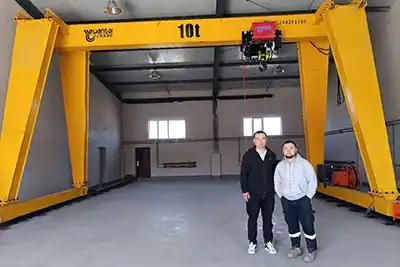
The A frame gantry crane system is one of the most widely used structures in real industrial projects. In simple terms, it is the "all-round" type. It fits many working sites because it offers balanced stability and adapts well to both indoor workshop gantry crane systems and outdoor yard material handling operations.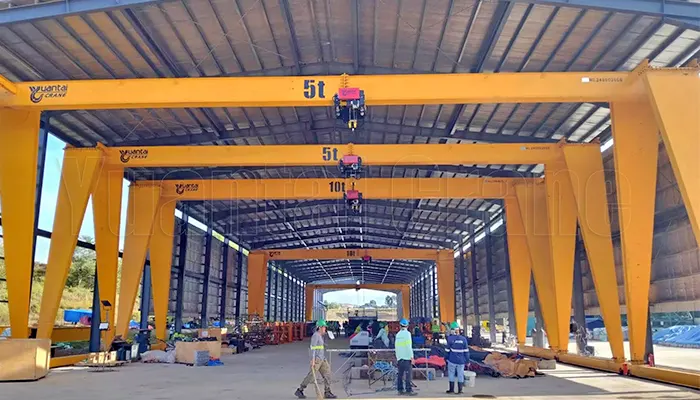
A frame gantry crane
In real purchasing situations, this type is often selected when the site does not have extreme space limitations. It basically "fits most normal factory layouts", and many buyers see it as a safe starting point for gantry crane selection for sale.
Its symmetrical structure provides stable load distribution. In practical operation, this means smoother lifting, less swing, and more predictable movement. Because of this, it is widely used in warehouse logistics systems, medium-duty production workshops, and general industrial material handling environments.
In real engineering projects, A frame gantry cranes are used in many standard working conditions. The key point is flexibility. It does not require complex layout modification or special structural planning.
Typical application scenarios include:
- Indoor workshop gantry crane systems for assembly line material handling and production lifting operations
- Warehouse gantry crane systems for loading, unloading, and daily logistics material handling tasks
- Outdoor gantry crane use in semi-open industrial yards with normal environmental exposure
- General factory layouts where space is standard, not narrow or irregular, allowing simple installation
In many factories, this is usually the first gantry crane type considered for general lifting requirements. It is simple and practical.
The A frame gantry crane is designed for general industrial lifting applications. It is not focused on extreme heavy-duty port work or container systems, but on everyday factory and workshop material handling.
Common materials handled include:
- Steel structural components, fabricated parts, and welded assemblies
- Mechanical equipment and machine assemblies used in production lines
- Palletized goods in warehouse logistics and storage systems
- Medium-duty industrial materials used in workshops and manufacturing plants
In real operation, it usually handles "general purpose loads" in the middle range of industrial work. Not too light, not extremely heavy.
In practical gantry crane procurement, buyers often choose the A frame structure because it matches real site conditions without complex engineering changes.
Main advantages in real industrial use:
- Works in both indoor workshop and outdoor yard environments with minimal adjustment
- Fits most standard factory layout design and warehouse space planning conditions
- Provides stable performance for daily industrial material handling and production lifting tasks
- Easier installation compared to more specialized structures like U frame or L frame gantry cranes
In many real projects, buyers start with A frame when layout conditions are not fully complex or unclear. It is often the most "straightforward practical choice" in general gantry crane selection.
U Frame Gantry Crane – High Clearance Solution for Container Handling and Logistics Yard Operations
The U frame gantry crane system is mainly used in logistics-heavy projects and container handling gantry crane applications. In real industrial work, this type is chosen when one thing is very clear: you need enough clearance for large cargo to move through the crane without getting blocked.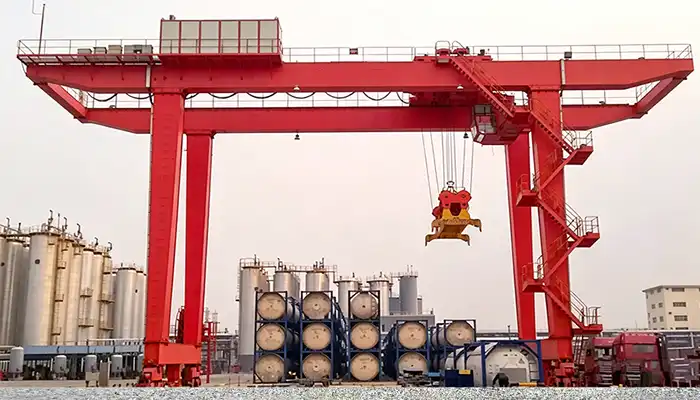
U frame rail mounted gantry crane for industrial uses
To put it simply, when you are handling containers or oversized materials in a yard, a normal gantry crane frame can sometimes "get in the way". That is exactly where the U frame structure becomes practical and widely used.
Its open lower design provides a clear passage space. Because of this, it is commonly found in port container yards, logistics distribution centers, and large outdoor freight terminals where material flow is continuous and efficiency matters every day.
In real projects, U frame gantry cranes are mostly used in open yard environments. The layout is usually wide, and cargo movement is frequent. So clearance and smooth travel paths become the main concern.
Typical application scenarios include:
- Container yard gantry crane systems used in port terminals and shipping logistics operations
- Logistics gantry crane setups in warehouse distribution centers for cargo loading, sorting, and dispatch
- Outdoor gantry crane systems in large open storage yards where oversized materials are handled daily
- Freight handling systems requiring high clearance design for truck access and smooth yard circulation
In practice, this type is rarely used inside workshops. It is mainly a yard and logistics solution.
The U frame gantry crane is designed for large-scale and high-clearance material handling. In real industrial environments, the focus is not small parts, but heavy and bulky cargo.
Common loads include:
- Shipping containers used in port and international logistics systems
- Heavy steel structures and prefabricated industrial modules
- Bulk cargo, oversized equipment, and irregular-shaped industrial materials
- Logistics units and transport goods used in yard stacking and dispatch operations
In real use, it is more about "big size, heavy weight, and wide handling space" rather than small workshop lifting tasks.
In practical gantry crane selection for sale, U frame design is chosen when yard space flow and clearance are more important than compact structure design.
Main advantages in real industrial applications:
- Improves space utilization in container handling and logistics yard operations
- Supports smoother loading and unloading of trucks and container transport systems
- Reduces blockage in material flow direction across large outdoor industrial areas
- Works well in high-capacity logistics environments with continuous operation demand
In short, when the project is focused on containers, freight movement, and open-yard logistics, the U frame gantry crane is usually the more practical and commonly selected option.
L Frame Gantry Crane – Space-Limited Industrial Solution for Narrow and Irregular Layouts
The L frame gantry crane structure is designed for restricted space conditions and irregular industrial layouts. In many real projects, this type is selected when standard gantry crane installation simply cannot fit the site. It is often a practical solution for outdoor edge areas, narrow working zones, and special layout industrial projects where space is not "clean and regular", so to speak.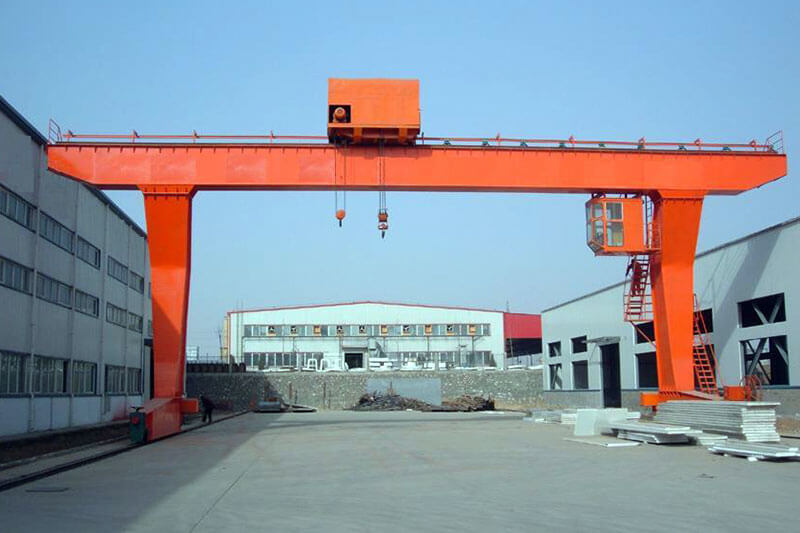
L frame gantry crane
It is commonly used in construction sites, edge yard zones, and narrow industrial corridors where flexible structural adaptation is needed for safe lifting and controlled material handling.
In real industrial projects, L frame gantry cranes are mainly used when available space is limited or irregular. The structure allows installation in areas where normal A frame or U frame cranes cannot be properly arranged.
Typical application scenarios include:
- Construction site gantry crane for temporary lifting operations and installation work
- Industrial edge zone gantry crane for restricted outdoor yard areas
- Narrow workshop or corridor lifting systems with limited installation space
- Special layout industrial projects requiring custom crane positioning and space adaptation
The L frame gantry crane is not designed for extremely heavy or continuous port operations. Instead, it is used for medium industrial materials where space limitation is the main concern.
Common materials handled include:
- Construction steel bars, beams, and structural pipes
- Medium industrial equipment and machinery components
- Prefabricated construction modules used in building projects
- General engineering materials in outdoor construction environments
In practice, buyers choose L frame gantry cranes when they need a solution that fits into difficult layouts. It is often used as a "problem-solving" structure in restricted industrial sites.
Main advantages in real use:
- Solves installation problems in narrow or irregular industrial spaces
- Allows safe lifting operation where standard gantry cranes cannot be installed
- Improves usable space in edge zones and constrained yard layouts
- Provides flexible adaptation for custom engineering and site-specific requirements
In real gantry crane selection projects, L frame design is usually not the first choice. It is selected when space conditions force a special layout solution.
If your site is narrow, uneven, or partially blocked by buildings or structures, L frame gantry crane becomes a practical option. It is often used in combination with site-specific engineering design to ensure safe and workable lifting operations.
Practical Gantry Crane Frame Selection Logic for Industrial Buyers
In real gantry crane engineering design and industrial procurement projects, frame selection is not something you do randomly. It follows a clear, practical order. If you skip steps, you often end up with layout problems or inefficient material handling on site.
In most cases, whether it is a warehouse gantry crane system, steel fabrication plant lifting equipment, port container handling crane, or construction site gantry crane, the selection logic is quite similar. You start from space, not from price.
The first thing in any gantry crane layout planning is to understand the real site condition. Not on paper only, but the actual available space.
- Check indoor workshop or outdoor yard space availability
- Confirm runway length, clearance height, and installation limits
- Identify obstacles like buildings, storage racks, or container stacks
After space, the next key point is how materials move. In real industrial projects, this affects daily efficiency more than people expect.
- Define loading and unloading direction in warehouse or yard
- Check truck access routes and container movement paths
- Understand production line or assembly flow in workshops
Now you match the structure. This is where A frame, U frame, or L frame gantry crane selection becomes clear.
- A frame gantry crane for general indoor and outdoor factory layouts
- U frame gantry crane for container handling and high clearance logistics yards
- L frame gantry crane for narrow, restricted, or irregular industrial spaces
After structure is clear, then you finalize technical details. This is where many buyers focus first, but in real projects, it actually comes last.
- Confirm lifting capacity based on real working load (tons)
- Define span and lifting height according to site layout
- Select hoist system (chain hoist or wire rope hoist)
- Confirm duty class based on working frequency (light, medium, heavy duty)
When this sequence is followed properly, the selected industrial gantry crane system for sale will match real working conditions in warehouse logistics systems, steel fabrication plants, port container yards, and construction lifting projects. It reduces mistakes and makes the installation much smoother on site.
Conclusion
A frame, U frame, and L frame gantry cranes are designed for different industrial space optimization and material handling requirements. In real projects, they are not interchangeable structures, even if the tonnage looks similar on paper.
In practical gantry crane selection for sale, the real difference comes from how well the crane matches your site layout, working space, and material flow direction. If the frame type is wrong, you will feel it during installation or daily operation.
Correct selection improves:
- warehouse and workshop layout efficiency in industrial material handling systems
- outdoor yard container handling performance in logistics and port operations
- industrial lifting safety and installation accuracy in factory crane systems
- long-term material flow optimization in production and warehouse logistics systems
In real engineering applications, the most effective gantry crane selection strategy is not choosing the highest tonnage or lowest price. It is selecting the frame structure that truly matches the actual industrial layout conditions, site space limitations, and material handling requirements.