From Lifting Equipment to Production Asset: Choosing the Right Crane
From Lifting Equipment to Production Asset: How to Choose the Right Crane for Industrial Projects
Introduction – Why Crane Selection Is More Than Choosing a Machine
Cranes are no longer just lifting equipment. In modern industrial operations, they are central to workflow, productivity, and safety. Picking the wrong crane can ripple through your entire operation. A small oversight at the selection stage—like choosing a crane that barely meets your current load or ignoring future expansion—can lead to hidden costs, downtime, and rework that add up over the crane’s life.
Many buyers think “all 10-ton cranes are the same.” In reality, a 10-ton crane in one factory can perform flawlessly, while another ends up underpowered, difficult to maintain, or inefficient because of span, lifting height, or duty cycle. Early planning saves money and stress down the line.
This guide is designed for:
- Steel mills and rolling facilities – where material flow and heavy loads are continuous.
- Fabrication and assembly plants – handling equipment and components that require precise positioning.
- Precast and concrete component yards – where repetitive lifting and outdoor exposure need durable solutions.
- EPC contractors – managing multiple industrial projects with complex lifting requirements.
- Expansion or greenfield project planners – aiming to future-proof operations and avoid expensive retrofits.
Key Points to Keep in Mind:
- Crane selection impacts throughput, labor efficiency, and safety, not just lifting ability.
- Consider current needs and future growth to avoid oversizing or undersizing.
- Decisions made early in planning directly affect installation, maintenance, and long-term costs.
Real Role of a Crane in Operations
A crane isn’t just a machine that moves loads from point A to point B. In a modern facility, it’s part of the material flow, affecting production speed, worker efficiency, and even safety outcomes. Choosing the right crane means thinking beyond tonnage—how it integrates into your workflow can make or break daily operations.
When planning, consider how often the crane will be used, the type of lifting tasks, and whether it needs to operate continuously or intermittently. The duty class and operational frequency determine the required steel strength, hoist size, and electrical system. A crane that’s under-specified will slow production, while an over-specified crane may unnecessarily increase cost and complexity.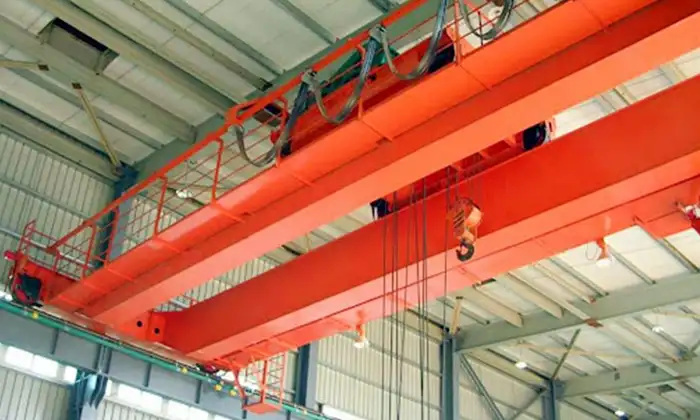
Cranes directly affect these critical areas:
- Throughput and production speed: A well-matched crane keeps materials moving efficiently, preventing bottlenecks on assembly lines, in warehouses, or on precast yards.
- Labor efficiency and operator workload: Proper crane sizing and control systems reduce manual handling, fatigue, and mistakes. Operators can work faster and safer with a crane that fits the workflow.
- Safety and regulatory compliance: Overloaded or poorly configured cranes increase risks, trigger maintenance issues, and may violate local safety standards.
- Flexibility for future expansion or layout changes: Choosing a crane with some margin for load, span, or lifting height ensures the facility can adapt to new production lines or larger components without costly retrofits.
Key Takeaways:
- Don’t look at cranes as isolated machines; see them as integrated workflow assets.
- Frequency, duty cycle, and material type are just as important as rated capacity.
- Investing time in proper specification upfront reduces long-term downtime, maintenance headaches, and operational inefficiencies.
Indoor vs. Outdoor Crane Systems: Strategic Trade-Offs
Choosing the right crane system is about more than just lifting capacity. It's about how the crane interacts with your site, production workflow, and long-term operational needs. Indoor and outdoor cranes each have advantages and trade-offs. Understanding them can help avoid unnecessary costs or downtime.
For facilities with roofs and controlled environments, indoor cranes are often the easiest and most cost-effective option. They protect equipment from weather and simplify maintenance.
- Compact and space-efficient, ideal for workshops with moderate spans.
- Lower initial investment due to lighter structure and simpler runway requirements.
- Minimal exposure to weather reduces corrosion, wear, and maintenance needs.
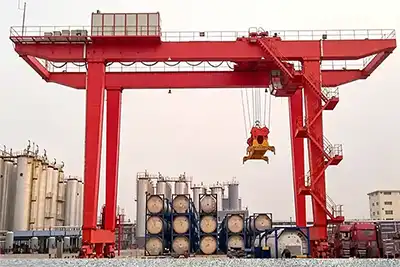
Outdoor bridge cranes are designed for heavy-duty, long-span applications. They require more planning upfront but offer reliable performance over time, especially in open yards or industrial plants.
- Supports higher lifting capacities and long spans with stable operation.
- Requires robust foundations and civil works, increasing installation costs.
- Weather-resistant components extend crane life in harsh environments.
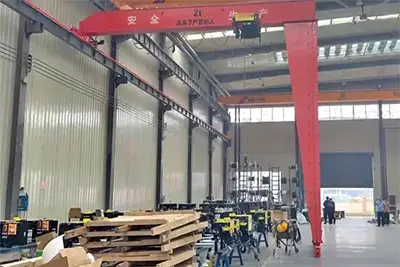
Gantry cranes provide flexibility and mobility. They are suitable for temporary setups or sites without permanent structures.
- Easy to relocate, allowing adaptable production layouts.
- Faster deployment with minimal structural preparation.
- Limited span or lifting height compared to fixed bridge cranes in some cases.
Before deciding, consider these practical factors:
- Structural investment vs. operational efficiency: Higher upfront costs can pay off with less downtime and longer service life.
- Maintenance under weather conditions: Plan for corrosion protection, lubrication, and inspections for outdoor cranes.
- Transportation, installation, and civil works: Include foundation, runway, and site prep costs in your budget.
- Why some "no-building" sites still choose bridge cranes: Stability, load capacity, and predictable performance often outweigh portability.
- Align crane type with site conditions, load needs, and workflow continuity.
- Portable or cheaper options are not always cheaper in the long run—consider total cost of ownership.
- Weather and structural requirements are often hidden costs that should influence selection.
Selecting the Right Crane Configuration (Beyond Lifting Capacity)
Choosing the right crane isn't just about the tonnage. How the crane is configured affects cost, efficiency, and long-term reliability. Small decisions made at this stage—like girder type or control systems—can save thousands in installation, maintenance, and future upgrades.
The girder type determines lifting height, span, and structural requirements. It's not always obvious which is better until you consider your site.
- Single girder cranes: lighter, easier to install, lower cost, suitable for short spans and moderate loads.
- Double girder cranes: higher hook heights, longer spans, and heavier loads; better for continuous or heavy-duty operations.
- Balancing span, hook height, and budget ensures the crane meets needs without overspending.
Design standards affect precision, safety, and compliance. European-style cranes often come with tighter tolerances and smoother operation.
- Offers higher accuracy and smoother hoisting, which can reduce product damage.
- Often comes with CE/FEM compliance, useful for international projects or strict safety requirements.
- Traditional designs may be simpler and more cost-effective but sometimes sacrifice advanced features.
How the crane interacts with runway beams affects structural investment and maintenance.
- Top-running cranes: run on rails above the building structure, better for long spans and heavier loads; need stronger runways.
- Underslung cranes: hoist hangs below the runway, lighter structure, lower installation cost, ideal for low-headroom workshops.
Some buyers fabricate their own girders locally to save on cost and shipping. Others prefer ready-to-install cranes.
- Crane kits: include hoists, end trucks, electrics, and controls; cost-effective for local assembly and customization.
- Complete cranes: pre-assembled, less on-site work, faster deployment, but usually higher upfront cost.
Standard cranes are often sufficient, but sometimes a small customization prevents major workflow or safety issues.
- Custom options: special hook blocks, remote controls, corrosion or explosion-proof modifications.
- Helps meet operational demands without overbuilding the crane.
- Proper evaluation of future expansion or heavier loads.
- Integration with existing runways, hoists, and trolleys.
- Long-term maintenance access and spare parts availability.
- Crane configuration impacts cost, performance, and lifespan far more than tonnage alone.
- Assess girder type, running method, and design standards before purchase.
- Decide between kits or complete cranes based on local fabrication capabilities and installation readiness.
- Consider customization only when it solves a real operational need, not just to add features.
Application-Specific Crane Solutions
Not all cranes are created equal. The type of material you handle and your working environment can drastically affect the right crane choice. Selecting a crane suited to your specific application improves efficiency, reduces downtime, and prevents costly mistakes.
Steel yards and mills require cranes that can manage heavy, sometimes awkward loads safely and quickly.
- Use clamp cranes for slabs and billets, ensuring secure lifting without damaging the steel surface.
- Electromagnetic cranes work well for handling steel plates and billets in continuous operations.
- Grab attachments are ideal for coils or irregularly shaped loads.
- Choosing the correct attachment improves speed, safety, and reduces product damage.
In precast concrete yards, placement accuracy and repeatability are critical for both safety and throughput.
- Cranes need fine positioning control to align heavy components accurately.
- Double girder overhead cranes or gantry cranes with precise trolleys are often preferred.
- Efficient layouts and smooth crane operation help maintain high daily output without extra labor.
Some workshops don't lift all day but require exact handling when they do, such as assembly or maintenance work.
- Single girder cranes often suffice, keeping costs lower while still supporting precision lifts.
- Smooth hoist movement and controlled lowering prevent damage to delicate machinery or tools.
- Focus on ease of maintenance and accessibility, since the crane may not run constantly but must be reliable.
Certain facilities face extreme conditions that standard cranes cannot handle.
- Heat-resistant cranes for furnaces or steelmaking operations.
- Explosion-proof or dust-proof cranes for chemical plants or grain handling.
- Corrosion-resistant materials for outdoor or chemical-exposed areas.
- Choosing the correct crane ensures operator safety, compliance, and equipment longevity.
- Crane choice must match the material type, lifting frequency, and environmental hazards.
- Specialized attachments and control systems can save time and reduce product damage.
- Ignoring the environment or application-specific requirements can increase operational risk and long-term costs.
Budgeting and Total Cost of Ownership (TCO)
When choosing a crane, the sticker price is only the beginning. A crane that looks cheap upfront can end up costing far more over its lifetime if you overlook hidden expenses. Thinking in terms of total cost of ownership (TCO) helps you make smarter, long-term decisions.
Initial Price vs. Lifecycle Cost
The purchase price is just one part of the equation. Over 10–20 years, energy, maintenance, and downtime often outweigh the initial investment.
- Compare upfront cost with projected operating costs, including inspections, repairs, and energy usage.
- Factor in how often the crane will run and whether it may need upgrades or replacements during its lifecycle.
Hidden Costs to Plan For
Some costs aren’t obvious until you start operating the crane. Planning for these can prevent unpleasant surprises.
- Runway beam mismatches or reinforcements: Light cranes may fit existing structures, but heavier or long-span cranes often need beam upgrades.
- Power supply compatibility and upgrades: Voltage, phase, and amperage requirements can mean additional electrical work.
- Maintenance access and inspection ease: Cranes that are difficult to inspect or service increase downtime and labor costs.
- Spare parts availability and downtime impact: Ensure parts are easy to source; otherwise, even a small repair can halt operations for days.
Rule of Thumb
The cheapest crane initially isn’t always the most cost-effective. A slightly higher investment in the right crane can save money, reduce downtime, and improve safety over its full lifecycle.
Key Takeaways:
- Always evaluate total cost of ownership, not just purchase price.
- Hidden costs like runway adjustments, power, maintenance, and spare parts can dramatically affect TCO.
- Planning ahead prevents the “cheap now, expensive later” scenario common in industrial lifting equipment.
Installation, Commissioning, and Long-Term Scalability
Installing a crane isn't just about putting it in place—it's about making sure it performs safely and efficiently for years. Proper planning at this stage avoids costly adjustments and downtime later.
Before a crane arrives, check that the runway beams, columns, and foundations can handle the crane's weight and span. Misaligned or weak structures can lead to safety issues and poor crane performance.
- Verify beam alignment and straightness; even small deviations affect travel smoothness.
- Inspect foundations for load-bearing capacity and level surfaces.
- Plan for vibration or deflection mitigation in heavy-duty or long-span cranes.
Electrical planning is key to avoid surprises during commissioning. The crane should integrate smoothly with your facility's power and control infrastructure.
- Confirm voltage, phase, and amperage requirements match the facility.
- Decide between pendant control, radio remote, or cabin operation based on workflow.
- Design automation or control upgrades early to allow future expansion.
Think ahead: production needs evolve, loads may increase, or new lifting points may be added. A crane designed for scalability saves both money and time in the long run.
- Ensure the crane frame can support potential heavier loads or longer spans.
- Plan for additional hoists or trolleys if future operations require multiple lifts.
- Choose systems that allow modular upgrades for hoists, drives, or safety devices.
Modern cranes often include software for monitoring, diagnostics, and automation. Make sure these systems can be updated or expanded as technology improves.
- Check compatibility with future PLC or control system updates.
- Ensure sensor and safety devices can be replaced or enhanced without major overhauls.
- Verify runway, alignment, and foundation before installation to prevent operational issues.
- Plan electrical and control systems to integrate seamlessly and support automation.
- Design for future expansion and load changes to protect your long-term investment.
- Upgrade-friendly systems reduce cost and downtime when adding features or increasing capacity.
How to Evaluate a Crane Supplier (Beyond Quotation)
Choosing the right crane supplier is about more than just price. The supplier's technical expertise, reliability, and long-term support can save you time, money, and headaches throughout the crane's life.
A supplier should clearly understand your lifting needs and workflow. Early technical discussions indicate whether they can provide a solution that fits your operation.
- Ask how quickly they respond to technical questions.
- Evaluate their ability to suggest options based on your actual workflow and lifting requirements.
- Look for clear, detailed engineering proposals rather than generic quotations.
A proper supplier will verify your facility conditions before quoting. Overlooking runway alignment, building clearance, or power supply can cause delays and extra costs.
- Check if they perform site surveys and measurements.
- Ensure they consider crane span, headroom, and obstructions.
- Confirm they account for future expansion or workflow changes.
Crane safety standards matter. Suppliers should provide documentation showing compliance with ISO, CE, FEM, or other local regulations.
- Request certification for materials, hoists, and electrical systems.
- Verify inspection reports and quality assurance procedures.
- Confirm the supplier can support audits or third-party inspections if needed.
A supplier who is attentive during the sale but disappears after installation can create serious problems. Long-term support is critical for maintenance, spare parts, and troubleshooting.
- Ask about warranties, service contracts, and response times.
- Check references or reviews from other industrial clients.
- Ensure they provide training or documentation for your operators and maintenance team.
- Evaluate suppliers on technical expertise, not just price.
- Accurate site surveys and data collection prevent costly mistakes.
- Certification and compliance reduce safety risks and liability.
- Long-term support and responsiveness are crucial for operational reliability.
Final Buyer Checklist
Before you send out a request for quotation (RFQ), it's important to have a clear understanding of your own requirements. Answering these questions upfront helps suppliers provide accurate proposals and prevents costly mistakes later.
Take a detailed look at your lifting needs and facility limitations. The more precise you are, the better the proposal you'll get.
- Maximum load, including attachments such as magnets, grabs, or slings.
- Duty cycle: how often and how continuously the crane will be used.
- Span and hook height requirements for your workflow.
- Building constraints: headroom, column spacing, and runway placement.
- Power supply: voltage, phase, frequency, and any special control system requirements.
- Installation and foundation needs: runway beams, floor load capacity, and accessibility for assembly.
A good supplier will ask detailed questions to tailor their solution to your actual operation.
- Detailed floor plan and crane path layout.
- Material types and weights to be handled.
- Required lifting attachments or automation features.
- Environmental conditions, such as outdoor exposure, heat, dust, or corrosive atmospheres.
- Future expansion plans for higher loads or additional cranes.
Watch for early warning signs that a supplier may not fully understand your needs or is trying to sell you a standard solution that doesn't fit.
- Missing compliance certifications (ISO, CE, FEM).
- Overspecified cranes that are heavier or more expensive than necessary.
- Vague or incomplete scope of supply, unclear responsibilities, or missing technical details.
- Lack of clarity on installation, testing, or after-sales support.
- Know your operational requirements in detail before requesting quotes.
- Ensure suppliers gather all critical site and workflow information.
- Avoid overspecification or vague proposals—clarity upfront saves time and cost.
- Prioritize compliance, installation support, and after-sale service when comparing offers.
Conclusion
Choosing the right overhead crane is not just a purchase—it’s a long-term production decision that can affect your facility for 10–20 years. Early-stage planning, careful specification, and clear communication with suppliers pay off far more than trying to negotiate a lower price later.
Key Takeaways:
- Think long-term: The crane you select today shapes workflow efficiency, safety, and productivity for decades.
- Focus on real operational needs: Match lifting capacity, span, duty cycle, and features to your actual workflow, not just the advertised tonnage.
- Consider total cost of ownership: Factor in installation, maintenance, energy, and potential downtime alongside the upfront cost.
- Engage suppliers early: Technical discussions help ensure the crane solution aligns with your material flow, future expansion plans, and specialized requirements.