For Capacities Under 20 Tons: When Double Girder Is Overkill
For Capacities Below 20 Tons, When Is a Double Girder Overkill?
For most lifting operations under 20 tons, a single girder overhead crane is the practical choice. Double girder cranes are generally only needed for high-frequency lifting, long spans, or extra hook height. Choosing the right crane type saves cost, reduces maintenance, and simplifies installation.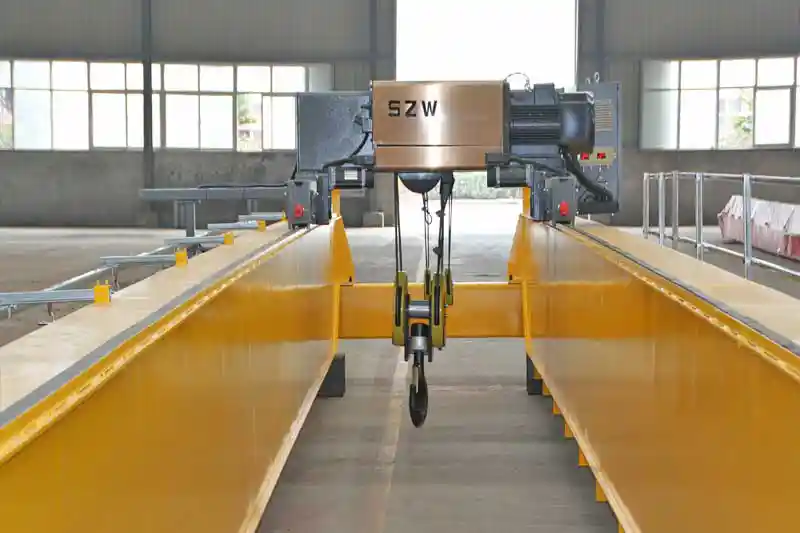 double girder overhead crane
For most lifting operations under 20 tons, a single girder overhead crane is the practical choice. Double girder cranes are generally only needed for high-frequency lifting, long spans, or extra hook height. Choosing the right crane type saves cost, reduces maintenance, and simplifies installation.
Questions Solved in This Article:
- When is a double girder crane really necessary under 20 tons?
- Can single girder cranes handle most industrial loads safely?
- How do factors like span, hook height, and duty cycle affect crane selection?
- What are the cost and maintenance differences between single and double girder cranes?
Single girder cranes are suitable for most operations under 20 tons, handling short-to-medium spans and low-to-medium duty cycles. Double girder cranes are generally reserved for heavier loads, longer spans, or continuous high-frequency lifting.
Single girder cranes can reliably handle most loads under 20 tons. They are sufficient for spans up to 25 meters and provide enough hook height for standard workshop and warehouse operations. Double girder cranes are only justified for unusually bulky loads, very tall lifts, or very long spans.
Low-to-medium frequency operations do not require the robustness of double girder cranes. Continuous or high-duty cycle lifting is the rare scenario where double girders might be needed. Most operations under 20 tons are well-served by single girder cranes.
Single girder cranes are lighter, simpler to install, and easier to maintain. Double girder cranes are heavier, more complex, and costlier to maintain over time. Proper planning helps reduce downtime and long-term costs.
Single girder cranes are significantly cheaper under 20 tons and offer faster ROI. Fewer parts, simpler inspections, and lower downtime make them cost-effective. Overspecifying with a double girder crane increases both upfront and long-term costs without real benefits.
Single vs. Double Girder Cranes
Choosing the right overhead crane comes down to understanding what each type is built for. Picking the wrong one can cost more upfront, increase maintenance, or simply be more than you actually need. Let's break it down.
A single girder crane has one main beam. The hoist trolley runs on top of this beam, making the system simple and efficient.
Why it works for most operations under 20 tons:
- Handles lifting capacities under 20 tons with ease.
- Ideal for short to medium spans, typically up to 25 meters.
- Works well for low-to-medium duty cycles where the crane isn't running constantly.
Key Benefits:
- Lower upfront cost than a double girder crane.
- Easier and faster to install.
- Fewer components mean simpler maintenance and lower long-term costs.
When to use it:
- Workshops or small factories.
- Assembly lines and light production areas.
- Situations where load heights and spans are moderate.
A double girder crane has two main beams, with the trolley running in between them. This design supports heavier loads and higher hook positioning.
When it makes sense:
- Lifting operations exceeding 20 tons or lifting large, bulky loads.
- Long spans where structural stability is critical.
- Continuous or high-frequency lifting, such as heavy production lines or warehouses.
Key Benefits:
- Higher lifting capacity and taller hook heights.
- Better suited for long-term, heavy-duty operations.
- Reduces stress on the structure for continuous use.
When it's necessary:
- Factories with tall equipment or stacked inventory.
- Facilities needing long-span coverage.
- Operations running cranes for multiple shifts every day.
- Single girder cranes are sufficient for most loads under 20 tons.
- Double girder cranes are usually only justified when span, hook height, or duty cycle is beyond standard limits.
- Always consider load weight, span length, hook height, and operation frequency before overspending on a double girder design.
Factors That Make a Double Girder Crane Overkill Below 20 Tons
Many people assume that a double girder crane is automatically “better.” The truth is, for most lifting operations under 20 tons, a double girder crane often brings extra cost, extra weight, and more maintenance without real benefits. Understanding the key factors can help you make the right choice.
Most factories lifting loads under 20 tons can rely entirely on a single girder crane. These cranes are strong enough for standard materials, machinery, and assembly components.
- Only consider a double girder if your load is unusually bulky or heavy, or if it requires very high hook positioning.
- For most workshops, single girder cranes meet everyday lifting needs efficiently.
- Over-specifying a double girder adds unnecessary expense and complexity.
The span of your crane—the distance it must cover—is another key factor. Single girder cranes handle short to medium spans up to around 25 meters without problems.
- Double girder cranes are mainly needed for long spans, where a single girder might sag or become unstable.
- If your factory floor or warehouse has a standard width, a single girder is usually more than enough.
Hook height often determines whether you need a single or double girder crane.
- Single girder cranes usually provide sufficient height for workshops, warehouses, and small assembly lines.
- Double girder cranes are only necessary when lifting tall items, stacked inventory, or oversized machinery.
- In most operations under 20 tons, you don't actually need the extra height a double girder offers.
- Single girder cranes meet the lifting requirements for most loads under 20 tons.
- Double girder cranes only make sense for special cases, such as extreme span, height, or continuous heavy-duty use.
- Choosing the right crane type can save money, reduce installation complexity, and lower maintenance needs.
How often your crane will run makes a big difference in deciding between single and double girder cranes.
- Low-to-medium frequency operations—like occasional lifting of materials or standard workshop use—don't need the extra robustness of a double girder crane.
- Continuous or high-duty cycles—for example, 24/7 production lines or heavy, repeated lifting—are the rare situations where a double girder might be justified.
- Overbuilding for duty cycle increases cost without improving performance if your crane isn't used heavily.
Practical tip: Check your operation's lifting schedule and load frequency. Most factories under 20 tons will find a single girder crane sufficient for daily use.
Installation and long-term maintenance are often overlooked but can be a significant part of the total cost of a crane.
- Single girder cranes are lighter, easier to install, and require fewer parts to maintain. They are ideal for smaller factories or workshops where installation speed and simplicity matter.
- Double girder cranes are heavier and more complex. They take more time to install and require more frequent maintenance checks, spare parts, and technical oversight.
- Choosing a double girder crane without need increases downtime and maintenance effort unnecessarily.
Practical tip: Think beyond the initial purchase price. Installation time, maintenance frequency, and spare part costs all add up over the crane's life.
Single vs Double Girder Overhead Crane Insights
Understanding cost, ROI, and practical applications helps buyers make the right choice between single and double girder cranes under 20 tons.
When choosing between a single and double girder crane under 20 tons, cost and long-term return are often the deciding factors. It's not just about the price tag—you also need to think about maintenance, installation, and how quickly your investment pays off.
Initial Cost
- Single girder cranes are significantly cheaper than double girder cranes for sub-20-ton capacities.
- The difference can be substantial, especially when buying multiple units for a workshop or production line.
- Avoid paying for extra capacity that your operation doesn't need.
Maintenance Costs
- Single girder cranes have fewer parts, which means inspections are quicker and simpler.
- Lower complexity results in reduced downtime and fewer unexpected repairs.
- Double girder cranes require more frequent checks, spare parts, and technical oversight, increasing long-term costs.
Return on Investment (ROI)
- Choosing the right crane for your actual lifting needs ensures faster ROI.
- Overspecifying with a double girder crane under 20 tons delays cost recovery and ties up capital unnecessarily.
- Single girder cranes provide a practical balance between purchase price, operating cost, and efficiency.
Practical Tip: Always calculate total cost of ownership, including installation, maintenance, and energy usage, not just the initial purchase price.
While single girder cranes handle most lifting tasks under 20 tons, there are a few specific situations where a double girder crane can make sense. Even then, the benefits should be weighed against the extra cost, complexity, and maintenance.
Situations Where Double Girders Are Useful:
- Tall equipment or high inventory racks: When lifting very tall machinery or stacking items in high storage, a double girder crane provides extra hook height.
- Continuous, high-frequency operations: Facilities running heavy lifting tasks 24/7 or multiple shifts may benefit from the structural strength and durability of a double girder design.
- Very long spans: Warehouses or production floors exceeding 25–30 meters may require a double girder crane to prevent girder deflection and maintain stability.
Practical Tip: Even if one of these conditions applies, double-check whether your actual loads, span, and duty cycle truly require it. Many operations can still manage with a single girder crane and avoid unnecessary costs.
Conclusion
For lifting operations under 20 tons, a single girder overhead crane is usually the most practical choice. Double girder cranes are often unnecessary unless your facility has special requirements, such as extremely tall loads, very long spans, or continuous, high-frequency lifting.
Choosing the right crane type doesn’t just affect upfront cost—it also impacts installation, maintenance, and long-term efficiency. Overspecifying with a double girder crane adds weight, complexity, and extra expense that most small-to-medium factories don’t need.
Bottom line:
- Match the crane to your actual lifting needs, not a “just in case” scenario.
- Single girder cranes are reliable, cost-effective, and easier to maintain for typical operations under 20 tons.
- Save money and simplify operations by avoiding unnecessary over-engineering.