Why Crane Prices Differ for Same Tonnage – Buyer Guide
Why Crane Prices Vary So Much for the Same Tonnage: Key Takeaways for Buyers
Most Important Takeaway:
Crane prices are not determined by tonnage alone. Factors like crane type, span, duty cycle, material quality, customization, and total cost of ownership can make cranes with the same lifting capacity vary significantly in price. Understanding these factors ensures you choose the right crane for your operation without overspending.
Key Takeaways
- Tonnage is just one factor: A 10-ton crane can range widely in price depending on type, design, and specifications.
- Single vs double girder cranes: Double girder cranes are more expensive due to heavier steel, higher lifting height, and durability for continuous operation.
- Span and hook height matter: Longer spans and taller lifts require more steel and larger components, driving up costs.
- Duty cycle impacts design: High-frequency or continuous lifting cranes need stronger components and higher-grade materials.
- Customization adds cost: Features like remote control, automation, explosion-proof hoists, magnets, or specialized clamps increase price.
- Material quality and certifications: Steel grade, branded hoists, CE/ISO/FEM compliance can significantly affect cost.
- Installation and maintenance: Costs for civil works, runway beams, and maintenance support should be included in the total price.
- Manufacturer location and logistics: Imported cranes, shipping, and tariffs can inflate the final cost compared to locally produced cranes.
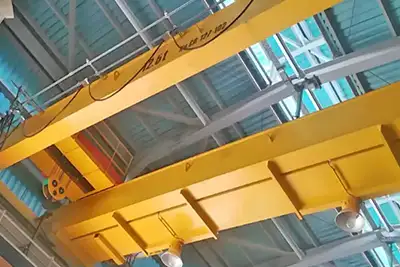
Main Factors Affecting Crane Prices
Choosing the right crane isn't just about picking a tonnage. Two cranes with the same lifting capacity can differ a lot in overhead crane price. Understanding the main factors that affect cost helps you make an informed decision and avoid overspending. Here's what you need to know.
The type of crane has a direct impact on both the purchase price and long-term costs. Not all cranes are built the same, even if their rated load is identical.
Single Girder vs Double Girder
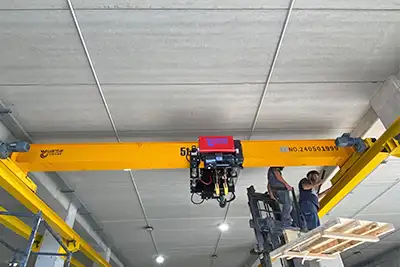
- Single girder cranes are lighter and simpler. They work well for shorter spans and moderate loads, usually under 20 tons. Installation is faster and less demanding on the building structure.
- Double girder cranes, on the other hand, are designed for higher lifting heights, heavier loads, and continuous or long-span operations. They use more steel, require stronger hoists, and last longer in heavy-duty environments. The extra material and complexity make them more expensive.
Top Running vs Under Running Cranes
- Top running cranes run on rails mounted on the building's runway beams. This setup requires stronger beams and often heavier crane components, which increases both material and installation costs.
- Under running cranes hang from the runway and are generally lighter. They are easier to install in workshops with limited headroom and don't require major structural upgrades.
The materials used in the crane frame, girders, and components directly affect safety, durability, and price.
- Steel Grade: Common options include S275 or S355. Higher-strength steel improves performance but costs more. Choosing the right grade depends on lifting load, duty cycle, and environmental conditions.
- Hoist and Trolley Components: Branded hoists and trolleys often cost more than generic ones, but they usually last longer and are easier to maintain.
- Compliance with Standards: Cranes certified to ISO, CE, or FEM standards ensure safety and reliability, but certification adds to production costs. Buyers looking for long-term reliability often consider certified cranes a worthwhile investment.
How often a crane is used and under what conditions changes both the design requirements and the price.
- Light-to-Medium Duty Cranes: These cranes have fewer moving parts, are easier to maintain, and cost less. They are suitable for workshops or warehouses where lifts are occasional and loads are moderate.
- Heavy-Duty or Continuous Operation Cranes: For operations running multiple shifts or frequent lifts, cranes need reinforced steel, stronger hoists, and more robust electrical systems. The design ensures reliability under constant stress but comes at a higher price.
The distance a crane must cover and how high the hook needs to reach can significantly affect cost. Long spans and tall hook heights require more material and careful engineering.
- Long spans need bigger girders and extra steel to prevent sagging or deflection.
- Tall hook heights often require double girder designs or reinforced sections for stability.
- Extra reinforcement increases both the material cost and the complexity of installation.
- Even small differences in span or hook height can add thousands to the final price, so it's important to define your exact needs before requesting a quote.
Cranes aren't one-size-fits-all. Adding specialized features changes both design and cost.
- Lifting tools like magnets, clamps, grabs, or dual hooks place additional stress on the crane structure.
- Automation options—including remote control, radio control, or cabin operation—require extra electronics and safety systems.
- Environmental features such as corrosion resistance, explosion-proof design, or outdoor-ready cranes increase manufacturing complexity and require higher-grade materials.
- Each customization may seem minor but can quickly increase total cost, especially for small workshops or short-span cranes.
Where your crane comes from matters as much as how it's built. Costs can vary significantly depending on production location and shipping requirements.
- Local vs imported cranes: Shipping fees, customs duties, and tariffs can add a large margin to the final price.
- Regional labor and production costs affect the base price of the crane. Cranes manufactured in regions with higher wages or stricter quality standards are often more expensive.
- Planning for logistics early—choosing local suppliers or factoring import costs—can prevent unexpected budget increases.
The cost of a crane doesn't stop at the factory gate. How and where it's installed, plus ongoing support, can significantly affect the overall investment.
- Runway beams and foundations: Heavier or longer cranes need stronger beams and reinforced foundations. Civil works can add a substantial cost, especially if the building wasn't originally designed for overhead cranes.
- Installation services: Assembly, alignment, and testing are often included by some manufacturers, while others may charge extra. Quality installation affects crane performance and lifespan.
- Maintenance and after-sales support: Regular inspections, lubrication, and spare parts supply are part of long-term costs. Choosing a supplier with accessible service teams or local support can reduce downtime and unexpected expenses.
- Planning matters: Coordinating installation logistics, such as crane lifting equipment, space clearance, and scheduling, avoids delays and extra labor charges.
Hidden Costs Buyers Often Overlook
When evaluating crane prices, it’s easy to focus on the sticker price and forget the small—but cumulative—expenses that appear later. These “hidden costs” can affect your total investment and operation efficiency.
- Electrical upgrades: Some cranes require high-voltage connections or upgraded circuits. Retrofitting an older building for a modern crane can add thousands to the project.
- Safety systems: Limit switches, overload protection, anti-sway devices, and other safety features aren’t optional in most operations. Installing them later can be costly.
- Energy consumption: Cranes run on electricity, and high-duty or continuous-use cranes consume significantly more power. Over years of operation, energy bills can rival the purchase cost.
- Spare parts and downtime: Every crane requires spare parts and maintenance. Unexpected breakdowns can halt production and create indirect costs. Factoring in inventory for critical components prevents costly delays.
Practical Buying Tips
When it comes to buying a crane, don’t just stop at the tonnage number. Two cranes with the same lifting capacity can have very different costs depending on their design, features, and operational fit. Thinking a bit beyond the basics can save money and headaches in the long run.
- Compare specifications carefully: Look at span, hook height, duty cycle, and optional features—not just lifting capacity. These factors determine whether the crane truly fits your workflow.
- Assess real operational needs: Avoid overspecifying. If your loads are under 20 tons and work is intermittent, a single girder crane may be enough. Buying heavier or more complex cranes than necessary ties up capital.
- Calculate total cost of ownership: Factor in installation, foundation work, maintenance, spare parts, energy use, and potential downtime. Sometimes a slightly more expensive crane upfront is cheaper over its lifetime.
- Check manufacturer reliability: Warranty, after-sales support, and local service availability matter. A reputable manufacturer ensures smoother installation and quicker troubleshooting when problems arise.
Practical Takeaway:
A smart crane purchase balances upfront price with long-term usability. Consider specs, real needs, and total ownership costs rather than just the rated tonnage.
Conclusion
Cranes with the same tonnage can vary widely in price, and it’s rarely just about the lifting capacity. Factors like crane type, material quality, duty cycle, span, hook height, and special features all play a role. Hidden costs—installation, foundations, maintenance, and energy use—can further increase the total investment.
Smart buyers focus on matching the crane’s capabilities to real operational needs and evaluating the total cost of ownership rather than only the initial purchase price. Understanding these factors helps you choose a crane that provides reliable performance, safety, and efficiency while keeping long-term costs manageable.
FAQ: Why Crane Prices Vary So Much
Questions Solved Here:
Two cranes of the same tonnage can differ in price due to factors like crane type, material quality, duty cycle, span, hook height, and included features. Hidden costs such as installation, maintenance, energy consumption, and safety systems also affect the final price.
Single girder cranes are lighter, simpler, and cheaper, suitable for moderate loads and shorter spans. Double girder cranes allow higher hook heights, heavier loads, and long-span stability, but cost more in materials, installation, and maintenance.
Cranes with light-to-medium duty cycles are less expensive because they use fewer parts and lower-spec components. Cranes designed for continuous or multi-shift operation require stronger steel, higher-quality hoists, and more robust electrical systems, which drives up the cost.
Longer spans and taller hook heights demand extra steel, larger girders, and reinforced trolleys. Special lifting attachments like magnets, grabs, dual hooks, or automation add complexity and increase manufacturing costs.
Hidden costs often overlooked include electrical upgrades, safety devices, energy consumption, spare parts inventory, civil works like runway beams and foundations, and downtime expenses.
Total cost of ownership includes the initial purchase price plus installation, foundation work, maintenance, energy use, and potential downtime. Comparing cranes based on these factors, not just tonnage, ensures smarter investment and long-term savings.