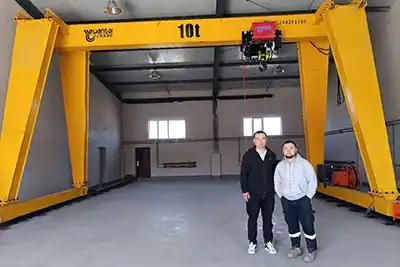
Optimizing PV module storage with a 15-ton gantry crane
Most Important Takeaway
Implementing a 15-ton full gantry crane for outdoor solar module storage can dramatically improve efficiency, safety, and workflow reliability in large PV facilities, reducing module damage and operational bottlenecks.
Key Takeaways (Bullet Points)
- Maximized Efficiency: Faster lifting, stacking, and repositioning of large solar modules.
- Enhanced Safety: Reduces manual handling, limits operator exposure to hazards, and ensures stable module placement.
- Damage Prevention: Controlled handling decreases module breakage, surface scratches, and misalignment.
- Optimized Workflow: Streamlined module storage paths, stacking patterns, and crane mobility improve yard operations.
- Scalable Solution: Supports future expansion for larger PV facilities or heavier module loads.
- Operational Reliability: High uptime with minimal maintenance interruptions, suitable for long-term outdoor deployment.
Introduction
Managing solar modules in large PV facilities is more than just stacking boxes in a yard. The efficiency of outdoor module storage directly affects workflow, project timelines, and even module integrity. Poorly organized storage can lead to damaged modules, slower material handling, and safety hazards for operators.
In large-scale operations, every extra minute spent moving or rearranging modules adds up. That's why optimizing storage layouts and selecting the right handling equipment is critical.
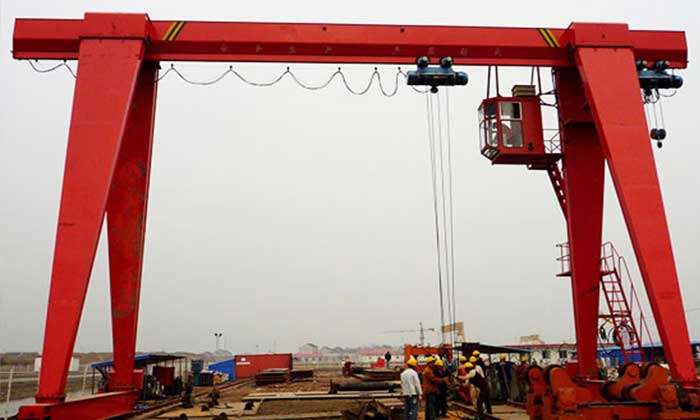
Key Points:
- Efficient storage reduces module handling time and operational delays.
- Proper stacking and yard layout prevent physical damage to solar modules.
- Optimized storage improves workflow predictability and helps plan module delivery schedules.
- Safety risks are minimized when operators can move modules with proper equipment rather than manually.
Industrial gantry cranes, particularly full gantry cranes, play a pivotal role in improving outdoor storage efficiency. Unlike forklifts or manual handling, a crane can lift large bundles of modules safely and move them over long spans without disrupting other operations.
For outdoor solar PV yards, a 15-ton full gantry crane provides the strength, reach, and stability needed to handle modern PV modules, which are becoming larger and heavier with high-capacity designs.
- Lifts multiple modules at once, saving labor hours and handling time.
- Moves modules over long distances across the yard without risk of tipping or dropping.
- Supports safe stacking at different heights without damaging modules.
- Reduces manual labor, improving operator safety and lowering the risk of accidents.
- Can be integrated with yard management plans for future storage expansion.
This case study examines a large-scale solar PV facility that recently integrated a 15-ton full gantry crane for outdoor module storage.
The facility handles hundreds of PV modules daily, ranging from standard 60-cell modules to larger 72-cell high-capacity designs.
- Time-consuming manual handling of heavy modules.
- Limited storage layout flexibility due to equipment constraints.
- Module damage caused by repeated lifting and repositioning.
- Workflow bottlenecks that slowed production schedules.
With the new crane, the facility streamlined its outdoor storage operations, improved safety, and minimized module damage.
This case study details how a practical material handling solution like a gantry crane can transform storage operations in real-world solar PV facilities.
Challenges in Outdoor PV Module Storage
Outdoor solar PV facilities face multiple operational challenges when storing large volumes of modules. These challenges affect efficiency, safety, and long-term module performance if not addressed with proper planning and equipment.
One of the biggest challenges in outdoor solar PV yards is simply managing the sheer volume and weight of modules. Modern 60-cell modules weigh around 20–25 kg, while high-capacity 72-cell or bifacial modules can reach 30–40 kg each.
Practical implications:
- Modules may be handled multiple times, increasing risk of scratches or cracks.
- Improper stacking can lead to instability and accidental damage.
- Time spent on repetitive lifting directly impacts overall project workflow.
Without equipment that can lift and transport several modules at once, operators are forced to spend extra hours on basic handling tasks.
Outdoor storage areas often have limited space and narrow pathways, which create bottlenecks in operations.
Challenges include:
- Manual operations that consume labor hours without adding real efficiency.
- Delays caused by improper storage layout or unexpected obstructions.
- Slowdowns that ripple through the entire production or assembly line.
In short, without a clear storage strategy and proper handling equipment, outdoor module storage can become a time-consuming and frustrating process.
Safety is another critical concern. Heavy modules handled manually or stacked unsafely create high-risk situations.
Key safety considerations:
- Repeated lifting increases the risk of musculoskeletal injuries.
- Slipping hazards from rain or dew can cause both operator and module accidents.
- Improper stacking may lead to modules falling unexpectedly.
Reliable lifting equipment, like a gantry crane, addresses these risks by reducing manual handling and allowing precise, controlled movements.
Storing modules outdoors exposes them to sunlight, wind, rain, and dust, all of which affect both the modules and the operators handling them.
Operational impacts:
- Sun and heat limit safe working hours or require shaded storage areas.
- Wind can shift tall stacks, making outdoor handling dangerous.
- Rain or moisture creates slippery surfaces and may require slower handling.
- These factors can dictate maximum stacking heights and transport routes.
Considering these environmental challenges is essential when designing outdoor storage workflows and selecting equipment that can operate reliably in all weather conditions.
Solution: 15-Ton Full Gantry Crane
To manage high-volume outdoor solar PV module storage efficiently, the facility selected a 15-ton full gantry crane. This solution combines high lifting capacity, long span coverage, and stable outdoor operation, making it suitable for large PV yards where modules are handled in bundled loads and stored over wide areas.
The 15-ton full gantry crane is designed for demanding outdoor PV storage environments. Its full gantry structure allows stable lifting across the entire yard, while the rated capacity supports bundled handling of large-format solar modules.
- Rated lifting capacity of 15 tons for grouped PV module loads
- Long-span design suitable for wide outdoor storage lanes
- Rail-mounted or track-based travel for consistent positioning
- Outdoor-rated components for sun, wind, and rain exposure
A full gantry crane offers better balance and reach than single girder or semi-gantry cranes, which is critical for outdoor PV yards with long travel distances and tall stacking requirements.
- Greater structural stability during multi-layer stacking
- Smoother movement across long outdoor spans
- Reduced sway when transporting heavy module bundles
- Lower risk of misalignment or tipping during placement
By lifting multiple modules in a single cycle, the gantry crane significantly reduces repetitive handling. This shortens loading and stacking time, especially during peak delivery periods.
- Fewer lifts required per delivery batch
- Faster truck unloading and yard clearance
- More predictable daily throughput
- Reduced idle time for downstream processes
The crane layout was planned alongside storage lane widths and stacking zones, ensuring smooth movement without conflicting with vehicle traffic or pedestrian paths.
- Dedicated crane travel paths across storage zones
- Clear access to delivery and dispatch areas
- Optimized stacking orientation for crane reach
- Reduced need for secondary repositioning
Beyond storage, the 15-ton gantry crane supports routine operational needs, from repositioning modules for inspection to preparing loads for shipment.
- Direct transfer from storage to assembly areas
- Flexible handling for inspection or re-sorting
- Reduced dependency on forklifts or manual labor
The selected gantry crane capacity allows the facility to adapt to future changes, including heavier modules, higher stacking density, or expanded yard space.
- Capacity margin for next-generation PV modules
- Expandable yard coverage without replacing equipment
- Long-term fit for growing production volumes
Implementation Strategy
Successfully deploying a 15-ton full gantry crane in an outdoor solar PV module yard requires more than equipment delivery. Proper site preparation, structured installation, and careful workflow integration are essential to achieve safe operations, high efficiency, and long-term reliability.
Before installing the gantry crane, the outdoor PV yard must be prepared to support heavy lifting operations and stable crane travel.
- Ground leveling: Ensure a smooth, firm surface to support crane rails and heavy module loads.
- Foundation work: Install reinforced concrete pads or rail foundations to maintain long-term stability.
- Crane pathways: Remove obstacles and define clear routes for efficient module transport.
Proper preparation minimizes installation risks, prevents premature wear, and allows the crane to operate efficiently from the first day of use.
Once the site is ready, correct installation and commissioning are critical for ensuring operational safety and reliability.
- Crane assembly: Erect the gantry structure, hoist, and trolley according to manufacturer specifications.
- Power setup: Verify voltage compatibility and connect electrical and safety systems.
- Control testing: Test lifting, travel, limit switches, and emergency functions before live operation.
A structured commissioning process confirms that the crane is fully functional, safe for operators, and ready for continuous outdoor use.
The full benefits of a gantry crane are realized only when it is integrated into the facility's overall storage and logistics workflow.
- Stacking patterns: Design module placement for safe lifting and easy future access.
- Storage layout: Arrange stacks to maximize yard capacity while maintaining clear crane travel paths.
- Delivery coordination: Align crane operation with incoming shipments to avoid congestion.
With proper workflow integration, the gantry crane becomes a core component of the PV facility's material handling system, improving speed, safety, and predictability.
Operational Benefits
Once a 15-ton full gantry crane is fully integrated into outdoor PV module storage operations, facilities begin to see measurable improvements in efficiency, safety, and long-term reliability. These benefits directly affect daily throughput and overall operational stability.
One of the most immediate impacts of installing a 15-ton full gantry crane is the improvement in material handling efficiency. Instead of moving modules one by one, operators can lift and transport multiple modules in a single cycle.
- Reduced handling time per batch, allowing more modules to be processed daily.
- Smooth travel across long outdoor spans without frequent stopping or repositioning.
- Improved coordination with module delivery and assembly schedules.
These gains often result in a noticeable reduction in labor hours spent on basic handling tasks.
Manual handling of heavy solar modules increases the likelihood of worker injuries and handling errors. The gantry crane removes most manual lifting from the process and allows operators to control movement from a safe position.
- Reduced physical strain by eliminating repetitive manual lifting.
- Controlled movement lowers the risk of modules tipping or falling.
- Fewer handling errors contribute to a safer outdoor work environment.
As a result, safety incidents decline and daily operations become more predictable.
Improper lifting and unstable stacking are common causes of PV module damage. A full gantry crane enables smooth lifting and accurate placement, significantly reducing physical stress on the modules.
- Smooth hoisting prevents scraping or contact between modules.
- Accurate positioning keeps stacks stable and evenly aligned.
- Fewer handling cycles reduce overall exposure to damage.
Over time, reduced damage translates into fewer replacements and lower waste costs.
Beyond daily handling performance, a full gantry crane offers consistent reliability. Designed for continuous outdoor use, it follows predictable maintenance schedules rather than reactive repairs.
- High operational uptime supports uninterrupted module handling.
- Scheduled inspections help prevent unexpected failures.
- Lower downtime reduces delays in storage and downstream operations.
This reliability gives PV facilities both operational stability and long-term cost control.
Performance Metrics
Measuring performance is essential to understanding the real value of a 15-ton full gantry crane in outdoor PV module storage. Clear metrics allow facilities to compare conditions before and after implementation and assess efficiency, safety, and cost impacts.
Comparing operations before and after crane installation highlights measurable changes in daily handling performance and safety.
- Time per batch: Handling a module bundle was reduced from 10–15 minutes to approximately 3–5 minutes per lift.
- Modules handled per day: Daily throughput increased, allowing more modules to be processed with fewer handling cycles.
- Safety incidents: Manual handling-related issues, such as drops or surface damage, were significantly reduced.
These results confirm that the gantry crane functions as a core productivity tool rather than just lifting equipment.
High utilization rates indicate that the crane is effectively supporting continuous outdoor storage operations.
- Crane uptime: Reliable design and preventive maintenance keep downtime to a minimum.
- Operator efficiency: Fewer trips and smoother lifts reduce fatigue while maintaining safe working conditions.
- Workflow throughput: Modules move steadily from delivery to storage or assembly without congestion.
Tracking these indicators helps facility managers maintain consistent workflow performance.
Performance metrics also reveal clear financial benefits from gantry crane implementation in outdoor PV facilities.
- Reduced labor hours: Fewer workers are needed for module handling, or existing teams can manage higher volumes.
- Lower damage costs: Controlled lifting and stable stacking reduce breakage and replacement expenses.
- Improved ROI: Faster handling and lower operational risk shorten the payback period for crane investment.
Together, these metrics provide a clear picture of the crane's efficiency, safety, and long-term economic value.
Lessons Learned
Implementing a 15-ton full gantry crane teaches PV facilities that efficiency, safety, and long-term value depend not only on equipment but also on layout, training, scalability, and environmental preparation.
Even the best crane is limited by yard design. Clear pathways, organized stacking patterns, and designated delivery zones maximize crane efficiency.
- Keep crane pathways free from obstacles and debris.
- Plan module stacks with sufficient spacing for safe access and repositioning.
- Optimize flow from delivery to storage to assembly to minimize extra movements.
Proper layout reduces handling time, prevents accidents, and limits module damage.
A gantry crane is only as effective as its operators. Proper training ensures safe operation, accurate placement, and consistent workflow.
- Provide hands-on training for all crane operators.
- Emphasize safety protocols and correct handling of high-capacity modules.
- Review workflow procedures regularly to maintain efficiency.
Investing in training improves safety and productivity while reducing errors and downtime.
PV facilities evolve over time, and so should crane capacity and yard layout. Planning for future needs ensures continued value from the investment.
- Ensure crane lifting capacity can handle larger or heavier modules in the future.
- Design storage areas to accommodate extra rows or higher stacks.
- Consider future workflow expansion when placing crane rails and pathways.
Scalable design ensures the gantry crane remains effective as the facility grows.
Outdoor storage exposes modules and cranes to sun, wind, rain, and dust. Preparing for environmental conditions maintains safety and performance year-round.
- Use weather-resistant crane components and protective coatings.
- Plan yard drainage and anti-slip surfaces for rain or dew.
- Adjust stacking practices to account for wind and heat to prevent instability.
Considering environmental factors protects equipment, modules, and personnel, ensuring smooth operations in all conditions.
FAQ: Questions Solved Here
This FAQ addresses common concerns for PV facilities using a 15-ton full gantry crane, including efficiency, safety, layout planning, crane type selection, and performance metrics.
A 15-ton full gantry crane improves efficiency by reducing handling steps. Instead of moving modules individually or repositioning multiple times with smaller equipment, the crane can lift bundled modules in a single move across long outdoor lanes.
- Fewer trips between delivery, storage, and staging areas
- Shorter handling time per batch
- More predictable daily throughput, even during high-volume deliveries
The ability to span wide yards without repositioning equipment is a major advantage for large PV facilities.
Outdoor storage carries risks such as manual lifting injuries, unstable stacks, and weather hazards. A gantry crane improves safety by minimizing manual handling and allowing precise movement control.
- Controlled lifting reduces scraping, edge impacts, and glass stress
- Stable stacking lowers the risk of shifting or collapsing piles
- Fewer handling cycles reduce accidental drops
Over time, facilities see lower incident rates and reduced module replacement costs.
Crane performance relies on yard layout and stacking discipline. Clear travel paths, consistent stack spacing, and defined loading/unloading zones are essential.
- Straight, unobstructed crane pathways to avoid idle movement
- Stacking heights matched to module type, weight, and wind exposure
- Logical flow from delivery → storage → assembly/shipping
Proper layout planning ensures smooth, safe operation with minimal repositioning.
For high-volume outdoor storage, a full gantry crane is usually the best option. Compared to single girder or semi-gantry cranes, it offers greater stability, wider coverage, and consistent ground support.
- Wide and open storage yards
- Large quantities of modules
- Long travel distances between stacks
The full gantry design ensures reliable performance where stability is critical.
PV facilities should monitor a small set of clear operational metrics to quantify crane effectiveness.
- Time per handling batch before and after installation
- Total modules handled per day or shift
- Crane uptime and unplanned downtime
- Safety incidents related to module handling
- Labor hours required for storage operations
Tracking these metrics helps measure efficiency gains, safety improvements, and ROI over time.
Conclusion
Implementing a 15-ton full gantry crane for outdoor solar module storage transforms how large PV facilities handle materials. By providing high-capacity lifting, precise module placement, and smooth movement across the yard, the crane addresses many challenges that previously slowed operations or caused damage.
Key benefits observed in practice include:
- Improved efficiency: Faster batch processing and reduced handling time per module.
- Enhanced safety: Minimal manual lifting and controlled movements reduce operator risk.
- Reduced module damage: Stable stacking and precise placement lower breakage and scratches.
- Scalable operations: Supports larger modules, higher stacks, and future storage expansion.
For other large-scale solar PV operations, the takeaway is clear: success depends not just on the equipment itself, but on careful planning of crane selection, yard layout, and stacking patterns. When these factors are aligned, facilities achieve maximum return on investment, safer workflows, and long-term operational reliability.
A 15-ton full gantry crane isn’t just a tool—it’s a practical solution for efficient, safe, and scalable outdoor PV module storage.