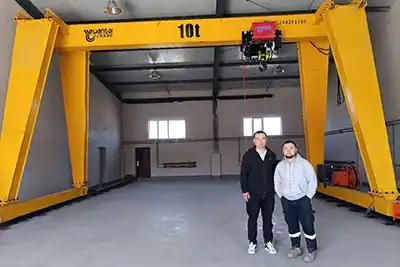
Choosing the Right Hoist for Solar PV Gantry Cranes
Choosing the Right Hoist for Outdoor Gantry Cranes in the Solar PV Industry: A Buyer’s Guide
Most Important Takeaway (at the very beginning):
Selecting the right hoist—whether an electric wire rope hoist, chain hoist, or semi-automatic hoist—for outdoor gantry cranes in solar PV operations is critical to protect modules, ensure safety, maximize efficiency, and reduce long-term maintenance costs.
Key Takeaways for Buyers
- Match hoist type to PV module weight and size to prevent damage and maintain production efficiency.
- Consider environmental conditions such as outdoor exposure to sun, rain, wind, and dust; weatherproofing and IP-rated hoists are essential.
- Balance lifting capacity and operational frequency—high-volume lines may require electric wire rope hoists, while smaller loads can use chain or semi-automatic hoists.
- Prioritize module protection features like anti-sway, soft-load, and precise positioning for sensitive solar panels.
- Plan for maintenance and long-term operation—accessibility and energy efficiency are key to minimizing downtime.
- Integrate hoist choice with crane layout and workflow—consider span, lift height, speed, and potential automation.
Choosing the Right Hoist for Outdoor Gantry Cranes in Solar PV Industry
Outdoor gantry cranes are essential in solar PV production, module assembly, and large-scale installation projects. The right hoist ensures module safety, operator safety, and operational efficiency while reducing maintenance requirements.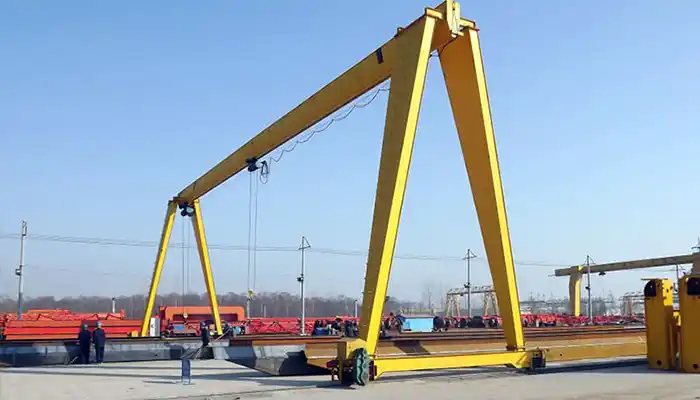
Outdoor gantry cranes handle everything from moving heavy module frames during manufacturing to positioning panels for assembly or testing. In outdoor settings, these cranes face sun, rain, wind, and dust, which makes choosing the right hoist critical.
- Gantry cranes support repetitive lifting tasks for solar module frames and racks.
- Outdoor setups require hoists that can handle environmental exposure without compromising performance.
- Proper crane and hoist selection directly affects workflow efficiency and production timelines.
The hoist directly interacts with your PV modules. Selecting the wrong hoist can lead to damaged panels, safety hazards, and costly downtime. Hoist performance affects:
- Module safety: Anti-sway and soft-load features prevent panels from cracking or bending during handling.
- Operator safety: Reliable hoists reduce the risk of accidents when lifting heavy loads outdoors.
- Operational efficiency: Smooth, precise hoist operation saves time and reduces the effort needed to position modules accurately.
- Maintenance requirements: Choosing the right type reduces unexpected maintenance and long-term repair costs.
Not all hoists are equal. Technical buyers in the solar PV industry often have to choose between electric wire rope hoists, electric chain hoists, or semi-automatic hoists. Each type has different advantages depending on load weight, lifting frequency, outdoor conditions, and production scale.
- Varying module sizes: Some modules weigh hundreds of kilograms, while others are lighter but fragile.
- Environmental exposure: Outdoor operations demand corrosion-resistant materials and weatherproof enclosures.
- Production scale: High-volume PV lines need hoists that can perform consistently under repeated lifts, while smaller setups may prioritize flexibility and cost.
Electric wire rope hoists are ideal for heavy loads and frequent lifting, providing smooth and precise movement. Electric chain hoists are compact, versatile, and suitable for lighter or moderate loads. Semi-automatic hoists offer cost-effective solutions for flexible or intermittent lifting tasks.
Features such as anti-sway and soft-load mechanisms prevent PV modules from cracking or bending during lifting. Correct hoist selection preserves module integrity and reduces the risk of rejects in production lines.
Reliable hoists contribute to operator safety and smooth workflow. Accurate positioning reduces manual adjustments, lowers fatigue, and speeds up production timelines, especially in outdoor conditions with wind or uneven surfaces.
Choosing the right hoist type minimizes maintenance requirements and unexpected downtime. Weatherproof designs, corrosion resistance, and proper load ratings extend service life and reduce long-term repair costs for outdoor gantry cranes in PV operations.
Hoist Types for Outdoor PV Gantry Cranes
Choosing the right hoist for an outdoor gantry crane in solar PV operations is not just about lifting capacity. It's about matching the hoist to your module size, environmental conditions, production frequency, and workflow. Below is a practical guide to the three main types of hoists used in PV module handling.
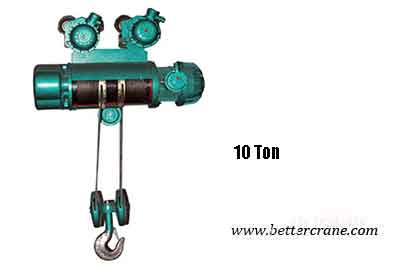 wire rope electric hoist for outdoor gantry crane
 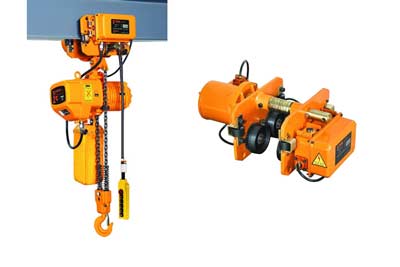 Electric chain hoist for outdoor gantry cranes for sale
 Electric wire rope hoists are the go-to choice for heavy-duty outdoor gantry cranes. They are designed to handle large loads consistently and with smooth motion, making them ideal for high-capacity solar PV operations.
Key Features:
- Smooth and precise operation, even under heavy loads.
- High lifting capacity suitable for large PV module frames.
- Long span capability, allowing cranes to cover wide outdoor assembly areas.
- Reliable for frequent lifting tasks without performance degradation.
Advantages for PV Module Handling:
- Minimizes module sway, reducing the risk of cracking or damage.
- Provides precise positioning for assembly, testing, or installation.
- Handles large modules or bundled panels efficiently.
Limitations:
- Higher initial cost compared to other hoist types.
- Requires regular inspection and preventive maintenance to ensure safe operation.
- More complex installation may require trained personnel.
Electric chain hoists are a practical choice when lifting medium-weight modules or working in tighter spaces. They are more compact than wire rope hoists, which makes them easier to install and operate for smaller-scale outdoor PV applications.
Key Features:
- Lightweight design, easier to handle and install.
- Moderate lifting capacity suitable for standard PV modules.
- Simple installation and less technical complexity than wire rope hoists.
Advantages for PV Module Handling:
- Ideal for smaller solar panels or light-duty outdoor lifts.
- Easier to move and adapt to different locations within a site.
- Lower upfront cost makes them accessible for smaller projects or pilot lines.
Limitations:
- Slower lifting speed than wire rope hoists.
- Limited lift height, which can restrict larger gantry setups.
- Not ideal for high-frequency operations in large PV assembly plants.
Key Factors to Consider in Hoist Selection
Selecting the right hoist for outdoor gantry cranes in solar PV operations requires more than just looking at lifting capacity. Technical buyers must evaluate multiple factors to ensure safety, module protection, efficiency, and long-term reliability. The following considerations provide a practical framework for making the best choice.
The first step is understanding the maximum weight of the modules or module bundles your crane will handle. Overestimating or underestimating this can lead to safety hazards or unnecessary expenses.
- Ensure the hoist can safely handle the heaviest module plus a safety margin of 20–30%.
- Account for variations in module size, as some PV panels may be heavier due to glass thickness, frames, or mounting structures.
- Consider future expansion if larger modules or multi-module lifts are planned.
Practical Tip: Always check the manufacturer's load chart for both single and multiple lifts to ensure compliance with safety standards.
How often the hoist will be used significantly impacts the type of hoist you should select.
- High-frequency lifting: Large PV assembly lines with continuous handling benefit from electric wire rope hoists, which are built for repeated, heavy-duty cycles.
- Moderate or occasional lifting: Chain hoists or semi-automatic hoists can handle lighter, less frequent tasks efficiently.
- Consider the duty cycle rating of the hoist—higher-duty hoists are more durable but also more expensive.
Practical Tip: Evaluate peak production days and seasonal spikes to ensure the hoist won't be overstressed.
Outdoor PV operations expose hoists to sunlight, rain, wind, dust, and temperature fluctuations. Selecting a hoist designed for these conditions is critical for reliability and safety.
- Check the IP (Ingress Protection) rating to ensure the hoist is dust-tight and protected against water.
- Look for corrosion-resistant coatings, stainless steel components, or weatherproof housings.
- UV-resistant materials prevent degradation from prolonged sun exposure.
- Consider wind load and dust when installing anti-sway systems or guide rails.
Practical Tip: Even high-quality hoists may need seasonal inspections in harsh climates to maintain performance.
PV modules are fragile, and improper lifting can cause micro-cracks or frame damage. Hoist selection should prioritize features that protect the load.
- Anti-sway systems: Reduce swinging during horizontal or vertical travel.
- Soft-load functions: Gradually apply force to prevent sudden jolts on modules.
- Precise control: Allows accurate positioning during assembly, testing, or installation.
Practical Tip: For high-value modules, investing in precision hoists can save on replacement costs and reduce production delays.
Outdoor hoists must be cost-effective and easy to maintain for long-term operation.
- Electric wire rope hoists are efficient for frequent heavy lifts, but check power consumption ratings.
- Semi-automatic and chain hoists often use less energy but may not be suitable for high-volume tasks.
- Easy-to-access components simplify preventive maintenance and reduce downtime.
Practical Tip: Consider a maintenance schedule aligned with production cycles to avoid unexpected shutdowns.
Finally, the hoist must fit seamlessly with your crane system and workflow. Poor integration can reduce efficiency and create safety risks.
- Match hoist speed, lift height, and travel range to the crane and line layout.
- Ensure compatibility with automation features if the gantry crane is part of a semi-automated or fully automated PV assembly line.
- Evaluate load positioning requirements—some tasks may need precise lateral or rotational adjustments.
Practical Tip: Simulate the workflow before purchase, or consult with the crane manufacturer to verify hoist compatibility with your gantry system.
Comparative Overview of Hoist Types
When it comes to outdoor gantry cranes in the solar PV industry, not all hoists are created equal. Choosing the right hoist depends on the balance between lifting capacity, speed, precision, maintenance, outdoor durability, and cost. Here's a practical breakdown of each type.
Who they are for: High-volume PV assembly lines, heavy modules, and long-span outdoor operations.
- Capacity & Speed: Can lift the heaviest modules or bundled panels quickly and efficiently.
- Precision: Smooth motion and minimal sway make precise placement easy.
- Maintenance: Medium—requires regular preventive inspections to ensure safety and longevity.
- Outdoor Suitability: Excellent—designed for exposure to sun, rain, wind, and dust.
- Cost: High, but the investment is justified for frequent heavy-duty lifting.
Takeaway: Ideal for heavy modules, repeated lifts, and environments where safety and efficiency are non-negotiable.
Who they are for: Medium-weight modules or mid-sized outdoor operations with moderate lifting frequency.
- Capacity & Speed: Suitable for standard PV modules with moderate lifting speeds.
- Precision: Medium—enough for careful handling of smaller panels.
- Maintenance: Low—simpler design makes inspections and servicing easier.
- Outdoor Suitability: Good—resistant to typical outdoor conditions but less robust than wire rope hoists.
- Cost: Medium—balanced between affordability and performance.
Takeaway: A practical choice for medium-duty outdoor PV applications where cost and ease of installation matter.
Who they are for: Light to medium loads, temporary outdoor setups, or cost-conscious projects.
- Capacity & Speed: Handles lighter or variable loads at moderate speeds.
- Precision: Medium-low—suitable for occasional lifts but may need manual adjustment.
- Maintenance: Very low—energy-efficient design requires minimal attention.
- Outdoor Suitability: Fair—best used in partially protected or low-frequency outdoor operations.
- Cost: Low—affordable, energy-efficient solution for smaller tasks.
Takeaway: Best for flexible lifting of lighter modules, temporary projects, or low-volume PV lines.
- Large-scale, high-frequency PV operations: Go with electric wire rope hoists for speed, precision, and reliability.
- Medium-weight modules or moderate-volume lines: Chain hoists provide a balance of performance, cost, and ease of use.
- Occasional lifts, small modules, or temporary setups: Semi-automatic hoists are cost-effective and low-maintenance.
Practical Recommendations for PV Industry Buyers
Selecting the right hoist for outdoor gantry cranes in solar PV operations is more than just choosing based on cost or lifting capacity. The right choice ensures module safety, smooth workflow, and long-term operational reliability. Below are practical recommendations based on real-world PV production needs.
For high-volume outdoor PV assembly or module handling, electric wire rope hoists are the most reliable choice.
- Handle heavy modules or bundled panels efficiently.
- Reduce sway and improve precision during placement.
- Suitable for long spans and continuous operation without overloading.
- Ideal for PV production lines where downtime is costly.
Tip: Even though the upfront cost is higher, investing in wire rope hoists pays off through faster production, fewer damaged modules, and lower long-term replacement costs.
Chain hoists are compact, cost-effective, and easier to install, making them a solid choice for medium-duty PV operations.
- Good for lifting standard PV modules or medium-weight frames.
- Easier to move and reposition for flexible layouts.
- Moderate speed and precision are adequate for most mid-sized assembly setups.
- Lower maintenance requirements reduce downtime and service costs.
Tip: Chain hoists work best when module weights and lifting frequency are moderate, and space or budget constraints exist.
Semi-automatic hoists combine manual and powered lifting, making them ideal for flexible or cost-sensitive PV projects.
- Handle smaller or irregular loads efficiently.
- Low maintenance and energy-efficient, suitable for occasional lifting.
- Useful for temporary outdoor setups or low-volume production lines.
Tip: Semi-automatic hoists are not recommended for high-frequency or heavy-load operations, as precision and speed are limited.
Environmental exposure, module fragility, and line layout should guide hoist selection:
- Check IP ratings, corrosion protection, and UV resistance for outdoor durability.
- Prioritize anti-sway and soft-load features to prevent module damage.
- Ensure the hoist is compatible with crane speed, travel range, and automation needs.
When selecting hoists, consider your production growth and long-term maintenance:
- Anticipate heavier modules or higher lifting frequency in the future.
- Choose hoists that allow easy servicing, inspection, and part replacement.
- Factor in energy efficiency to reduce long-term operating costs.
Practical Takeaway: The right hoist protects your modules, keeps production efficient, and reduces unexpected downtime. Choosing carefully now saves time, money, and headaches later.
FAQ: Choosing the Right Hoist for Outdoor Gantry Cranes in the Solar PV Industry
- Electric Wire Rope Hoists: High-capacity, fast, precise, and suitable for heavy modules or high-frequency lifting. Ideal for large-scale PV production.
- Electric Chain Hoists: Medium capacity, slower, easier to install, and cost-effective for medium-weight modules or smaller outdoor setups.
- Semi-Automatic Hoists: Low-to-medium capacity, energy-efficient, low maintenance, flexible for variable or occasional lifting but less precise for fragile modules.
Practical Tip: Choose a hoist based on module weight, production frequency, and outdoor environmental exposure rather than just price.
- Wire rope hoists with anti-sway and soft-load features provide the most precise handling for fragile panels.
- Chain hoists can protect modules if lifts are moderate and sway is minimized with careful operation.
- Semi-automatic hoists are less precise and better suited for small, low-frequency tasks where gentle handling is manageable.
Practical Tip: Always consider hoists with load control and smooth motion to reduce the risk of micro-cracks or frame damage.
- Outdoor exposure to sun, rain, wind, and dust can degrade hoist components over time.
- Check IP ratings, corrosion-resistant materials, and UV protection for durability.
- Extreme temperatures or high winds may require reinforced hoist design or anti-sway systems.
Practical Tip: Schedule seasonal inspections and preventive maintenance to ensure consistent performance in harsh outdoor conditions.
- High-frequency lifting favors electric wire rope hoists for durability and speed.
- Medium-weight, moderate-frequency lifts work well with chain hoists.
- Occasional or variable lifting is suitable for semi-automatic hoists.
- Always account for the heaviest module weight plus a safety margin to avoid overloading.
Practical Tip: Evaluate your production peaks and lifting cycles before selecting a hoist to prevent downtime or premature wear.
- Wire rope hoists: Higher initial cost, medium maintenance, long-term reliability for heavy-duty lines.
- Chain hoists: Moderate cost, low maintenance, good performance for medium-duty operations.
- Semi-automatic hoists: Low cost, very low maintenance, ideal for light loads or temporary setups.
Practical Tip: Consider total cost of ownership: initial investment, energy efficiency, maintenance requirements, and module safety. Sometimes spending more upfront saves money and time over the life of the hoist.
Conclusion
Selecting the right hoist for outdoor gantry cranes in the solar PV industry is more than picking a model based on lifting capacity. Buyers must balance multiple factors:
- Capacity: Can the hoist handle your heaviest modules with a safety margin?
- Precision: Does it protect fragile PV modules during lifting and placement?
- Cost: Is the investment justified for your production scale and frequency?
- Environmental Resilience: Can it withstand sun, rain, wind, and dust?
- Production Needs: Does it integrate smoothly with your workflow, crane system, and future expansion plans?
A well-chosen hoist improves operational efficiency, safeguards valuable modules, and reduces maintenance and downtime. For PV industry buyers, the decision is about more than lifting weight—it’s about creating a safer, smoother, and more reliable material handling process that supports long-term production goals.
Practical Takeaway: Investing time in proper hoist selection today saves cost, protects modules, and ensures consistent productivity in outdoor PV operations.