Why Coil Weight Alone Isn’t Enough for Crane Selection
Most Important Takeaway
When selecting a coil handling crane, always account for the combined weight of the coil, the clamp, and the dynamic forces during operation—ignoring any of these can lead to unsafe, inefficient, or prematurely worn equipment.
Key Takeaways
- Coil weight alone does not reflect the real operational load on the crane.
- Clamp weight can add significant extra load that must be included in calculations.
- Dynamic forces from lifting, acceleration, deceleration, or swinging increase stresses on the crane.
- Proper capacity selection prevents accidents, mechanical failure, and downtime.
- Providing complete load and operation details to manufacturers ensures accurate crane design and quotation.
Questions This Article Solves
- How do I calculate the real load on a coil handling crane?
- Why isn’t the coil weight sufficient for crane selection?
- How do clamp weight and dynamic load affect crane safety and performance?
- What information should I provide to a manufacturer to get an accurate crane recommendation?
Coil Handling Crane Loads
Choosing the right coil handling crane requires more than just matching the crane capacity to the coil weight. Many hidden factors affect safe operation and long-term reliability.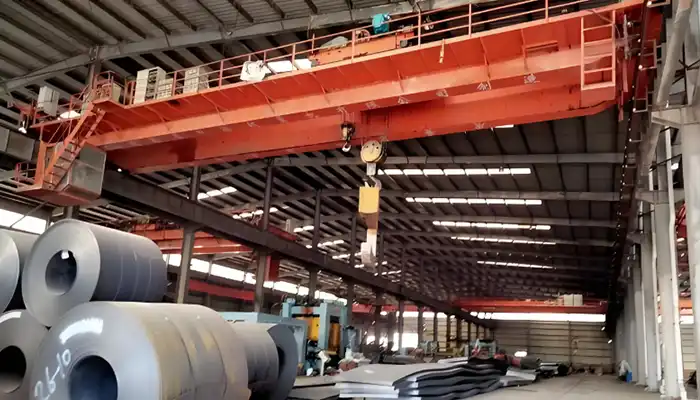 40 ton ovehread crane for steel coil handling
When you’re choosing a coil handling crane for a steel mill, warehouse, or processing plant, it’s easy to think: “If my coil weighs 20 tons, I need a 20-ton crane.”
But here’s the truth: the crane never lifts just the coil.
You must also consider:
- The weight of the coil clamp itself
- Extra forces caused by movement—lifting, starting, stopping, or swinging
Ignoring these factors is the single most common mistake crane buyers make. The result? Overstressed equipment, safety risks, and downtime.
Did you know? Even a small hydraulic clamp can add 1–2 tons to the load, which is enough to push a crane over its rated capacity if not planned for.
Understanding what contributes to the total load helps you specify a crane that works safely in real life.
Step 1: Coil Weight (Static Load)
- This is simply the weight of your steel coil.
- Coils can range from a few tons to over 30 tons in steel mills.
- Why it’s not enough: The crane also lifts the clamp, plus it handles dynamic forces—so the total load is always higher than the coil weight.
Actionable tips:
- Always measure or verify the heaviest coil you’ll handle.
- Include a margin for occasional heavier coils.
Step 2: Clamp Weight
Coil clamps are what grip the coil during lifting. Types include:
- Hydraulic clamps: Use hydraulic pressure, typically weighing 1–2 tons.
- Mechanical clamps: Use friction or mechanical force, weight varies by design.
Why it matters:
- Clamp weight adds directly to the total load on the crane.
- Ignoring it is a frequent source of undersized cranes and mechanical failure.
Actionable tips:
- Include clamp weight when requesting a crane quotation.
- Confirm if your crane capacity rating already accounts for the clamp.
- Plan for future clamp upgrades if needed.
Step 3: Dynamic Load
Dynamic load is the extra force generated when the crane moves. This includes:
- Acceleration and deceleration
- Swinging the coil
- Repeated lifts over time
Impact of ignoring dynamic load:
- Premature wear of hoist and trolley
- Structural fatigue on crane bridge and runway
- Increased downtime and maintenance costs
- Safety risks for operators and nearby staff
Actionable tips:
- Provide the manufacturer with operational details: lift height, speed, and frequency.
- Use dynamic load calculations to select the correct crane capacity.
- Don’t underestimate repeated lifts—fatigue accumulates quickly.
- Coil weight alone is never enough.
- Always include clamp weight in your calculations.
- Factor in dynamic forces from real-world crane operation.
- Provide full load and operational data to your crane supplier for accurate selection.
Practical Note: Being thorough upfront saves money, reduces downtime, and keeps your operators safe. A crane that looks fine on paper might fail quickly if real-world forces aren't considered.
Common Buyer Mistakes
When selecting a coil handling crane, buyers often make the same mistakes—mistakes that can lead to unsafe operation, premature wear, or unnecessary downtime. Understanding these pitfalls is key to making the right choice.
Many buyers assume that if a coil weighs 20 tons, a 20-ton crane is sufficient. In reality, the crane never lifts the coil alone. Ignoring additional load factors—like the clamp and dynamic forces—can easily overload the crane.
Why it’s a problem:
- The crane may operate at or above its rated capacity.
- Increased risk of hoist or trolley failure.
- Shortened crane lifespan due to excessive stress.
Tip: Always calculate total load, not just coil weight.
A coil clamp is not just a tool—it’s part of the load. Many buyers either forget to include it or assume the crane’s safety factor will cover it. This is risky, especially with heavier hydraulic clamps.
Consequences of ignoring clamp weight:
- Overstressed crane components.
- Reduced operational safety.
- Increased maintenance and downtime.
Tip: Confirm clamp weight with the supplier and add it to the crane’s required capacity.
Dynamic load is often overlooked, especially in operations with frequent lifts or high-speed movement. Every start, stop, or swing creates extra force that the crane must handle.
Potential issues from underestimating dynamic load:
- Premature wear of hoists, trolleys, and bridge structures.
- Unexpected downtime and repair costs.
- Safety hazards for operators and nearby personnel.
Tip: Provide your manufacturer with details about lift height, speed, and handling frequency so they can calculate dynamic load accurately.
- Include coil + clamp weight when requesting quotations.
- Specify operational speed and lift frequency.
- Ask for dynamic load calculations.
- Don’t rely solely on the crane’s nominal capacity—total load matters.
Accurate Crane Capacity Specification
Selecting the right coil handling crane requires more than just knowing the coil weight. To ensure safe and efficient operation, you need to calculate the total load the crane will handle in real-world conditions. Here's a step-by-step guide.
Start by identifying the heaviest coil your crane will lift. Consider variations in production and any future increases in coil size.
Practical points:
- Verify actual coil weight from production data.
- Include occasional heavier coils in your calculations to avoid under-sizing.
- For steel mills, coils can range from 5 tons to over 30 tons, so don't assume all coils are the same.
The clamp is an essential part of the load. Its weight varies depending on type and design:
- Hydraulic clamps: Typically 1–2 tons.
- Mechanical clamps: Weight depends on design; check specifications.
Why it matters:
- Ignoring clamp weight can easily exceed the crane's rated capacity.
- Always include clamp weight in total load calculations.
Tip for buyers: Confirm with the supplier whether the crane capacity rating already includes clamp weight.
The crane experiences extra forces whenever it starts, stops, or swings the coil. This is called dynamic load, and it depends on:
- Lift speed
- Lift height
- Handling frequency (how often the crane lifts per hour/day)
Practical advice:
- Add a dynamic load factor (typically 10–25%) to your total load.
- For high-speed or repetitive operations, use the higher end of the range.
- Provide operational details to your crane supplier so they can calculate the correct factor.
After calculating coil weight + clamp weight + dynamic load, choose a crane with a margin above the total load to ensure safety and accommodate future needs.
Best practices:
- Include a 10–15% safety margin above the calculated total load.
- Consider potential future increases in coil weight or faster handling speeds.
- A properly rated crane reduces maintenance costs and prevents downtime.
- Verify maximum coil weight and possible variations.
- Add clamp weight to total load.
- Calculate dynamic load based on lift speed, height, and frequency.
- Include safety margin for future-proofing.
- Provide full load and operation details to your crane supplier.
Practical Tips for Buyers
Selecting the right coil handling crane goes beyond knowing the weight of your coils. Small oversights can lead to safety risks, equipment wear, or costly downtime. The following practical tips will help you make an informed decision and work effectively with crane manufacturers.
Before requesting a quotation, provide the manufacturer with complete information:
- Maximum coil weight and variations in size or weight
- Clamp type and weight (hydraulic or mechanical)
- Handling cycles, including how often the crane lifts, moves, and lowers coils
Why it matters: Manufacturers use this information to calculate the total operational load, ensuring the crane is properly rated for your real-world needs.
Dynamic forces significantly increase the load a crane experiences. These forces come from:
- Acceleration and deceleration during lifts
- Swinging or sudden stops
- Frequent repetitive operations
What to do:
- Request that your supplier provide a dynamic load calculation based on your operation speed, lift height, and frequency.
- Confirm that the crane's rated capacity includes the dynamic load factor for safe operation.
Your operation may change over time, with heavier coils or faster handling cycles. Buying a crane that just meets today's requirements can cause problems down the line.
Practical advice:
- Select a crane with some extra capacity beyond current needs.
- Consider potential upgrades in clamp size or coil weight.
- Ask your manufacturer about options for future-proofing the crane.
- Provide full coil + clamp weight details.
- Include handling cycle and operational speed information.
- Ask for dynamic load calculations and recommendations.
- Consider future increases in load or operational speed.
- Choose a crane with adequate margin for long-term safety and reliability.
Case Study: Why Coil Weight Alone Isn't Enough
Understanding theory is one thing—but seeing it in practice makes the lesson much clearer. Let's look at a real-world example that shows the risks of relying on coil weight alone and how to correct it.
A steel processing plant planned to install a 20-ton overhead coil handling crane to lift 20-ton coils. The buyer assumed the crane capacity only needed to match the coil weight.
What went wrong:
- The crane was fitted with a hydraulic clamp weighing 1.5 tons.
- Dynamic forces from lifting, stopping, and moving the coil added roughly 15% extra load.
- The total operational load became about 25 tons, well above the crane's rated capacity.
Consequences:
- Hoist motor frequently overloaded
- Excessive wear on trolley wheels and crane bridge
- Unplanned downtime and maintenance costs increased
- Potential safety hazards for operators
By accounting for clamp weight and dynamic load, the calculation becomes:
- Coil weight: 20 tons
- Clamp weight: 1.5 tons
- Dynamic load factor: 15% of (coil + clamp) = 23 tons
Total required crane capacity: 20 + 1.5 + 23 ≈ 27 tons
Actionable lesson:
- A 25-ton crane would have been the correct choice for safe and efficient operation.
- Don't rely on coil weight alone. Always add clamp weight.
- Factor in dynamic loads from acceleration, deceleration, and lifting cycles.
- Include a safety margin for occasional heavier coils or operational changes.
- Share complete operational details with the crane manufacturer to ensure accurate sizing.
Key takeaway: Proper calculation prevents unnecessary downtime, extends crane life, and ensures operator safety—saving money and headaches in the long run.
Conclusion
Choosing the right coil handling crane is more than just matching the crane to the coil’s weight. Relying on coil weight alone is a common mistake that can lead to overloaded equipment, increased maintenance, and safety hazards.
To ensure safe and efficient operation:
- Always include the weight of the coil clamp when calculating total load.
- Factor in dynamic forces caused by lifting, stopping, and swinging operations.
- Provide detailed operational information—coil weight, clamp type, handling frequency, lift height, and speed—to your crane manufacturer.
By considering all these factors, you’ll select a crane that is not only safe and reliable but also durable and cost-effective over the long term. Taking the time to calculate total load accurately protects both your equipment and your workforce, while preventing unexpected downtime and expenses.