Buyer Guide to Coil Handling Overhead Cranes & Gantry Cranes
Practical Selection, Capacity, and Safety Insights for Steel Coil Handling, Service Centers, and Steel Mills
Key Takeaways for Coil Handling Crane Buyers
Before diving into the full guide, here’s what you need to know:
- Specialized cranes are essential: Standard hooks or generic overhead cranes can damage coils, create safety hazards, and increase hidden defects.
- Capacity planning is more than coil weight: Always include clamp weight, dynamic load, and working frequency in calculations.
- Device choice matters: Mechanical clamps, motorized clamps, C-hooks, or electromagnetic systems impact coil protection and operational safety.
- Crane configuration affects cost and performance: Single vs double girder, duty class, and span precision influence both lifecycle cost and reliability.
- Workshop and installation conditions cannot be ignored: Building load, runway beam, power supply, and future expansion affect project success.
- Total cost of ownership > initial price: Maintenance, downtime, spares, and crane structure quality often outweigh initial cost savings.
Questions this guide solves:
- How to select the right coil handling crane for steel mills, service centers, or warehouses.
- What crane capacities are typical for different coil weights and widths.
- How to choose the correct lifting device for safe and damage-free operations.
- How to account for working frequency, duty class, and control options.
- What installation and workshop factors impact crane performance and safety.
- How to calculate total cost of ownership beyond the crane price.
Introduction: Why Coil Handling Requires Specialized Cranes
Handling steel coils isn't like lifting other materials. They are heavy, tightly wound, and often sensitive to pressure. Using a standard hook or a generic overhead crane might work for simple lifting—but for coils, it's risky.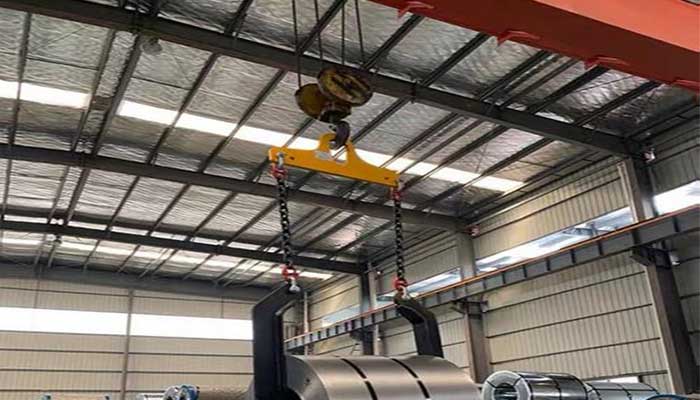 steel coil handling overhead cranes for horizontal coil handing
Even small mistakes in lifting can lead to serious problems:
- Coil deformation: Uneven pressure or misalignment can bend or flatten the coil. This affects how the coil feeds into processing lines.
- Surface damage: Cold-rolled or coated steel is easily scratched. Scrapes or dents can make the coil unusable or require extra finishing.
- Dropped loads: A crane or lifting device not rated for coil handling increases the risk of accidents, which can damage products and threaten worker safety.
- A crane isn't just a lifting tool—it's part of your quality control process.
- The right crane, combined with a proper lifting device and control system, keeps coils intact and safe.
- Ignoring proper selection often leads to hidden defects, costly replacements, and production delays.
- Don't rely on generic cranes or hooks for coils.
- Consider coil weight, diameter, width, and material type when choosing lifting equipment.
- Proper coil handling reduces product damage, safety risks, and long-term costs.
Who Typically Buys Coil Handling Cranes
Steel coil handling cranes aren't for everyone. The type of buyer usually depends on what the facility produces, how coils are processed, and how often they need to be moved. Knowing the typical buyers helps in selecting the right crane and lifting device.
- Steel mills (hot & cold rolling lines): Move raw or finished coils along production lines. Heavy-duty cranes are often required.
- Coil service centers & distribution warehouses: Need flexible cranes for storage, sorting, and dispatching coils efficiently.
- Slitting, cut-to-length, and shearing lines: Require precise handling to avoid coil deformation or misalignment.
- Galvanizing, coating, & finishing plants: Handle delicate or coated coils where surface protection is essential.
- Export yards & heavy-duty warehouses: Lift and transport large coil quantities safely for storage or shipment.
- Precision vs. capacity: Some buyers need exact positioning and smooth handling to protect the coil surface, while others focus on lifting heavy loads quickly.
- Flexibility: Many facilities handle different coil sizes and materials, requiring adjustable clamps or versatile crane configurations.
- Facility constraints: Each workshop has unique height, span, and runway limitations; one crane type rarely fits all scenarios.
Before requesting a quote, buyers should clearly define their facility type, typical coil dimensions, and daily handling frequency. This ensures the crane selected meets both operational needs and safety requirements, preventing costly mistakes.
Key Steel Coil Specifications Buyers Must Know
Selecting the right coil handling crane starts with understanding the steel coils themselves. Every detail matters, from weight to dimensions to material type. Missing or inaccurate information can lead to mis-sized cranes, damaged coils, and costly downtime.
- Coil weight (net and gross): The total weight, including packaging if any, determines the crane's rated capacity. Don't just look at the nominal coil weight; always include clamps and dynamic load factors.
- Outer diameter, inner bore, and width: These dimensions affect which clamps or C-hooks can be used and how the crane positions the coil safely.
- Material type: Different steel types—Hot-rolled (HR), Cold-rolled (CR), Galvanized (GI), Aluminum—have varying surface sensitivity and handling requirements. For example, coated or polished surfaces need extra protection to prevent scratches.
- Clamp and crane compatibility: Choosing a crane without knowing the coil's weight or diameter can result in poor lifting performance or unsafe operations.
- Avoid mis-sized cranes: The most common mistake buyers make is providing incomplete coil data. A crane that's too small or a lifting device that doesn't fit the coil can lead to product damage or operational delays.
- Efficiency and safety: Accurate coil specifications allow for proper planning of lifting devices, crane capacity, and duty cycle, reducing downtime and protecting operators.
Always gather detailed coil information before sending an RFQ. Include weight, outer and inner diameters, width, and material type. If your facility handles multiple coil sizes, provide the full range to ensure the crane is suitable for all operations.
Standard Coil Handling Crane Capacities
Choosing the right crane capacity is more than matching numbers on a specification sheet. You need to consider the coil weight, clamp weight, and dynamic forces during lifting. Selecting a crane that is too small can cause safety hazards, damage the coil, and increase maintenance costs.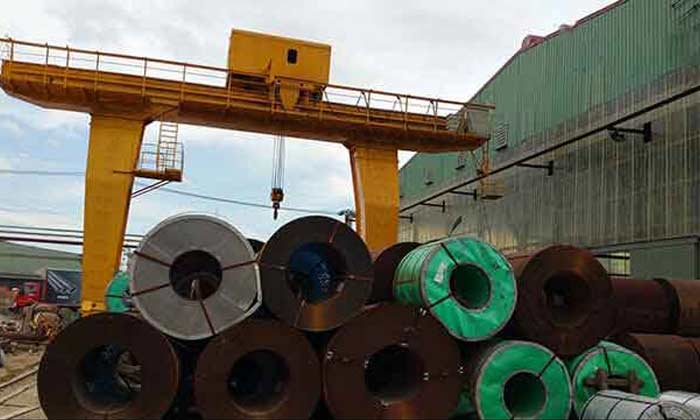
gantry crane with different coil lifters for steel coil hanlding
- 10–15 ton: Suitable for light-duty coils or facilities with low-frequency handling. Often used in small service centers or warehouses where coils are lighter and operations are intermittent.
- 20–25 ton: The most common choice for steel service centers and mills. This range handles medium to heavy coils efficiently while balancing cost and operational reliability.
- 32 ton and above: Chosen mainly for high safety margins or when handling exceptionally heavy coils. This does not always reflect the actual coil weight but provides extra assurance in demanding operations.
- Include all weight factors: Always calculate coil weight + clamp weight + dynamic load to determine the correct rated capacity. Ignoring any component can lead to under-capacity cranes.
- Avoid under-sizing: Using a crane that is too small can compromise safety, coil integrity, and workflow efficiency.
- Plan for the heaviest expected lift: Even if your coils are usually lighter, occasional heavier loads should dictate crane sizing.
Practical Tip:
When requesting a quote, provide the full range of coil weights and dimensions, including clamps. This ensures the manufacturer recommends a crane that is safe, efficient, and suitable for all your operations.
Coil Handling Devices: Clamps, C-Hooks, and Electromagnetic Systems
Selecting the right lifting device is just as important as choosing the crane itself. The device must match the coil's size, weight, and material type, and it should suit the facility's handling frequency and workflow. Using the wrong device can lead to coil damage, unsafe operations, and costly downtime.
Mechanical and motorized adjustable clamps:
- Most widely used for standard steel coils.
- Adjustable designs allow handling a range of diameters and widths.
- Motorized clamps provide smoother operation and reduce operator strain, particularly for frequent lifts.
C-hooks:
- Ideal for versatile coil handling in slitting lines or storage yards.
- They lift coils from the inner bore, reducing surface contact and minimizing scratches.
- Suitable for operations where multiple coil sizes are handled daily.
Electromagnetic lifts:
- Used in specific applications, such as hot-rolled steel or high-temperature coils.
- Limited use because not all materials or coatings are compatible with magnetic lifting.
- Offers quick pick-and-place operations but requires sufficient power supply and proper safety measures.
- Coil protection: The wrong device can scratch, dent, or deform coils.
- Operational safety: Improper lifts increase the risk of dropped loads or accidents.
- Efficiency: Correct devices reduce handling time, improve workflow, and extend crane life.
Match the lifting device to both the coil and the operation. For example, high-frequency handling favors motorized clamps, while varied coil sizes may require C-hooks or adjustable clamps. Always discuss the coil material, weight range, and daily cycles with the crane supplier to ensure optimal device selection.
Crane Configuration: Single Girder vs Double Girder
The structural configuration of a coil handling crane affects stability, handling precision, and long-term maintenance. Choosing between a single girder and double girder crane depends on the crane's capacity, span, and operational requirements.
Structural stability and span limitations:
- Single girder cranes are lighter and easier to install but have limited span and lower capacity.
- Double girder cranes provide higher stability, support heavier loads, and can cover longer spans.
Handling precision and maintenance access:
- Double girder cranes offer smoother movement and better alignment for precision coil handling.
- Maintenance is easier on double girder cranes as the hoist can be serviced without fully removing the crane.
Lifecycle cost implications:
- Single girder cranes are cheaper upfront but may have higher maintenance costs for frequent heavy lifts.
- Double girder cranes have higher initial cost but generally offer longer service life and fewer operational issues.
- Most coil handling cranes over 20 tons are double girder because stability and precision are critical for safety and product protection.
- Structural choice impacts long-term reliability more than the purchase price. Investing in the right configuration avoids premature wear, downtime, and costly repairs.
When planning a crane purchase, consider not just the weight of your heaviest coil, but also the span, duty cycle, and frequency of lifts. A double girder configuration often pays off in safety, precision, and reduced maintenance over time.
Duty Class and Working Frequency
When it comes to coil handling cranes, capacity alone isn't enough. How often and how hard a crane operates—its duty class—plays a major role in safety, reliability, and maintenance. Choosing the wrong class can result in early component failure and costly downtime.
- ISO A4 / FEM 1Am – Light usage:
Designed for occasional lifting with low-frequency operations. Suitable for small warehouses or light-duty coils. - ISO A5 / FEM 2M – Medium usage:
Handles regular operations during a shift. Common for steel service centers and medium-weight coils. - ISO A6+ – Heavy-duty, continuous operation:
Built for high-frequency, long-shift workloads with heavy coils. Required in large mills or processing lines.
- Frequency matters more than single lift weight: Repeated moderate loads can cause more wear than occasional heavy lifts.
- Under-rated duty leads to failures: Hoists, trolleys, and motors wear prematurely if duty class is insufficient.
- Plan for peak loads and cycles: Always consider the heaviest lifts and most frequent cycles, not just average operation.
- Track your daily lifting cycles, coil weights, and shifts.
- Share this information with your crane supplier to ensure the crane is correctly rated.
- A properly rated crane reduces maintenance, downtime, and safety risks over its lifespan.
Control, Safety, and Operator Protection
Handling steel coils leaves very little room for mistakes. Even minor errors can damage the product or create serious safety risks. That's why control systems and safety features are just as important as crane capacity or lifting devices.
- Pendant control: Reliable for operators stationed near the crane.
- Radio remote control: Lets operators move freely around the load for better visibility and safer handling. Ideal for large workshops or storage yards.
- Redundant brakes: Prevent the load from dropping if a primary brake fails.
- Load monitoring systems: Protect cranes and coils from overloading.
- Anti-sway control: Reduces swinging of heavy coils during travel.
- Emergency stop mechanisms: Allow operators to halt operations immediately in case of hazards.
- Precision and protection: Coils are heavy and sensitive. Safety systems minimize risk of damage or accidents.
- Operator reaction time: Clear visibility and responsive controls allow fast, safe operation.
- Match control type to your facility layout and workflow.
- Ensure the crane includes redundant safety systems for unexpected situations.
- Consider anti-sway or stabilization features for frequent or long-span lifts.
Workshop and Installation Considerations
Even the best coil handling crane can underperform or fail if the workshop and installation conditions aren't properly evaluated. Many buyers focus only on crane specifications and overlook critical site factors.
- Building load-bearing capacity: Ensure the floor and supporting structures can handle the crane's weight plus the heaviest coils.
- Runway beam condition and alignment: Poorly aligned or weak beams can cause crane instability, uneven movement, or premature wear.
- Power supply compatibility and phase requirements: Check voltage, current capacity, and phase type to ensure smooth crane operation.
- Future expansion or additional crane provisions: Plan for potential facility growth or additional cranes to avoid costly modifications later.
- Many coil handling crane projects fail not because of the crane itself, but due to insufficient building support, runway issues, or inadequate power supply.
- Early inspection and planning of the workshop and site conditions save time, reduce risk, and prevent expensive retrofits.
- Conduct a detailed site survey before ordering a crane.
- Confirm building load capacity, runway alignment, and electrical compatibility.
- Discuss future expansion plans with your supplier to ensure the crane system can accommodate growth.
Total Cost of Ownership
When buying a coil handling crane, the initial purchase price is only one part of the story. The real cost comes from operating, maintaining, and keeping the crane running safely over its lifetime. Understanding total cost of ownership helps buyers make smarter decisions.
- Crane structure and hoist: Includes the bridge, girders, trolley, and hoist system. Quality and durability affect long-term maintenance and safety.
- Lifting clamps or C-hooks: The correct device ensures coil protection and reduces the chance of damage-related costs.
- Installation, commissioning, and training: Proper setup and operator training are critical to avoid accidents and ensure smooth operations.
- Maintenance, spare parts, and downtime risk: Regular servicing, availability of spare parts, and minimizing downtime all contribute to overall cost.
- A low upfront price often becomes the most expensive choice over time. Cheap cranes may have higher maintenance requirements, more frequent repairs, and shorter lifespans.
- Investing slightly more initially in a well-engineered crane pays off with long-term reliability, safer operations, and reduced downtime.
- Calculate the crane's lifetime cost, not just purchase price.
- Include costs for clamps, installation, training, maintenance, and downtime risk in your budget.
- Discuss total cost expectations with your supplier to avoid surprises and ensure long-term efficiency.
Final Buyer Checklist Before Requesting a Quotation
Getting an accurate quote starts with a complete and detailed checklist. Supplying all the necessary information upfront helps avoid mis-sized cranes, operational delays, and unexpected costs.
What to Include
- Maximum coil weight and dimensions: Net and gross weight, outer and inner diameter, and width. Ensure the crane can handle your heaviest and largest coils safely.
- Maximum clamp weight: Add the weight of the lifting device to the coil’s weight when calculating crane capacity.
- Working frequency / duty cycle: How often and how fast the crane will operate—important for selecting the right duty class.
- Span, lifting height, and travel speeds: Include runway span, hook lift height, and required trolley and bridge speeds.
- Control system preference: Specify pendant control, radio remote, or other operator control systems to match your workflow.
- Safety, compliance, and operator protection: Include local regulations, load monitoring, anti-sway systems, emergency stops, and any redundant safety requirements.
Practical Tips
- The more detailed your checklist, the more accurate the quotation from suppliers.
- Think ahead about future expansion or heavier loads so the crane can meet long-term needs.
- Use this checklist to compare multiple suppliers objectively, ensuring you get a safe, efficient, and reliable solution.
Conclusion: Making Confident Coil Handling Crane Decisions
Buying a coil handling crane is not just about lifting capacity. It’s about protecting coils, ensuring operator safety, and maintaining reliable operations over the long term.
Key Points for Buyers
- Safety and coil protection first: Ensure the crane, lifting device, and control system work together to prevent damage or accidents.
- Consider technical factors: Include duty class, crane configuration, lifting device type, and operational frequency in your decision.
- Check workshop readiness: Confirm that the building, runway beams, and power supply are ready for installation.
- Look beyond the upfront price: Account for total cost of ownership, including maintenance, spare parts, downtime risk, and installation.
Practical Takeaways
- Make decisions based on specifications and operational needs, not just price.
- Use a structured, specification-driven approach to ensure safe, efficient, and cost-effective coil handling.
- Collaborate with your supplier to verify the crane meets both current and future requirements.