Crane Kits: Choosing the Right Kit for Your Crane
Crane Kits: Choosing the Right Kit for Your Overhead, Bridge, or Gantry Crane
Introduction
What’s in a Crane Kit?: When we talk about a "crane kit," we’re referring to all the key mechanical and electrical components needed to build a working crane—minus the main girder or structure. Think of it like the engine, wheels, and steering of a car, but without the frame. You get the essentials packaged together, usually including:
- End trucks (the wheel assemblies that run along the runway beams)
- Electric hoist or trolley (which lifts and moves the load)
- Motor and drive system
- Electrical panels and wiring
- Control system (pendant, remote, or cabin control)
- Festoon or cable system for power supply
These kits are designed to bolt onto a locally-fabricated girder or beam, which means you can build the full crane on site, often saving money and adapting to your space.
Why the Right Kit Matters: Not every crane kit fits every job. If you pick the wrong one, it could wear out too fast, lift slower than you need, or worse—fail under load. That’s a problem nobody wants to deal with. Matching the kit to your exact lifting needs makes sure the crane runs safely, efficiently, and with as little downtime as possible.
Some key reasons why it’s worth choosing carefully:
- Ensures lifting capacity and duty cycle meet your real workload
- Helps avoid overpaying for features you won’t use
- Reduces setup and maintenance headaches
- Makes future upgrades or part replacements easier
A well-matched kit helps the crane “fit in” with the rest of your operations, instead of becoming the bottleneck.
Where Are Crane Kits Used?: You’ll find crane kits used just about everywhere industrial lifting is needed. Buyers range from workshop owners installing a basic 3-ton crane, to project engineers setting up multi-ton gantry systems. Some of the most common environments include:
- Machine shops and repair workshops – light-duty single girder cranes with manual or electric hoists
- Warehouses and logistics centers – bridge cranes for moving pallets, parts, and goods overhead
- Steel mills and foundries – heavy-duty kits with robust motors, high heat resistance, and strong brakes
- Construction prefabrication plants – gantry crane kits with large spans and mobile support legs
- Fabrication and welding facilities – customized kits with fine speed control for handling molds, dies, or jigs
No matter the setting, choosing the right crane kit sets the tone for safety, productivity, and ease of future maintenance. It's not just about lifting—it's about lifting smart.
What is a Crane Kit?
Definition and Purpose: A crane kit is a ready-to-assemble package that includes all the mechanical and electrical parts needed to build an overhead crane—except for the main load-bearing beam or girder. These kits are especially useful for companies or contractors who plan to fabricate the crane structure locally but want to ensure that the functional parts are reliable, compatible, and pre-engineered.
In short, a crane kit gives you the operational heart of a crane without the bulk of the steel structure. It’s ideal when you already have the capability to fabricate girders or support frames in-house or through a trusted local supplier. This also helps lower shipping costs and provides flexibility in adjusting the girder length or type based on site conditions.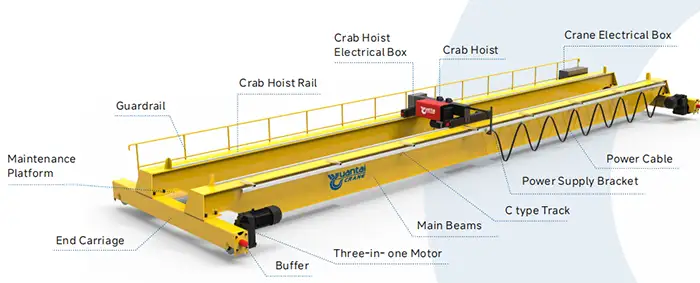
complete overhead crane kit , economical double girder overhead crane kit without main girder
Key Components Typically Included: Crane kits vary slightly by supplier and crane type, but a standard overhead or gantry crane kit usually includes the following components:
- End Trucks: These are the wheeled assemblies that support and move the crane along the runway beams (in a bridge crane) or ground tracks (in a gantry crane). They come with motors, gearboxes, wheels, and drive mechanisms. You’ll need to know your span and wheelbase to get the right fit.
- Trolley and Hoist: This unit travels along the crane girder and does the actual lifting. The hoist (wire rope or chain type) determines your lifting capacity, lifting speed, and hook travel. In single girder cranes, the trolley is usually built into the hoist, while double girder systems often use a separate trolley with a mounted hoist.
- Electrical Control System: Includes the control cabinet, circuit breakers, motor contactors, overload protection, and wiring terminals. Everything comes pre-engineered to match the motors and hoist system, helping avoid electrical mismatches or safety issues during installation.
- Festoon or Cable System: This system delivers power to the moving parts of the crane. Festoon tracks with cable trolleys are common in indoor bridge cranes, while cable reels or energy chains may be used for outdoor or gantry cranes. These systems keep your power lines organized, flexible, and safe from snagging or damage.
- Bolts, Brackets, and Drive Units (as applicable): Mounting hardware, drive couplings, buffers, limit switches, and any small parts required for assembly. Some kits also include geared motors and brake units, depending on whether you're ordering a complete drive solution.
Advantages of Using Crane Kits: Crane kits simplify the entire crane sourcing and building process—especially when you don’t want to engineer each part separately. Here’s why many project managers and buyers prefer going with kits:
- Simplified Sourcing: Instead of hunting down each part (and hoping they all work together), you get a complete, matched system from one supplier. This reduces procurement time and avoids compatibility problems.
- Standardized Components: All components are designed to work together in terms of power ratings, dimensions, control logic, and mounting. This improves performance, reduces vibration, and extends the life of the system.
- Ease of Installation and Maintenance: Kits often come with technical drawings, wiring diagrams, and pre-calibrated settings. This makes them easy to assemble even for contractors or technicians who are building their first crane. Standard parts also make future repairs or replacements more straightforward, since you can reorder exact matches.
A crane kit isn’t just a parts package—it’s a strategic tool for project flexibility, budget control, and efficient crane building. Whether you’re assembling a small 3-ton crane in your shop or a 50-ton gantry crane in a shipyard, the right kit can save you a lot of time, guesswork, and long-term hassle.
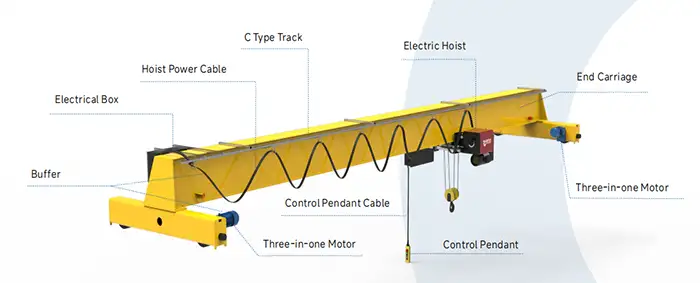
Overhead Bridge Crane Kits
Best for: Indoor industrial environments such as workshops, manufacturing plants, warehouses, and assembly lines.
Overhead bridge crane kits are the most commonly used in fixed indoor setups. These systems run along runway beams fixed to building columns or steel supports, covering large rectangular areas for efficient material handling.
- Lighter weight, lower cost
- Suitable for capacities up to ~20 tons (varies by design)
- Typically paired with compact hoists
- Easier to install and maintain
- Good for low headroom situations
- Supports heavier loads (often 10–100 tons)
- Provides greater hook height since hoist sits between girders
- More stable for long spans and high-frequency use
- Ideal for heavy-duty workshops, steel fabrication, and foundries
Top-Running vs. Underrunning Mounting
- Top-running systems are supported on top of the runway beams. They handle heavier loads and allow greater span.
- Underrunning (suspended) systems are hung below the runway beams, ideal for light loads and buildings with limited headroom.
Other Options to Consider:
- Span: Common spans range from 5m to 30m or more
- Duty class: From light-duty (A3) to heavy-duty (A7 or A8) depending on usage
- Speed: Fixed-speed or variable frequency drives for lifting and traveling
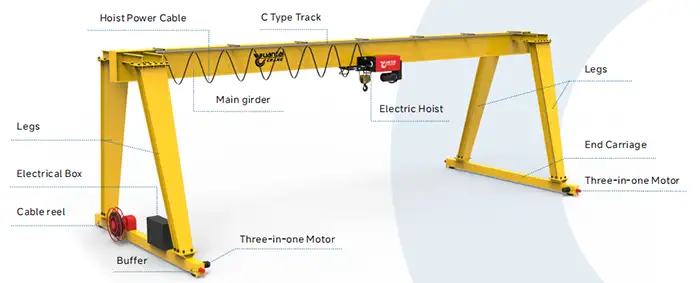
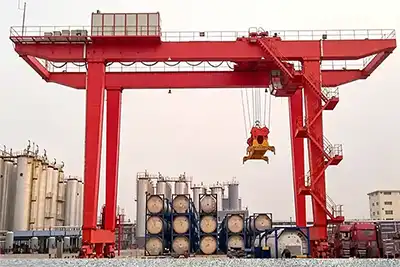
complete gantry crane kit, crane kit without main steel structure are provided.
Gantry Crane Kits
Best for: Outdoor yards, construction sites, warehouses without roof structures, and applications where portability is needed.
Gantry crane kits offer more flexibility in installation, especially when a building can’t support a runway beam. These systems move on wheels or rails and can be easily relocated or modified.
Full Gantry Crane Kits
- Two legs running on floor-mounted rails
- Often used in large material yards, precast plants, or outdoor assembly zones
- Can be powered or manual depending on size and capacity
Semi-Gantry Crane Kits
- One leg runs on ground rail, the other runs on an elevated runway (wall-mounted)
- Ideal for narrow areas where space is limited on one side
- Common in fabrication shops and manufacturing lines
Portability and Installation Tips
- Ground preparation is key—rails must be aligned and secure
- Kits may include power cables via cable reels or festoon tracks
- Some small gantry kits can be wheel-mounted for mobile use within a site
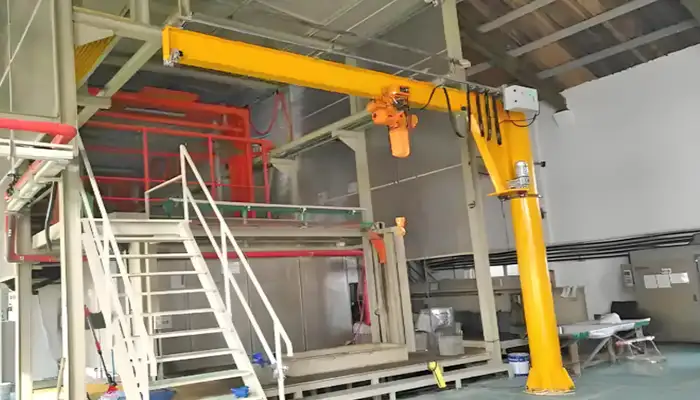
Complete jib crane kit, and cost-effective price jib crane kits without steel arm and pilllar are provided .
Jib Crane and Wall-Mounted Crane Kits (Optional)
Best for: Localized lifting tasks such as machine loading, repair stations, and individual work zones.
If you're working in a small or confined space and don’t need to cover a wide area, jib crane kits are a practical solution. They’re also a great addition to larger crane systems when handling repetitive tasks in a fixed location.
- Floor-mounted, with rotating arms (typically 180° to 360°)
- Capacities typically range from 0.5 to 5 tons
- Great for loading/unloading workbenches or CNC machines
- Can be motorized or manual
Wall-Mounted or Wall-Traveling Kits
- Mounted to existing structural columns or walls
- Saves floor space
- Ideal for assembly lines and maintenance areas
- Limited in swing range and height, but very compact
Each crane kit design serves a different role, and choosing the right one depends on your load weight, working space, frequency of use, and installation constraints. When in doubt, it’s best to get input from your supplier or crane builder to ensure the system fits your project like a glove.
Matching Crane Kits to Applications
Crane kits aren’t one-size-fits-all. A kit that works well in a small parts warehouse might fail—or wear out fast—in a hot, dusty steel plant. To avoid performance issues or safety risks, you need to match the crane kit to the specific working conditions of your site. This section will walk you through the most important factors to consider and provide a few practical examples for reference.
Key Selection Factors
Choosing the right crane kit starts with evaluating your actual lifting needs—not just what looks good on paper. Here are the main details to sort out before making a decision:
Load Capacity and Lifting Height
- What’s the maximum weight you'll be lifting? Always build in a safety margin of at least 20–30%.
- How high do you need to lift the load? Low headroom buildings may limit hoist options.
- Example: A 5-ton hoist with 6-meter lifting height might work for a small warehouse, but not for handling tall dies or molds.
Span and Runway Length
- Span refers to the distance between the end trucks (width of coverage), while runway length is how far the crane travels.
- Kits are pre-engineered to match specific spans—so always confirm girder size and wheelbase.
- Long-span cranes often need double girders and stronger end truck assemblies.
Operating Environment
- Indoor vs. Outdoor: Outdoor cranes need weatherproof motors, IP-rated electrical systems, and UV-resistant cables.
- Dusty or Corrosive: Foundries, cement plants, or chemical factories often require sealed motors, enclosed drives, or stainless hardware.
- Explosive Areas: Explosion-proof hoists, sealed enclosures, and spark-resistant materials may be mandatory.
Frequency of Use and Duty Cycle
- Duty cycle refers to how often and how long the crane will operate in a day.
- Light-duty kits (Class A3) are fine for occasional lifting.
- Heavy-duty kits (Class A5–A7) are needed for continuous production use, especially in steel, mining, or manufacturing plants.
- Higher duty also means better brakes, stronger motors, and more robust gearboxes.
Application Examples
Still not sure which type of crane kit is the right fit? Here are three common real-world cases to help visualize your options:
Light-Duty Warehouse Lifting → 2–5 Ton Single Girder Crane Kit
- Ideal for: Packaging plants, light assembly lines, tool storage
- Features: Low headroom hoist, manual or VFD drive, pendant control
- Environment: Indoor, clean, low usage (2–4 hours/day)
- Reason to choose: Affordable, simple to install, minimal maintenance
Steel Mill Billet Handling → 20–30 Ton Double Girder Crane Kit
- Ideal for: Billet or slab yard, hot metal handling, heavy steel loads
- Features: Double girders for added strength, heat-resistant motors, heavy-duty trolleys
- Environment: High temperature, possibly dusty or corrosive
- Reason to choose: High-duty rating, strong structure, good safety margin for steel industry loads
Outdoor Material Yard → 10 Ton Gantry Crane Crane Kit
- Ideal for: Precast yard, fabrication plant, scrap yard
- Features: Full gantry or semi-gantry structure, cable reel festoon system, weatherproof enclosures
- Environment: Outdoor, exposed to wind, sun, rain
- Reason to choose: Flexible layout, easy ground-level access, no need for building supports
Matching the crane kit to the right application isn't just about specs—it's about making sure the crane works with your space, your workflow, and your future plans. A little attention to detail now can save you a lot of downtime later.
Customization Options
Not every crane kit comes off the shelf ready for your exact environment—and that’s okay. One of the biggest advantages of choosing a crane kit is the ability to customize the components to better match your job site, workflow, and safety requirements. Whether you're dealing with extreme heat, corrosive chemicals, or the need for precision lifting, there are practical add-ons and upgrades that can make your crane run smoother, last longer, and fit your operations better.
Motor Brands, Speed Control, and VFDs
You often have the choice of motor brands, depending on your preferences or country-specific service requirements.
- Options may include Siemens, Schneider, SEW, ABB, or Chinese brands like Jiangte or Nanjing.
- Some buyers prefer local serviceable brands to make future repairs easier and reduce downtime.
Variable Frequency Drives (VFDs) are a common upgrade and allow you to:
- Adjust hoisting and traveling speeds smoothly
- Prevent load swings during starts and stops
- Reduce mechanical stress on motors and brakes
- Improve energy efficiency and control for delicate handling
Tip: If your crane needs to move molds, dies, or precision parts, a VFD isn’t just “nice to have”—it’s essential.
Remote Control or Cabin Control Options
- Pendant control is standard and suits most small-to-medium indoor cranes.
- Radio remote control gives operators freedom to move with the load, improving visibility and safety. Especially useful when handling long or awkward loads where the operator needs to stay clear of the hook path.
- Cabin control is common for large double girder cranes in steel plants, foundries, or shipyards.Offers enclosed protection for the operator and better control over heavy or dangerous lifts.
Anti-Sway Systems or Automation-Ready Kits
Anti-sway systems use sensors and control algorithms to minimize load swing during movement.
- Reduces accident risk and improves positioning speed.
- Ideal for high-bay warehouses or operations with narrow stacking areas.
Automation-Ready Kits may include:
- Encoder feedback systems
- PLC control panels
- Interfaces for remote monitoring or full automation
- Load positioning memory and programmable travel paths
These are especially useful in repetitive lifting jobs or where labor costs are high and precision is key.
Weather Protection for Outdoor Use
Outdoor cranes are exposed to the elements, and unprotected components can fail quickly in harsh weather. Customizations may include:
- IP55 or higher-rated motors and control panels
- UV-resistant festoon cables or sealed cable reels
- Stainless steel enclosures for junction boxes
- Rain covers for hoists and motors
- Rust-resistant paint for exposed steel parts
Always let your supplier know if the crane will be exposed to rain, snow, or direct sunlight.
Special Coatings for Corrosive or Hazardous Environments
If your crane will operate in tough environments—like chemical plants, coastal yards, or waste treatment facilities—standard coatings won’t cut it.
Common protective upgrades include:
- Epoxy or zinc-rich primers for saltwater resistance
- Flame-resistant cable jackets and control panels for hazardous zones
- Spark-proof hooks, wheels, and brass bumpers for explosive gas/dust atmospheres
- Stainless steel fasteners and parts for chemical resistance
These options help extend service life and reduce the chance of sudden failures in harsh operating zones.
Crane kit customization isn’t just about “bells and whistles”—it’s about building a lifting system that works with your conditions, not against them. Whether you need more control, more protection, or more precision, talk to your supplier early to plan ahead. It’ll save you a lot of retrofitting and regret down the line.
Benefits of Buying a Complete Kit vs. Individual Components
When planning to build an overhead or gantry crane, buyers often face the choice: Should you buy a complete crane kit, or order each component separately? While buying parts individually might seem more flexible at first glance, most experienced users and project managers will tell you—it usually makes more sense to go with a complete crane kit, especially if you're building the main girder locally. Here's why:
Time and Cost Efficiency
- A full crane kit saves hours of research, back-and-forth communication, and sourcing time.
- All components are bundled, priced as a package, and ready to ship. You don’t have to deal with five or six different vendors just to assemble one working crane.
- When you account for the cost of shipping, compatibility issues, and rework if components don't fit—kits often end up being more affordable in the long run.
Compatibility Assurance
- All components in a crane kit are engineered to work together—from the motor and gearbox to the control panel and festoon system.
- That means no surprise misalignments, wiring headaches, or mismatched speeds.
- You get a hoist that runs smoothly with the trolley, which fits perfectly on the end trucks, with motors that match the electrical system.
This peace of mind is especially valuable if your team has limited experience with crane assembly.
Easier Project Coordination and Installation
- Suppliers usually provide complete electrical diagrams, 3D drawings, and installation instructions for the whole kit.
- That makes planning, fabrication, and assembly faster—less time wasted figuring out “what goes where.”
- If you need installation support or service later, it’s easier to work with one supplier who knows the entire system inside and out.
Ideal for Fabricators or Users Who Build Main Girders Locally
- If you have steel fabrication capabilities or a trusted structural supplier nearby, you can just build the girder locally and bolt on the rest.
- This keeps shipping costs lower—especially for long spans—and gives you flexibility in adapting the girder size or shape to fit the building.
- Local fabricators may also be able to reinforce or modify girders to meet site-specific constraints, without relying on a foreign OEM for every change.
Buying Tips for First-Time Crane Kit Buyers
If you're buying a crane kit for the first time, it's easy to overlook the details that affect installation, performance, and long-term reliability. These tips will help you avoid common mistakes and get the most value from your investment:
Request Detailed Technical Support and Drawings
- Ask the supplier for layout drawings, electrical schematics, and girder connection diagrams before placing your order.
- Make sure the documentation matches your building dimensions, hook height needs, and runway layout.
- A reputable supplier should help you check these details, not just take your order.
Verify Supplier Certifications (ISO, CE, etc.)
Certification isn't just paperwork—it shows the supplier meets basic quality and safety standards.
Look for:
- ISO 9001 for quality management
- CE marking for European compliance
- Third-party inspection reports for exported kits
These give you confidence that the components have been tested and approved for industrial use.
Clarify Local Fabrication Capabilities for the Main Girder
- If you're building the girder yourself, confirm you have access to the right steel grade, welding tools, and skilled technicians.
- Ask the supplier for load calculations and girder specifications (such as beam size, deflection limits, and wheel loads) to avoid under- or overbuilding.
- For critical applications, consider having a structural engineer review your design.
Review Warranty, After-Sales Service, and Spare Parts Availability
- Ask about warranty terms for major components like the hoist, motors, and control system.
- Check whether the supplier stocks spare parts and how quickly they can ship replacements.
- Inquire about remote support options—can they help you troubleshoot by phone or video if something doesn’t work?
The upfront price is only part of the story. A well-chosen crane kit should be easy to install, safe to operate, and reliable for years. Take the time to ask the right questions now—it’ll save you a lot of downtime, delays, and frustration later.
Conclusion
Choosing the right crane kit isn’t just about lifting capacity or price—it's about making sure your crane system truly fits your working environment, operational needs, and long-term plans. A mismatched kit might still lift a load, but it can lead to safety risks, poor performance, and unnecessary maintenance headaches down the road.
By carefully matching the crane kit to your application—whether it’s light warehouse handling, heavy-duty steel mill operations, or outdoor gantry work—you set the foundation for smoother operations and a longer service life. The right kit also helps you avoid overbuying or underestimating, both of which can hurt your budget and productivity.
If you’re not sure which kit suits your setup, you’re not alone. Crane systems are technical, and every job site is different. That’s why it’s always worth discussing your needs in detail with a knowledgeable manufacturer or supplier. A good supplier won't just sell you a product—they'll help you find a solution that works, down to the last bolt.
If you're planning to build an overhead, bridge, or gantry crane and want to avoid costly trial and error, now is the time to act:
- Request a Customized Crane Kit Quote: Tell us your load capacity, span, lifting height, and working conditions. We’ll recommend a crane kit tailored to your exact needs—no more, no less.
- Need Help with Planning?: We’re here to help. Whether you’re building the main girder locally or need guidance choosing between single and double girder kits, our technical team can walk you through the details.
Let us help you build the right crane, right from the start.