Double Cantilever RMG Cranes: Cost, ROI & Yard Efficiency Guide 2026
Most Important Takeaway
Double cantilever RMG cranes offer terminal developers a strategic balance between upfront investment and long-term operational efficiency. Understanding the cost structure, ROI, lift cycle performance, and land-use optimization is essential for maximizing yard productivity and future-proofing terminal operations.
- Double cantilever RMG cranes require higher initial capital but deliver faster lift cycles and improved container throughput.
- Strategic placement and yard layout can significantly reduce land use while maximizing operational efficiency.
- Proper cost-benefit analysis reveals that long-term savings in labor, fuel, and equipment wear often outweigh the initial investment.
- Evaluating ROI involves considering lift cycle frequency, container size mix, and integration with yard automation.
- Selecting the right crane design impacts both safety compliance and terminal scalability.
Introduction: Making the Right Choice for Your Terminal
Double cantilever Rail Mounted Gantry (RMG) cranes are a backbone of modern container terminals. They stretch across multiple lanes, lift containers efficiently, and move them with precision. What sets the double cantilever design apart is its reach—it can handle more lanes without adding extra cranes, which saves space and simplifies yard operations.
Why This Matters for Terminal Developers
Investing in a double cantilever RMG crane isn’t just about the sticker price. It’s about understanding the real impact on your yard’s productivity and long-term costs. Ask yourself:
- Will this crane help move containers faster?
- Can it maximize space in a crowded terminal?
- How soon will the investment start paying off?
Answering these questions upfront prevents costly surprises later and ensures your terminal runs smoothly.
Key Questions This Guide Answers
What drives the cost of a double cantilever RMG crane?
From the structural framework to hoists, electrical systems, and track installation, every component contributes to the overall investment.
How does the crane improve yard efficiency?
Efficient lift cycles, optimized lane coverage, and better stacking reduce handling time and make the most of available land.
When does the ROI make sense?
The recovery period depends on container volume, lift frequency, and integration with yard management systems. High-traffic terminals typically see returns sooner.
By looking at these practical aspects, developers can make informed decisions that balance upfront costs with operational benefits. This guide is designed to give you clear, actionable insights for planning, budgeting, and running an efficient container yard.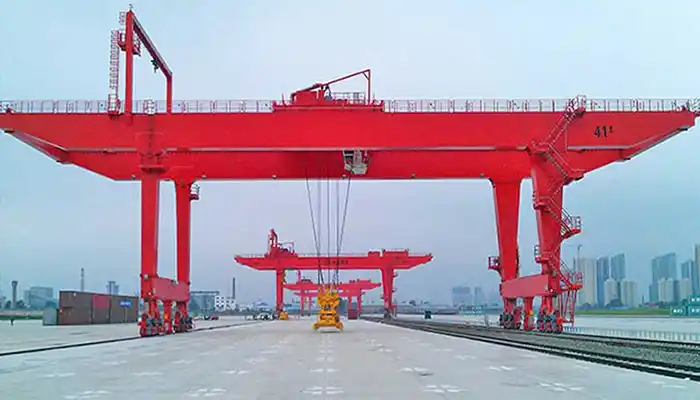
Double Cantilever RMG Cranes
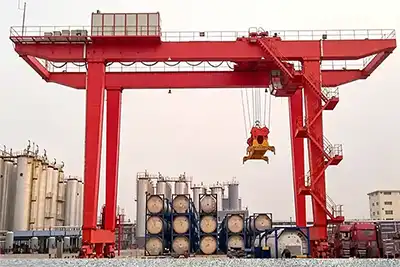
Double cantilever RMG cranes are a specialized type of rail-mounted gantry designed for high-density container terminals. Unlike single cantilever or conventional RMG cranes, these cranes have a dual-arm structure that allows them to span multiple container lanes simultaneously. This feature gives operators more reach without adding extra equipment, which is especially useful in tight yard layouts.
The main differences compared to other RMG designs include:
- Extended Reach: Able to cover two or more container lanes at once, reducing the number of cranes needed.
- Dual Cantilever Arms: Provides structural stability while allowing greater lane coverage.
- Optimized Lift Cycles: Faster container handling due to simultaneous movement along multiple lanes.
These features make double cantilever cranes ideal for terminals where space is limited and container throughput is high.
The price of a double cantilever RMG crane is influenced by several core components:
- Bridge Structure: Larger spans and reinforced frames increase material and fabrication costs.
- Hoist System: Single or twin hoists, lifting capacity, and speed specifications directly impact both cost and productivity.
- Automation: Remote operation, programmable lift cycles, and integration with terminal software add upfront expense but can improve efficiency and reduce labor costs.
- Electrical Systems: Motors, power distribution, lighting, and safety controls are essential for smooth and safe operations.
Understanding how these components contribute to both initial investment and long-term operating costs is crucial for accurate budgeting and ROI planning.
Terminals with limited space or high container volumes gain several advantages from double cantilever RMG cranes:
- Efficient Use of Land: Fewer cranes cover more lanes, freeing up space for container stacking or equipment movement.
- Faster Turnaround: Multiple lanes lifted in a single pass reduces container handling time.
- Scalability: Layouts can be adapted without needing major infrastructure changes.
- Reduced Congestion: Optimized reach lowers lane congestion and minimizes delays in container retrieval.
In short, double cantilever RMG cranes combine space efficiency, operational speed, and flexibility, making them a practical choice for busy, high-density container terminals.
The bridge structure is the backbone of the crane. Larger spans and reinforced frames provide the strength needed to cover multiple lanes, but also increase material and fabrication costs.
Hoist options, including single or twin hoists, lifting capacity, and speed, directly affect productivity and operating efficiency. Proper selection ensures that crane performance matches terminal demands.
Remote operation, programmable lift cycles, and integration with terminal management software enhance efficiency and reduce labor costs, but they add upfront expense.
Electrical systems, including motors, power distribution, safety controls, and lighting, ensure smooth and safe operation. Their quality and reliability are critical to long-term performance.
Cost Breakdown
Investing in a double cantilever RMG crane involves more than just buying the equipment. The total cost includes the crane itself, installation, civil works, and ongoing operational expenses. Understanding where your money goes is key to planning a budget that avoids surprises and ensures long-term efficiency.
The upfront cost covers several major elements:
- Equipment Purchase: The crane's structure, hoists, electrical systems, and automation features. Larger spans and higher lifting capacities increase this cost.
- Installation: Rail alignment, crane assembly, and integration with existing yard infrastructure. Precision is critical here to ensure smooth operation.
- Civil Works: Foundations, track supports, and yard modifications needed to accommodate the crane safely.
- Commissioning: Testing, calibration, and operator training before the crane enters full operation.
Why it's higher than conventional cranes: The dual cantilever design, advanced hoist systems, and automation add both complexity and material costs compared to single cantilever or older RMG models.
Even after installation, cranes continue to generate expenses that must be factored in:
- Energy Consumption: Electric motors and automation systems use significant power, especially in high-frequency lift operations.
- Routine Maintenance: Regular inspections, lubrication, and replacement of wear parts to prevent downtime.
- Labor: Skilled operators, technicians, and support staff are required for safe, efficient operation.
Compared to simpler crane types, double cantilever RMGs may have slightly higher operational costs, but the improved efficiency and faster lift cycles often offset these expenses over time.
There are less obvious costs that terminal developers often overlook:
- Downtime: Unplanned stops due to mechanical failure or track issues can be costly.
- Wear-and-Tear: Heavy-duty operation accelerates component replacement, especially hoists and wheels.
- Training Requirements: Operators and maintenance teams must be trained to handle the crane safely and efficiently.
Accounting for these hidden factors is essential for realistic ROI calculations and long-term operational planning.
What makes double cantilever RMG cranes more expensive upfront?
The dual-arm structure, extended reach, and automation features all contribute to higher initial costs.
How do ongoing costs compare to alternatives?
While energy, maintenance, and labor are slightly higher, faster lift cycles and improved yard efficiency often reduce total cost per container handled.
Cost Breakdown
Investing in a double cantilever RMG crane involves more than just buying the equipment. The total cost includes the crane itself, installation, civil works, and ongoing operational expenses. Understanding where your money goes is key to planning a budget that avoids surprises and ensures long-term efficiency.
The upfront cost covers several major elements:
- Equipment Purchase: The crane's structure, hoists, electrical systems, and automation features. Larger spans and higher lifting capacities increase this cost.
- Installation: Rail alignment, crane assembly, and integration with existing yard infrastructure. Precision is critical here to ensure smooth operation.
- Civil Works: Foundations, track supports, and yard modifications needed to accommodate the crane safely.
- Commissioning: Testing, calibration, and operator training before the crane enters full operation.
Why it's higher than conventional cranes: The dual cantilever design, advanced hoist systems, and automation add both complexity and material costs compared to single cantilever or older RMG models.
Even after installation, cranes continue to generate expenses that must be factored in:
- Energy Consumption: Electric motors and automation systems use significant power, especially in high-frequency lift operations.
- Routine Maintenance: Regular inspections, lubrication, and replacement of wear parts to prevent downtime.
- Labor: Skilled operators, technicians, and support staff are required for safe, efficient operation.
Compared to simpler crane types, double cantilever RMGs may have slightly higher operational costs, but the improved efficiency and faster lift cycles often offset these expenses over time.
There are less obvious costs that terminal developers often overlook:
- Downtime: Unplanned stops due to mechanical failure or track issues can be costly.
- Wear-and-Tear: Heavy-duty operation accelerates component replacement, especially hoists and wheels.
- Training Requirements: Operators and maintenance teams must be trained to handle the crane safely and efficiently.
Accounting for these hidden factors is essential for realistic ROI calculations and long-term operational planning.
What makes double cantilever RMG cranes more expensive upfront?
The dual-arm structure, extended reach, and automation features all contribute to higher initial costs.
How do ongoing costs compare to alternatives?
While energy, maintenance, and labor are slightly higher, faster lift cycles and improved yard efficiency often reduce total cost per container handled.
ROI Analysis
Investing in a double cantilever RMG crane is a major decision, but the key question for terminal developers is always: When will this investment pay off? Understanding ROI requires looking beyond the upfront cost to how the crane improves yard productivity, lift cycle speed, and overall throughput.
Several operational elements directly affect how quickly your crane investment can be recovered:
- Lift Cycle Speed: Faster cranes move containers more quickly, reducing waiting times for trucks and vessels. Every extra container moved per hour increases revenue potential.
- Handling Efficiency: Optimized stacking, reduced lane congestion, and fewer manual movements lower labor costs and minimize errors.
- Yard Throughput: High-frequency operations benefit most from double cantilever RMG cranes because multiple lanes can be served simultaneously.
Even small improvements in these areas can compound into significant savings over time.
Case studies from busy container terminals show that high-frequency double cantilever RMG cranes can recover their initial investment in 5 to 10 years, depending on container volumes and lift cycles.
For example:
- A terminal handling 1,500–2,000 TEUs per day reduced vessel turnaround time by 12–15% after installing double cantilever RMG cranes.
- Labor hours per container dropped by 10–12%, as operators could move multiple lanes without repositioning cranes.
- Stacking density improved, freeing up additional yard space without expanding the footprint.
The ROI isn't just about money saved—it's also about operational improvements that translate into measurable benefits:
- Reduced Vessel Turnaround: Faster container handling helps ships depart on schedule, reducing demurrage fees.
- Lower Labor Costs: Less manual handling and optimized crane coverage reduce overtime and staffing needs.
- Optimized Yard Space: Higher stacking density and fewer crane moves free up space for additional containers or equipment.
When will the investment break even?
Break-even depends on container volume, lift cycles, and operational efficiency. High-traffic terminals typically see ROI in 5–10 years.
How do lift cycles and throughput affect profitability?
The more containers a crane can move in a given time, the faster costs are recovered. Efficient lift cycles reduce delays, labor, and vessel turnaround, directly boosting profit per TEU handled.
In short, ROI for double cantilever RMG cranes is strongly tied to operational efficiency. Terminals that prioritize speed, high-frequency operations, and optimized yard layouts are the ones that see the fastest returns.
Yard Efficiency and Land Use Optimization
Double cantilever RMG cranes don't just lift containers—they reshape how a terminal uses its space. Efficient yard design can dramatically reduce congestion, improve retrieval times, and allow more containers to be stored in the same footprint. For terminal developers, this is where smart planning meets measurable operational gains.
The way cranes are spaced along tracks has a direct effect on both operational efficiency and land use:
- Crane Spacing: Proper distance between cranes reduces interference while maximizing coverage across lanes. Too close, and cranes block each other; too far, and some areas are under-served.
- Track Alignment: Straight, level tracks reduce travel time and wear on crane wheels, allowing smoother lift cycles.
- Lane Coverage: Double cantilever cranes can serve multiple lanes in one pass, reducing the number of cranes needed and freeing up yard space.
Container yard efficiency isn't just about how many cranes you have—it's about how the yard is organized:
- Stacking Height: Double cantilever cranes can reach higher stacks safely, increasing storage density.
- Lane Width: Narrower lanes are possible without slowing operations, as cranes cover multiple lanes simultaneously.
- Container Retrieval: Fewer moves are needed to access a container, cutting retrieval times and reducing congestion during peak periods.
Modern terminals increasingly rely on software and automation to maximize efficiency:
- Yard Management Systems (YMS): Track container locations, schedule crane operations, and reduce idle time.
- Automation Support: Some cranes can be partially or fully automated, performing routine lift sequences without constant operator input.
- Predictive Planning: Software can optimize stacking and lane usage based on expected vessel arrivals and container flow.
How can terminals maximize space with minimal crane footprint?
- By optimizing crane spacing, track layout, stacking height, and lane width.
- Integrating cranes with automation and yard management software ensures containers are moved efficiently, and space is used effectively.
In practice, a well-designed yard with double cantilever RMG cranes can store more containers, reduce handling delays, and make terminal operations smoother and more predictable.
Comparative Analysis
Choosing the right RMG crane goes beyond just cost—it's about how each type fits your terminal layout, container volume, and long-term operational goals. Each design has its own strengths, limitations, and ideal use cases.
Before we dive into specifics, it's important to understand the core differences between double cantilever, single cantilever, and conventional RMG cranes. These differences influence coverage, speed, maintenance, and overall yard efficiency.
Double Cantilever RMG Cranes:
These cranes are designed for high-density terminals where multiple lanes need coverage at once. The dual-arm design allows operators to move containers faster and stack them more efficiently.
- Cover multiple lanes simultaneously, reducing the number of cranes needed.
- High stacking efficiency improves space utilization.
- Faster lift cycles support high-frequency operations.
- Higher initial investment and slightly more complex operations.
Single Cantilever RMG Cranes:
Single cantilever cranes are simpler and usually cover one lane at a time. They are cost-effective for smaller terminals but may require more cranes for the same coverage.
- Lower upfront cost and simpler maintenance.
- Suitable for smaller yards or lower container volumes.
- Easier integration with existing infrastructure.
- Limited lane coverage may increase retrieval times.
Conventional RMG Cranes:
Conventional RMG cranes are standard single-bridge designs that work well in open or medium-density yards. They are reliable but less efficient in tight, high-density layouts.
- Standard design with straightforward setup and maintenance.
- Best for yards with plenty of space and moderate throughput.
- Less flexible for high-density stacking or multi-lane coverage.
- Slower operations compared to cantilever designs.
Every crane type offers trade-offs between cost, efficiency, and operational flexibility. Knowing these helps you choose the right fit for your terminal.
Advantages of Double Cantilever:
Double cantilever cranes allow terminals to increase throughput while minimizing congestion. They are especially beneficial in automated or semi-automated operations.
- Faster operations with fewer cranes.
- High stacking efficiency reduces lane congestion.
- Compatible with automation and yard management systems.
Limitations of Double Cantilever:
The added complexity and higher upfront cost require careful planning and skilled operators.
- Higher capital investment.
- Requires skilled operation and regular maintenance.
Advantages of Single Cantilever / Conventional RMGs:
These cranes are simpler to operate and maintain, making them suitable for smaller or medium-volume terminals.
- Lower cost and simpler setup.
- Easier to maintain and operate.
Limitations:
Their limited reach may require additional cranes and can slow operations in high-density yards.
- Reduced lane coverage in dense layouts.
- More cranes may be needed for similar throughput.
Choosing the right crane affects not only current operations but also how easily the terminal can expand or adapt in the future.
- Fleet Flexibility: Double cantilever cranes allow layout adjustments without adding extra cranes.
- Expansion Potential: High-density cranes make it easier to increase container volumes without major yard changes.
- Operational Planning: Crane choice influences labor, maintenance schedules, and future automation integration.
Which crane type delivers the best long-term value for specific terminal layouts?
- High-density, high-volume terminals usually gain the most from double cantilever cranes.
- Smaller or medium-volume yards may benefit more from single cantilever or conventional RMGs.
- The key is balancing upfront costs, expected throughput, yard space, and expansion plans.
Implementation Considerations
Installing a double cantilever RMG crane is a complex process that requires careful planning and coordination. Developers need to think beyond just purchasing the crane and consider every stage from preparation to operation. Proper implementation ensures safety, efficiency, and long-term reliability.
Successful crane deployment happens in clear stages. Each phase is critical for ensuring the crane operates safely and meets performance expectations.
- Planning: Assess yard layout, container volumes, and lane coverage requirements. Proper planning identifies the number of cranes needed, track alignment, and potential space constraints.
- Procurement: Select a crane model that fits operational requirements, budget, and technical specifications. Consider lead times, supplier reliability, and maintenance support.
- Civil Works: Prepare foundations, tracks, and support structures. Accurate measurements and quality construction prevent operational issues and reduce downtime.
- Commissioning: Install, test, and calibrate the crane. Operators and maintenance teams should receive hands-on training to ensure smooth handover.
Double cantilever RMG cranes operate in high-density yards, making safety and regulatory compliance essential. Planning for these requirements upfront prevents accidents and legal issues.
- Safety Protocols: Emergency stops, safe operating zones, and regular inspections reduce risks during daily operations.
- Regulatory Compliance: Meet local and international standards for load handling, electrical systems, and structural integrity.
- Training: Skilled operators and maintenance teams are essential to avoid downtime and maximize crane performance.
The crane doesn't operate in isolation. Integration with existing equipment and software ensures smooth workflow and minimizes operational disruptions.
- Yard Management Systems (YMS): Link crane operations to software for container tracking, automated scheduling, and predictive planning.
- Other Equipment: Coordinate with straddle carriers, trucks, and automated guided vehicles to reduce congestion and idle time.
- Infrastructure Adaptation: Adjust tracks, stacking areas, and lane widths to match the crane's reach and lift capabilities.
What should developers plan for before investing?
Evaluate yard layout, container flow, and crane specifications. Plan for civil works, regulatory approvals, and operator training.
How can integration reduce operational risks?
Coordinated crane, yard, and equipment operations reduce bottlenecks, prevent collisions, and ensure predictable throughput.
A well-planned implementation ensures the crane delivers maximum efficiency, maintains safety, and integrates seamlessly into the terminal's workflow, protecting both the investment and operational performance.
FAQs – Terminal Developer Focus
Terminal developers often have the same set of questions when evaluating double cantilever RMG cranes. Here are the most common concerns, explained in a practical way:
The return on investment depends on how busy your terminal is and how efficiently the crane is used. Factors like lift cycle frequency, container volume, and yard layout all play a role.
- High-volume terminals often recover costs within 5–7 years.
- Optimized yard layouts and fast lift cycles accelerate ROI.
Double cantilever cranes shine in dense, high-throughput yards. For smaller yards with fewer containers, the benefits may not justify the higher upfront cost.
- In low-to-medium volume yards, single cantilever or conventional cranes may offer better value.
- Double cantilever cranes make sense when space is tight and multiple lanes need coverage.
The way your yard is organized can make a huge difference in crane efficiency. Even the best crane won't perform optimally if lanes are too narrow or stacks are poorly arranged.
- Proper crane spacing and lane width reduce interference and congestion.
- Optimized stacking heights and placement improve retrieval speed and reduce unnecessary moves.
Running a double cantilever RMG crane involves more than just electricity. Regular maintenance and trained operators are essential for safe, continuous operation.
- Energy consumption depends on lift frequency and hoist capacity.
- Mechanical wear and tear affects hoists, wheels, and rails.
- Inspections and training are required to prevent downtime and ensure safety.
Yes, modern double cantilever RMG cranes are designed to work with automated yard management and remote operation systems. This integration improves efficiency and safety.
- Automated scheduling and predictive planning reduce idle time.
- Remote operation minimizes the risk of accidents.
- Software integration helps track container locations and optimize lift cycles.
Conclusion
Double cantilever RMG cranes provide a robust solution for container terminals that handle high volumes and require efficient yard operations. Their ability to cover multiple lanes, support high stacking densities, and integrate with automated systems makes them especially valuable for terminals where speed, throughput, and space optimization are critical.
While the initial investment is higher than for single cantilever or conventional RMG cranes, the long-term benefits often outweigh the upfront cost. Careful planning—considering yard layout, track alignment, and crane spacing—combined with proper integration of automation and yard management systems can:
- Increase lift cycle efficiency, moving more containers per hour.
- Reduce labor and operational costs through optimized workflows.
- Maximize yard space, allowing higher stacking density and fewer bottlenecks.
- Support future expansion without major infrastructure changes.
For terminal developers, the key is to balance the upfront expenditure with measurable, long-term operational gains. By understanding costs, ROI, and yard efficiency, you can make informed decisions that ensure the crane investment delivers consistent value, enhances productivity, and future-proofs container handling operations for years to come.