Engine Room Overhead Cranes | Power, Petrochemical & Maritime
Custom Engine Room Overhead Crane Solutions: Tailoring Cranes for Power, Petrochemical, and Maritime Sectors.
Engine rooms are the heartbeat of industrial operations, whether in power plants, petrochemical facilities, or onboard ships. Heavy equipment, engines, pumps, and spare parts need to be moved safely and efficiently within tight spaces. This is where engine room overhead cranes come in. These cranes are not just about lifting—they are essential for smooth operations, reducing downtime, and protecting both personnel and equipment.
In these specialized environments, standard cranes often fall short. Every engine room has unique dimensions, obstacles, and load requirements. That’s why customized crane solutions are critical. Tailoring a crane to the exact needs of your facility ensures you can handle heavy equipment without risk, even in confined or hazardous spaces.
Why Custom Cranes Matter
- Safety First: Properly designed cranes minimize accidents and protect operators when moving heavy or awkward loads.
- Efficient Operations: Custom designs allow precise placement of equipment, speeding up maintenance and repair tasks.
- Space Optimization: Low headroom, narrow passages, and existing structures are all considered to maximize usable space.
- Durability in Harsh Conditions: Materials and coatings are selected based on environmental factors, like high humidity, heat, chemicals, or saltwater exposure.
Every engine room is different, and a one-size-fits-all crane rarely meets operational demands. Investing in a crane that is engineered for your space and load types pays off in efficiency, safety, and long-term reliability.
1 ton to 20 ton overhead crane single girder design for your needs
Engine Room Requirements
Engine rooms are unique environments, and understanding their requirements is the first step in choosing the right overhead crane. Each factor—space, load, and environment—affects not only crane type and capacity but also safety, efficiency, and maintenance needs.
Space in engine rooms is often tight. Low ceilings, narrow aisles, and existing equipment create challenges for crane installation and operation. Choosing the wrong crane can lead to inefficient lifting, collision risks, or wasted space.
- Headroom Limitations: Low ceilings may require compact hoists or low-headroom crane designs.
- Passageways and Obstacles: Pipes, ducts, and machinery can restrict crane movement; careful layout planning is essential.
- Single Girder Cranes: Ideal for moderate loads and tighter spaces.
- Double Girder Cranes: Suitable for heavy equipment and longer spans.
- Semi-Gantry or Monorail Systems: Can adapt to floor or wall space limitations.
Engine room cranes handle a variety of equipment, each with unique weight, shape, and handling requirements. Knowing what you plan to lift ensures the crane is designed for safety and efficiency.
- Typical Loads: Turbines, pumps, engines, valves, heat exchangers, spare parts.
- Weight Distribution: Some equipment has uneven weight; cranes must handle off-center loads safely.
- Handling Frequency: Frequent lifts may require faster hoists or higher durability components to reduce wear.
The environment in which a crane operates affects its design, materials, and maintenance schedule. Engine rooms can be challenging due to heat, humidity, and exposure to chemicals or seawater.
- Temperature Extremes: High or low temperatures can affect hoist performance and lubrication.
- Humidity and Corrosion: Moist or salty air, common in maritime or petrochemical settings, requires corrosion-resistant materials and coatings.
- Chemical Exposure: Cranes near oil, fuels, or chemical lines need protective finishes and explosion-proof components in hazardous areas.
Key Features of Custom Engine Room Cranes
Custom engine room overhead cranes are designed to match the exact demands of your facility. Selecting the right features ensures safety, efficiency, and durability while maximizing performance in confined or hazardous spaces.
Capacity and Span
The crane’s lifting capacity and span are the foundation of its design. Choosing the right values ensures safe handling and smooth operation.
- Lifting Capacity: Typically ranges from 1 to 50 tons in engine rooms, depending on equipment weight and operational frequency. Overestimating capacity adds unnecessary cost, while underestimating can be dangerous.
- Span Length: Must match the existing room dimensions, allowing the crane to reach all required areas without obstruction. Proper span planning ensures full coverage of the workspace and minimizes dead zones.
Hoist and Trolley Options
The hoist and trolley system is critical for lifting efficiency and durability. The right selection depends on load type, frequency, and environmental conditions.
- Wire Rope Hoists: Ideal for heavier loads and long-span applications; durable and reliable.
- Chain Hoists: Compact, suitable for lighter loads, and excellent for low-headroom spaces.
- Explosion-Proof Hoists: Essential for petrochemical or hazardous environments to prevent sparks.
- Corrosion-Resistant Hoists: Use stainless steel or coated materials for maritime or chemical-exposed areas.
Control Systems
Crane controls affect operator safety, precision, and integration with facility processes.
- Pendant Controls: Simple, cost-effective, and reliable for most lifting tasks.
- Radio Remote Controls: Allow operators to move freely, improving visibility and safety.
- Cabin Controls: Suitable for large or complex lifts in high-capacity cranes.
- Automation Integration: Can connect with facility systems for scheduling, monitoring, or remote operation.
Structural Modifications
Engine rooms often demand cranes that fit within tight spaces and handle heavy or irregular loads.
- Compact Designs: Low-headroom cranes reduce vertical space requirements and avoid interference with existing equipment.
- Reinforced Girders: Strengthened steel structures provide long service life and allow safe handling of heavy or unevenly distributed loads.
- Custom End Trucks and Wheels: Designed to fit runway beams and minimize stress on supporting structures.
A well-selected combination of these features ensures your engine room crane operates efficiently, safely, and reliably for years to come.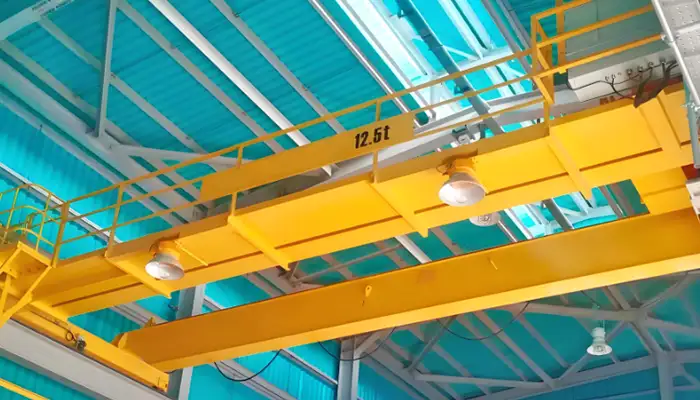
double girder 3 ton to 80 ton overhead crane for sale
Industrial Solutions
Engine room cranes must be tailored to the specific demands of each industry. Different sectors have unique loads, operational frequencies, and environmental challenges. Understanding these differences ensures safe, efficient, and long-lasting crane performance.
Power plants require cranes that can handle heavy and often awkward equipment. These cranes support ongoing maintenance and occasional equipment replacement, making reliability and precision critical.
- Typical Loads: Turbines, generators, pumps, valves, and other maintenance machinery.
- Precision Lifting: Critical for aligning heavy equipment during installation or repair.
- Frequent Use: High operational frequency demands durable hoists, reinforced girders, and reliable control systems.
- Maintenance Support: Cranes are designed for quick, safe lifting of components during routine inspections or overhauls.
Petrochemical environments present unique hazards. Cranes here must comply with strict safety standards while handling loads in potentially explosive or corrosive atmospheres.
- Explosion-Proof Design: Meets ATEX, IECEx, or local safety regulations for hazardous zones.
- Chemical Resistance: Materials and coatings protect against corrosion from acids, solvents, or other chemicals.
- High-Temperature Operation: Cranes may need specialized hoists and lubrication to withstand heat from industrial processes.
- Safety Features: Anti-sway systems, overload protection, and emergency stop mechanisms are essential.
Cranes on ships or offshore facilities face limited space, saltwater exposure, and frequent lifting of heavy components under challenging conditions.
- Space-Constrained Design: Compact cranes fit into engine rooms and tight cargo areas.
- Saltwater Resistance: Stainless steel, protective coatings, and corrosion-resistant hoists extend service life.
- Versatile Load Handling: Capable of lifting engines, pumps, and cargo with precision and safety.
- Durable Controls: Reliable pendant or radio controls ensure safe operation even in harsh maritime conditions.
By tailoring crane features to each sector, operators can maximize safety, reduce downtime, and extend the service life of both cranes and equipment.
Safety and Compliance Considerations
Safety is the top priority when operating engine room overhead cranes. Beyond just lifting heavy equipment, cranes must protect personnel, prevent equipment damage, and comply with industry regulations. Ignoring these factors can lead to costly downtime, accidents, and legal issues.
Compliance with International Standards
Cranes must meet recognized standards to ensure safe operation and regulatory approval.
- ISO and CE Certification: Confirms the crane meets international quality and safety requirements.
- API Standards: Relevant for cranes in power plants and petrochemical facilities handling critical equipment.
- ATEX Compliance: Essential for operation in hazardous zones with explosive gases or dust.
- Local Regulations: Many regions have additional safety and inspection requirements that must be followed.
Load Testing and Inspection Protocols
Regular testing ensures that cranes can handle rated loads and operate safely under all conditions.
- Initial Load Testing: Confirms design capacity before commissioning.
- Routine Inspections: Includes checking hoists, trolleys, girders, and controls for wear or damage.
- Preventive Maintenance: Detects potential issues before they cause downtime or accidents.
Operator Safety Features
Modern cranes include features that prevent accidents and improve operational precision.
- Limit Switches: Prevent the hook from traveling too far vertically or horizontally.
- Overload Protection: Stops lifting if the load exceeds the crane’s capacity.
- Anti-Sway Devices: Reduces load swing for safer placement, especially in confined engine rooms.
- Emergency Stop Systems: Allows operators to immediately halt operations in unsafe conditions.
Prioritizing safety and compliance not only protects workers but also extends the life of the crane and ensures smooth, uninterrupted operations in demanding industrial environments.
Planning and Installation
Proper planning and installation are critical to ensure your engine room overhead crane operates safely and efficiently from day one. A poorly planned installation can lead to operational bottlenecks, safety hazards, and unexpected costs.
Before installing a crane, a thorough survey of the engine room is essential to understand structural and spatial constraints.
- Runway Support: Evaluate the strength and alignment of beams or supporting structures to ensure they can handle the crane and its maximum load.
- Space Assessment: Check ceiling height, aisle width, and potential obstacles to determine crane type and dimensions.
- Integration Points: Identify points where the crane will interface with existing equipment, pipelines, or electrical systems to avoid conflicts.
Installation should not disrupt ongoing operations or interfere with other machinery.
- Workflow Planning: Align crane operation with maintenance schedules and equipment movement patterns.
- Equipment Clearance: Ensure the crane does not obstruct valves, access panels, or emergency exits.
- Collaboration: Work closely with facility engineers, safety officers, and maintenance teams for seamless integration.
Efficient installation minimizes downtime, which is critical for power plants, petrochemical facilities, and maritime operations.
- Step-by-Step Installation Plan: Includes crane assembly, hoist installation, control setup, and initial testing.
- Testing and Commissioning: Load tests, safety checks, and operational trials before full deployment.
- Minimizing Disruption: Schedule installation during planned maintenance windows or low-activity periods whenever possible.
A well-planned installation ensures the crane performs reliably from the start, keeps personnel safe, and integrates smoothly into the existing facility layout.
Maintenance and Long-Term Support
Engine room overhead cranes work in demanding environments, and proper maintenance is essential to keep them reliable and safe over the long term. A proactive approach reduces downtime, avoids costly repairs, and ensures smooth operations.
Routine Inspections and Preventive Maintenance
Regular checks and preventive measures protect both equipment and operators.
- Scheduled Inspections: Examine hoists, trolleys, girders, and electrical systems for wear, misalignment, or corrosion.
- Lubrication and Adjustments: Keep all moving parts properly lubricated and aligned to prevent unnecessary strain.
- Environment-Specific Maintenance: Account for high temperatures, humidity, or exposure to chemicals and saltwater that may affect crane components.
Spare Parts Availability and Service Contracts
Quick access to parts and professional support ensures minimal downtime when issues arise.
- Critical Spare Parts: Maintain stock of ropes, gears, motors, limit switches, and other essential components.
- Service Agreements: Partner with crane suppliers for routine maintenance, inspections, and emergency repair services.
- Trained Technicians: Use qualified personnel familiar with your crane’s design for safe and effective maintenance.
Future Upgrades and Capacity Planning
Engine room requirements evolve, and cranes should be ready to meet future demands.
- Capacity Adjustments: Design for potential increases in load or operational frequency.
- Automation Integration: Consider adding remote control, monitoring, or smart systems in the future.
- Modular Features: Modular crane components allow easier upgrades without replacing the entire system.
Proper maintenance combined with planning for future needs maximizes crane life, ensures safe operation, and supports efficient industrial processes.
Conclusion
Selecting the right engine room overhead crane is more than just choosing a lifting device—it’s about tailoring a solution to your facility’s unique requirements.
- Importance of Custom Solutions: Engine room dimensions, load types, and environmental factors demand cranes specifically designed for your operations.
- Collaboration with Suppliers: Providing detailed facility information allows suppliers to recommend the most suitable crane configuration, ensuring safety and efficiency.
- Long-Term Benefits: A well-designed crane improves operational efficiency, reduces maintenance costs, ensures safety, and provides reliable performance for years to come.
Investing time in proper planning, installation, and maintenance ensures that your engine room crane remains a dependable tool, supporting heavy lifting tasks safely and efficiently in demanding industrial environments.