
Overhead vs Gantry vs Jib Cranes: Choosing Right EOT Crane in UAE
A practical guide for UAE fabricators to select suitable overhead crane , bridge crane, jib crane systems based on space, load, and operation needs.
Overhead vs Gantry vs Jib Cranes: How UAE Fabricators Can Choose the Right Crane System
Introduction
Common Crane Types Used in UAE Fabrication Plants
In the UAE, fabrication plants rely heavily on three main types of cranes: overhead cranes, gantry cranes, and jib cranes. Each plays a distinct role depending on where and how lifting is needed. Overhead cranes are mostly seen inside workshops, where they run on fixed runway beams and handle heavy, continuous lifting. Gantry cranes often work outdoors or in semi-covered yards, moving large steel bundles or modules across open spaces. Jib cranes are smaller and more flexible, perfect for spot lifting tasks right next to a workstation or assembly line.
Why Choosing the Right Crane Matters
Picking the right crane system is more than just matching lifting capacity. It directly affects how smoothly your operations flow, how safe your workers stay, and how much money you spend—not just upfront, but over the crane’s entire life. The wrong choice could mean:
- Bottlenecks slowing down your production
- Increased risk of accidents or equipment damage
- Higher maintenance costs and unexpected downtime
Getting the crane choice right from the start saves headaches and keeps the plant running efficiently.
UAE-Specific Factors to Keep in Mind
Fabrication plants in the UAE face unique challenges that influence crane selection:
- Space constraints: Many workshops and yards are tight or irregularly shaped, requiring cranes that fit or adapt to tricky layouts.
- Climate: Extreme heat, dust, and occasional sandstorms put extra wear on cranes and can affect electronics and motors if not properly protected.
- Diverse plant layouts: Some plants combine indoor and outdoor operations, while others have sprawling yards or multi-level assembly lines. The crane system must work seamlessly across these conditions.
Overview of Crane Types
Overhead Cranes
Overhead cranes are a staple inside many UAE fabrication workshops. You’ll usually see them mounted on runway beams fixed to the building’s structure, running along the length of the shop. These cranes come mainly in two designs: single girder and double girder.
- Single girder cranes are lighter and simpler, typically handling loads up to 10 or 15 tons. They’re great for smaller workshops or where headroom is limited.
- Double girder cranes have two main beams, offering better stability and higher load capacity—often 20 tons and above. They provide higher hook clearance, which is useful when lifting tall or bulky steel assemblies.
Overhead cranes are designed for continuous, repetitive lifting in controlled indoor environments, where they can run smoothly on well-maintained runway beams. They’re perfect for welding bays, assembly lines, and any place where heavy steel moves frequently along a fixed path.
Gantry Cranes
Gantry cranes stand apart because they don’t need a building structure to hang from. Instead, they have their own legs that run on the ground—either on rails or rubber tires.
- Rail-mounted gantry cranes run on fixed tracks, offering stable, repeatable movement across long outdoor or indoor yards. They’re common in UAE steel yards and modular fabrication sites where steel bundles and large welded structures need moving.
- Rubber-tyred gantry (RTG) cranes are mobile and don’t need rails, making them perfect for uneven ground or when you need to move the crane between different yard areas.
- Semi-gantry cranes have one leg on the ground and the other running on a building rail, saving space while providing outdoor lifting reach.
Gantry cranes handle heavy, bulky loads and are built to withstand harsh outdoor conditions like heat, dust, and wind. They’re your go-to when you need to lift large steel frames, pipe racks, or pre-fab modules in yards or open areas.
Jib Cranes
Jib cranes are smaller and more specialized. They’re either wall-mounted or pillar-mounted, and they rotate on a fixed pivot point, covering a circular working area.
- Ideal for localized lifting where loads don’t need to move far—think machine shops, small assembly stations, or maintenance bays.
- Typically handle lighter loads, usually up to 5 tons.
- Their compact size makes them easy to install in tight spots where overhead or gantry cranes wouldn’t fit.
In UAE fabrication plants, jib cranes speed up repetitive tasks like loading raw materials onto machines or moving parts between workstations, improving workflow without taking up much space.
Each crane type plays a clear role depending on the lifting needs, available space, and operational environment. Knowing the strengths and limits of each will help you pick the best fit for your plant.Check more types of overhead cranes and projects for sale UAE.
Application Suitability
Overhead Electric Overhead Traveling (EOT) cranes are the workhorses inside many UAE steel fabrication workshops. You’ll find them running along building runways, lifting heavy steel plates, beams, and welded assemblies between welding bays or assembly lines.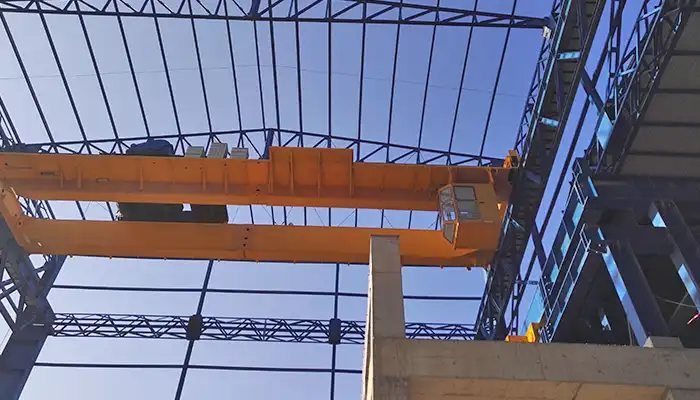
Typical applications:
- Moving heavy steel parts during fabrication
- Transporting welded frames between workstations
- Handling repetitive lifting tasks inside enclosed workshops
Best for:
- Heavy loads that require long-span coverage
- Continuous use where precision and speed matter
- Environments with stable power supply and controlled indoor conditions
Gantry cranes shine in the open-air steel yards of the UAE. They handle loading, unloading, and moving bulky steel stock that can be too large or heavy for overhead cranes inside workshops. Many yards in places like Ras Al Khaimah and Abu Dhabi rely on gantry cranes to manage steel beams, pipe racks, and pre-fabricated modules.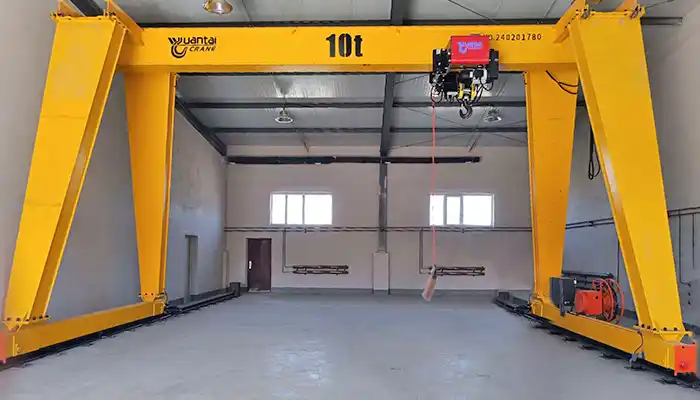
Typical applications:
- Outdoor stacking and transporting of steel bundles
- Loading/unloading trucks and trailers
- Moving large welded frames and pipe racks in modular fabrication yards
Best for:
- Heavy and bulky loads in outdoor or semi-covered areas
- Flexible yard layouts where fixed overhead runways aren’t available
- Sites needing cranes that withstand harsh weather and dust
Jib cranes are compact and versatile, making them ideal for tight spaces in UAE fabrication plants. They’re often used near machines, assembly lines, or maintenance stations where small loads need to be lifted and rotated within a limited radius.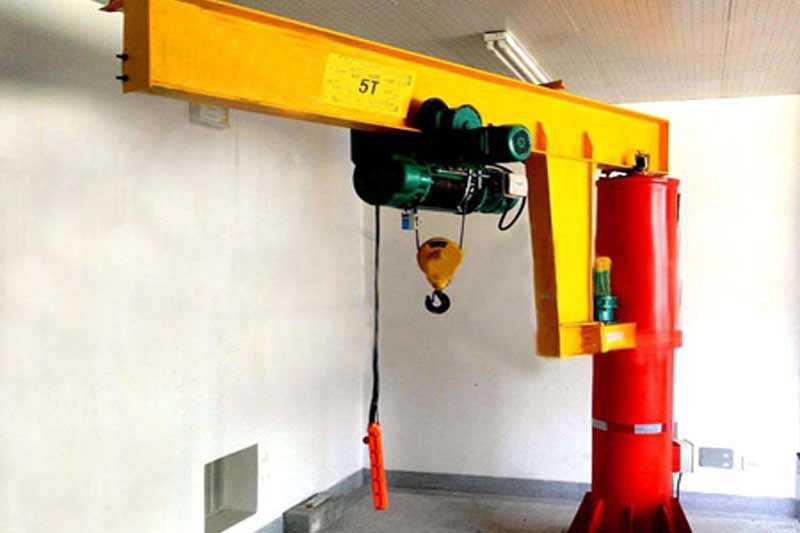
Typical applications:
- Loading materials onto machines
- Lifting components for assembly or repair
- Assisting workers with repetitive small-lift tasks in confined areas
Best for:
- Localized lifting tasks with low to medium weight loads
- Areas with space constraints where bigger cranes can’t fit
- Quick, precise lifting that improves workflow at workstation level
Choosing the right crane type depends on your plant’s layout, the weight and size of loads, and whether your operations are mostly indoor or outdoor. Each has its place in keeping steel fabrication running smoothly across the UAE.
| Crane Type | Typical Applications in UAE Fabrication Plants | Best For |
|---|---|---|
| Overhead EOT Crane | Steel fabrication workshops, welding bays, assembly lines | Heavy loads, long spans, continuous indoor use |
| Gantry Crane | Outdoor steel yards, modular fabrication yards, loading/unloading | Heavy, bulky loads; outdoor use; flexible layouts |
| Jib Crane | Machine shops, small assembly stations, maintenance areas | Localized lifting; low capacity; tight spaces |
Space and Layout Considerations
Overhead Cranes
- Require building runway beams and sufficient headroom
- Fixed path, efficient for linear workflows
Gantry Cranes
- No permanent building structure needed; can cover outdoor or semi-covered areas
- Span flexibility and mobility options for changing yard layouts
Jib Cranes
- Installed on columns or walls, ideal for small spaces or corner lifting
- Rotational movement covers a circular working area
Load Capacity and Frequency
Typical Capacities for UAE Fabrication Plants
In the UAE, steel fabrication and yard operations deal with a broad range of load weights, which directly influences the crane type and capacity you need.
- Jib Cranes: Usually handle lighter loads, typically from 0.5 up to 5 tons. Ideal for spot lifting tasks where heavy weight isn’t common but frequent movement is needed.
- Overhead Cranes: Commonly range from 5 to 30 tons in fabrication workshops. Single girder cranes typically cover the lower end (5-10 tons), while double girder cranes are used for heavier lifting (15-30 tons).
- Gantry Cranes: Designed for heavier, bulkier loads, often between 10 to 50 tons, especially in outdoor yards or modular fabrication facilities. Larger capacity cranes handle heavy structural frames, pipe racks, and steel modules.
Duty Cycles and Operational Frequency
How often and how intensely the crane is used makes a big difference in choosing the right model.
- Jib cranes often have high cycle rates but lower load weights. They’re built for frequent starts and stops but limited to smaller payloads.
- Overhead cranes in workshops usually operate on medium to heavy duty cycles—lifting loads multiple times per hour during busy shifts. These cranes must have reliable motors and brakes to handle repeated starts, stops, and load changes.
- Gantry cranes outdoors generally operate on a moderate duty cycle, handling fewer lifts per hour but often with much heavier weights. They need to be robust and built for endurance, especially in harsh environmental conditions.
Impact of Load Size, Shape, and Handling Needs
Not all loads are created equal. The size and shape of the materials you lift can influence your crane choice:
- Long beams and plates require cranes with wide spans and higher hook clearance to safely lift and move without obstruction.
- Welded frames and pipe racks can be unevenly weighted or bulky, needing cranes with adjustable hoist positions or dual hoist systems for balanced lifts.
- Prefabricated modules may require extra lifting height and flexible movement paths to navigate yard layouts and loading docks.
Matching crane capacity and features to the specific load types reduces risk of damage, improves safety, and makes handling more efficient.
Environmental and Operational Factors in the UAE
Heat, Dust, and Sand Challenges
The UAE’s climate isn’t easy on lifting equipment. High temperatures, blowing sand, and fine dust pose constant challenges.
- Heat can cause motors and electrical components to overheat or degrade faster if not designed for hot climates. Look for cranes with heat-resistant wiring, thermal protection, and ventilation.
- Dust and sand infiltration can quickly wear down moving parts and damage electronics. Cranes built for UAE outdoor use often include sealed hoists, IP-rated motors, and corrosion-resistant coatings to withstand this abrasive environment.
Outdoor vs Indoor Considerations
- Indoor cranes benefit from climate control, reducing exposure to extreme temperatures and dust. However, they require sufficient building infrastructure like runway beams and clear headroom.
- Outdoor cranes, such as gantry cranes, must be ruggedly built to resist UV rays, sandstorms, and sudden temperature swings. Weatherproof enclosures and protective paints are critical for longevity and reliability.
Power Supply and Control System Compatibility
The UAE commonly uses a 415V, 50Hz three-phase power supply, which sets the standard for crane motors and electrical systems.
- Ensure your crane’s motors and controls are compatible with this supply to avoid expensive modifications.
- Remote control systems and pendant controls are popular for improving operator safety and visibility, especially in outdoor or complex yard layouts.
- Some yards are adopting automation features like load monitoring and anti-collision systems, but these need to be tailored for local power and environmental conditions.
Cost and Installation Considerations
Choosing the right crane for a steel plant involves more than just the upfront price. Understanding how cost breaks down and what installation looks like helps avoid surprises and keeps your project on track.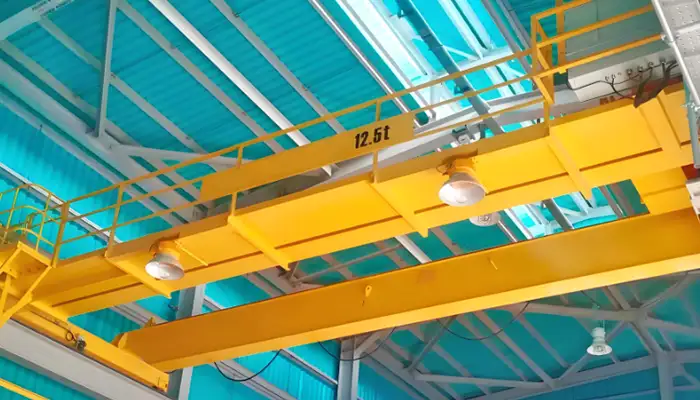
explosion proof overhead cranes
Initial Investment Differences Among Crane Types
- Single Girder Overhead Cranes: Generally less expensive due to simpler design and lighter components. Best for lighter loads and smaller workshops.
- Double Girder Overhead Cranes: Higher initial cost because of larger steel structures, stronger motors, and longer spans, but needed for heavy-duty applications.
- Gantry Cranes: Installation often more involved, especially rail-mounted types, which can increase upfront expenses. Rubber-tyred gantry cranes add mobility but require additional maintenance costs.
- Specialized Cranes (e.g., explosion-proof, electromagnetic): Typically come at a premium due to custom features and certifications.
Installation Complexity and Downtime Impact on Production
- Crane installation can range from a few days for simple single girder cranes to several weeks for large double girder or gantry cranes.
- Complex installations involving foundation work, runway beam construction, or electrical upgrades may cause significant plant downtime.
- Scheduling installation during planned maintenance shutdowns or low-production periods helps minimize losses.
Maintenance and Lifecycle Cost Implications
- More robust cranes designed for heavy use and harsh environments usually cost more upfront but have lower maintenance needs and longer lifespans.
- Cheaper cranes might save money initially but can result in frequent repairs, higher energy consumption, and costly downtime.
- Factoring in spare parts availability, local service support, and ease of maintenance is essential for long-term cost control.
Decision-Making Guide: Matching Crane Type to Fabricator Needs
Before selecting a crane, fabricators should ask practical questions to ensure the crane matches their specific handling needs and plant conditions.
Checklist of Key Questions for Fabricators
What types of loads and weights are handled?
- Knowing max and typical loads helps define required crane capacity and duty rating.
Is lifting mostly indoors or outdoors?
- Environmental conditions affect crane design—weatherproofing, corrosion protection, and electrical specifications differ.
How much space is available for crane installation?
- Limited headroom or narrow aisles may restrict crane type or require custom designs.
What frequency and speed of lifting are needed?
- High-frequency, fast cycles need cranes with suitable motors and control systems, affecting cost and maintenance.
Are mobility or flexibility requirements critical?
- Does the plant need fixed overhead cranes or mobile gantry cranes that can be repositioned easily?
Answering these questions helps fabricators select cranes that fit their workflows, budget, and operational environment—leading to better performance and cost savings over time.
Conclusion
Choosing the right crane for a UAE steel plant involves balancing many factors—from the plant’s size and location to environmental challenges and specific lifting needs. Understanding how these elements affect crane cost and performance is essential for making a smart investment.
- Crane price depends on load capacity, span, duty class, and installation environment.
- Local logistics, soil conditions, and power supply impact both cost and design.
- Optional features like automation, safety devices, and custom attachments add value but affect pricing.
- Total cost of ownership includes maintenance, energy, and downtime—important to consider alongside upfront costs.
- Asking the right questions about your plant’s needs helps match you with the best crane type.
Recommendation Framework
- Start by clearly defining your steel plant’s lifting requirements and environmental conditions.
- Prioritize suppliers with local or regional experience and support in the UAE.
- Request detailed, customized quotes that reflect your specific needs.
- Consider long-term service and maintenance options to protect your investment.
We encourage you to reach out for expert advice tailored to your steel plant’s unique demands. Whether it’s a site evaluation, technical consultation, or a custom quotation, our team is ready to help you find the crane solution that fits your needs and budget in the UAE.
Contact us today to get started!