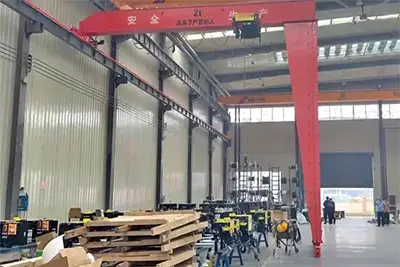
Overhead Crane for Every Saudi Steel Workshop in Riyadh to Jubail
Introduction
Saudi Arabia’s metal and steel industry is experiencing steady growth fueled by ongoing infrastructure development, industrial diversification, and increased local manufacturing. The demand for high-quality steel products continues to rise, driving expansion in workshops, fabrication plants, and shipyards across the kingdom. As these facilities grow, efficient material handling becomes essential to meet production deadlines and maintain safety standards.
Overhead cranes are a vital part of this material handling process. They allow workers to lift and move heavy steel components such as beams, plates, coils, and large assemblies quickly and safely. These cranes reduce manual labor, increase precision in positioning loads, and help avoid costly damage to materials or equipment. Whether the operation involves light fabrication or heavy-duty steel mill handling, having the right crane tailored to the specific workshop environment makes a big difference.
Saudi Arabia’s key industrial hubs for metal and steel operations include:
- Riyadh: Known for pre-engineered building (PEB) workshops and light to medium fabrication shops.
- Jubail: One of the largest industrial cities with heavy steel mills, coil processing plants, and large fabrication yards.
- Dammam: Major steel production and shipbuilding facilities located near the eastern coast.
- Yanbu: Shipyards and heavy industrial workshops along the Red Sea coast, supporting maritime industries.
This article is designed to help workshop owners, production managers, and procurement professionals understand the types of overhead cranes available and how to choose the best fit for their needs. Whether you’re upgrading an existing crane system or installing new equipment in Riyadh, Jubail, or elsewhere, this guide will provide practical information to simplify your decision.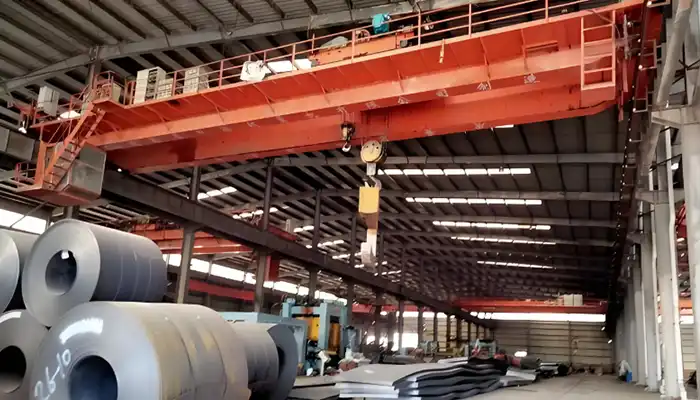
40 ton overhead crane for steel coil handling
In this guide, you will learn:
- Why overhead cranes are essential in Saudi steel workshops
- Differences between common crane types and their applications
- Factors to consider when selecting cranes for local environmental and operational conditions
- How to align crane capacity and features with your specific workflow requirements
These points will help you select a crane solution that improves productivity, ensures worker safety, and offers reliable performance for years to come.
Overview of Saudi Arabia’s Metal Industry Landscape
Saudi Arabia’s metal industry is concentrated in several key industrial regions, each serving different segments of the steel and fabrication market. Knowing the characteristics of these zones and their facility types helps in choosing the right overhead crane solution tailored to local demands and working conditions.
Key Industrial Zones and Their Specialties
- Riyadh: As the capital and a major commercial hub, Riyadh hosts numerous pre-engineered building (PEB) workshops and light fabrication shops. These workshops typically work on structural steel frames for warehouses, factories, and commercial buildings. Cranes here need to be compact, efficient, and suitable for smaller indoor spaces.
- Jubail: Jubail is home to some of the largest steel mills and heavy fabrication plants in the region. Facilities here deal with massive steel coils, billets, and plates destined for large infrastructure, petrochemical, and construction projects. Overhead cranes in Jubail must handle very high capacities, cover long spans, and be designed for continuous, heavy-duty operation.
- Dammam and Yanbu: Both cities feature large shipbuilding and repair yards where heavy and irregular-shaped components require special handling. Gantry cranes and heavy double girder overhead cranes are common, with capabilities for outdoor use and flexible lifting attachments.
Types of Metalworking Facilities and Their Overhead Crane Requirements
Pre-Engineered Building (PEB) Workshops
PEB workshops mainly fabricate steel structures for quick assembly buildings. These facilities usually have:
- Moderate crane capacities, typically between 5 to 15 tons, enough to lift steel beams and light assemblies.
- Compact, single girder overhead cranes or low-headroom cranes designed to fit limited ceiling height and smaller workshop footprints.
- Simple control systems to facilitate frequent short lifts and easy maneuvering.
- Smooth operation features for precise positioning of steel frames during assembly.
- Emphasis on quick installation and low maintenance due to fast project timelines.
Heavy Steel Fabrication Plants
These plants fabricate large and heavy steel components for industrial, oil and gas, and infrastructure projects. Crane requirements include:
- High lifting capacities from 30 tons up to 100 tons or more to handle heavy coils, billets, and large structural elements.
- Double girder overhead cranes to provide extra strength and wider spans across large workshops.
- Robust mechanical and electrical components rated for continuous heavy-duty use.
- Features like variable frequency drives (VFD) for smooth speed control during lifting and trolley travel.
- Durable paint coatings and sealed electrical enclosures to resist dust and heat typical in Saudi Arabia’s climate.
- Integrated safety features such as overload protection, anti-sway control, and emergency stop systems.
Shipbuilding and Repair Yards
Shipyards work with oversized, irregular loads such as ship hull sections, engines, and heavy machinery. Their cranes must be:
- Large capacity gantry cranes or heavy double girder overhead cranes with spans often exceeding 30 meters.
- Designed for outdoor use with weather-resistant materials and protective covers to handle coastal humidity and salt air.
- Equipped with specialized lifting attachments, such as spreader beams, magnets, or clamps, to safely handle irregular shapes.
- Flexible in operation to lift and place components precisely during ship assembly or repair.
- Often integrated with remote control systems for operator safety in hazardous areas.
Common Material Handling Challenges and Practical Crane Solutions
Despite differences in scale and specialty, Saudi metal workshops share several material handling challenges:
- Handling Heavy Loads Safely: Overhead cranes must have capacities that comfortably exceed the maximum load weights, with safety factors included. This ensures safe lifting of heavy steel coils, plates, and assemblies.
- Limited Workshop Space: Especially in smaller PEB workshops, cranes must be designed with low headroom or compact profiles to maximize usable space.
- Harsh Environmental Conditions: Saudi Arabia’s heat, dust, and occasional sandstorms require cranes with corrosion-resistant paint, sealed electrical components, and cooling or ventilation systems to maintain performance.
- Varied Load Sizes and Shapes: Cranes need adaptable hoisting equipment—like adjustable hooks, electromagnets, or clamps—to securely lift a wide variety of steel parts.
- High Operational Frequency: Workshops with fast production cycles demand cranes that are durable, easy to maintain, and designed to minimize downtime.
Selecting the right steel structure workshop overhead crane means balancing these practical needs with the facility’s workflow, space constraints, and budget. Properly chosen overhead cranes not only improve productivity but also protect workers and equipment, making them a smart investment for every Saudi steel workshop. If you have any need or question, please feel free to contact us by whatsapp + 86 150 38346929 or leave us a message down below.
Types of Overhead Cranes Suitable for Saudi Steel Workshops
Choosing the right type of overhead crane depends largely on the specific needs of your workshop or facility. Saudi steel workshops vary from small-scale pre-engineered building (PEB) shops to massive steel mills and shipyards, each requiring different crane capabilities. Below is a breakdown of the most common overhead crane types used across these settings, along with their practical applications and advantages.
European style single girder overhead cranes
Single girder cranes consist of one main beam that supports the trolley and hoist. They are often the go-to option for lighter to medium lifting needs and are very popular in smaller workshops.
Ideal Uses and Capacity Ranges:
- Typically used for loads ranging from 1 ton up to 20 tons.
- Suitable for lifting steel beams, light to medium steel assemblies, and smaller coils.
- Common in fabrication workshops where lifting requirements are moderate.
Advantages for Smaller PEB Workshops:
- Compact design fits well in low ceiling height workshops, maximizing usable space.
- Lower upfront and maintenance costs compared to double girder cranes.
- Easier and faster to install, which is important for fast-moving projects.
- Simpler operation and maintenance reduce downtime and operational complexity.
- Lightweight construction means less stress on runway beams and building structure.
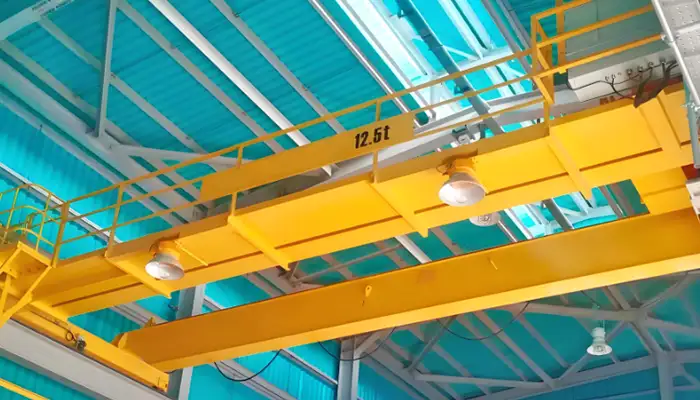
Double girder cranes feature two parallel girders and are designed for heavy-duty lifting and longer spans, making them suitable for large steel fabrication plants and shipyards.
Best Suited For Heavy-Duty Steel Fabrication and Shipyards:
- Ideal for handling heavy coils, billets, thick plates, and large assemblies.
- Common in steel mills and shipyards where loads can exceed 30 tons and even reach 100 tons or more.
Higher Lifting Capacity and Span Capabilities:
- The double girder design supports heavier loads and allows for wider coverage of the workshop floor.
- Provides greater stability and less deflection under heavy loads, which is critical for safe handling of large steel components.
- Allows for bigger trolley and hoist combinations, enabling lifting of oversized or bulky items.
- Better suited for harsh industrial environments requiring robust construction and long service life.
- Usually equipped with advanced control features such as variable frequency drives (VFD), anti-sway, and overload protection.
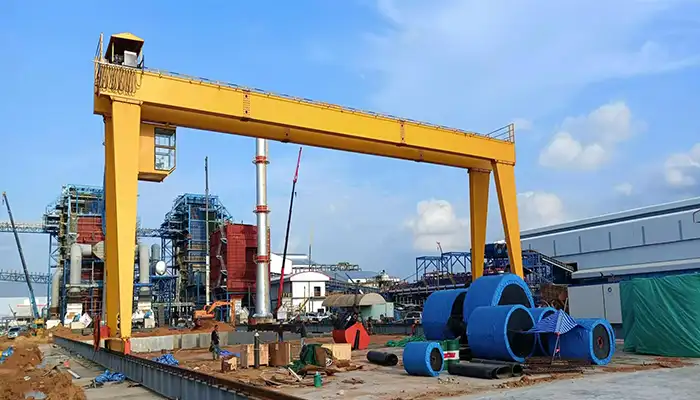
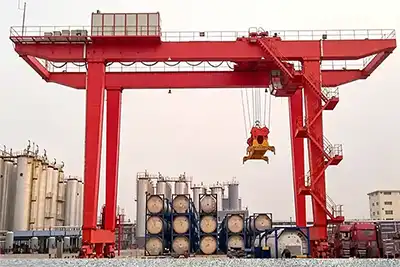
gantry crane of yuantai crane for your reference
Gantry Cranes
Gantry cranes are typically used in outdoor or semi-outdoor environments where overhead runway beams are not practical.
Applications in Outdoor or Semi-Outdoor Settings:
- Widely used at shipyards, large fabrication yards, and steel storage areas.
- Ideal for loading and unloading heavy materials like steel coils, plates, and ship components directly from trucks or railcars.
- Common in locations where mobility and flexibility are necessary.
Practical Features of Gantry Cranes:
- Self-supporting structure eliminates the need for building runway beams.
- Can be designed as full gantry or semi-gantry depending on space constraints.
- Available in a wide range of capacities, from a few tons up to several hundred tons.
- Often equipped with weather-resistant coatings and covers to withstand harsh outdoor conditions.
- Some models can be rail-mounted for precise movement along large yards.
Specialized Cranes (Explosion-Proof, Electric Hoists, Customized Solutions)
Certain workshops, especially those in hazardous or demanding environments, require cranes with specialized features to ensure safety and performance.
Importance in Hazardous or High-Demand Environments:
- Explosion-Proof Cranes: Essential in petrochemical plants, refineries, or workshops handling flammable materials. These cranes comply with strict safety standards and feature explosion-proof motors, electrical components, and control systems to prevent sparks or ignition.
- Electric Hoists: Versatile hoisting devices used on both single and double girder cranes, electric hoists vary in capacity and speed. They allow smooth lifting and lowering with precision controls, and can be customized with protective covers for outdoor use or harsh environments.
- Customized Solutions: Many Saudi workshops require tailor-made cranes to handle unique load shapes, weights, or space constraints. Customized features can include longer spans, dual hoists, remote operation, integration with automated control systems, or specific lifting attachments like magnets and clamps.
Choosing the right industrial overhead crane type involves matching your facility’s operational needs, load requirements, space, and environmental conditions with the workshop crane’s design and capabilities. This ensures smoother workflow, improved safety, and a better return on investment.
Key Considerations for Selecting Overhead Cranes in Saudi Workshops
Selecting the right overhead crane for your workshop isn’t just about picking the biggest or most advanced model. It requires careful thought about how the crane will be used, the environment it will operate in, and how well it fits into your facility’s setup. Here are the main factors to consider when choosing an overhead crane in Saudi Arabia.
Load Capacity and Frequency of Use
Before anything else, you need to clearly understand the maximum loads your crane will have to lift. This includes the heaviest steel plates, coils, or assemblies handled regularly, plus any occasional heavier lifts.
- Select a crane with a capacity comfortably above your heaviest load to include a safety margin (usually 20-30%).
- Consider how often the crane will be used each day. Frequent use means the crane should be rated for continuous duty to avoid premature wear.
- For light to medium use, standard duty cranes may be sufficient, but heavy steel mills need cranes designed for heavy-duty, high-frequency operation.
Workshop Size, Ceiling Height, and Runway Length
The physical space of your workshop greatly impacts crane selection.
- Low ceiling heights, common in smaller Riyadh PEB workshops, require cranes with low headroom designs to maximize workspace.
- Large steel fabrication plants or shipyards often have very long runways, needing cranes with long spans and strong structural support.
- Make sure runway beams and building structures can support the crane’s weight, including the trolley, hoist, and maximum load.
- Plan the crane’s travel length and lifting height according to the layout of your facility and workflow paths.
Environmental Factors: Heat, Dust, Sand, and Coastal Conditions
Saudi Arabia’s climate is harsh, with high temperatures, dust, sandstorms, and salty air near coastal areas. These conditions affect crane durability and performance.
- Choose cranes with corrosion-resistant paint and sealed electrical components to protect against dust and sand ingress.
- Motors and control panels may need special cooling or ventilation systems to handle extreme heat.
- Coastal workshops require materials and finishes that resist saltwater corrosion to prevent premature rusting.
- Regular cleaning and maintenance schedules are crucial in dusty or sandy environments to keep cranes running smoothly.
Power Supply Compatibility and Voltage Considerations
Saudi Arabia’s industrial power supply typically ranges around 380-415V, 50Hz, three-phase electricity, but variations can exist.
- Verify your facility’s exact power supply specs before selecting crane motors and electrical components.
- Ensure the crane’s electrical system can handle the local voltage and frequency safely and efficiently.
- Look for cranes with energy-saving features like variable frequency drives (VFD) to reduce power consumption and smooth operation.
- Confirm compatibility with your plant’s circuit breakers and control system to avoid installation issues.
Maintenance and Local Service Availability
A crane is a long-term investment, and regular maintenance is essential to keep it operating safely and reliably.
- Choose cranes from suppliers who offer local service centers or certified technicians in Saudi Arabia.
- Easy availability of spare parts and quick response times minimize downtime in case of repairs.
- Consider cranes designed with simple maintenance procedures, such as easy-to-access components and modular parts.
- Establish a preventive maintenance schedule aligned with manufacturer recommendations to extend crane lifespan.
Safety Standards and Compliance
Safety is non-negotiable, especially when lifting heavy steel loads.
- Ensure your crane complies with Saudi Arabian Standards Organization (SASO) regulations as well as international certifications such as CE and ISO.
- Look for features like overload protection, emergency stop buttons, limit switches, and anti-sway control.
- Training for crane operators on safe handling and emergency procedures is equally important.
- Regular safety inspections and audits should be part of your operational routine to maintain compliance and reduce accidents.
Taking these considerations into account helps you choose an overhead crane that not only fits your current facility material handling needs but also adapts to your workshop’s conditions and future growth. It’s about finding the balance between capacity, durability, safety, and overhead crane cost-effectiveness.
Case Studies: Overhead Crane Applications Across Saudi Facilities
Looking at overhead crane projects in Saudi Arabia helps put theory into practice. Saudi Arabia’s diverse metal industry demands different overhead crane solutions depending on the facility type and operational needs. Here are three typical cases demonstrating how crane choices align with workshop requirements.
Riyadh PEB Workshop: Installing 5–10 Ton Single Girder Cranes for Light to Medium Fabrication
In Riyadh, many pre-engineered building (PEB) workshops focus on manufacturing steel frameworks for warehouses, factories, and commercial buildings. These workshops often have limited ceiling height and space.
- Challenge: The workshop needed a crane that fits low headroom spaces, handles loads up to 10 tons, and allows precise positioning of steel frames during fabrication.
- Solution: Installing single girder overhead cranes with a lifting capacity between 5 and 10 tons proved ideal. These cranes featured compact designs tailored for the limited height and span requirements.
Benefits:
- Improved workflow by enabling faster steel assembly and reducing manual handling.
- Easier maintenance and lower upfront cost compared to double girder options.
- Enhanced safety with smooth trolley controls and overload protection systems.
This solution is perfect for light to medium fabrication where space is a constraint and frequent lifting is required.
Jubail Steel Mill: Deploying 30–100 Ton Double Girder Cranes for Heavy Steel Coil and Billet Handling
Jubail’s steel mills deal with large, heavy steel products such as coils and billets used in construction, oil, and petrochemical sectors. The workshop floor covers a large area with heavy production loads.
- Challenge: The facility required cranes with very high lifting capacity (30 to 100 tons) and the ability to span long distances for handling large steel loads safely and efficiently.
- Solution: Double girder overhead cranes equipped with heavy-duty hoists and advanced control features were installed. These cranes included variable frequency drives for precise speed control and overload protection systems for safety.
Benefits:
- Efficient handling of large steel coils and billets without risk of material damage.
- Longer spans enabled by the double girder design covered large workspace areas.
- High durability and reliability suitable for continuous heavy-duty operation.
This setup is a prime example of cranes designed for heavy industrial environments demanding high capacity and robustness.
Dammam Shipyard: Customized Gantry Cranes for Shipbuilding and Heavy Component Movement
Shipyards in Dammam face unique challenges because they work with oversized, irregularly shaped parts like hull sections, engines, and heavy machinery. The work often takes place outdoors or in large semi-covered areas.
- Challenge: The shipyard needed flexible crane solutions that could handle heavy loads, move along large outdoor yards, and operate reliably in harsh coastal conditions.
- Solution: Customized gantry cranes with corrosion-resistant coatings and weatherproof electrical systems were implemented. These cranes were rail-mounted for mobility and equipped with special lifting attachments tailored to shipbuilding needs.
Benefits:
- Ability to move large ship components precisely and safely across the yard.
- Enhanced resistance to coastal salt air and extreme weather.
- Increased operational flexibility with remote control options for safer handling.
This example highlights how customization and rugged design are critical for specialized industries like shipbuilding.
Each of these case studies demonstrates how overhead cranes must be chosen based on the specific demands of the facility — whether it’s space constraints in Riyadh, heavy lifting in Jubail, or outdoor, flexible handling in Dammam. Selecting the right indoor or outdoor overhead crane solution ensures smoother operations, increased safety, and better long-term value.
Choosing the Right Supplier and Support Partner
Selecting the right overhead crane is just one part of the process. Equally important is choosing a supplier who can provide strong local support, reliable quality, and ongoing service. Your supplier relationship can make or break your crane investment, especially in demanding industrial environments like Saudi Arabia.
Importance of Local Presence and On-Site Support
Having a supplier with a local presence in Saudi Arabia—or at least strong regional representation—is critical. This means faster response times for emergencies, quicker delivery of spare parts, and expert on-site support for installation and maintenance.
- Local teams understand Saudi Arabia’s industrial standards and environmental challenges.
- On-site support helps address unexpected issues promptly, reducing costly downtime.
- Suppliers with local warehouses can stock commonly used parts, speeding up repairs.
- Regular visits and inspections by local technicians ensure cranes stay in peak condition.
Certifications and Quality Assurances
Crane buyers must prioritize suppliers who adhere to internationally recognized safety and quality standards. This is especially important for heavy industrial cranes handling critical loads.
- Look for suppliers certified with SASO (Saudi Standards, Metrology and Quality Organization), which ensures compliance with local regulations.
- International certifications such as CE (European Conformity) and ISO 9001 demonstrate the supplier’s commitment to quality manufacturing and management systems.
- Quality assurance processes during manufacturing and factory inspections help prevent defects and ensure crane reliability.
- Suppliers should provide detailed documentation, including test reports, inspection certificates, and compliance declarations.
Customization Capabilities to Fit Specific Workshop Needs
No two workshops are exactly alike, so off-the-shelf crane solutions don’t always fit every application perfectly. A good supplier offers customization to tailor cranes based on your operational, spatial, and environmental requirements.
- Ability to design cranes for unusual spans, low headroom, or special lifting attachments.
- Custom electrical systems for compatibility with local power supplies and specific control preferences.
- Options for explosion-proof components or specialized hoists for hazardous or heavy-duty environments.
- Engineering support to optimize crane integration into your workflow and facility layout.
After-Sales Service and Maintenance Packages
Long-term performance depends on regular maintenance and reliable support after installation. Choosing a supplier with comprehensive after-sales service is essential to protect your investment.
- Preventive maintenance programs to catch wear and tear before it causes breakdowns.
- Availability of trained technicians for repairs, inspections, and emergency call-outs.
- Spare parts supply chains that minimize crane downtime.
- Training services to ensure your operators and maintenance staff understand crane operation and safety protocols.
- Service agreements that include regular inspections and compliance checks in line with Saudi industrial safety regulations.
Partnering with the right overhead bridge crane supplier means more than just buying equipment—it’s about securing a relationship that supports your business through every stage: from purchase and installation to years of safe and efficient operation.
Conclusion
Choosing the right overhead crane is very important for metal workshops and steel plants in Saudi Arabia. Whether you have a small workshop in Riyadh, a big steel mill in Jubail, or a shipyard by the coast, each place has different needs. Picking a crane that fits your load size, workspace, and environment helps your work run smoothly and keeps everyone safe.
Before buying, think about how often you will use the crane, how heavy your loads are, your workshop’s size and ceiling height, and the local weather. Also, make sure the crane matches your power supply and that you can get local support and maintenance when needed.
If you want to buy a crane, work with suppliers who know the Saudi market and can create cranes made just for you. From Riyadh to Jubail, the right supplier will help you choose, install, and take care of your crane—giving your business a strong start for the future.