How to Get Floor Jib Crane at Right Price – Buyer’s Checklist
A practical buyer's checklist to select a safe, efficient floor jib crane, ensuring correct capacity, reach, & cost for workshops. Get your wall jib crane!
Introduction / Initial Search Queries
When it comes to buying a floor jib crane, the first step for most buyers is figuring out what’s available and what fits their workshop. People often start by typing simple searches online or asking straightforward questions. The goal is to quickly see options that match their lifting needs without wasting time or money.
Some of the most common questions and searches include:
- “Best floor jib crane for small workshop”: Small workshops usually have limited space, so buyers are looking for a crane that won’t take up too much floor area but still provides enough reach and lifting capacity. They want something compact, sturdy, and easy to install.
- “Affordable floor-mounted jib crane for sale”: Price is always a big concern. Buyers want a solid crane without paying extra for features they don’t need. They are comparing multiple suppliers, checking shipping costs, and looking for options that give the best value for their budget.
- “Freestanding jib crane vs. wall-mounted jib crane”: This is a practical question. Freestanding cranes are flexible and can be moved slightly or placed anywhere, but they need a strong foundation. Wall-mounted cranes save floor space but require a solid wall for support. Buyers often ask this to understand which type suits their space and lifting tasks better.
- “360-degree rotating jib crane price”: Full rotation cranes are more versatile because they cover a wider working area. People searching for this want to know if the cost fits their budget and if a full-rotation crane is really necessary for their workflow. Sometimes 270° rotation is enough, and it can save a significant amount of money.
- “Short boom jib crane for indoor use”: Indoor workshops often need cranes with a short boom to avoid hitting walls, doors, or overhead obstacles. Buyers ask this to make sure the crane can operate safely without interfering with other equipment or workspace layout.
These initial questions show what buyers care about first: size, cost, type, rotation, and practical use. Knowing this helps suppliers provide faster, more accurate quotes and gives buyers a head start in choosing the right crane for their workshop.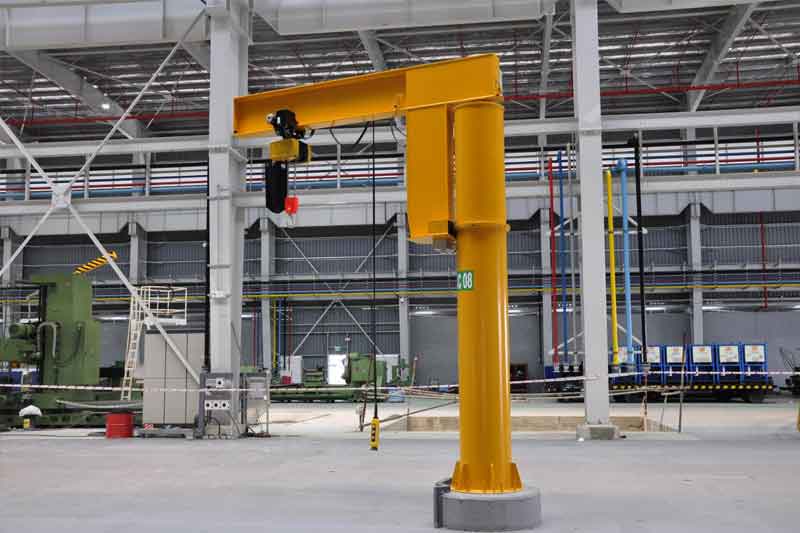
Floor Jib Crane Types and Features
Before buying a floor jib crane, many buyers ask: “Types of floor jib cranes and which is best for my workshop?” Understanding the types and features helps you choose a crane that fits your space and lifting needs efficiently and safely.
Types of Floor Jib Cranes: Which Fits Your Workshop?
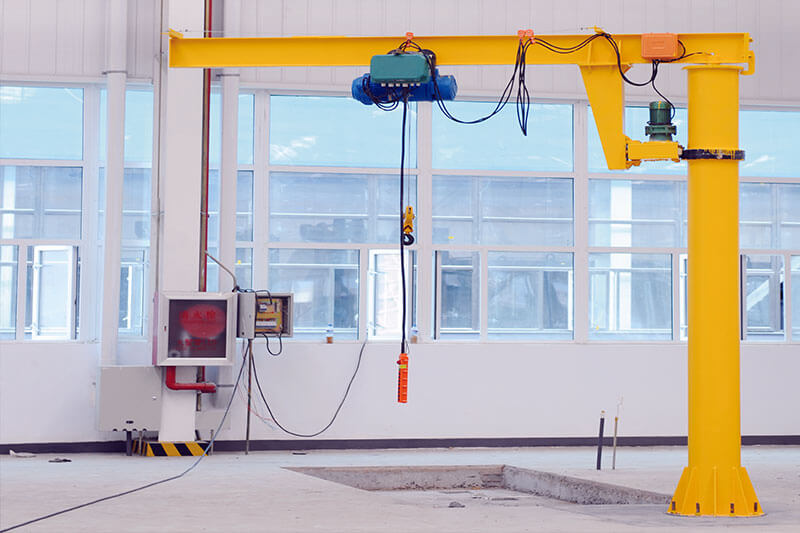
- Freestanding Floor Jib Cranes: Many people wonder if a freestanding floor jib crane is right for them. These cranes stand on a base bolted to the floor, making them flexible and suitable for open workshop areas. They can be installed anywhere as long as the floor can support the foundation.
- Folding or Articulating Floor Jib Cranes: Some buyers ask: “Is there a floor jib crane that won’t get in the way when not in use?” Folding cranes solve this by allowing the boom to fold back, perfect for low-ceiling areas or narrow aisles.
Manual vs. Electric Floor Jib Cranes
Another common question is: “Manual vs. electric floor jib crane for light lifting—which one should I choose?”
- Manual Floor Jib Cranes: Operated by hand or chain, these are simple, reliable, and cost-effective. Ideal for light loads under 1 ton and occasional lifting. No electricity is required, making them suitable for workshops without nearby power.
- Electric Floor Jib Cranes: Motorized for lifting, and sometimes for rotation. They handle heavier loads and frequent lifting tasks with less effort. Best for 1–5 ton lifting capacities, improving workflow and reducing operator fatigue.
Heavy-Duty Floor Jib Cranes for 2–5 Ton Loads
Buyers often ask: “Do I need a heavy-duty floor jib crane for 2–5 ton lifts?”
- Reinforced booms, strong slewing bearings, and high-quality hoists are essential.
- Even if current lifting needs are light, consider potential future requirements to avoid upgrading too soon.
Floor Jib Crane Rotation: 180° or 360°
A common concern is: “Floor jib crane rotation: 180° or 360°—which is better?”
- 180° Rotation: Covers a limited area, sufficient for workstations in narrow spaces. Lower cost and easier installation.
- 360° Rotation: Full-circle coverage, ideal for open areas and freestanding cranes. Offers maximum flexibility but comes at a higher price.
- Decide based on workflow: full rotation is useful if you need to lift across multiple positions, while 180° may be enough for a single workstation.
By asking these practical questions and understanding floor jib crane types, lifting methods, and rotation options, you can pick a crane that fits your workshop, avoids unnecessary costs, and improves safety and efficiency.
Determining Lifting Capacity and Reach
After selecting the right type of floor jib crane, the next step is determining how much it can lift and how far it can reach. Buyers frequently ask questions like: “Floor jib crane capacity for lifting 1 ton, 2 ton, 5 ton?” or “Can a floor-mounted jib crane lift irregular-shaped loads?” These details are critical to ensure safe and efficient operation in your workshop.
- 1–2 Ton Floor-Mounted Jib Cranes: Perfect for light workshop tasks, small assembly work, or maintenance operations. They are simpler to install and more budget-friendly.
- 3–5 Ton Foundation Jib Cranes: Ideal for heavier lifting or frequent industrial use. Ensure the crane’s structure, hoist, and foundation are rated for the full load.
- Always include a safety margin of 20–30% above your maximum load to prevent overloading and extend the crane’s service life.
- Buyers often ask: “Boom length needed for 6-meter reach?”: The boom length on a floor-mounted jib crane determines how far it can reach from its base. Measure your workspace carefully, including obstacles, and choose a boom that allows easy load movement without hitting walls or machinery.
Calculating Boom Reach: Many wonder: “How to calculate jib crane boom reach for my workspace?”
- Measure the distance from the crane’s base to the farthest load position.
- Add a small buffer for operator movement and safety.
- Choose a boom length that allows full coverage without excessive overhang.
- Another common question: “Maximum lifting height for standard floor jib cranes?”: Lifting height is measured from the floor to the hook when fully raised. Make sure the floor-mounted jib crane fits your ceiling height and can safely lift loads without obstruction.
Buyers often ask: “Can a floor-mounted jib crane lift irregular-shaped loads?”
- Yes, but specialized lifting attachments may be required, such as slings, clamps, or spreader bars.
- Always secure the load properly and check its center of gravity to prevent swinging.
- For heavy or awkward loads, consider consulting a professional to ensure safe handling.
By evaluating lifting capacity, boom length, reach, maximum height, and load shape, you can choose the right floor jib crane, floor-mounted jib crane, or foundation jib crane for your workspace. Careful planning at this stage avoids costly mistakes and ensures smooth, safe operations in your workshop.
Installation and Base Considerations
Choosing the right floor jib crane isn’t just about lifting capacity and reach. Installation and base requirements are equally important. Many buyers ask: “Freestanding jib crane foundation requirements?” or “Can I install a jib crane myself?” Getting this right ensures safety, stability, and long-term reliability.
Freestanding / Foundation Floor Jib Cranes
Buyers often ask: “Freestanding jib crane foundation requirements?”
- Freestanding or foundation jib cranes need a strong, level concrete base to support the crane and its maximum load.
- The foundation must match the crane’s weight, lifting capacity, and duty cycle.
- Proper anchoring prevents tipping, wobbling, or structural damage during operation.
Floor Strength Considerations
- Question often asked: “Floor strength needed for 3-ton jib crane?”
- The floor must handle both the crane’s weight and the lifted load. Reinforced concrete floors are usually required for medium-duty cranes (2–5 tons).
- Light floors may need additional support or a foundation pad to safely install a freestanding jib crane.
Installation Questions
Buyers sometimes wonder: “Can I install a jib crane myself?”
- Small floor-mounted jib cranes can sometimes be installed by trained staff with basic tools.
- Larger or foundation cranes require professional installation to ensure safety and meet local regulations.
- Always follow the manufacturer’s instructions and check local building codes.
Portable Floor Jib Cranes
For small shops, buyers ask: “Portable floor jib cranes for small shops?”
- Portable cranes are lightweight and can be moved around the workshop as needed.
- They’re ideal for temporary lifting, light loads, or shops without a permanent foundation.
- While convenient, they have lower lifting capacity compared to anchored foundation cranes.
Proper installation and a suitable base are critical for safety and efficiency. By evaluating foundation requirements, floor strength, and whether a portable or fixed floor-mounted jib crane is best, you’ll ensure smooth, reliable operation in your workshop.
Power Supply and Controls
Choosing the right power and control system for your floor jib crane is just as important as selecting the type and capacity. The right setup can make lifting easier, safer, and faster. Here’s what buyers usually ask and need to know:
Manual vs. Electric Floor Jib Cranes
Manual Floor Jib Cranes
- Operated by hand or chain; no electricity needed.
- Simple, low-cost, and reliable.
- Best for light loads (under 1 ton) or occasional lifting.
Electric Floor-Mounted Jib Cranes
- Motorized for lifting and sometimes rotation.
- Handles heavier loads (1–5 tons) and frequent lifting.
- Saves operator effort and speeds up workflow.
- For small workshops, ask: “Single-phase electric jib crane for home workshop?” Yes, small cranes can often run on single-phase power.
Control Options
Pendant Control
- Wired, hanging control.
- Affordable, precise, and reliable.
- Slight limitation: the operator stays near the crane.
Remote Control
- Wireless, allows freedom of movement.
- Ideal for larger areas or when you need to operate from different angles.
- Question buyers ask: “Remote control vs. pendant control jib crane—which should I choose?” It depends on your workspace layout and workflow needs.
Power Requirements
- Small electric floor jib cranes usually need single-phase 220–240V.
- Medium or heavy-duty cranes require three-phase power.
- Always check the crane’s voltage and current ratings to avoid electrical issues.
- Planning the power source ahead saves installation headaches later.
Pro Tip: Match your crane type, lifting load, and control method with your workshop setup. This ensures your floor-mounted jib crane operates safely, efficiently, and lasts for years.
Workshop Conditions and Duty Cycle
Your floor jib crane won’t perform the same way in every environment. Temperature, humidity, dust, and usage frequency all matter. Buyers often ask practical questions like: “Indoor vs. outdoor jib crane for humid environment?” or “Light-duty vs. heavy-duty jib crane for frequent use?” Here’s a clear guide.
Indoor vs. Outdoor Use
Indoor Floor Jib Cranes
- Perfect for controlled environments with minimal weather exposure.
- Protects paint, electrical components, and moving parts from corrosion.
Outdoor or Humid Environments
- Question: “Corrosion-resistant jib crane for coastal area?”
- Choose cranes with stainless steel parts, powder-coated finishes, or extra protective covers.
- Ensure motors and electrical panels have weatherproof enclosures.
Duty Cycle: Light vs. Heavy Use
Light-Duty Floor-Mounted Jib Cranes
- Best for occasional lifting or short shifts.
- Manual or small electric cranes are usually sufficient.
- Ideal for workshops that lift a few loads per day.
Heavy-Duty Floor or Foundation Jib Cranes
- Designed for frequent lifting, long shifts, or industrial operations.
- Reinforced booms, strong hoists, and robust motors are key.
- Buyers ask: “Light-duty vs. heavy-duty jib crane for frequent use?” Choose based on your daily lifting schedule.
Harsh Workshop Conditions
Dusty or Hot Workshops
- Question: “Jib crane for dusty or hot workshops?”
- Look for sealed motors, dust-proof hoists, and heat-resistant components.
- Regular inspection and maintenance are critical to prevent breakdowns.
Practical Tip: Match your floor jib crane type, duty cycle, and environmental protection to your workshop. This ensures safe operation, reduces downtime, and extends the crane’s service life.
Pricing, Quotation, and Supplier Questions
After deciding on type, capacity, installation, and controls, the next step is understanding cost and dealing with suppliers. Buyers often ask questions like: “Floor jib crane cost for 1–5 ton capacity?” or “Cheap but reliable floor jib crane suppliers?” Here’s a guide to make the process easier.
1–5 Ton Floor-Mounted Jib Cranes
- Prices vary depending on lifting capacity, boom length, rotation, and whether the crane is manual or electric.
- Buyers often ask: “Floor jib crane cost for 1–5 ton capacity?” Expect heavier-duty cranes and electric versions to be more expensive than light-duty manual cranes.
- Foundation cranes usually cost more due to concrete work and heavier construction.
Question: “Cheap but reliable floor jib crane suppliers?”
- Look for suppliers with experience, certifications (ISO, CE), and good customer reviews.
- Don’t compromise safety for price; a poorly made crane can be dangerous and costly in the long run.
Buyers often ask: “Jib crane quote for workshop installation?”
- Provide details like lifting capacity, boom length, rotation, power supply, and floor type.
- Mention whether you need foundation work or prefer a portable floor-mounted jib crane.
- Clear specifications help suppliers give accurate pricing.
Question: “Best value floor-mounted jib crane?”
- Focus on durability, safety, and long-term maintenance costs, not just the initial price.
- Sometimes paying slightly more upfront saves money over time due to fewer repairs and longer lifespan.
Buyers ask: “How to get a customized jib crane price?”
- Share your workshop layout, load types, lifting height, boom reach, and environmental conditions.
- Suppliers can then design a crane that fits your exact needs and provide a tailored quotation.
Practical Tip: Always compare multiple suppliers and clarify installation and foundation requirements. A well-specified floor jib crane, floor-mounted jib crane, or foundation jib crane ensures safety, efficiency, and long-term value for your workshop.
Maintenance and Safety Questions
Once your floor jib crane is installed, maintenance and safety become crucial. Buyers often ask: “Jib crane maintenance tips and cost?” or “How long does a floor jib crane last?” Regular upkeep ensures reliability, prolongs service life, and keeps your workshop safe.
Maintenance Tips and Cost
Routine Inspections
- Check hoists, bearings, bolts, and electrical systems regularly.
- Lubricate moving parts and ensure the crane moves smoothly along the boom and rotation axis.
Maintenance Costs
- Costs vary depending on crane size, usage frequency, and whether maintenance is performed in-house or by a professional.
- Light-duty floor-mounted jib cranes are cheaper to maintain, while heavy-duty or foundation cranes require more investment.
Spare Parts Availability
Question: “Spare parts availability for floor jib cranes?”
- Choose suppliers that provide quick access to hoists, motors, hooks, bearings, and control components.
- Readily available parts reduce downtime and keep your workshop running efficiently.
Safety Standards
Buyers ask: “Safety standards for jib cranes?”
- Ensure compliance with local regulations and international standards (ISO, OSHA, CE).
- Safety checks should include load testing, electrical inspection, and operator training.
- Always follow manufacturer guidelines for lifting limits and operation.
Lifespan of a Floor Jib Crane
Question: “How long does a floor jib crane last?”
- With proper maintenance, a well-built floor-mounted or foundation jib crane can last 15–20 years or more.
- Heavy-duty cranes in harsh environments may require more frequent inspections but can still offer long-term reliability.
Pro Tip: Schedule routine maintenance, keep spare parts on hand, and ensure operators are trained. A well-maintained floor jib crane, floor-mounted jib crane, or foundation jib crane is safer, more efficient, and lasts longer.