Shipbuilding Gantry Cranes Solution: Role of Flexible & Box Legs
Explore flexible and box-type supporting legs, their roles, and benefits in ensuring safe, efficient heavy-duty shipbuilding gantry crane operation.
Introduction
Heavy-duty shipbuilding gantry cranes are at the heart of modern shipyards. These cranes are designed to lift and move massive hull blocks, sometimes weighing hundreds of tons, safely and efficiently. Without a reliable crane, handling large ship sections would be slow, risky, and often impractical.
One of the key elements that make these cranes work smoothly is the supporting leg design. The legs don’t just hold the crane up—they distribute the weight evenly, handle dynamic loads during lifting, and keep the structure stable as the crane moves along the rails. In short, well-designed legs are the foundation of both safety and efficiency in heavy shipyard operations.
Interestingly, not all legs are built the same. On most heavy-duty shipbuilding gantry cranes, you’ll notice one end has flexible legs, while the other end uses box-type, rigid legs. This is not random—it’s a carefully engineered setup. Flexible legs allow slight movement to absorb stress, while box-type legs provide a solid, fixed base for stability. Understanding why this combination is used helps buyers and shipyard managers make better decisions when planning crane installation or upgrades.
This guide will take a close look at supporting leg designs, explain the differences between flexible and box-type legs, and show why this combination is essential for safe, efficient, and long-lasting crane operation.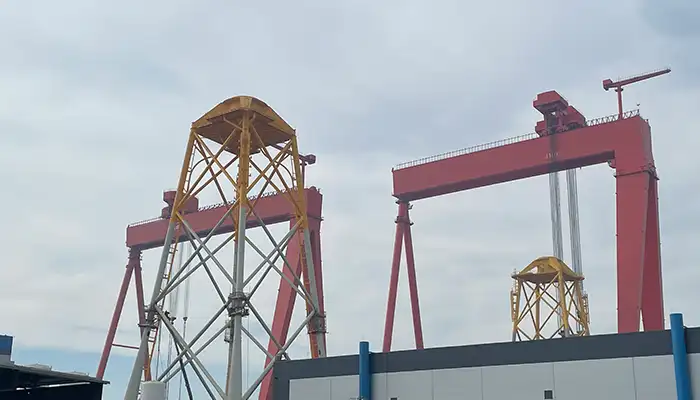
Overview of Supporting Leg Design
Supporting legs are the backbone of a heavy-duty shipbuilding gantry crane. They do more than just hold the crane up—they carry the full weight of the crane, handle dynamic forces while lifting massive hull blocks, and keep the crane moving safely along the rails. Without properly designed legs, even the strongest crane structure would be at risk of bending, misalignment, or excessive wear over time.
What Supporting Legs Do
The main functions of supporting legs can be summarized as follows:
- Weight Bearing: Legs support the crane frame, trolley, hoist, and the heaviest blocks being lifted.
- Load Distribution: Dynamic forces from lifting, moving, and swinging blocks are spread across the legs to prevent structural stress.
- Movement Stability: They guide the crane along the rails, ensuring smooth travel without wobbling or tilting.
- Operational Safety: Proper leg design reduces the risk of accidents caused by misalignment, overloading, or uneven movement.
Types of Supporting Legs
Heavy-duty shipbuilding gantry cranes typically use two types of legs: flexible (movable) legs and box-type (rigid) legs.
- Flexible Legs: Allow slight movement to absorb stress caused by thermal expansion, uneven rails, or dynamic loads.
- Box-Type Legs: Provide a rigid, strong base that anchors the crane and ensures stability during heavy lifting.
Impact of Leg Design on Crane Operation
The choice of supporting leg design directly affects daily crane performance and maintenance requirements:
- A well-designed combination of flexible and box-type legs improves lifting accuracy and reduces sway.
- Proper leg engineering reduces wear and tear, minimizing maintenance downtime.
- It ensures long-term reliability, even when handling extremely heavy or oversized ship sections.
Flexible Supporting Legs
On a heavy-duty shipbuilding gantry crane, one end usually features flexible supporting legs. These legs are designed to allow slight movement, which might look minor, but it plays a huge role in crane performance and safety.
Purpose of Flexible Legs
Flexible legs serve several important functions:
- Accommodate thermal expansion and contraction: Steel structures expand and contract with temperature changes. Flexible legs absorb these movements, preventing excessive stress on the crane.
- Reduce stress and strain on the crane structure: Lifting massive hull blocks generates dynamic forces. Flexible legs allow small adjustments that reduce bending or warping over time.
- Enable easier alignment on uneven or long rail tracks: In large shipyards, rails may have slight deviations. Flexible legs allow the crane to move smoothly without binding or misalignment.
Typical Applications
Flexible supporting legs are particularly useful in situations such as:
- Large shipyards where crane spans are long and thermal expansion is significant.
- Long assembly docks where minor misalignments in rails could otherwise cause operational issues.
- Yards handling heavy hull blocks that require precise yet slightly adaptable movement during lifts.
By combining flexibility with a rigid base on the other end, shipbuilding gantry cranes achieve a balance of strength, stability, and adaptability. This ensures safer operation, longer equipment life, and smoother handling of massive ship sections.
Box-Type Supporting Legs
On the opposite end of the gantry crane, you’ll find box-type supporting legs. Unlike the flexible end, these legs are rigid and strong, forming the main anchor for the crane. Their design ensures that heavy lifts can be handled safely and accurately.
Purpose of Box-Type Legs
Box-type legs play several critical roles:
- Provide maximum structural strength and stability: They are designed to carry the full weight of the crane and the heaviest blocks without bending or deformation.
- Anchor the crane firmly to the foundation: This ensures that all lifting loads are safely transmitted to the ground, preventing movement that could affect precision or safety.
- Serve as the main reference point for alignment: The rigid legs establish a fixed baseline, allowing the crane operator to position blocks accurately during assembly.
Importance in Heavy-Duty Lifting
Box-type legs are especially important for 400t–600t goliath cranes and other heavy-duty shipbuilding applications:
- They handle extreme loads such as large hull sections or superstructures.
- Provide a stable base that allows the flexible legs on the other end to absorb stress without compromising crane safety.
- Essential for long-term reliability, ensuring the crane can operate repeatedly without excessive maintenance or structural issues.
A combination of flexible legs on one end and box-type legs on the other gives shipbuilding gantry cranes the perfect balance between adaptability and stability, which is crucial when handling massive ship sections safely and efficiently.
Why One End is Flexible and the Other End is Box-Type
Heavy-duty shipbuilding gantry cranes are designed with one flexible end and one box-type end for a reason. It’s not just tradition—there’s solid engineering behind this combination.
Engineering Reasoning
- Flexible end: Allows minor adjustments during operation. This prevents structural stress, absorbs small movements from thermal expansion, and avoids warping of the crane frame.
- Box-type end: Provides a strong, fixed base that maintains stability under heavy loads. It serves as the main anchor, ensuring precise lifting and alignment of massive hull blocks.
- Balance of rigidity and flexibility: Combining these two designs gives the crane the strength to lift heavy sections safely while still adapting to small movements in the structure or rails.
Benefits of the Combination
Using a flexible leg on one side and a box-type leg on the other offers several practical advantages:
- Smoother crane travel: The crane moves along the rails with less resistance and fewer alignment issues.
- Reduced maintenance: Stress and strain are absorbed by the flexible end, reducing wear on structural components.
- Safer lifting of massive blocks: Stability from the box-type end ensures heavy hull sections are handled reliably and accurately.
This combination is a simple but effective solution that enhances both safety and operational efficiency, especially in shipyards handling 400t–600t goliath cranes or other heavy-duty lifting tasks.
Practical Considerations for Buyers and Shipyards
Selecting the right supporting leg design is more than a technical detail—it directly affects crane safety, efficiency, and long-term reliability. Buyers and shipyard managers should consider several practical factors before making a decision.
How to Choose the Right Leg Design
When evaluating flexible vs. box-type legs, focus on these key points:
- Yard length and layout: Longer assembly docks may benefit from a flexible leg on one end to accommodate rail deviations and thermal expansion. Shorter yards might have simpler requirements.
- Maximum block weight and crane capacity: Heavier blocks require stronger, rigid support. Make sure the box-type leg is sized appropriately to handle peak loads.
- Environmental factors: Temperature changes, wind, and uneven foundations can affect crane performance. Flexible legs help absorb these stresses while maintaining stability.
Consulting with Manufacturers
- Tailored solutions: A trusted manufacturer can help design the optimal combination of flexible and box-type legs for your specific yard and crane capacity.
- Production needs: They will account for current lifting requirements and future expansion plans, ensuring your crane can handle heavier blocks or longer spans down the line.
- Compliance and safety: Experienced manufacturers ensure designs meet international standards and certifications, reducing risks and maintenance costs.
Choosing the right leg design is about balancing stability, flexibility, and safety. Taking the time to plan with experienced professionals ensures smoother operations, longer crane life, and safer handling of massive ship sections.
Conclusion
Supporting leg design is a critical aspect of heavy-duty shipbuilding gantry cranes. It’s not just about lifting power; it’s about how the crane handles massive loads safely, moves along rails smoothly, and maintains structural integrity over time.
Understanding the difference between flexible and box-type legs is key for anyone involved in crane selection or shipyard planning:
- Flexible legs absorb stress, accommodate thermal expansion, and allow slight movement to prevent warping.
- Box-type legs provide a rigid, stable base that anchors the crane, ensuring heavy blocks are lifted safely and accurately.
- Together, they create a balance of strength and adaptability, reducing maintenance needs and improving operational efficiency.
For shipyard managers and buyers, paying attention to supporting leg design ensures safer operations, longer crane life, and more efficient hull assembly. Investing time in understanding this aspect will pay off in smoother production and fewer safety concerns over the life of the crane.