Gantry Crane Selection for Solar Module Storage, 2–20 Ton
Gantry Crane Selection for Outdoor Solar Module Storage 2–20 Ton Capacity Guide for Solar Logistics Yards
Most Important Takeaway
For outdoor solar module storage yards, the right gantry crane is one that protects fragile PV modules while matching bundle weight, stacking method, yard layout, and climate conditions—not simply the largest lifting capacity. Correct selection directly reduces breakage, speeds up loading and unloading, and supports large-scale solar project logistics.
Key Takeaways (What This Guide Solves)
- Shows how to choose the correct 2–20 ton gantry crane specifically for solar module storage yards
- Explains which crane type works best for module pallets, racks, and containers
- Covers outdoor design for wind, rain, dust, heat, and corrosion
- Connects crane choice with solar industry sectors and logistics models
- Reduces risks of panel damage, slow turnover, and over-investment
Introduction: Why Solar Module Storage Needs Specialized Gantry Cranes
Solar modules are not heavy, but they are easy to damage. The glass surface, aluminum frame, and internal cells can crack or shift if handled poorly. In large projects, thousands of panels pass through outdoor storage yards near ports, factories, or job sites before installation.
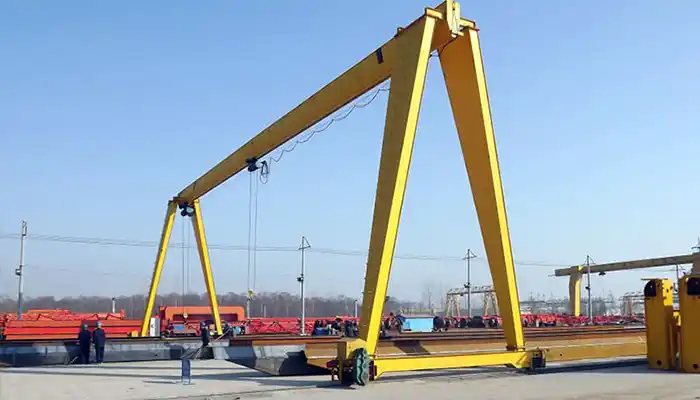
Outdoor yards add real challenges. There is wind, dust, rain, heat, and uneven ground. Forklifts can press on frames. Mobile cranes are slow and hard to control for wide, light loads. Solar yards need lifting systems that are stable, gentle, and easy to control. That is why gantry cranes are widely used for outdoor solar module storage.
Solar modules are usually handled as:
- Pallets with 20–40 panels
- Wooden or steel crates
- Large bundled racks
These loads are wide and relatively light, which makes them easy to sway.
Common problems include:
- Wind pushing loads during lifting
- Long pallets bending if lifted at the wrong points
- Frames scratching or twisting under pressure
This is very different from lifting steel, containers, or concrete.
Most solar yards are open areas with no buildings or overhead beams. Equipment must:
- Travel long distances along storage rows
- Work on rails or wheels on the ground
- Stay stable in wind
- Lift slowly and smoothly
Gantry cranes are designed for exactly this kind of work.
A gantry crane moves on legs along rails or wheels. It covers wide areas and long rows without a building.
In solar storage yards, gantry cranes:
Lift pallets and crates gently
- Slow, controlled hoisting
- Even support with spreader beams
Stack modules without bending frames
- Wide lifting points for long pallets
- Stable travel to reduce sway
Work outdoors in tough conditions
- Sealed motors and electrics
- Wind alarms and storm locks
Gantry cranes are chosen because they solve daily yard problems:
- Smooth movement along storage rows
- High stacking without forklifts pressing on panels
- Less breakage during loading and unloading
- Better control of wide, light loads
In outdoor solar yards, a gantry crane is not just a crane. It is the main system that controls how fast modules move, how safely they are stored, and how much damage is avoided before installation.
Industrial Sectors Using Outdoor Solar Module Storage
Outdoor solar module storage is not limited to one type of business. It is part of the daily workflow across several industries in the solar supply chain. Gantry cranes are commonly used in the following sectors because they match the way modules are stored, moved, and shipped in open yards.
Factories often keep finished modules in outdoor yards when indoor space is limited or shipment schedules change.
Typical uses include:
- Temporary storage of palletized or crated modules after final inspection
- Loading modules onto trucks or containers for domestic delivery and export
- Reorganizing pallets by project, destination, or shipping date
Gantry cranes help avoid frame damage that can happen when forklifts handle wide pallets too often.
EPC contractors usually build temporary storage yards near construction sites.
Common tasks:
- Receiving modules in bulk from manufacturers
- Storing them in rows by installation phase or array zone
- Feeding modules to installation teams day by day
Here, gantry cranes support steady site supply and reduce delays caused by damaged panels or slow handling.
Ports handle large volumes of solar modules for international projects.
Typical operations:
- Lifting modules from trucks into yard storage areas
- Moving pallets between storage blocks and container loading zones
- Loading containers or flat racks for overseas shipment
Gantry cranes are preferred because they can cover long container lanes and work continuously in outdoor conditions.
Regional solar warehouses serve multiple installers and project sites.
Daily usage includes:
- Buffer storage of imported or factory-direct modules
- Sorting pallets by customer or project
- Fast loading onto delivery trucks
Stable lifting and accurate positioning are important here to keep inventory damage low and turnover fast.
Large solar farms often store modules on-site before and during installation.
Typical scenarios:
- Temporary yards for phased construction
- Storage close to array fields to shorten transport distance
- Handling heavy racks or bundled pallets for large block installation
In these projects, gantry cranes help maintain steady installation speed while keeping modules safe in open terrain.
Typical Gantry Crane Tasks in Solar Storage Yards
In outdoor solar storage yards, gantry cranes handle most daily movement. The work is not about heavy lifting. It is about safe lifting. Solar modules are wide, light for their size, and easy to sway, so every move must be slow and controlled. Different tasks often use different gantry crane types and capacities.
This is the first handling step in the yard, and mistakes here cause early damage.
Common crane choices:
- 5–10 ton single girder gantry crane for standard pallet loads
- Rubber-tired gantry (RTG) for flexible receiving areas
Typical tasks:
- Lifting palletized or crated modules from trucks or containers
- Placing loads gently into receiving zones
- Avoiding frame pressure that forklifts can cause
Storage rows may be long and narrow, and stacking often reaches two or three levels.
Common crane choices:
- 5–10 ton single girder gantry for light to medium pallets
- 10–15 ton double girder gantry for tall stacks or wide spans
- Rail-mounted gantry (RMG) for fixed row layouts
Typical tasks:
- Placing pallets into single or multi-level stacks
- Keeping pallets level and aligned
- Moving slowly to reduce sway
Yard layout changes with shipments and project schedules.
Common crane choices:
- 5–10 ton single girder gantry for routine transfers
- RTG for temporary or changing yard layouts
Typical tasks:
- Transferring modules from storage rows to loading zones
- Moving pallets closer to shipping or installation areas
- Clearing space for incoming trucks
Loading often involves containers, flatbeds, or rail wagons.
Common crane choices:
- 10 ton single or double girder gantry for standard loads
- 10–20 ton double girder gantry for heavy racks or large bundles
Typical tasks:
- Loading pallets into containers or onto flatbed trucks
- Aligning loads accurately to fit frames
- Using spreaders or soft slings to protect module edges
Stock order changes based on project needs.
Common crane choices:
- 5–10 ton single girder gantry for daily re-sorting
- RTG for yards that change layout often
Typical tasks:
- Moving older stock first under FIFO rules
- Grouping pallets by project or delivery date
- Opening blocked rows
Some pallets need checking before shipping or installation.
Common crane choices:
- 2–5 ton single girder gantry for light pallets
- Small RTG for flexible inspection zones
Typical tasks:
- Placing pallets into inspection areas
- Lifting damaged or mixed pallets for repacking
- Returning checked pallets back to storage
Solar Module Load Types and Weight Ranges
Solar modules come in different forms, and each type affects how they are lifted and stored. Understanding these variations helps in selecting the right gantry crane and lifting tools for outdoor solar yards.
- Weight: 20–25 kg per panel
- Usually handled in small batches or as part of a pallet
- Requires gentle lifting to avoid bending or cracking
- Weight: 1–3 tons per pallet
- Standard format for transport from factories to storage yards
- Can be lifted with single girder gantry cranes (2–5 tons) or small RTG cranes
- Weight: 3–8 tons
- Often contains multiple pallets or larger modules
- Requires wider lifting points and stable hoisting
- Typically handled with 5–10 ton single girder or low double girder gantry cranes
- Weight: 8–20 tons
- Used in large utility-scale projects or long-term storage
- Needs high-capacity, double girder gantry cranes (10–20 tons)
- May also require rail-mounted gantries for fixed rows or RTG cranes for flexible layouts
Because solar loads range from light panels to heavy stacked pallets, most outdoor solar storage yards rely on 2–20 ton gantry cranes to cover all handling and stacking needs safely and efficiently.
Gantry Crane Types for Solar Module Storage
Selecting the right gantry crane type is essential for safe, efficient handling of solar modules in outdoor storage yards. The choice depends on load weight, stacking height, yard layout, and workflow requirements.
Single girder gantry cranes are commonly used for light to medium solar module loads. They fit well in smaller yards or temporary storage areas.
Typical uses:
- Lifting palletized modules weighing 1–3 tons
- Stacking 1–2 pallets high in short-term storage
- Moving bundles between trucks and storage zones
Key advantages:
- Easier installation and routine maintenance
- Smaller footprint for narrow aisles
- Compatible with electric hoists and radio remote control
Limitations:
- Not suitable for heavy racks or tall stacking
- Limited span and lifting height
Double girder gantry cranes are built for heavier loads and higher stacking requirements. They are often selected for large or permanent solar module yards.
Typical uses:
- Handling heavy racks or bundled pallets (8–20 tons)
- Multi-level stacking across long storage rows
- Transporting modules over wider spans
Key advantages:
- Higher lifting capacity and longer span
- Better stability for wide or fragile loads
- Supports spreader beams and vacuum lifters
Limitations:
- Higher upfront investment
- Requires stronger foundations and more installation space
Rail-mounted gantry cranes are suited for fixed layouts and high-volume solar storage yards. They operate on rails and offer precise positioning.
Typical uses:
- Permanent yards with stable storage patterns
- Efficient container and truck loading
- High-density stacking for utility-scale projects
Key advantages:
- Accurate load placement
- Handles continuous heavy-duty operations
- Low risk when lifting wide pallets
Limitations:
- Layout changes are difficult once rails are installed
- Requires civil work and track installation
Rubber-tired gantry cranes offer mobility and layout flexibility. They are widely used in temporary or changing solar yards.
Typical uses:
- Temporary storage yards for EPC contractors
- Moving pallets between storage and loading zones
- Handling medium to large bundles
Key advantages:
- No rail installation required
- Adaptable to changing yard layouts
- Handles moderate stacking heights
Limitations:
- Less precise than rail-mounted systems
- May require stabilizers for heavy loads
In practice, the right gantry crane should match module weight, stacking height, yard size, and operating rhythm. Proper selection reduces panel damage, improves loading speed, and keeps outdoor solar storage running smoothly.
Choosing the Right Capacity: 2–20 Ton Solar Guide
Selecting the correct crane capacity is critical for safe and efficient solar module handling. The goal is to match the crane to the heaviest load you expect, while leaving some safety margin for future growth or unusual handling situations.
Capacity Recommendations by Solar Storage Use
| Solar Storage Use | Typical Load | Recommended Crane |
|---|---|---|
| Light pallet storage | 1–2 tons | 2–5 ton single girder |
| Standard pallet and crate | 3–6 tons | 5–10 ton single girder |
| Heavy crate and rack | 8–15 tons | 10–15 ton double girder |
| Large stacked systems | 15–20 tons | 15–20 ton double girder |
Key Considerations for Capacity Selection
- Heaviest possible load: Always consider the maximum weight of a single pallet, crate, or stacked bundle, including lifting tools.
- Lifting tools and spreaders: Some loads require spreader beams, vacuum lifters, or soft slings. These add weight and change load distribution, which affects crane capacity.
- Future storage expansion: Yard layouts may change, stacks may get taller, or module bundles may become heavier. Planning ahead avoids overloading and ensures long-term usability.
Choosing the right crane capacity ensures minimal panel damage, smoother yard operations, and efficient workflow across all types of solar storage tasks.
Outdoor Design for Solar Storage Yards
Outdoor solar storage yards are exposed to weather, dust, and sunlight all year round. Cranes operating in these conditions need special design features to ensure durability, reliability, and safe handling of solar modules.
- Anti-corrosion paint or galvanizing: Protects the crane structure from rain, humidity, and coastal environments.
- Weatherproof electrical systems: Sealed motors, control panels, and cables prevent short circuits and downtime.
- Wind alarms and storm locks: Alerts operators when wind exceeds safe limits and secures cranes during storms.
- UV-resistant cables and seals: Prevents cracking and insulation damage from prolonged sun exposure.
- Drainage-friendly rail foundations: Avoids water pooling under rail-mounted gantries.
These measures ensure gantry cranes remain operational and safe even in harsh outdoor environments.
Solar modules are fragile, and even minor bending or impact can cause micro-cracks. Proper lifting and protection methods are critical.
- Soft slings and spreader beams: Distribute weight evenly across long pallets or crates.
- Vacuum lifters or frame clamps: Secure panels without pressure points.
- Anti-sway systems: Reduce swinging during hoisting and travel.
- Protective pads: Prevent scratches where modules contact lifting tools.
Combining proper load protection with outdoor-ready crane design keeps modules intact throughout yard handling.
Yard size, layout, and location directly influence crane power supply and operating method. Selecting the right system ensures precision and reliability.
- Electric cranes: Best for permanent yards with stable power supply.
- Diesel or hybrid cranes: Suitable for remote or temporary projects.
- Remote control operation: Improves accuracy and operator safety.
- Cabin operation: Preferred for large double girder cranes and long spans.
The right power and control setup reduces handling errors and module damage.
Outdoor handling involves wind, fragile loads, and electrical exposure. Dedicated safety measures protect both workers and solar modules.
- Overload protection: Prevents lifting beyond rated capacity.
- Wind speed monitoring: Automatically stops operation in unsafe conditions.
- Emergency stop systems: Instantly halts crane movement.
- Grounding and lightning protection: Reduces electrical hazards.
- Operator training: Ensures correct handling of fragile loads.
These safety systems reduce accidents and ensure consistent yard operation.
Yard layout directly affects crane efficiency, handling speed, and module protection. Outdoor storage requires careful planning.
- Crane span matched to row width: Ensures unobstructed pallet placement.
- Height based on stacking level: Determines girder type and hoist selection.
- Clear truck and forklift routes: Prevents collisions and delays.
- Dedicated zones: Separate receiving, inspection, and loading areas.
- Future expansion space: Allows for higher density storage later.
Proper layout planning improves efficiency and keeps gantry crane operations safe and predictable.
FAQ: Gantry Cranes for Outdoor Solar Module Storage
This section answers the most common questions for logistics managers, warehouse planners, and solar project operators when selecting gantry cranes for outdoor solar module storage.
Answer:
The crane capacity depends on the weight and configuration of your modules:
- Light pallets (1–2 tons): 2–5 ton single girder crane
- Standard pallets or crates (3–6 tons): 5–10 ton single girder crane
- Heavy crates or racks (8–15 tons): 10–15 ton double girder crane
- Large stacked systems (15–20 tons): 15–20 ton double girder crane
Always include the weight of lifting tools, spreader beams, and allow margin for future expansion.
Answer:
The right crane type depends on load size, stacking height, and yard layout:
- Single girder (2–10 tons): Light loads, moderate stacking, small or temporary yards
- Double girder (10–20 tons): Heavy loads, tall stacks, wide spans
- Rail-Mounted Gantry (RMG): Fixed rows, long-term high-volume storage
- Rubber-Tired Gantry (RTG): Flexible layouts and temporary yards
Answer:
Outdoor solar yards require cranes built for long-term exposure to the environment:
- Anti-corrosion paint or galvanizing for structural protection
- Weatherproof motors and sealed electrical systems
- Wind alarms and storm locks for high-wind safety
- UV-resistant cables and rubber seals
- Drainage-friendly rail and foundation design
These features reduce breakdowns and extend crane service life.
Answer:
Gantry cranes handle nearly all daily module movement:
- Unloading palletized or crated modules from trucks
- Stacking pallets into single or multi-level rows
- Moving modules between storage, inspection, and loading areas
- Loading containers, flatbeds, or rail wagons
- Inventory reorganization using FIFO or project-based grouping
- Supporting inspection and repacking operations
Answer:
Gantry cranes are used throughout the solar supply chain:
- Manufacturing plants: Outdoor buffer storage and truck loading
- EPC contractors: Site staging and phased installation support
- Ports and export terminals: Container handling and yard transfers
- Logistics centers: Regional storage and fast order fulfillment
- Utility-scale solar farms: On-site storage during construction
Understanding these use cases helps match crane capacity, type, and layout to real operating needs.
Conclusion
Outdoor solar module storage yards rely heavily on gantry cranes to move, stack, and organize fragile PV modules safely. From manufacturing plants and port terminals to EPC contractors, logistics centers, and utility-scale solar farms, 2–20 ton gantry cranes form the backbone of yard operations.
Choosing the right crane type, lifting capacity, and outdoor-ready design allows operators to:
- Reduce module damage during handling and stacking
- Improve unloading and loading speed for trucks and containers
- Maintain safe and efficient operations in wind, rain, dust, and sun
- Support large-scale solar project logistics without unnecessary delays
Investing in properly selected gantry cranes ensures reliable, cost-effective, and long-term performance, keeping solar modules safe from arrival to installation.