Gantry Cranes in Steel Fabrication | Safe Beam & Column Handling
Gantry Cranes in Steel Fabrication: Handling Beams and Columns Safely
Steel fabrication is all about shaping heavy steel into beams, columns, and structural parts that support buildings, bridges, and industrial projects. Moving these massive pieces isn’t something you can do by hand. It takes the right equipment, careful planning, and trained operators. That’s why gantry cranes are so important in steel workshops.
They don’t just lift heavy loads—they make it possible to move long beams and columns safely and accurately across the workshop. Without them, handling steel would be slow, risky, and prone to accidents.
Why Safe Handling Matters
Handling steel beams and columns isn’t just a matter of strength. There are real risks if things go wrong:
- Materials can get damaged, costing time and money.
- Improper lifting can cause injuries to operators or other staff.
- Misaligned positioning can lead to construction errors later on.
Even experienced operators can run into trouble if the crane, rigging, or workflow isn’t suited for the load. That’s why understanding proper procedures is essential.
What This Article Will Cover
If you are an engineer, workshop manager, or someone who buys cranes, this guide will help you:
- Learn how gantry cranes fit into steel fabrication workflows.
- Understand the challenges of lifting beams and columns safely.
- Get practical tips for day-to-day crane operation.
- Make informed decisions when selecting a crane for your workshop.
By the end of this guide, you’ll have a clear view of how to use gantry cranes efficiently and safely, protecting both your team and your steel.
Types of Gantry Cranes in Steel Fabrication
Choosing the right gantry crane is essential for steel fabrication. The type of crane you select depends on the weight and size of your beams and columns, your workshop layout, and how often you need to move materials. Let’s break down the main types and their practical uses.
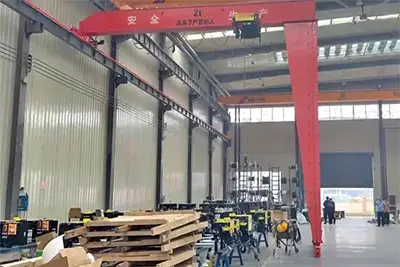
Light-Duty vs Heavy-Duty Gantry Cranes
Not all steel fabrication needs the same lifting power. Some workshops deal with lighter beams or smaller columns, while others handle massive structural steel.
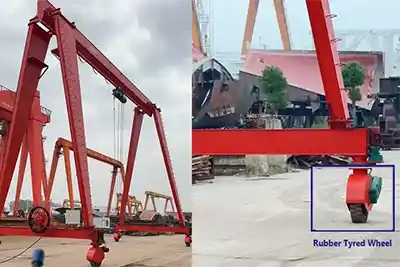
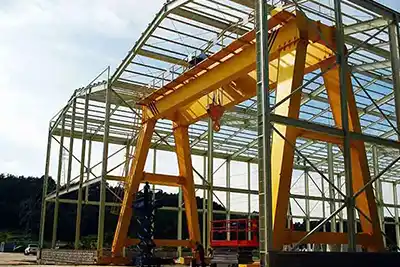 heavy duty gantry crane for sale
 Light-Duty Gantry Cranes:
- Lifting capacity usually ranges from 1 to 10 tons.
- Ideal for smaller beams, lightweight columns, and routine shop handling.
- Easier to install and maintain, with lower operating costs.
- Can be used for assembly lines or workshops with frequent but moderate lifts.
Heavy-Duty Gantry Cranes:
- Lifting capacity can go from 20 tons up to 100 tons or more.
- Designed for long, heavy beams and large structural columns.
- Requires more space and stronger foundations to operate safely.
- Common in large steel fabrication plants, bridges, and industrial projects.
Practical Tip: Choose the crane type based on the heaviest load you plan to lift regularly, with at least a 20% safety margin for unexpected conditions.
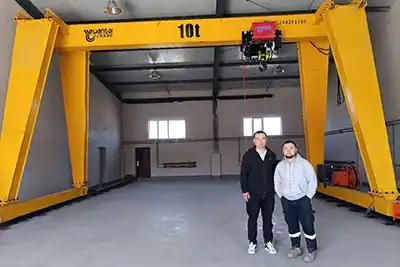

Single-Girder vs Double-Girder Gantry Cranes
The girder design affects both how much weight the crane can lift and how stable the load will be during transport.
Single-Girder Gantry Cranes:
- Simpler structure and easier to maintain.
- Suitable for lighter loads and shorter spans.
- Lower upfront cost, ideal for workshops with limited budget.
Double-Girder Gantry Cranes:
- Can carry heavier loads and longer beams.
- Provides greater stability, reducing sway when moving long or heavy columns.
- Better for precise positioning in assembly operations.
- Usually comes with higher initial cost but greater long-term flexibility.
Practical Tip: For long steel beams or heavy columns, a double-girder crane is safer and more reliable, especially if precision matters.
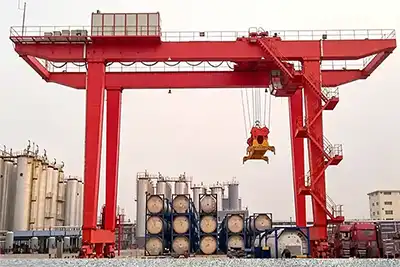
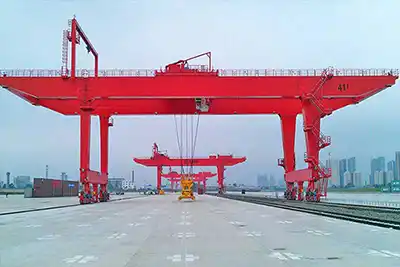 rail mounted gantry crane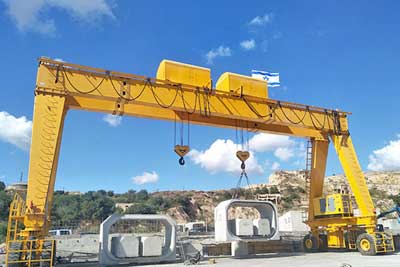
Mobile Travelling Rubber-Tyred Gantry Cranes vs Fixed Rail Gantry Cranes
Movement capability is another critical factor. Depending on your workshop layout, you may need a crane that can travel freely or one fixed on rails.
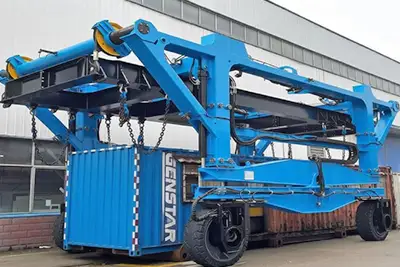
Mobile Rubber-Tyred Gantry Cranes (RTGs):
- Can move freely within the workshop or outdoor yard.
- Ideal for large, irregular layouts where steel needs to be moved between different stations.
- Flexible and doesn’t require permanent rails, but may need more floor space and stronger tires for heavy loads.
Fixed Rail Gantry Cranes:
- Runs on rails fixed to the workshop floor or runway beams.
- Offers precise movement along a set path, making it safer for repeated operations.
- Suited for large plants with predictable workflow and heavy, long beams.
Practical Tip: If your steel fabrication involves handling multiple long beams across large areas, mobile RTGs offer flexibility. For high-volume, repetitive lifting along the same path, rail-based cranes provide stability and precision.
Steel Beam and Column Handling Requirements
Handling steel beams and columns safely starts with knowing the material and how it behaves during lifting. Even experienced operators can make mistakes if they overlook weight, balance, or load distribution.
Steel beams and columns may look simple, but their size and weight play a big role in how you lift them.
- Weight & Size: Beams and columns can range from a few hundred kilograms up to tens of tons, with lengths from 4 meters to over 12 meters.
- Balance & Center of Gravity: Long or uneven pieces can tilt or swing if not lifted correctly. Always locate the center of gravity and plan your lifting points.
Tip: Mark lifting points clearly on long beams or heavy columns to prevent accidental tilting.
Where and how you attach slings, shackles, or hooks determines whether the lift is safe or risky.
- Correct Rigging: Always use slings and hooks rated for your load, and position them to keep the beam balanced.
- Avoid Bending & Twisting: Lifting at the wrong points or angles can warp steel, especially thin or long sections. Keep angles as vertical as possible.
Tip: For extra-long beams, use dual hoists to support both ends and prevent sagging in the middle.
How often you lift steel affects equipment life and safety.
- High-Volume Work: Frequent lifting accelerates wear on cranes, hoists, and rigging. Schedule regular maintenance to prevent breakdowns.
- Occasional Lifts: Less frequent lifts are easier on equipment but require operators to stay sharp on proper procedures.
Tip: Choose crane type and rigging setup based on how often you move beams. Don't push light-duty cranes into repeated heavy lifts—it's a safety risk and can shorten the crane's lifespan.
Gantry Crane Operation Best Practices
Operating a gantry crane safely is about more than just pressing buttons. Careful preparation, steady lifting, and clear communication make the difference between a smooth operation and a costly accident.
Before every lift, take the time to inspect both the crane and the load. Skipping these checks can lead to equipment failure or accidents.
- Crane & Hoist Inspection: Look for worn hooks, frayed wires, damaged chains, or loose bolts. Check brakes, limit switches, and emergency stops.
- Rigging Equipment: Inspect slings, shackles, and hooks for wear or deformation. Only use equipment rated for the weight of the load.
- Load Verification: Confirm the weight of the beam or column and compare it with the crane's rated capacity.
Tip: Always document inspections. It helps track maintenance needs and ensures compliance with safety regulations.
Lifting steel safely requires smooth movements and proper balance.
- Balanced Lifting: Use dual hoists for long beams or heavy columns to keep the load stable.
- Avoid Sudden Movements: Never jerk the crane or swing the load abruptly. Side pulls or uneven lifts can cause the beam to twist or the crane to tip.
Tip: Lift slowly at first, check that the load is stable, then move steadily to the target location.
Moving steel beams safely through the workshop requires careful planning.
- Clear Path: Ensure the travel route is free of obstacles and the floor markings are visible.
- Tag Lines: Use ropes to control long or heavy loads, preventing swinging and unwanted rotation.
- Positioning: Place the load precisely at the intended spot, avoiding abrupt stops or collisions.
Tip: Mark critical drop zones and keep non-essential personnel away from the lifting area.
Clear communication between the crane operator and the team is crucial to prevent accidents.
- Hand Signals: Standardized hand signals help guide lifts when operators cannot see the full path.
- Radio Communication: Two-way radios are useful for large workshops or noisy environments.
- Spotters: Assign trained personnel to guide operators and warn of any hazards.
Tip: Never operate a crane alone in blind zones. Communication saves time and reduces risks.
Specialized Equipment and Accessories
In steel fabrication, gantry cranes handle heavy loads every day, but the right accessories can make a huge difference in safety and efficiency. Long beams, tall columns, or unusual steel shapes often need more than just a hook and sling. Using specialized tools ensures the load stays stable, reduces stress on the crane, and protects both your team and the material.
When beams or columns are long or heavy, lifting beams or spreader bars are essential. They distribute weight evenly and prevent sagging in the middle.
- Use them for long I-beams, H-beams, or multiple pieces lifted at once.
- They improve stability and reduce stress on slings and the crane itself.
Practical Tip: Measure the beam or column first and position the slings correctly on the spreader bar. A balanced lift keeps the steel level and safer to handle.
For steel sheets, plates, or smooth-profile beams, magnetic lifters or clamps can be a fast and efficient alternative to slings.
- Ideal for short lifts or frequent repositioning of materials.
- Always verify the rated lifting capacity and inspect for surface conditions that may reduce grip.
- For heavier loads, pair magnets with slings as a backup for extra safety.
Practical Tip: Magnetic lifters speed up handling, but never rely on them alone for long or very heavy beams—dual support is safer.
Modern cranes are equipped with safety features to protect operators and prevent accidents.
- Overload protection: prevents lifting beyond the crane's rated capacity.
- Limit switches: stop the trolley or hoist from moving past safe points.
- Emergency stop systems: allow instant shutdown in critical situations.
Practical Tip: Test safety devices regularly. Even a small malfunction can lead to serious accidents, so routine checks are essential.
Risk Factors and Safety Hazards
Even with the right cranes and accessories, steel handling comes with inherent risks. Being aware of these hazards helps you plan safer lifts and prevent accidents.
Accidents in workshops often happen quickly, but most are preventable if you follow safe practices.
- Slips and Trips: Wet floors, loose cables, or cluttered paths can cause operators to fall.
- Dropped Loads: Incorrect rigging, overloaded cranes, or unstable beams can lead to material dropping unexpectedly.
- Collisions: Loads swinging into equipment, walls, or other workers can cause serious injury.
- Tip-Overs: Overloading a crane or improper lifting angles may cause the crane or load to tip.
Practical Tip: Keep the lifting area clean and mark boundaries clearly. Always check rigging before each lift.
The workshop or yard itself can add risk factors:
- Floor Conditions: Uneven, slippery, or damaged floors can reduce crane stability and increase accident risk.
- Weather Conditions: For outdoor cranes, rain, snow, or strong winds can affect load stability.
- Lighting: Poorly lit areas make it harder to judge distances and spot obstacles.
Practical Tip: Inspect the environment before lifting and adjust crane operation accordingly. Use extra caution in wet, windy, or dimly lit conditions.
Even experienced operators can make mistakes if attention lapses or procedures aren't followed:
- Operator Fatigue: Long hours without breaks can reduce focus and reaction time.
- Improper Rigging: Using the wrong slings, hooks, or attachment points increases the chance of accidents.
- Lack of Communication: Poor coordination between operators and spotters can lead to collisions or dropped loads.
Practical Tip: Rotate operators for long shifts, provide proper training, and always use clear hand signals or radio communication.
Maintenance and Inspection for Safe Operation
Even the best gantry crane can become unsafe without proper maintenance. Regular inspections and timely servicing are essential to keep your workshop running smoothly and prevent accidents.
Daily checks are crucial for spotting wear and tear before it becomes a problem.
- Daily Checks: Inspect hoists, wire ropes, brakes, hooks, and chains for signs of damage or wear. Make sure limit switches and emergency stops function correctly.
- Monthly and Annual Inspections: Have certified personnel conduct thorough inspections, including structural components, electrical systems, and load-bearing elements.
Practical Tip: Encourage operators to report even minor issues immediately. Early detection prevents small problems from turning into costly repairs.
A structured maintenance schedule keeps the crane reliable and prolongs its lifespan.
- Lubrication: Regularly oil moving parts to reduce friction and prevent premature wear.
- Component Replacement: Replace worn hooks, slings, and brakes promptly.
- Structural Checks: Inspect girders, beams, and welds for cracks or fatigue.
Practical Tip: Keep a calendar for maintenance tasks and stick to it—skipping even one scheduled check can increase accident risk.
Maintaining proper records ensures accountability and helps meet safety regulations.
- Inspection Logs: Record daily, monthly, and annual inspections to track crane condition over time.
- Compliance: Follow OSHA, ISO, or local safety standards to meet legal requirements and industry best practices.
Practical Tip: Digital logs can simplify record-keeping and make it easier to spot recurring issues or trends.
Buyer and Engineer Considerations
Selecting the right gantry crane isn’t just about lifting the heaviest load. Engineers and buyers need to consider workshop requirements, material types, and long-term efficiency to make the best choice.
Choosing the Right Gantry Crane
- Assess the types of steel beams and columns you handle most often.
- Determine whether single-girder or double-girder cranes fit your lifting needs.
- Consider the crane’s mobility—fixed rail versus rubber-tyred mobile gantries—for your workflow.
Practical Tip: A crane that meets today’s needs but allows for some flexibility in the future will save time and money as your operations grow.
Capacity Planning and Load Analysis
- Calculate the maximum weight of beams and columns you will lift.
- Include a safety margin of 20–30% for unexpected loads or variations in material size.
- Consider long or unusually shaped beams, which may require dual-hoist or spreader bar solutions.
Practical Tip: Never assume all beams of the same profile weigh the same—verify weights, especially when using older stock or imported steel.
Customization Options
- Adjust the crane span, lift height, and trolley speed to fit your workshop layout.
- Choose accessories like lifting beams, spreader bars, magnetic lifters, or clamps based on the material you handle.
- Factor in floor conditions, ceiling height, and workflow paths to ensure smooth operation.
Practical Tip: Discuss your exact workflow with the crane manufacturer—they can provide custom solutions that save time, reduce accidents, and increase efficiency.
Conclusion
Gantry cranes are essential in steel fabrication, but safe and efficient operation depends on more than just the crane itself. Understanding material characteristics, proper lifting techniques, and potential hazards is key to protecting both your team and your steel.
Key Safety Practices
- Conduct pre-lift inspections of cranes, hoists, and rigging equipment every day.
- Use balanced lifting techniques, dual hoists, or spreader bars for long or heavy beams.
- Maintain clear communication between operators and spotters at all times.
- Monitor environmental conditions such as floor surfaces, lighting, and weather for outdoor operations.
- Follow maintenance schedules and regularly test safety devices like overload protection, limit switches, and emergency stops.
Equipment, Training, and Maintenance
- Invest in high-quality cranes suited to your load types and workshop layout.
- Equip your team with proper training to handle beams and columns safely.
- Stick to routine maintenance and inspection programs to prevent equipment failure and reduce downtime.
Final Recommendation
For efficient and safe steel fabrication, always choose cranes and accessories that match your material handling needs. Combining reliable equipment, operator expertise, and proactive maintenance ensures smooth operations, reduces accidents, and protects your investment.