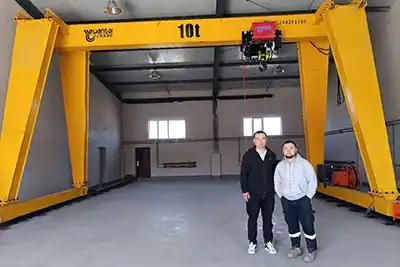
Gantry Crane vs Outdoor Overhead Crane: Which Is More Economical?
Most Important Takeaway
Key Insight: Contrary to common belief, outdoor overhead cranes with self-supporting structures are generally more economical than gantry cranes for permanent industrial installations, even though gantry cranes appear simpler and cheaper at first glance.
Key Takeaways for Crane Buyers:
- Overhead cranes often cost less overall due to reduced foundation requirements.
- Gantry cranes require continuous, deep rail foundations, increasing installation cost.
- For temporary or specialized access projects, gantry cranes can be useful but less flexible for resale.
- Project location and local climate can heavily impact the cost difference between crane types.
- Understanding your lifting span, weight requirements, and mobility needs ensures the right choice.
This guide answers:
- Are gantry cranes cheaper than overhead cranes?
- When is a gantry crane advantageous?
- How do foundation and installation costs compare?
- What should buyers consider for temporary vs. permanent projects?
Introduction
Outdoor lifting projects in industrial or manufacturing settings can be tricky. Whether you’re moving heavy steel, machinery, or other large materials, the crane you choose affects costs, safety, and efficiency. Choosing the wrong type can lead to extra expenses, longer installation, and more maintenance later.
A lot of people think gantry cranes are cheaper than overhead cranes. It makes sense at first glance—gantry cranes have legs and sit on rails, while overhead cranes need a tall structure to support them. Simple design looks like a lower price. But in reality, gantry cranes can be more expensive once you add in foundation work, rail installation, and outdoor stability requirements.
This guide will help you understand the real differences between gantry cranes and outdoor overhead cranes. By reading it, you’ll know which crane is more cost-effective for your project and why.
What you’ll learn here:
- Why a gantry crane is not always cheaper than an overhead crane.
- How foundations, structure, and installation affect overall cost.
- Advantages and limitations of each crane type in real industrial settings.
- When to choose a crane for temporary or permanent projects.
- Questions you should ask before buying a crane to save time and money.
Knowing these points upfront helps you plan better, control costs, and choose the right crane for your needs.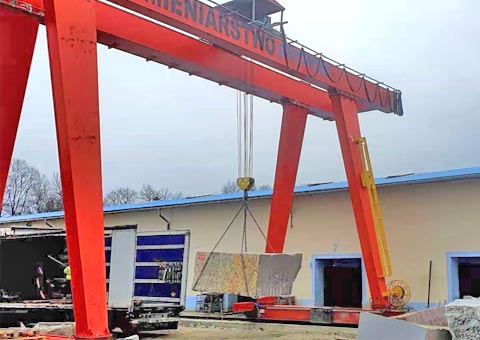
Comparing Gantry Cranes and Outdoor Overhead Cranes
When choosing between a gantry crane and an outdoor overhead crane, it's important to understand the key differences and how they affect project cost, installation, and long-term operation. Let's break it down in practical terms.
| Feature | Gantry Crane | Outdoor Overhead Crane |
|---|---|---|
| Definition | Lifting equipment with vertical supports running on ground rails | Lifting equipment installed on an elevated self-supporting steel structure |
| Span | Usually ≤ 100 ft | Up to 150 ft or more |
| Lifting Capacity | Up to 30 tons | Up to 160+ tons |
| Runway Rails | On-ground, requires deep, continuous foundations | Elevated structure supported at discrete points |
| Mobility | Fixed on rails, limited movement along track | Fixed, permanent installation, usually spans large areas |
For gantry cranes, the foundation is one of the biggest cost factors. The rails need to be perfectly aligned and securely anchored along the entire span of the crane. That means:
- Deep concrete footings along the full length of the track to prevent movement.
- Extra labor and material costs for excavation, formwork, and pouring concrete.
- Maintenance over time to ensure the rails stay level and the crane runs smoothly.
In contrast, an overhead crane sits on a self-supporting steel structure. The foundation work is limited to the main columns only, not along the entire track. This often reduces both initial construction costs and long-term maintenance needs.
Project location can greatly affect costs for both crane types. In North America, for example:
- Cold climates require deeper foundations for frost protection if installing gantry rails.
- Heavy snow or wind loads increase the size and cost of gantry crane legs and foundation work.
- Overhead cranes on self-supporting structures can often be engineered to meet local standards without requiring continuous ground rails, saving both money and installation time.
Additionally, local codes and standards sometimes favor one type of crane over the other, affecting design, permitting, and overall project cost. European pricing examples for gantry cranes may look cheaper online, but when adapted to North American standards, the cost difference can disappear—or even reverse.
- Don't judge crane cost by equipment price alone; foundation and installation often outweigh the initial purchase cost.
- For permanent outdoor installations, overhead cranes often save money in foundation, labor, and long-term maintenance.
- Consider local climate and codes early—they can add significant cost to a gantry crane project.
- Mobility is limited with gantry cranes, so if your project requires flexibility, this is a critical factor.
Cost Analysis and Project Considerations
Choosing between a gantry crane and an outdoor overhead crane isn't just about the equipment price. The total cost of ownership includes installation, foundations, long-term maintenance, and project-specific factors. Let's look at the key considerations.
Gantry Crane
Installing a gantry crane requires careful attention to the ground rails and foundations:
- Deep, continuous concrete foundations along the entire crane track to ensure stability and prevent rail movement.
- Precision rail installation so the crane can move smoothly without binding or uneven wear.
- Ongoing maintenance costs, including rail leveling, foundation inspection, and occasional adjustments to account for soil settling.
Outdoor Overhead Crane
For overhead cranes on a self-supporting structure:
- Elevated steel structure supports the crane, reducing the need for extensive ground foundations.
- Fewer foundation points—usually only at the main column bases—saving excavation and concrete costs.
- Easier long-term maintenance, since the crane runs on elevated rails that are less affected by ground conditions.
Several project-specific factors influence overall cost and feasibility:
- Crane span: Longer spans increase structural steel requirements for both types, but overhead cranes handle large spans more efficiently.
- Lifting weight: Higher capacities require stronger foundations for gantry cranes, which can drive up cost significantly. Overhead cranes distribute weight across columns, often lowering foundation expenses.
- Outdoor exposure: Wind, rain, snow, and temperature fluctuations can increase both material requirements and maintenance. Gantry crane legs and rails are more affected by weather than elevated overhead structures.
The intended duration of use can affect your crane choice:
Temporary Projects
- Gantry cranes can be installed for short-term use, but delivery times are often long (20+ weeks), and rails need precise alignment.
- Limited lifting speeds may reduce efficiency compared with mobile cranes or rental solutions.
- Resale value may be low, as the crane is designed for a specific project.
Permanent Projects
- Overhead cranes are ideal for long-term installations, with a durable steel structure and minimal foundation footprint.
- Easier to maintain, upgrade, or expand for future operations.
- Total project cost is often lower over the crane's lifecycle compared with a gantry crane.
- Always factor in installation and foundation costs, not just equipment price.
- Consider your span, lifting weight, and environmental conditions to avoid unexpected expenses.
- Think about whether your project is temporary or permanent, and plan for delivery times and long-term flexibility.
- For most permanent outdoor industrial projects, an overhead crane provides better value and easier maintenance than a gantry crane.
When Gantry Cranes Are Advantageous
While overhead cranes are usually more cost-effective for permanent outdoor installations, there are situations where a gantry crane is the better choice. Understanding these scenarios helps buyers avoid choosing the wrong equipment for the job.
One of the main advantages of a gantry crane is the ability to design cantilever extensions. This allows the hoist to reach areas beyond the crane legs, making it ideal for projects where materials need to be lifted over obstacles or into tight spots. For example:
- Handling loads that extend beyond a standard track.
- Reaching areas where fixed overhead rails cannot go.
- Situations where lateral movement flexibility is critical.
Gantry cranes are commonly used in ports and construction sites because they can be designed for specific reach and layout needs:
- Loading and unloading containers or bulky cargo in confined areas.
- Lifting materials over uneven terrain where overhead rails aren't practical.
- Temporary setups on construction sites where overhead crane installation isn't feasible.
Gantry cranes can be considered for short-term or temporary projects, such as bridge construction, roadwork, or industrial renovations:
- Rails and foundations must be carefully prepared, but the crane can serve a defined project period.
- Delivery times can be long—sometimes over 20 weeks—so planning ahead is crucial.
- After the project ends, resale can be challenging, as gantry cranes are often built for specific spans and layouts.
Even when a gantry crane fits the application, buyers should be aware of potential downsides:
- Mobility is limited to the installed rails; moving the crane requires reinstallation.
- Lifting speeds are typically slower than mobile cranes or some overhead cranes.
- Resale value may be low, especially for specialized or custom-built gantry cranes.
- Choose gantry cranes when you need access beyond the rails or specific cantilever reach.
- They are best for ports, construction, or temporary civil projects, not permanent factory yards.
- Consider delivery times and resale value before committing to purchase.
- Understand that mobility and speed limitations may affect project efficiency.
Practical Recommendations for Industrial Buyers
Choosing the right crane for your outdoor lifting project requires more than looking at the price tag. The best decision comes from a clear understanding of your project needs, site conditions, and long-term goals. Here's a practical approach to help industrial buyers make an informed choice.
Before deciding on a gantry or overhead crane, it's essential to consult a lifting specialist. They can assess:
- The maximum lifting weight and frequency of operations.
- The span and layout of your workspace.
- Ground conditions, soil stability, and climate factors.
- Any temporary or permanent project requirements.
A professional evaluation helps avoid surprises during installation and ensures that the crane matches your operational needs.
When evaluating options, look at the total project cost, not just the equipment price. Consider:
- Installation timeline – how long it takes to prepare foundations and assemble the crane.
- Foundation complexity – gantry cranes usually require continuous deep foundations, while overhead cranes need fewer support points.
- Long-term flexibility – overhead cranes are often easier to maintain, expand, or relocate.
Industrial operations evolve, so consider whether your lifting equipment will need to handle:
- Increased production volume.
- Longer spans or higher lifting capacities in the future.
- Facility layout changes or potential relocation.
Choosing a solution that accommodates growth can save significant costs over the crane's lifecycle.
Finally, match your project to the crane type:
- Gantry cranes are suitable when you need cantilever access, temporary setups, or specialized reach beyond rails.
- Overhead cranes typically provide more economical and flexible solutions for permanent outdoor installations, especially when foundation costs and long-term maintenance are considered.
- Always start with a needs analysis by a qualified lifting specialist.
- Look at the full project cost, not just equipment price.
- Factor in installation complexity, foundation work, and long-term flexibility.
- Plan for future expansion or relocation.
- Choose the crane type that best fits your layout, workflow, and budget.
Conclusion
When it comes to outdoor industrial lifting in North America, choosing the right crane can save both time and money. Based on project experience:
Overhead Cranes – The Economical Choice
- Self-supporting structure reduces foundation costs.
- Easier long-term maintenance compared with continuous rail systems.
- Better for permanent installations in manufacturing and industrial yards.
Gantry Cranes – When They Make Sense
- Ideal for specialized access beyond rails or cantilever lifting.
- Suitable for ports and temporary civil projects where standard overhead rails aren’t feasible.
- Flexibility comes with trade-offs: higher foundation cost, limited mobility, and lower resale value.
Practical Advice for Buyers
- Always start with a needs-based assessment: lifting capacity, span, site layout, and environmental factors.
- Consider total project cost, not just crane purchase price.
- Plan for future expansion or layout changes to avoid replacing equipment too soon.
Bottom Line:
For most permanent outdoor industrial projects, an overhead crane provides the best balance of cost, performance, and long-term reliability. Gantry cranes are valuable for specialized applications but require careful planning to ensure they are cost-effective.
Frequently Asked Questions (FAQs) – Crane Buyers' Perspective
When comparing gantry cranes and outdoor overhead cranes, industrial buyers often have similar questions. Here's a practical guide to what you need to know:
Not usually. Gantry cranes might look simpler at first because they sit on ground rails, but the cost of continuous foundations, precise rail alignment, and maintenance often makes them more expensive than overhead cranes on a self-supporting structure.
Key point: Don't judge by equipment price alone—consider total installation and long-term costs.
Gantry cranes are useful when:
- You need cantilever access beyond the crane legs.
- You're working in ports or construction sites where specific reach is required.
- Your project is temporary and requires a fixed yet flexible lifting solution.
Remember: If your goal is a permanent industrial installation, overhead cranes often remain more economical.
Yes, but there are trade-offs:
- Delivery times can be long, sometimes 20+ weeks.
- Resale is difficult since the crane is usually built for a specific project or span.
- Lifting speeds and mobility may be limited compared with mobile cranes.
Tip: Plan ahead and factor in project duration before choosing a gantry crane for short-term work.
Environmental conditions matter:
- Cold climates require frost-protected foundations for gantry rails.
- High winds, heavy snow, or extreme temperatures may increase structural and installation requirements.
- Overhead cranes on elevated, self-supporting structures are often less affected by ground and weather conditions.
Insight: Local standards and climate can make a big difference in total project cost, especially for gantry cranes.
Buying a crane isn't just about the sticker price. Evaluate:
- Foundation work – depth, alignment, and complexity.
- Maintenance needs – ongoing checks, rail leveling, and structural inspections.
- Lifting speed and workflow efficiency – affects productivity.
- Project lifespan and future expansion – can the crane adapt to new requirements?
- Mobility – gantry cranes are fixed on rails; overhead cranes may allow easier adjustments in layout.
Bottom line: Look at the full lifecycle cost and operational flexibility, not just the initial purchase price.