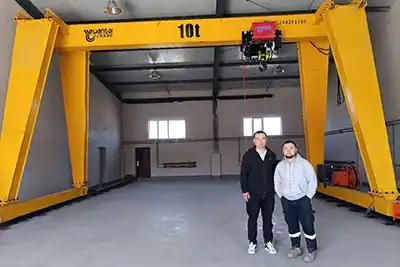
Indoor Gantry Crane for Factories:Guide to Smart Design Features
Discover key design features, practical tips & selection criteria for indoor gantry cranes to boost factory efficiency & safety. Get indoor gantry crane!
Introduction
Indoor gantry cranes are essential pieces of equipment in many factories. They provide a reliable way to move heavy materials, machinery, and parts across production floors without relying on forklifts or manual labor. Whether you run a metal fabrication shop, a plastic injection molding plant, or a machinery assembly line, these cranes can save time, reduce workplace strain, and improve workflow.
Selecting the right design isn’t just about picking a crane that can lift a certain weight. The right indoor gantry crane can make your operations smoother, safer, and more cost-effective in the long run. On the other hand, the wrong choice can lead to frequent breakdowns, maintenance headaches, and even safety risks for your staff. Factors like lifting capacity, span, hoist type, and control system all matter—and getting them wrong can cost more than the initial purchase.
This guide is aimed at people who make decisions about factory equipment. If you’re a factory owner, a workshop manager, or someone in procurement, this guide will help you understand what to look for when choosing an indoor gantry crane. By the end, you’ll have practical information to compare different designs and make a choice that fits your factory’s workflow, floor layout, and budget.
In this guide, you will learn:
- How indoor gantry cranes are used in factories and why they matter
- The main types of indoor gantry cranes and their typical applications
- Design features that impact performance, safety, and maintenance
- How to match crane specifications to your specific factory needs
Common Applications in Factories
Indoor gantry cranes play a critical role in day-to-day factory operations. They are designed to lift, move, and position heavy loads efficiently, which helps streamline workflow and reduce the physical strain on workers. Knowing the main applications of these cranes can help buyers choose the right type and size for their factory needs.
One of the primary uses is material handling and transportation across the shop floor. Cranes can carry heavy materials safely and quickly, reducing reliance on forklifts or manual handling. This is especially valuable in factories with large production areas or heavy inventory.
Common material handling tasks include:
- Moving raw materials from storage to production lines
- Transporting finished products to packing or shipping areas
- Relocating large components between different workstations
Using a crane for material handling ensures smoother operations and minimizes the risk of workplace injuries. Proper planning of crane paths and load capacity is essential to maximize efficiency.
Another important application is loading and unloading machinery or heavy parts. Many factories receive bulky equipment or ship out large products that are difficult to handle without mechanical assistance. An indoor gantry crane can lift these loads with precision and reduce potential damage.
Examples of loading and unloading tasks:
- Lifting heavy motors, presses, or pumps onto assembly stations
- Unloading metal coils, steel sheets, or machinery parts
- Positioning large molds or dies for production setup
By using cranes for these operations, factories save time and reduce labor costs, while keeping materials and equipment safe during transport.
Indoor gantry cranes are also highly useful for assisting in assembly and production line operations. In assembly-based manufacturing, precision is key. Cranes help move heavy components accurately, supporting production efficiency and reducing repetitive strain on workers.
Assembly and production support tasks include:
- Positioning machine frames or assemblies for bolting, welding, or machining
- Moving components along production lines without stopping operations
- Supporting repetitive or physically demanding tasks for workers
Finally, these cranes are essential for handling molds, dies, and maintenance equipment. Factories involved in injection molding, stamping, or forging processes rely on gantry cranes to lift and transport heavy molds or dies safely. They also play a critical role in maintenance, allowing large equipment to be moved or replaced quickly.
Specific handling examples include:
- Moving molds in and out of injection molding machines
- Lifting dies for stamping presses or forging machinery
- Supporting maintenance tasks, such as motor replacement or equipment repositioning
By understanding these common applications, buyers can make better decisions about crane type, lifting capacity, span, and height. Choosing the right crane ensures safer operations, faster workflows, and lower long-term costs for the factory.
Types of Indoor Gantry Cranes
Indoor gantry cranes come in different types, each suited for specific factory needs. Understanding these types helps buyers choose a crane that matches their workflow, space constraints, and lifting requirements. Let’s go through the most common options.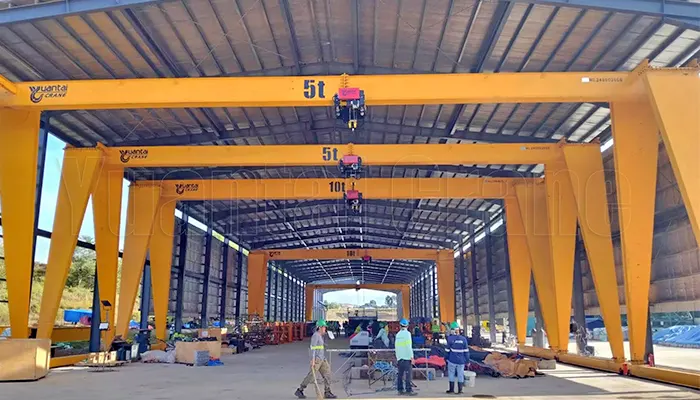
Single Girder Indoor Gantry Cranes
Single girder gantry cranes are widely used in small to medium-sized factories. They are simple in design, cost-effective, and lighter compared to double girder models. Despite their simplicity, they can handle a wide range of lifting tasks efficiently.
Key specifications and advantages:
- Typical capacities: 1–20 tons
- Common spans: usually 5–20 meters, depending on factory layout
- Lifting heights: often 3–12 meters, customizable based on workshop ceiling height
- Advantages: cost-effective, lightweight, easy to install, suitable for smaller loads
Single girder cranes are ideal for workshops that don’t require extremely heavy lifting but still need reliable material movement across the floor. They are also easier to maintain due to their simpler structure.
Double Girder Gantry Cranes
Double girder gantry cranes are designed for heavier loads and larger spans. They feature two main girders, which provide additional strength and stability. These cranes are common in factories that handle bulky machinery or heavy raw materials.
Key specifications and advantages:
- Typical capacities: 10–50 tons or more
- Wider spans: 10–35 meters, suitable for larger workshop areas
- Higher lifting heights: often 6–20 meters, depending on factory needs
- Advantages: high stability, can handle heavy-duty operations, precise load positioning
Double girder cranes are preferred when lifting very heavy or large items. They may cost more upfront, but their durability and capacity make them a solid investment for high-volume or industrial operations.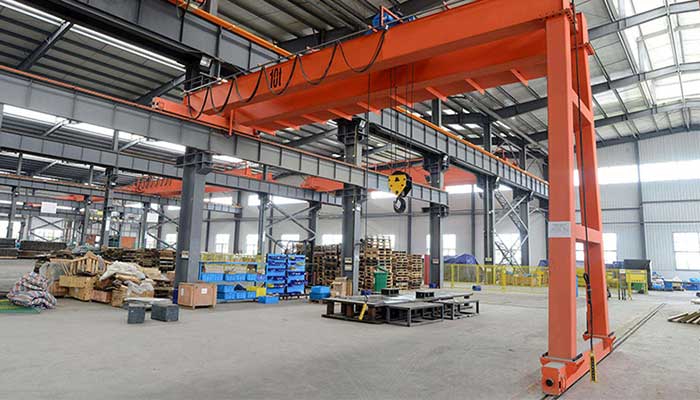
Semi-Gantry Cranes
Semi-gantry cranes are a hybrid type. One side runs on rails along the floor, while the other side is supported by a wall or runway beam. This design saves floor space while still providing solid lifting capabilities.
Key features and advantages:
- One leg on rails, other supported by a wall or existing structure
- Ideal for space-limited workshops
- Can lift moderate to heavy loads depending on design
These cranes are particularly useful when floor space is tight or when only part of the workshop can accommodate full rails. They combine flexibility with a robust lifting capacity.
Portable Indoor Gantry Cranes
Portable indoor gantry cranes are small, mobile, and easy to move between workstations. They are often used in factories for temporary or flexible lifting needs.
Key specifications and advantages:
- Smaller capacities: typically 0.5–5 tons
- Can be relocated easily for variable work areas
- Advantages: flexible, no permanent installation required, suitable for temporary projects
These cranes are perfect for workshops that need occasional lifting assistance or where tasks vary day-to-day. They offer convenience but are not meant for continuous heavy-duty operations.
Key Design Features Buyers Should Know
Choosing the right indoor gantry crane goes beyond capacity and span. The design details can make a huge difference in daily operation, maintenance, and long-term performance. Let’s break down the main features buyers should pay attention to.
Structural Design
The structure of a crane determines its strength, stability, and suitability for your factory layout. The main beam can be a box girder or an I-beam, each with its own benefits. Box girders are stronger and reduce deflection on long spans, while I-beams are lighter and more cost-effective for shorter spans.
Other structural considerations include:
- Leg design: fixed, adjustable, or mobile legs depending on your floor space and workflow flexibility
- Rail and floor track requirements: proper alignment is crucial for smooth operation and safety
A well-designed structure ensures the crane can handle loads safely and reduces wear on moving parts, saving maintenance costs over time.
Hoisting Mechanism
The hoist is the heart of any gantry crane. Your choice will impact lifting efficiency, precision, and maintenance needs.
Key hoist considerations:
- Type: wire rope hoist for heavier loads and longer lifts, chain hoist for smaller capacities, electric hoists for frequent lifting
- Load capacity and lifting speed: match the hoist to your daily operational needs
- Safety features: overload protection and upper/lower limit switches prevent accidents and equipment damage
Selecting the right hoist type and rating is essential to ensure safety and smooth workflow in your factory.
Bridge and Trolley
The bridge and trolley system affects how smoothly the crane moves across the shop floor. A well-designed system improves precision, reduces downtime, and minimizes maintenance.
Important factors include:
- Bridge construction and span support: ensures stability across longer spans
- Trolley movement: manual, semi-electric, or fully electric depending on workflow needs
- Stability and smooth operation: reduces sway and vibration for safer handling of delicate or heavy items
The right combination ensures the crane operates reliably, even in high-frequency lifting scenarios.
Power Supply and Control Options
How you operate the crane affects both efficiency and safety. Cranes can be controlled in several ways, and each has advantages depending on your factory layout and tasks.
Control considerations:
- Operation types: pendant control, radio remote, or cabin operation
- Integration with automation: can connect to production lines or automated systems for higher efficiency
- Energy efficiency: electric hoists and modern control systems reduce energy consumption and operating costs
Matching the control system to your operational needs can improve productivity and reduce operator fatigue.
Safety Features
Safety is not optional—especially when lifting heavy loads in a busy workshop. Modern gantry cranes come equipped with multiple safety systems to protect both workers and equipment.
Common safety features include:
- Anti-collision devices and audible/visual warning alarms
- Emergency stop buttons and reliable braking systems
- Compliance with ISO, CE, and OSHA standards for industrial safety
Ensuring your crane meets these safety standards reduces the risk of accidents and supports long-term factory compliance.
Customization Options
No two factories are exactly the same. A crane that fits perfectly into your workflow will save time, reduce accidents, and make material handling more efficient.
Typical customization options include:
- Adjustable spans and lifting heights to match your facility layout
- Protective coatings and corrosion-resistant materials for workshops with humid or harsh environments
- Adaptations to fit unique production lines, equipment, or floor layouts
Customizing your crane to your specific needs ensures it performs efficiently from day one and continues to support your operations for years to come.
Practical Considerations for Buyers
When choosing an indoor gantry crane, practical details in your factory often matter more than the specifications on paper. Even the most capable crane can underperform if it doesn’t fit the workshop layout, ceiling height, or workflow. Let’s go through the key considerations that can make a big difference in day-to-day operations.
Workshop Layout and Ceiling Height Limitations
Before selecting a crane, you need to carefully assess your workshop’s physical layout. Ceiling height, overhead obstructions, and available floor space will dictate the crane’s lifting height and span. Ignoring these factors can cause collisions, reduce operational efficiency, and even pose safety risks.
Key points to check:
- Ensure the crane can move freely without hitting lighting, ventilation systems, or other overhead structures
- Check clearance above machinery or workstations to allow safe lifting
- Consider potential future expansions or layout changes
Taking the time to evaluate layout and height ensures the crane integrates seamlessly into your workflow, improving productivity and reducing downtime.
Floor Load Capacity and Rail Alignment
The crane’s rails and the factory floor carry the full load, so structural support is critical. Poorly supported rails or insufficient floor strength can lead to uneven operation, equipment wear, or safety hazards.
Important considerations:
- Verify the floor can handle the combined weight of the crane and its maximum lifted load
- Ensure rails are level and accurately aligned to avoid trolley misalignment
- Account for concentrated loads where crane legs or wheels contact the floor
Proper floor support and rail alignment help the crane operate smoothly, reduce maintenance costs, and prevent premature wear or accidents.
Interaction with Existing Equipment and Workflow
A crane should enhance your workflow, not disrupt it. Before installation, consider how it will interact with existing machines, conveyors, and storage areas. Poor planning here can create bottlenecks or safety issues.
Things to evaluate:
- Map crane paths relative to machines, workstations, and storage zones
- Avoid placing cranes where they interfere with forklifts, conveyors, or foot traffic
- Determine if multiple cranes or semi-gantry designs are necessary for complex layouts
By integrating the crane thoughtfully, you can maintain smooth production flow and ensure safe operations across the factory.
Maintenance Access and Long-Term Operational Costs
Maintenance is a fact of life for any gantry crane. How easy it is to access components for inspection and repair can have a big impact on uptime and long-term costs.
Key points to consider:
- Ensure critical components like hoists, motors, and brakes are easily accessible
- Plan for routine lubrication, electrical inspections, and part replacement
- Factor in energy consumption and potential downtime when calculating ROI
Caring for a crane properly reduces unexpected breakdowns, keeps production running efficiently, and protects your investment over the long term.
Benefits of Choosing the Right Design
Selecting the right indoor gantry crane design can have a noticeable impact on daily operations and long-term costs. It’s not just about lifting heavy loads—choosing a crane that fits your workflow, space, and production needs can make your factory safer, faster, and more efficient.
Key benefits include:
- Increased efficiency and reduced labor costs: A crane matched to your factory layout and load requirements can move materials faster, reduce manual handling, and free up staff for other tasks.
- Safer operations for workers: Properly designed cranes minimize risks of collisions, tipping loads, and operator fatigue. Safety features like limit switches, emergency stops, and anti-collision devices contribute to a safer workplace.
- Flexibility for future factory expansions or process changes: Adjustable spans, modular designs, and customizable lifting heights allow your crane to adapt as your production lines evolve.
- Optimized ROI through reduced downtime and maintenance: Choosing high-quality components and designs suited to your workflow reduces maintenance needs and unexpected downtime, saving money over the crane’s lifespan.
By focusing on these benefits, buyers can see that investing in the right design pays off in efficiency, safety, and cost savings.
Conclusion
Indoor gantry cranes are a critical part of modern factories. Choosing the right crane design involves more than just lifting capacity—it requires considering workflow, safety, structural design, hoisting mechanisms, and maintenance access.
Key takeaways for buyers:
- Carefully evaluate the main design features, including structural design, hoist type, bridge and trolley systems, control options, safety features, and customization possibilities.
- Work with experienced crane suppliers who understand factory needs and can recommend solutions tailored to your operations.
- Assess your workshop layout, ceiling height, floor capacity, and workflow to ensure the crane fits seamlessly into your facility.
Taking these steps ensures your crane will improve efficiency, enhance safety, and deliver long-term value. Before making a purchase, take the time to plan and consult experts—your factory’s productivity depends on it.