Upgrade Your Workshop Crane: When & How to Renew Overhead Crane
Learn how to upgrade your workshop cranes to meet your production needs, ensuring safety, efficiency, and reliable performance for your operations.
Introduction
A workshop crane is often the backbone of a factory or workshop. When it works smoothly, materials move quickly, production stays on schedule, and operators can do their jobs safely. But when a crane struggles or breaks down, even a small delay can ripple across the entire workflow, affecting productivity and profits. Reliable cranes are not just a convenience—they are a necessity.
Upgrading or replacing a crane at the right time is just as important as having a good one in the first place. Waiting too long can lead to unexpected downtime, higher maintenance costs, and even safety hazards. Imagine a hoist failing mid-lift or controls malfunctioning during a critical operation—those risks are real and can be costly. A timely upgrade prevents these problems and keeps your workshop running efficiently.
In this guide, we will walk you through:
- Signs your crane needs replacement or retrofitting – Learn how to spot warning signals before they become serious problems.
- Retrofit and modular upgrade options – Understand how you can modernize existing cranes without replacing the entire system.
- Full crane replacement considerations – When a complete new crane makes more sense than upgrading old equipment.
- Decision-making strategies – How to balance cost, safety, and operational needs when planning an upgrade.
By the end, you’ll have a clear idea of when it’s time to act and how to make the best choice for your workshop. Efficient, safe, and modern cranes aren’t just a luxury—they’re a practical investment in the day-to-day operation of your facility.
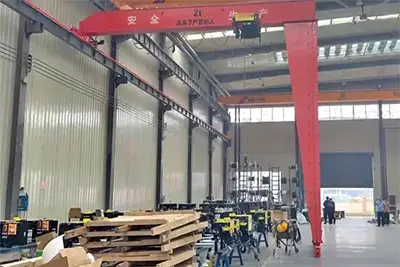
Single girder overhead crane for indoor use
Signs Your Crane Needs Replacement or Retrofitting
Even the best workshop crane doesn’t last forever. Over time, wear and tear, outdated technology, and evolving production needs can make a crane less efficient—or even risky to operate. Recognizing the signs early can save you time, money, and headaches. Here’s what to look for:
When your crane starts slowing down or breaking down more often, it’s a clear warning. Minor issues may seem manageable, but repeated failures interrupt workflow and frustrate operators. You should also watch for cranes struggling to lift their rated loads consistently.
- Frequent breakdowns during normal operations.
- Slower hoisting or trolley movement than before.
- Difficulty handling current or slightly increased load requirements.
Safety standards change over time, and older cranes may no longer meet current regulations. Even if a crane “works,” outdated systems can put operators at risk. Near-miss incidents, complaints from staff, or visible wear on hooks, ropes, or brakes are red flags.
- Non-compliance with updated OSHA or local safety standards.
- Increasing incidents or near-misses reported by operators.
- Worn or outdated safety features like limit switches, emergency stops, or overload protection.
Some cranes become money pits. If your repair bills keep rising or spare parts are hard to find, it may be time to rethink keeping the old system. Sourcing obsolete parts can also delay repairs, adding unplanned downtime.
- Repair costs that are consistently high or rising.
- Long delays in finding replacement parts.
- Frequent unscheduled maintenance interrupting production.
Older cranes often lack modern features that improve productivity and safety. Manual controls, slow speeds, or limited lifting height can slow your workflow. As your production evolves, your crane might simply not meet the new demands.
- Outdated controls without variable speed (VFD) or automation options.
- Limited lifting height or span for current workflow requirements.
- Slow hoisting or trolley speeds that create bottlenecks.
If your workshop is expanding, your crane may need to keep up. New production lines, heavier loads, or smart factory integration can make an older crane insufficient. Planning ahead ensures your equipment grows with your business, not against it.
- Workshop expansion requiring higher load capacity or longer spans.
- Integration with modern production lines or semi-automated systems.
- Preparing for future upgrades without overhauling the entire facility.
Evaluating Modular Upgrades vs. Full Crane Replacement
When your crane shows signs of aging or inefficiency, the next step is deciding whether to retrofit it or replace it entirely. Both options have pros and cons, and the right choice depends on the crane’s condition, your budget, and your workshop’s current and future needs.
Modular Upgrades
Modular upgrades focus on improving key parts of your crane rather than replacing the whole system. Think of it as giving your crane a second life without the cost and downtime of a full replacement. You can replace or modernize components like the hoist, motor, control panels, electrics, or even the trolley system.
Advantages:
- More cost-effective than a full crane replacement.
- Minimal production downtime compared to installing a new crane.
- Extends the crane’s operational life by 5 to 10 years.
- Upgrades can include modern features like variable frequency drives (VFD), remote controls, or better safety systems.
Best For:
- Cranes with structurally sound girders and runway beams.
- Situations where the crane’s load capacity is still sufficient but the technology is outdated.
- Workshops that want to improve safety and efficiency without a large upfront investment.
Modular upgrades are practical when your crane still has strong bones but needs a tech refresh. It’s a good balance between cost, efficiency, and long-term planning.
Full Crane Replacement
Full replacement means installing a completely new crane system. This option is more expensive upfront but comes with benefits that modular upgrades can’t always match. A new crane can meet higher capacity needs, longer spans, and modern safety or automation standards.
Advantages:
- Meets current safety regulations and efficiency standards.
- Higher lifting capacity, longer span, and full customization options.
- Future-ready with automation, IoT integration, energy-efficient motors, and modern control systems.
- Reduces maintenance costs because everything is new and designed to last.
Best For:
- Cranes that are severely worn out or non-compliant with current safety standards.
- Expanding workshops with heavier loads or more complex workflows.
- Situations where upgrade costs are approaching or exceeding the price of a new crane.
Full replacement is the way to go if your old crane is holding you back, or if you want a long-term solution that can grow with your business.
Practical Steps for Decision-Making
Deciding whether to upgrade or replace a workshop crane can feel overwhelming. There's a lot at stake—safety, productivity, and budget. Breaking the process into clear steps makes the decision easier and ensures you don't overlook anything important.
The first step is to understand exactly what condition your crane is in. A thorough inspection will reveal structural issues, worn components, or outdated systems that may not be obvious at first glance.
- Conduct a professional evaluation of the crane's structure, hoist, motor, electrics, and control systems.
- Compare repair costs against replacement costs to see which option is more cost-effective.
- Identify components that could be upgraded modularly versus those that would require full replacement.
A detailed inspection gives you a realistic picture of your crane's health and helps avoid surprises later on.
Even experienced operators can miss critical signs or underestimate risks. Bringing in certified professionals ensures you have an unbiased, accurate assessment.
- Work with certified crane manufacturers or service providers who understand your crane type.
- Consider a third-party inspection to get independent advice, especially for older cranes or complex systems.
- Ask about recommended upgrades, safety improvements, and expected lifespan after retrofitting.
Experts can also help you plan for future workflow changes and ensure compliance with local safety standards.
Money matters, but it's not just the upfront cost that counts. Think about long-term savings, reduced downtime, and productivity gains.
- Calculate lifecycle costs for both upgrading and replacing the crane.
- Factor in potential downtime during installation or repairs.
- Consider financing options or phased upgrades if budget constraints are an issue.
- Include energy savings and maintenance reduction when evaluating ROI.
A clear financial picture ensures you make a decision that balances short-term costs with long-term benefits.
Once you've decided, plan carefully to minimize disruption to your workshop. A well-organized implementation keeps production moving and ensures the new or upgraded crane performs as expected.
- Schedule the upgrade or replacement during low production periods to reduce impact on workflow.
- Prepare the site in advance, checking runway beams, power supply, and safety zones.
- Train operators on new controls, safety systems, or VFD settings to avoid mistakes.
- Document maintenance procedures and inspection schedules for the upgraded crane.
Proper planning ensures the project goes smoothly and that your team can safely and efficiently operate the upgraded or new crane from day one.
Contact Us Today to Get Your Solution
Keeping your workshop crane in top condition is more than just maintenance—it’s about planning for efficiency, safety, and long-term cost savings. Regularly assessing your crane’s performance, load capacity, and safety features helps you catch small problems before they turn into major downtime or expensive repairs. A proactive approach keeps your workflow smooth and your team safe.
When it comes to upgrades, modular solutions are practical for cranes that are structurally sound but technologically outdated. They extend the crane’s life, improve safety, and reduce immediate costs. On the other hand, a full replacement makes sense for older, heavily worn, or under-capacity cranes, especially when your workshop is expanding or handling heavier loads. The right choice depends on your specific situation, future plans, and budget.
Take Action Today:
- Schedule a professional assessment of your current cranes.
- Explore modular upgrade options for efficiency improvements.
- Consider full replacement if your crane no longer meets your operational needs.
- Consult a trusted workshop crane supplier to evaluate your options and plan a solution that fits your workflow, safety requirements, and long-term goals.
By taking these steps, you ensure your workshop cranes stay reliable, safe, and ready for whatever your production demands next. Don’t wait for a breakdown—plan your crane upgrade or replacement now and keep your operations running smoothly.