Industries That Benefit Most from Single Girder Gantry Cranes
Explore how 5–20 ton single girder gantry cranes improve efficiency, safety, and workflow across metal, machinery, construction, and logistics industries.
Introduction
Single girder gantry cranes with 5–20 ton capacities are a versatile solution for many industrial operations. They are designed to lift and transport medium to heavy loads efficiently, making them suitable for factories, workshops, construction sites, and outdoor yards. Whether you need to move steel plates, machinery, or bulk materials, these cranes handle the task reliably.
Choosing the right crane is more than just looking at capacity. The correct single girder gantry crane ensures safety for operators, minimizes downtime, and improves overall workflow. A crane that matches your operational needs can make daily material handling smoother and faster, reducing unnecessary strain on workers.
These cranes also offer cost-effective material handling solutions. With their simpler design compared to double girder cranes, installation and maintenance are generally easier and more affordable, while still providing the lifting strength needed for medium-heavy industrial loads.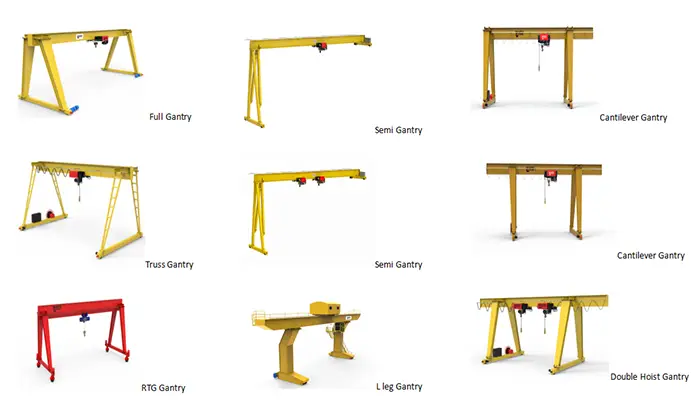
types of single girder gantry cranes for sale 1 ton to 20 ton
Key Takeaways:
- 5–20 ton single girder gantry cranes are practical for lifting medium to heavy loads in industrial settings.
- Proper crane selection improves safety, efficiency, and productivity.
- These cranes offer a cost-effective solution for reliable material handling across workshops, yards, and construction sites.
Key Features of 5–20 Ton Single Girder Gantry Cranes
Understanding the key features of single girder gantry cranes in the 5–20 ton range helps industrial buyers choose the right crane for their specific operations. These cranes combine practicality, flexibility, and reliable lifting performance for medium-heavy loads.
Typical Lifting Capacities and Span Ranges
Cranes in this range are designed to handle 5 to 20 tons, making them suitable for a wide variety of industrial tasks. The span, or distance between the crane legs, typically ranges from 5 to 25 meters, depending on the workspace.
Considerations:
- Ensure the crane’s lifting capacity matches the heaviest load in your operation.
- Longer spans are ideal for wide workshops or outdoor yards.
- Always include a safety margin to handle occasional heavier loads.
Mobility Options
Different operations require different mobility solutions. Single girder gantry cranes offer multiple configurations:
Options:
- Rail-Mounted: Fixed path for repetitive indoor lifting tasks, ensuring precision.
- Rubber-Tyred: Wheels allow mobility across outdoor yards or construction sites.
- Portable: Lightweight and easy to relocate for temporary or seasonal operations.
Hoist Types
The choice of hoist impacts lifting speed, precision, and maintenance:
Options:
- Electric Wire Rope Hoist: Suitable for heavier loads and continuous industrial use.
- Electric Chain Hoist: Compact design for lighter loads and limited headroom areas.
- Manual Hoist: Low-cost option for occasional lifting or small-scale operations.
Safety and Optional Features
Industrial operations require reliable safety features to protect operators and materials:
Important Features:
- Tandem Hoists: For lifting long or uneven loads safely and evenly.
- Remote Control: Allows safe operation from a distance, especially outdoors.
- Weatherproofing: Protects electrical components for outdoor or harsh environments.
- Optional explosion-proof or customized features for specialized industrial conditions.
Takeaway: Understanding these features ensures you select a 5–20 ton single girder gantry crane that fits your space, workload, and operational environment while maximizing efficiency, safety, and longevity.
Industries That Benefit Most
Single girder gantry cranes in the 5–20 ton range are highly versatile, serving a wide range of industrial sectors. Their moderate capacity, flexible design, and ease of operation make them a practical choice for everyday material handling.
Overview: Metal and steel fabrication plants handle heavy slabs, billets, steel plates, and beams. Moving these materials manually is inefficient and risky, making single girder gantry cranes an essential part of the workflow.
Typical Configurations:
- Full gantry single girder cranes for indoor or outdoor yards
- Truss girder single beam cranes for longer spans and wider areas
Operational Benefits:
- Faster movement of heavy steel materials between processing stations
- Safer lifting with stable crane structures
- Precise positioning for cutting, welding, or stacking operations
Machinery Manufacturing & Workshops
Overview: Workshops and manufacturing plants need to lift and move heavy machinery, motors, and assembly equipment. Semi-portal and L-leg single girder cranes are particularly useful in confined spaces, where floor clearance or side access is limited.
Typical Configurations:
- Semi-portal single girder cranes for space-saving operations
- L-leg single girder cranes for side-clearance requirements
Operational Benefits:
- Improved assembly line efficiency
- Reduced manual handling and operator strain
- Accurate placement of heavy machinery for installation or maintenance
Overview: Construction sites and engineering projects often involve lifting heavy beams, prefabricated parts, and other construction materials. On busy sites, manual handling is not only slow but also risky. Single girder gantry cranes provide a reliable solution for moving these materials efficiently and safely.
Typical Configurations:
- Rubber-tyred single girder cranes for mobility across uneven outdoor terrain
- Cantilever single girder cranes for extended reach and lifting long or awkward loads
Operational Benefits:
- Easy repositioning on outdoor sites without permanent rails
- Flexible placement for various construction zones
- Reduces labor requirements while improving safety and efficiency
Overview: Ports, logistics hubs, and storage yards require cranes that can handle containers, pallets, and bulk materials quickly. Time is critical in these environments, and single girder gantry cranes equipped with specialized lifting attachments meet the challenge.
Typical Configurations:
- Grab bucket single girder cranes for bulk materials like coal, sand, or grain
- Magnetic single girder cranes for steel slabs, plates, and other ferrous materials
Operational Benefits:
- Faster loading and unloading of materials
- Minimizes downtime in busy logistics operations
- Reduces manual labor while improving handling accuracy and safety
Overview: Power plants and heavy industry facilities often deal with extremely heavy equipment such as generators, turbines, and large machinery. Moving these safely requires cranes that can handle unique weights and sizes while fitting into complex layouts. Customized single girder gantry cranes are often the solution in these demanding environments.
Typical Configurations:
- Customized single girder cranes tailored to specific lifting needs
- Optional features like tandem hoists or extended spans for oversized loads
Operational Benefits:
- Safe lifting and precise positioning of heavy or oversized machinery
- Adaptable to complex industrial layouts with limited space
- Minimizes risk to operators and equipment during installation, maintenance, or relocation
Practical Considerations for Industrial Use
Selecting the right 5–20 ton single girder gantry crane requires more than just picking a popular model. To ensure safe, efficient, and cost-effective operations, it’s important to evaluate practical factors that affect performance and long-term value.
Matching Crane Capacity and Span to Industry Needs
Not all cranes are created equal. Choosing a crane that fits your load requirements and workspace span is critical. A crane that is too small slows operations, while an oversized crane can increase costs unnecessarily.
Considerations:
- Maximum weight of materials handled daily
- Span required to reach all work areas without repositioning
- Lifting height needed for stacking, installation, or maintenance
Floor Space, Ceiling Height, and Outdoor Conditions
The physical environment plays a major role in crane selection. Space restrictions, indoor ceiling heights, and outdoor conditions determine which crane type and configuration will work best.
Considerations:
- Indoor vs. outdoor operation
- Clearance under the crane for equipment or vehicles
- Exposure to weather: rain, wind, dust, or extreme temperatures
C. Safety Features and Maintenance Requirements
Safety is always a priority in industrial lifting. Modern single girder gantry cranes offer features to protect operators, materials, and machinery, while maintenance requirements affect long-term reliability.
Considerations:
- Tandem hoists for lifting long or uneven loads
- Remote or pendant control for operator safety
- Regular inspection schedules and ease of access for maintenance
- Optional weatherproofing or explosion-proof components for harsh environments
Cost vs. ROI
A crane is an investment, and understanding the return on investment (ROI) is important. Properly selected cranes save time, reduce labor, and prevent damage to materials.
Considerations:
- Initial purchase cost vs. long-term operational savings
- Faster material handling reduces downtime
- Safer operations reduce accident-related costs
- Efficient workflow improves overall productivity
Takeaway: By carefully considering capacity, environment, safety, and cost, industrial operators can select a single girder gantry crane that maximizes efficiency, reduces risks, and delivers long-term value.
Conclusion
5–20 ton single girder gantry cranes offer a versatile and cost-effective solution for a wide range of industrial operations. From workshops and steel fabrication yards to construction sites and power plants, these cranes provide the lifting capacity, span, and flexibility needed to handle medium-heavy loads safely and efficiently.
Consulting with experienced crane suppliers is highly recommended. They can help match the crane type, hoist, and optional features to your specific operational requirements, ensuring a solution that fits your space, workload, and safety standards.
Key Benefits:
- Improved efficiency with faster, more reliable material handling
- Safer operations, reducing the risk of accidents and material damage
- Streamlined workflow, saving time and reducing labor costs
Choosing the right single girder gantry crane is not just an equipment purchase—it’s an investment in productivity, safety, and long-term operational success.