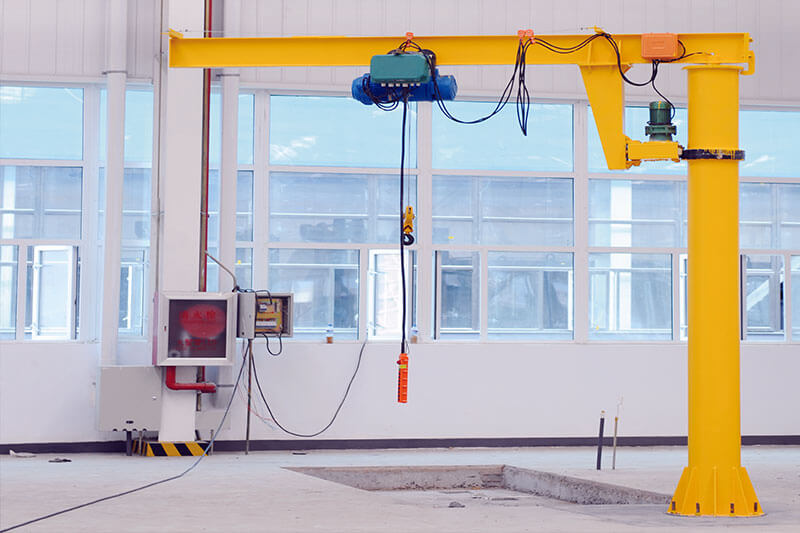
Maintenance of Pumps & Valves with 0.5–10 Ton Jib Cranes
Maintenance of Pumps, Valves, or Auxiliary Equipment Using Jib Cranes (0.5–10 Tons) – Buyer Guide
Key Takeaway
Proper maintenance of pumps, valves, and auxiliary equipment relies on selecting the right jib crane for safe, precise, and efficient lifting. For loads between 0.5–10 tons, careful planning, crane selection, and adherence to safety standards prevent equipment damage, reduce downtime, and ensure smooth plant operations.
Key Takeaways & Questions Solved in This Guide:
- Understand which jib crane types and capacities are ideal for pump room and auxiliary bay maintenance.
- Learn how localized lifts improve safety and precision when handling sensitive pumps, valves, and motors.
- Discover the technical specifications buyers must confirm: load capacity, lifting height, duty class, and control systems.
- Identify safety standards and compliance requirements for small-capacity jib cranes.
- Learn best practices for maintenance planning, inspections, and emergency support.
- Understand site, structural, and environmental considerations for installing jib cranes in confined spaces.
Introduction
In many industrial facilities, maintenance teams face the challenge of lifting pumps, valves, and auxiliary equipment in tight, confined spaces. Pump rooms and auxiliary bays are often crowded with piping, structural supports, and other equipment, leaving little room for maneuvering.
Using jib cranes rated for 0.5–10 tons provides a practical solution. These cranes allow operators to lift, move, and position equipment precisely, without relying on temporary hoists, chain blocks, or overhead cranes designed for much larger loads. Properly installed jib cranes save time, reduce the risk of accidents, and make routine maintenance smoother and safer.
Practical Benefits:
- Enables safe lifting of pumps, valves, and small motors in confined areas.
- Reduces reliance on temporary rigging or external lifting equipment.
- Improves precision and control during equipment maintenance.
- Minimizes downtime during routine repairs or replacement tasks.
Typical Applications
Jib cranes are especially suited for localized lifting tasks where precision and controlled movement are important. They work well in areas where overhead bridges or gantry cranes cannot operate effectively.
Common Maintenance Applications:
- Pump removal or replacement in pump rooms: Handles pumps of various sizes and weights safely, allowing maintenance teams to swap or repair units without disturbing surrounding equipment.
- Valve maintenance or actuator installation: Precise positioning is critical for valves in tight piping networks or mechanical rooms.
- Motor and auxiliary equipment handling: Lifts motors, small compressors, or other auxiliary devices during routine maintenance or scheduled shutdowns.
- Localized lifts where overhead cranes cannot reach: Jib cranes fill the gaps, providing coverage for areas not served by larger lifting systems.
Operational Considerations:
- Ensure crane placement allows full coverage of the maintenance area.
- Consider swing radius and rotation limits to avoid collisions with piping or structural elements.
- Match crane capacity to the heaviest expected load plus a safety margin.
Jib Crane Configurations for Maintenance Tasks
Choosing the right jib crane configuration is critical for both safety and efficiency. The wrong type of crane can make lifts awkward, slow, or even unsafe, especially in tight pump rooms or auxiliary equipment bays. Selecting a configuration that fits the space, load, and frequency of use ensures smooth maintenance operations.
Common Jib Crane Configurations:
- Free-standing jib cranes: These cranes are ideal for areas with open floor space. They can be positioned where needed and often provide a full 360-degree rotation, allowing operators to cover multiple workstations without relocating the crane. Free-standing units are versatile for workshops or auxiliary bays where mobility and coverage are priorities.
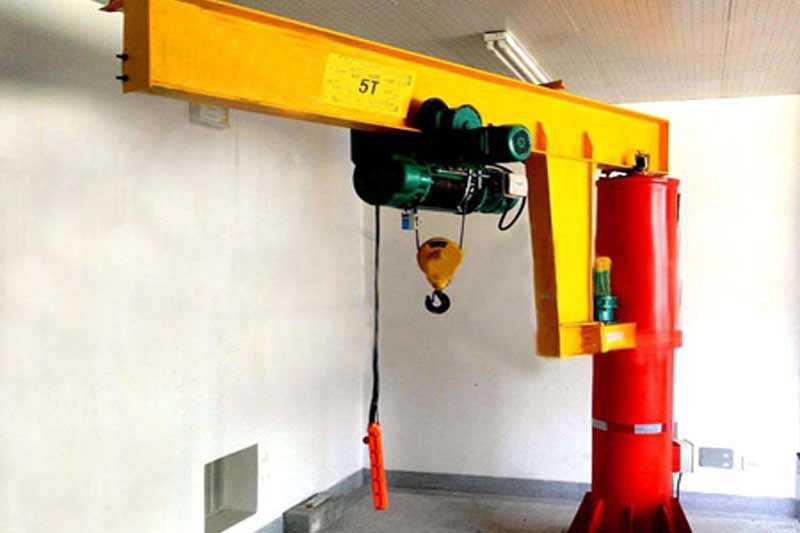
- Wall-mounted or column-mounted jib cranes: When space is limited, mounting the crane on a wall or structural column is the most practical solution. This configuration keeps the floor clear, making it ideal for confined pump rooms or areas crowded with piping and structural supports. Wall-mounted cranes often have a fixed swing radius, so it’s important to plan the installation carefully.
- Manual, electric, or hydraulic hoists: The type of hoist depends on the load and the maintenance workflow. Manual hoists are simple, low-cost solutions for occasional light lifts. Electric hoists provide consistent speed and control for frequent or heavier lifts, while hydraulic hoists are preferred for precise positioning of sensitive equipment or loads that require smooth motion. Choosing the correct hoist ensures safe operation and reduces operator fatigue.
- Rotation and swing radius considerations: The crane’s swing radius must be planned to reach all equipment without obstruction. Proper rotation allows operators to lift, move, and position pumps, valves, or motors safely. Pay attention to nearby walls, piping, and other equipment to avoid collisions during operation.
Practical Tips for Buyers:
- Match crane type to space constraints and load requirements.
- Confirm the hoist type suits the frequency and precision of maintenance tasks.
- Measure swing radius and rotation limits to ensure full coverage of the maintenance area.
- Consider future changes or additional equipment to avoid reconfiguring the crane later.
Technical Specifications Buyers Must Confirm
Before purchasing a jib crane for pump, valve, or auxiliary equipment maintenance, it’s essential to verify the technical specifications. The right parameters ensure safe operation, prevent equipment damage, and avoid delays during maintenance. Small mistakes in capacity, reach, or controls can create big problems in tight spaces.
Key Specifications to Check:
- Rated Load Capacity: The crane must safely handle the heaviest equipment you plan to lift. For most pump rooms or auxiliary bays, this ranges from 0.5 to 10 tons, but always include a safety margin above the expected load. This protects both the equipment and the crane from overload stress.
- Lifting Height and Radius: Ensure the crane can reach the full vertical and horizontal range needed for maintenance tasks. Lifting height must accommodate ceiling clearance, piping, and ductwork, while the swing radius should cover all equipment locations without obstruction.
- Duty Class and Operational Frequency: Match the crane’s design to how often it will be used. A lightly used manual hoist may be sufficient for occasional maintenance, but cranes used daily or for repeated lifts require a higher duty class to withstand wear and tear.
- Control Systems: Choose controls based on access and precision needs. Pendant controls are simple and reliable for short-range operation. Radio remote controls allow more flexibility in confined spaces, letting operators stand at a safe distance. Manual hoists are fine for light, infrequent tasks, but electric or hydraulic options offer smoother, safer lifting for heavier or delicate equipment.
Practical Tips for Buyers:
- Always check the maximum expected load plus safety margin to avoid overload accidents.
- Measure the work area carefully to confirm lifting height and radius requirements.
- Choose a duty class that matches the expected frequency and intensity of maintenance tasks.
- Select a control system that balances operator safety, precision, and ease of use.
Safety Standards and Compliance
Even for small jib cranes lifting 0.5–10 ton loads, safety cannot be overlooked. Operators and equipment are at risk if the crane isn’t designed, installed, and operated according to established standards. Following recognized guidelines ensures safe lifts, reduces accidents, and protects both personnel and equipment.
Key Safety Measures:
- Follow recognized standards: Jib cranes should comply with CMAA (Crane Manufacturers Association of America), ISO, and ASME guidelines. These standards cover mechanical design, electrical systems, and operational safety, ensuring the crane performs reliably and safely.
- Install essential safety devices: Include overload protection, limit switches, and emergency stop systems. Overload protection prevents lifting beyond the crane’s capacity, while limit switches stop the hoist from traveling beyond safe points. Emergency stops provide immediate control in unexpected situations.
- Consider operator ergonomics: In confined pump rooms or auxiliary bays, operators often work in awkward positions. Ensure controls are accessible, visible, and simple to use. Ergonomic positioning reduces fatigue, improves precision, and minimizes the risk of accidents.
Practical Tips for Buyers:
- Verify that all crane components are certified and compliant with international safety standards.
- Check that safety devices are installed and tested before the crane is put into service.
- Train operators on safe lift practices, including using controls, handling loads, and emergency procedures.
Maintenance Best Practices
Proper maintenance is the backbone of safe and efficient operations in pump rooms and auxiliary bays. Both the jib crane and the equipment it handles—pumps, valves, motors—require attention. Following consistent maintenance practices reduces unexpected downtime, prevents costly repairs, and extends the life of the equipment.
Essential Maintenance Practices:
- Routine Inspections: Regularly check the crane’s structure, hoist, and mechanical components. Look for signs of wear, loose bolts, corrosion, or misalignment. Early detection of small issues prevents them from becoming major problems during a lift.
- Lubrication and Wear Monitoring: Proper lubrication of hoists, bearings, and pivot points ensures smooth operation and reduces mechanical stress. Monitor wear on cables, chains, and hooks, and replace parts as needed to maintain safe lifting performance.
- Verify Load Weights Before Lifting: Always confirm the weight of pumps, valves, or auxiliary equipment before lifting. Even a small overload can damage the crane or the equipment being handled. Use scales, manufacturer specifications, or documentation to verify loads.
- Maintain Detailed Service Logs: Keep records of inspections, repairs, and maintenance activities. Documenting crane and equipment history helps track component life, schedule preventive maintenance, and supports compliance audits.
Practical Tips for Buyers and Operators:
- Schedule inspections and maintenance before planned shutdowns to minimize operational disruption.
- Train staff to identify early warning signs of crane or equipment issues.
- Include spare parts planning for critical components to reduce downtime during replacements.
- Use logs to analyze recurring issues and improve maintenance strategies over time.
Site and Installation Considerations
A jib crane is only as effective as the environment it operates in. Even a well-chosen crane can run into problems if the installation site isn’t properly prepared. Ensuring the facility supports safe, precise, and reliable crane operation is a critical step before lifting pumps, valves, or auxiliary equipment.
Key Site and Installation Factors:
- Structural Support: Mount the crane on walls, columns, or floors that are structurally sound and capable of handling both the crane’s weight and the maximum lifted load. Reinforce the foundation if needed, especially when operating near heavy pumps or motors.
- Clearances and Swing Paths: Verify the crane’s swing radius, reach, and rotation to prevent collisions with piping, valves, platforms, or other equipment. Proper planning avoids accidents and allows operators to move equipment safely and efficiently.
- Environmental Conditions: Consider the operating environment. High humidity, chemical exposure, or temperature extremes can affect crane components and hoist performance. Use corrosion-resistant materials or protective coatings when necessary, and ensure electrical components are rated for the environment.
Practical Tips for Buyers and Operators:
- Conduct a pre-installation survey to identify structural and spatial constraints.
- Use mock-ups or measurements to confirm that all equipment areas are reachable without obstruction.
- Account for future changes in equipment layout to avoid relocating the crane later.
- Ensure that all mounting surfaces are level and secure to maintain safety and longevity.
Practical Tips for Maintenance Lifts
Even with the right jib crane and proper installation, how lifts are performed makes a big difference. Following practical lifting procedures reduces risk, protects equipment, and keeps maintenance tasks on schedule. Small mistakes during a lift can lead to accidents or equipment damage, so planning and coordination are key.
Essential Tips for Safe and Efficient Lifts:
- Schedule lifts during off-peak operation: Plan maintenance lifts when other plant activities are minimal. This reduces the chance of collisions, distractions, or interference with ongoing operations.
- Use tag lines or guide ropes: For pumps, valves, or motors, swinging can be a serious hazard. Tag lines let operators guide the load smoothly, improving precision and preventing contact with nearby equipment.
- Coordinate with maintenance teams: When multiple lifts are required at the same time, make sure all teams are aware of each other’s movements. Clear communication prevents collisions and ensures everyone is working safely.
- Double-check equipment weights and crane capacity: Always verify the weight of the equipment before lifting, and confirm the crane’s rated capacity. Overloading even a small crane can damage the hoist or the equipment, and create serious safety risks.
Practical Advice for Operators:
- Walk the lift path beforehand to identify obstructions or tight spots.
- Ensure all operators understand the lift plan and safety protocols.
- Keep emergency stops accessible and ready for immediate use during all lifts.
- Document any unusual lift conditions to improve future maintenance planning.
Conclusion
Maintaining pumps, valves, and auxiliary equipment with 0.5–10 ton jib cranes is more than just lifting and lowering loads. It requires thoughtful planning, selecting the right crane, and following safety and technical standards. When these elements are properly addressed, maintenance teams can work efficiently, safely, and with confidence—even in tight pump rooms or auxiliary bays.
Following site preparation, crane configuration, and maintenance best practices ensures that each lift is smooth, precise, and controlled. Adhering to compliance guidelines and safety standards minimizes risk to both personnel and equipment.
Ultimately, investing time upfront in planning, inspection, and operator training helps reduce downtime, prevent costly repairs, and extends the life of both the cranes and the equipment they handle. Properly executed, jib crane maintenance lifts become reliable, routine operations that keep plant systems running efficiently.
Key Takeaways:
- Correct crane selection and configuration is essential for safe lifts in confined spaces.
- Following technical specifications and safety standards prevents accidents and equipment damage.
- Routine maintenance, inspections, and load verification ensure long-term reliability.
- Clear planning, coordination, and operator training reduce downtime and improve efficiency.
- Thoughtful site preparation and environmental considerations protect both crane and equipment over time.