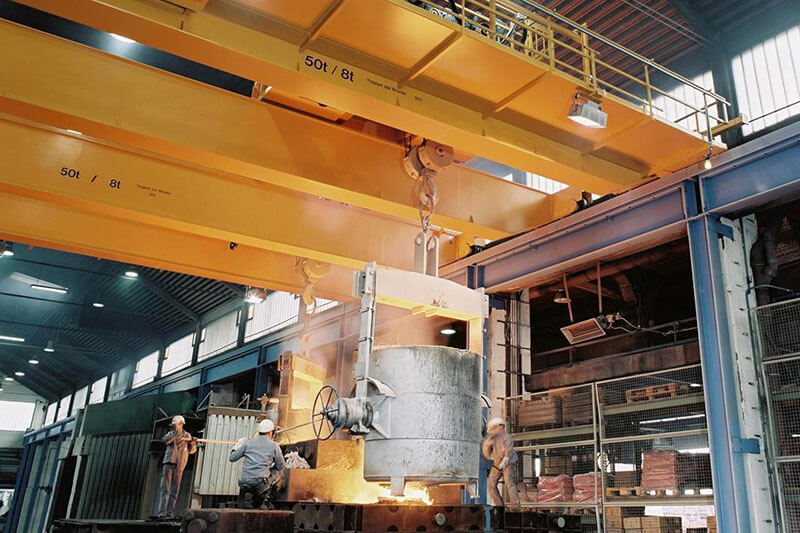
Standards-Compliant Ladle & Overhead Cranes for Steel Mills
Standards-Compliant Ladle & Overhead Cranes for Global Steel & Metallurgical Operations
Key Takeaways for Buyers
For international steel and metallurgical operations, choosing ladle and overhead cranes that comply with ISO, FEM, DIN, and GB standards ensures high-temperature handling safety, operational reliability, and smooth international market acceptance—reducing third-party inspection risks and boosting buyer confidence.
- Safety First: Proper duty class and high-temperature-resistant components protect operators and assets.
- Standards Compliance Matters: ISO, FEM, DIN, GB ensure cranes meet global safety and operational benchmarks.
- Global Market Confidence: Standards-compliant cranes simplify inspections, audits, and international approvals.
- Reliability & Longevity: Following international standards reduces downtime, extends service life, and lowers total cost of ownership.
- Brand Credibility: Selecting compliant cranes positions your facility as professional and trustworthy in global steel operations.
International Standards for Ladle & Overhead Cranes
When you're handling molten steel or heavy loads in a steel mill, the crane you choose isn't just a machine—it's a safety-critical piece of equipment. International standards provide a practical framework to make sure your ladle overhead cranes are reliable, safe, and accepted in global markets. Let's break down the main standards you should know.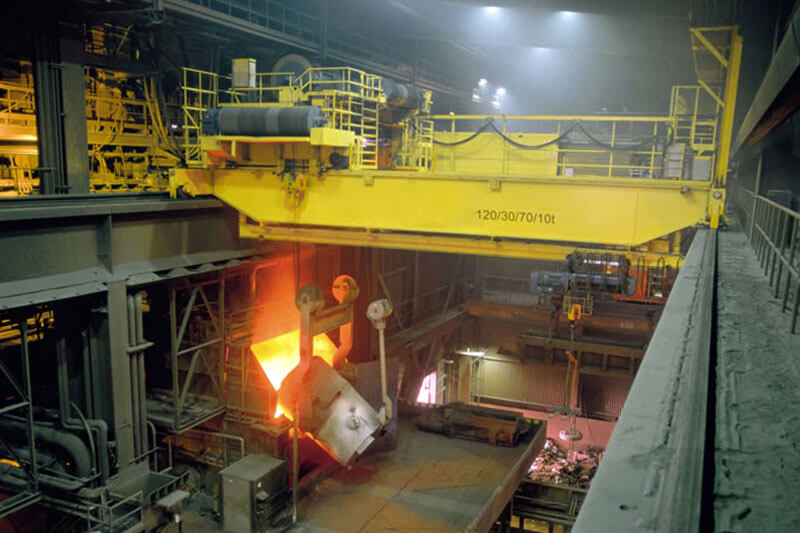
ISO standards define the basic safety, design, testing, and maintenance requirements for overhead and ladle cranes. They are the foundation for universal compliance, especially if your operation deals with multiple international markets.
- Safety & Performance: ISO sets clear benchmarks for structural design, load handling, and operator safety.
- Maintenance Guidelines: Following ISO standards means you get tested inspection and lubrication procedures to keep cranes running longer.
- Global Applicability: ISO-compliant cranes are recognized in Europe, Asia, and Middle East markets, simplifying audits and approvals.
FEM (Fédération Européenne de la Manutention) standards are widely used in Europe for duty classes, operational loads, and expected service life. They are essential if your crane is destined for EU operations or CE marking compliance.
- Duty Class Guidance: FEM provides classification for heavy-duty, continuous, or intermittent operation.
- Load Handling & Safety: Ensures cranes are capable of managing dynamic loads safely.
- Service Life Planning: Helps estimate operational lifespan and schedule preventive maintenance.
DIN standards originate from Germany and focus on structural integrity, high-temperature resistance, and industrial safety. They are especially relevant for buyers exporting to Europe or who need CE marking.
- High-Temperature Safety: Critical for ladle cranes handling molten steel.
- Structural Integrity: Ensures the steel structure, girders, and trolley systems meet strict durability standards.
- Inspection Compliance: Makes audits and third-party inspections smoother in EU markets.
GB standards are the Chinese national standards covering design, performance, and maintenance. They are widely applied in Asia and essential if you are sourcing cranes from Chinese manufacturers.
- Design & Performance: Ensures cranes meet local regulatory requirements and safety practices.
- High-Temperature Operation: Covers ladle handling, heavy loads, and thermal-resistant components.
- Export Readiness: GB-compliant cranes are easier to sell to nearby Southeast Asian countries.
High-Temperature Ladle Handling Safety
Handling molten steel is no small task. The combination of extreme heat, heavy loads, and constant movement puts every crane and operator to the test. For steel mills and metallurgical plants, understanding the practical safety requirements is critical before making any purchase.
Molten steel isn't just heavy—it's dangerously hot. Even a small mistake can damage equipment or put workers at risk. Cranes need to handle not only the raw weight but also dynamic forces when moving ladles quickly or over long spans.
- Heat Exposure: Components must resist temperatures that can exceed 1,500°C near the ladle.
- Dynamic Loads: Lifting, swinging, or stopping molten steel introduces forces beyond the static weight of the load.
- Operational Risk: Any failure in hooks, hoists, or trolley systems can halt production or lead to accidents.
Ladle cranes are not like regular overhead cranes. Most are classified as A7 or A8, which means they are built for continuous, high-stress operation. Choosing the correct duty class directly impacts safety and crane longevity.
- A7/A8 Classification: Designed for heavy-duty, continuous handling of molten steel and extreme operating conditions.
- Avoid Underclass Cranes: Using an A5 or A6 crane for ladle operations increases the risk of structural fatigue and mechanical failure.
- Service Life Consideration: Correct duty class ensures predictable maintenance cycles and fewer unexpected repairs.
Even the right duty class crane needs proper safety systems. These protect both operators and equipment, reducing downtime and accidents.
- Thermal-Resistant Hooks and Hoists: Prevent metal deformation or failure under high temperatures.
- Limit Switches: Stop the crane automatically at travel or lifting limits to avoid collisions.
- Anti-Sway Systems: Reduce load swing when lifting molten steel over long distances.
- Emergency Stops: Immediate shutdown in case of operator error or system failure.
Not all cranes are built for molten steel. Choosing a crane with the right duty class and safety systems isn't optional—it's a practical necessity. Using an under-rated crane may save money upfront, but it can cause costly accidents, shortened service life, and frequent downtime.
Compliance Benefits in International Markets
When buying ladle or overhead cranes for global steel and metallurgical operations, compliance with international standards isn't just about paperwork—it directly impacts operational safety, market acceptance, and long-term reliability. Different regions have different requirements, and understanding them helps avoid costly delays or inspection failures.
The EU has strict regulations for overhead cranes, especially in heavy-duty ladle handling applications. Compliance with FEM and DIN standards and obtaining a CE marking is mandatory for inspections.
- Labor and Safety Regulations: CE-certified cranes meet European requirements for operator safety, structural integrity, and control system reliability.
- Inspection Readiness: FEM and DIN compliance ensures your crane passes factory and third-party inspections without major modifications.
- Operational Confidence: Standard-compliant cranes reduce downtime and avoid unexpected legal or operational issues.
Steel mills and metallurgical plants in the Middle East operate under challenging environmental conditions—high temperatures, dust, and heavy workloads. Here, standards compliance focuses on reliability and robust safety systems.
- Duty Class Reliability: Cranes must handle continuous high-stress operation (A7/A8) without unexpected breakdowns.
- Thermal Protection: Hooks, hoists, and trolleys designed for molten steel exposure prevent accidents.
- Third-Party Certification: ISO and local certification ensures smooth inspection and reduces operational risk.
Southeast Asia's steel and metallurgical industry is growing rapidly, and local buyers increasingly expect ISO and GB-compliant cranes. Compliance not only ensures safety but also improves operational efficiency.
- Inspection & Audit Ready: ISO/GB compliance reduces risks of failed inspections or import issues.
- Operational Reliability: Standard-compliant cranes handle high-temperature loads and frequent cycles reliably.
- Market Competitiveness: Using certified cranes signals professionalism to local partners and clients.
Frequently Asked Questions (FAQ) – What This Article Solves
Ladle and overhead cranes are regulated by several international standards to ensure safety, reliability, and global market acceptance. The main standards include:
- ISO (International Organization for Standardization): Covers crane design, safety, testing, and maintenance procedures. ISO-compliant cranes are recognized worldwide, making inspections and audits easier.
- FEM (Fédération Européenne de la Manutention): European standard focusing on duty classes, operational loads, and service life, essential for CE marking and EU compliance.
- DIN (Deutsches Institut für Normung): German standards emphasizing structural integrity, high-temperature resistance, and industrial safety.
- GB (Guobiao Standards): Chinese national standards ensuring proper design, performance, and maintenance for domestic and export markets.
Ladle cranes handle extremely heavy, molten loads on a continuous basis. Standard duty classes ensure the crane can operate safely under such conditions:
- A7/A8 Classification: Designed for high-frequency, high-load operations typical in steel mills and metallurgical plants.
- Prevent Overload Risks: Using a lower class like A5 or A6 can cause structural fatigue, shorter service life, and frequent breakdowns.
- Maintenance Predictability: Proper duty class simplifies maintenance planning and reduces unexpected downtime.
Standards compliance is more than a legal requirement—it directly impacts day-to-day crane operation:
- Design & Load Testing: Ensures the crane structure and hoisting mechanisms can safely handle rated loads.
- Thermal and Mechanical Safety: Components such as hooks, hoists, and trolleys are tested for high-temperature operation.
- Operational Reliability: Reduces unexpected failures, accidents, and downtime.
- Maintenance & Inspection: Provides clear guidelines for lubrication, inspection intervals, and replacement parts.
Standards compliance has practical advantages depending on the regional market:
- European Union: CE marking, FEM/DIN compliance simplify inspections, audits, and labor regulation adherence.
- Middle East: ISO compliance and high-duty cranes handle extreme heat, dust, and continuous operation, supporting operational safety.
- Southeast Asia: ISO/GB-compliant cranes reduce failed inspections, improve reliability, and signal professionalism to local buyers.
Investing in a standards-compliant crane is the first step. Buyers can further ensure reliability by:
- Choosing the Right Duty Class: Match crane classification (A7/A8) to operational loads and cycle frequency.
- Selecting High-Temperature Components: Hooks, hoists, and trolleys designed for molten steel.
- Following Maintenance Guidelines: Adhere strictly to inspection schedules, lubrication, and part replacements.
- Working With Verified Suppliers: Ensure manufacturers provide proper ISO, FEM, DIN, or GB certifications and documentation.
Choosing the Right Standards-Compliant Crane
Selecting the right crane for ladle handling isn't just about lifting capacity. It's about matching the crane to the operation, environment, and regulatory requirements. A wrong choice can lead to downtime, costly maintenance, or even safety incidents. Here's a practical guide for buyers.
Every operation has unique demands, and the crane's duty class must align with the workload. Most ladle cranes require A7 or A8 classification for continuous high-stress operation.
- Assess Load Requirements: Confirm the maximum ladle weight and any dynamic loads during movement.
- Duty Frequency: Consider how often the crane will lift per shift—continuous cycles need higher classes.
- Avoid Under-Rating: Using a lower-duty crane increases wear, shortens service life, and compromises safety.
Not all suppliers deliver cranes that truly meet international standards. Certifications are your proof that the crane has been designed, tested, and approved for global operations.
- ISO, FEM, DIN, GB Compliance: Ensure these are present and verifiable.
- CE Marking: Critical for European operations and inspections.
- Documentation: Request certificates and inspection reports before finalizing the purchase.
Steel and metallurgical plants can be harsh environments. A compliant crane also needs to adapt to temperature, dust, humidity, and operational cycles.
- High-Temperature Resistance: Hooks, trolleys, and hoists should tolerate molten steel heat.
- Dust and Corrosion Protection: Especially important in Middle East or Southeast Asia facilities.
- Duty Cycle Matching: Ensure the crane can handle the expected operational intensity without overheating or premature wear.
Every plant is different, and off-the-shelf solutions may not be enough. Customization ensures maximum safety and operational efficiency.
- Tailored Hoists and Hooks: Designed for the specific type of ladle and molten material handled.
- Control Systems: Include features like anti-sway, emergency stops, and thermal monitoring.
- Modular Options: Allow easier maintenance and future upgrades.
Conclusion
Choosing the right ladle or overhead crane goes far beyond lifting capacity—it’s about safety, reliability, and long-term performance. Standards compliance with ISO, FEM, DIN, and GB isn’t optional; it forms the backbone of safe and dependable operations in steel mills and metallurgical plants.
- Operational Safety: Compliant cranes handle high-temperature loads, dynamic stresses, and continuous duty cycles without compromising worker safety.
- Extended Equipment Life: Proper duty class and tested components reduce wear, prevent breakdowns, and lower maintenance costs.
- Smooth International Operations: ISO, FEM, DIN, and GB certifications simplify inspections, audits, and market approvals in the EU, Middle East, and Southeast Asia.
- Brand Credibility: Investing in standards-compliant cranes signals professionalism, reliability, and commitment to best practices—qualities that partners and clients value.
In short, selecting the right standards-compliant crane is a strategic decision. It ensures not just safe handling of molten steel, but also predictable performance, lower risks, and strengthened trust in the global market. For buyers, making this choice carefully is the first step toward a safer, more efficient, and internationally accepted steel operation.