
Overhead Cranes for Fire-Fighting Equipment Lifting & Assembly
Overhead Cranes for Fire-Fighting Equipment Manufacturing: Lifting Solutions for Heavy Materials and Complex AssemblyFire-fighting equipment manufacturing is not light work. From raw steel plates to assembled fire trucks, almost every step of the process involves heavy lifting and careful positioning. The materials are tough, the assemblies are bulky, and the finished products are large and often complex.
This is where overhead cranes come in. They make it possible to move heavy items safely and precisely, keeping production lines efficient while reducing the risk to workers. Whether it’s lifting a small extinguisher shell or hoisting a fire truck chassis into place, the right crane ensures the job gets done smoothly.
In this sector, crane capacities vary widely. A 1-ton crane is often enough for lighter tasks, like extinguisher assembly or valve handling. On the other end, 20–30 ton cranes are commonly used for vehicle assembly, foam tank installation, and large pump skid lifting. Most workshops fall somewhere in between, with 2–10 ton cranes handling everyday parts and assemblies.
Key points to note about crane use in fire-fighting manufacturing:
- Light-duty lifting: 1–3 ton cranes for small assemblies such as extinguishers, valves, and hoses.
- Medium-duty lifting: 5–10 ton cranes for pumps, skids, and pressure vessels.
- Heavy-duty lifting: 20–30 ton cranes for fire truck chassis, tanks, and large assemblies.
Choosing the right capacity is not just about strength—it’s about matching the crane to the workflow, layout, and heaviest load in your production.
1 ton to 20 ton overhead crane for sale
Raw Materials Handling with Overhead Cranes
Overhead cranes are essential for efficiently moving raw materials in industrial and manufacturing environments. Selecting the right crane capacity ensures safe handling, reduces the risk of damage, and improves workflow. Different materials have varying weights, sizes, and handling requirements, which dictate the type and capacity of crane needed.
Common Raw Materials and Recommended Crane Capacities
- Steel Plates & Sections: Typically moved in bundles. Requires overhead cranes with capacities ranging from 5 to 20 tons, depending on bundle size and thickness. Proper rigging and clamps help maintain stability during lifts.
- Aluminum Sheets & Extrusions: Lighter than steel, usually handled with 2 to 5 ton cranes. Careful handling prevents surface damage and ensures precise placement.
- Brass/Bronze Billets & Bars: Dense but relatively small in volume. Typically lifted using 2 to 5 ton cranes. Proper slings and trolleys improve safety and reduce the risk of material deformation.
- Heavy Machinery Parts (Pumps, Motors, Engines): Can vary in weight. Often require 5 to 15 ton cranes, depending on component size. Using appropriately rated slings and load balancing is critical.
- Gas Cylinders & Pressure Vessels (Empty, Batch Handling): Often handled in bundled racks with 3 to 10 ton cranes. Secure handling prevents tipping or rolling and ensures operator safety.
Overhead Crane Applications in Fire-Fighting Product Manufacturing
Overhead cranes play a critical role in the production of fire-fighting equipment. From assembly and testing to storage and transport, the right crane capacity ensures safe handling, precise placement, and efficient workflow. Different components and assemblies require cranes suited to their weight and handling needs.
Typical Fire-Fighting Products and Recommended Crane Capacities
- Fire Extinguishers (shell forming, hydro-testing, painting): Handled in batches using 1–3 ton overhead cranes or jib cranes. Lightweight yet precise handling is essential to prevent deformation or surface damage.
- Fire Hoses & Large Reels: Stored and transported with 2–5 ton cranes. Proper attachment points and racks ensure safe movement of long, bulky reels.
- Pump Sets & Skids: Assembly alignment and placement often require 5–20 ton cranes, depending on the size of the pump or skid assembly. Accuracy is crucial for installation and operational efficiency.
- Hydrants & Valves (bulk casting batches): Usually moved with 2–5 ton cranes. Handling multiple units at once increases productivity while reducing the risk of damage.
- Fire Trucks (chassis lifting, body & ladder installation): Heavy-duty operations require 10–30 ton double girder cranes. Precise positioning ensures safety and prevents damage during assembly.
- Foam Tanks & Suppression Systems: Large assemblies weighing multiple tons are typically handled with 10–20 ton cranes. Stability and load balancing are critical during movement and installation.
Selecting the appropriate crane for each fire-fighting product not only improves efficiency but also protects expensive equipment and ensures operator safety. Regular inspection, proper rigging, and adherence to manufacturer guidelines are essential for safe crane operation in manufacturing environments.
Overhead Crane Types Suitable for Fire-Fighting Manufacturing
Choosing the right type of overhead crane is essential for handling fire-fighting products safely and efficiently. Different crane types are better suited for specific tasks, material weights, and workspace layouts. Selecting the appropriate crane ensures smooth operations, minimizes damage, and improves productivity.
Common Crane Types and Applications
- Single Girder Overhead Cranes: Typically rated 1–10 tons, these cranes are ideal for handling lighter components such as fire extinguishers, hoses, and valves. They are compact, cost-effective, and suitable for indoor production areas.
- Double Girder Overhead Cranes: With capacities from 10–30 tons, these cranes are perfect for heavy assemblies like pumps, foam tanks, and fire truck components. Double girder designs offer higher load capacity, stability, and long-span coverage.
- Gantry Cranes: Rated 5–30 tons, gantry cranes provide flexible operation in outdoor yards, logistics areas, or spaces without overhead supports. They are ideal for moving large assemblies or raw materials across open areas.
- Jib Cranes: Small, localized cranes with 0.5–3 ton capacities, jib cranes are excellent for workstation tasks such as extinguisher assembly, valve handling, or small part placement. Their maneuverability allows precise handling in confined spaces.
- Explosion-Proof Cranes: Rated 1–10 tons, these cranes are designed for hazardous areas such as foam mixing, chemical storage, or filling zones. Safety features prevent sparks and ensure compliance with fire and chemical safety standards.
Selecting the right crane type ensures that each production or assembly task is handled safely, efficiently, and with minimal risk to operators or equipment. Optional features like remote control, automation, and customized end trucks can further enhance performance for specific manufacturing processes.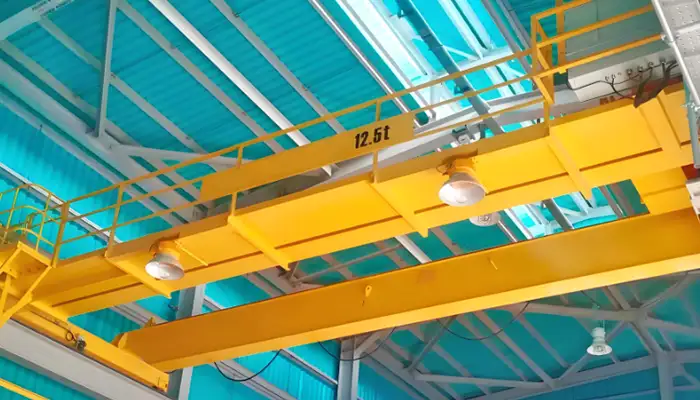
Double girder overhead crane for sale - Tailored explosion proof cranes for selection
Storage & Logistics Support with Overhead Cranes
Efficient storage and material handling are critical in fire-fighting product manufacturing and industrial operations. Overhead cranes and gantry cranes simplify warehouse management, loading, and outdoor material movement, improving workflow and reducing manual labor risks.
Typical Storage & Logistics Applications
- Warehouse Stacking (Extinguishers, Hose Reels): Small to medium overhead cranes with 2–5 ton capacities are ideal for stacking and organizing lighter items. They allow precise placement and safe handling within confined warehouse spaces.
- Pallet or Container Loading (Pump Sets, Tanks): For heavier assemblies, 5–20 ton gantry cranes efficiently load and unload pallets or containers. They provide stability for bulk items and reduce handling time during shipping or storage.
- Outdoor Yard Handling (Bulk Steel, Truck Bodies): Large gantry cranes with 10–30 ton capacities are perfect for moving heavy raw materials or large components in outdoor areas. They offer flexibility in open spaces and enable safe, high-volume material transport.
Proper selection of cranes for storage and logistics ensures smooth operations, minimizes product damage, and improves workplace safety. Optional features like remote control operation, adjustable hoists, and automated positioning can further enhance efficiency and productivity.
Key Crane Selection Factors for Fire-Fighting Manufacturers
Selecting the right overhead crane is crucial for efficiency, safety, and smooth production in fire-fighting product manufacturing. Several factors should be considered to match the crane to your facility, workflow, and component sizes.
Important Considerations
- Match Crane Capacity to Component Weight: Always select a crane that can safely lift the heaviest component or assembly in your production process. Underrated cranes risk accidents and equipment damage.
- Workshop Size and Production Scale: Small workshops may only require 2–5 ton cranes for lighter items like extinguishers and hoses. Larger assembly areas, such as fire truck or foam tank production, often need 20–30 ton cranes.
- Facility Layout & Workflow Integration: Consider the workshop span, production flow, and how the crane will integrate with painting stations, hydro-testing areas, or assembly lines. Proper alignment ensures smooth handling and reduces operational delays.
- Compliance with Safety Standards: Ensure that cranes meet ISO, CE, and NFPA-related safety standards. Certified equipment reduces risk, improves reliability, and ensures regulatory compliance.
Choosing the right crane with these factors in mind optimizes production efficiency, enhances workplace safety, and reduces long-term operational costs. Optional features like remote operation, automation, and specialized hoists can further improve performance for specific manufacturing tasks.
Case Examples of Overhead Crane Use in Fire-Fighting Manufacturing
Real-world applications demonstrate how selecting the right crane type and capacity improves efficiency, safety, and workflow in fire-fighting product manufacturing. These examples highlight practical uses across different production tasks.
Practical Crane Applications
- 10-ton Double Girder Crane: Used for pump skid assembly, including engine and pump alignment. Provides the capacity and stability needed for precise installation of heavy machinery components.
- 20-ton Double Girder Crane: Handles fire truck ladder and tank installation. The high-capacity crane ensures safe lifting and accurate placement of large vehicle components during assembly.
- 3-ton Jib Crane: Ideal for fire extinguisher shell filling and valve assembly. Its compact size and localized operation allow precise handling in small workstations.
These case examples illustrate the importance of matching crane capacity and type to the specific production task, ensuring both safety and productivity in the manufacturing environment.
Send Us An Inquiry to Get Suitable Overhead Cranes
Overhead cranes—from 1 ton to 30 tons—can handle nearly every lifting requirement in fire-fighting equipment manufacturing. Choosing the right crane ensures that materials, components, and assemblies are moved safely, efficiently, and with minimal disruption to workflow.
Proper crane selection improves production efficiency, reduces manual handling risks, and enables smooth assembly, testing, and storage operations. Integrating the right crane type into your workflow enhances both safety and operational productivity.
Take Action
- Request a Quote: Get tailored specifications and pricing for your facility’s lifting needs.
- Consult Our Experts: Ensure the right crane is matched to your workshop layout, production flow, and component weights.
- Download Catalog: Access detailed technical specifications, capacity charts, and optional attachments for planning and procurement.
- Ask Questions: Receive fast, practical answers to operational, technical, or safety concerns.
Selecting the right crane today ensures safer, faster, and more reliable operations for all your fire-fighting manufacturing tasks.