Safe Practices for Working at Height with Overhead Cranes
Key Takeaway – What Every Crane Buyer and Operator Must Know
Overhead cranes are designed for materials, not personnel. Using them to lift workers is prohibited and unsafe. Proper planning, engineering, and alternative equipment ensure safety when working at height near cranes.
Introduction
In industrial environments, working at height is a daily reality. Whether it's maintaining equipment, inspecting machinery, or accessing overhead systems, workers are often in situations where a fall could be dangerous. Safety here isn't optional—it's essential.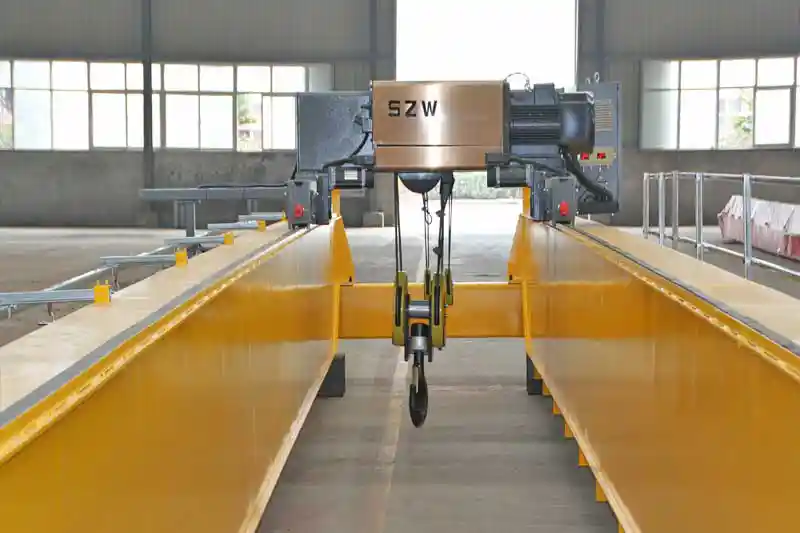 Double girder overhead cranes, with European style low headroom wire rope hoist
- Even small falls can cause serious injuries or fatalities.
- Proper planning and the right equipment save lives and prevent downtime.
- Knowing the difference between safe and unsafe practices is critical for supervisors and operators.
It's easy to see why some think overhead cranes could lift workers. After all, they carry tons of material every day. But here's the reality: overhead cranes are designed for loads, not humans. Using them for personnel is risky, illegal, and goes against manufacturer instructions.
- Sudden stops or load swings make cranes extremely dangerous for people.
- Mechanical failures that are tolerable for materials can be deadly for a person.
- Manufacturer manuals clearly state that personnel lifting is not allowed.
Think of it this way: just because something is strong doesn't mean it's safe for every purpose. Cranes can handle materials, but humans require specialized platforms and fall protection.
Regulations like RROHS Article 260 make it clear: lifting people with cranes is prohibited. These rules exist to protect workers and prevent accidents. Non-compliance isn't just unsafe—it can bring serious legal consequences.
- Violating these rules may lead to fines, insurance problems, and halted operations.
- Safety inspections will flag any unauthorized use of cranes for personnel.
- Following the law also helps maintain a culture of safety across the workplace.
This guide is designed to give practical, actionable advice. By the end, you'll understand:
- Safe alternatives to lifting personnel with cranes, like aerial work platforms or mobile lifts.
- How overhead cranes can sometimes serve as fall arrest anchors, but only under strict engineering controls.
- Zero-energy lockout procedures and other safeguards to prevent accidents.
The goal is simple: keep workers safe while maintaining efficient operations. Whether you're a crane operator, safety officer, or industrial buyer, these guidelines help you make informed decisions on working at height.
Why Overhead Cranes Cannot Lift Personnel
It's a question that comes up more often than you might think: "We're already moving tons of material, why not lift a person?" The simple answer is: no, absolutely not. Overhead cranes are engineered for loads, not humans. People are far more fragile than steel plates or machine parts, and even a minor swing or sudden stop can be catastrophic.
It's a question that comes up more often than you might think: "We're already moving tons of material, why not lift a person?" The simple answer is: no, absolutely not. Overhead cranes are engineered for loads, not humans. People are far more fragile than steel plates or machine parts, and even a minor swing or sudden stop can be catastrophic.
Cranes are built with precise tolerances for lifting heavy equipment and industrial materials. The structure, the brakes, the hoist, and the controls are all optimized for predictable loads—not unpredictable human behavior.
- Load centers, hook motion, and sway are calculated for inanimate objects.
- A human's weight and movement can create unexpected torque or imbalance.
- Safety factors for machinery do not cover lifting personnel.
Safety regulations, including RROHS Article 260, make it clear: using cranes to lift personnel is illegal. These rules are not just formalities—they exist because the consequences of misuse are severe.
- Violating regulations puts the company at legal and financial risk.
- Workers face high risk of serious injury or death.
- Insurance and compliance audits will immediately flag any violations.
Crane manufacturers explicitly state in manuals and safety guides that personnel lifting is forbidden. Using a crane in this way:
- Voids the warranty and any safety certifications.
- Could result in the manufacturer refusing service or liability support.
- Puts operators in a position of personal and legal responsibility.
The dangers are not hypothetical—they are very real:
- Uncontrolled movement: sudden jerks or swings can throw a person off balance.
- Mechanical failure: brakes, ropes, or hooks designed for materials may fail under unpredictable human weight shifts.
- Human injury: falls from height are often fatal or result in permanent disability.
Safer Alternatives for Lifting Workers
If you need to lift personnel, don't even think about using an overhead crane. The good news is, there are plenty of practical, safe options to get workers to the height they need without putting anyone at risk. Using the right equipment not only protects your team but also keeps operations smooth and compliant with safety regulations.
- Mobile lifts – These are versatile and can be moved easily around the workspace. Perfect for quick maintenance tasks.
- Scissor lifts – Stable and ideal for tasks that require a broad working platform. Great for repeated access to the same height.
- Aerial work platforms – Extendable and flexible, especially useful when reaching awkward or high areas where scaffolding isn't practical.
For areas where workers need regular access, adjustable scaffolding can be a better long-term solution. It allows multiple workers to operate at height simultaneously and provides a stable work surface.
- Adjustable height options adapt to changing needs.
- Can be positioned away from crane paths to minimize interference.
- Safer for tasks that require both hands and tools.
Even when using proper lifting equipment, it's critical to consider the crane's presence. A moving overhead crane can be a hazard, so take steps to isolate personnel from the crane's operating area.
- Isolation zones – Mark off areas where cranes operate to keep workers at a safe distance.
- Interlock systems – Automated systems can prevent the crane from moving when someone is detected in the hazard zone.
- Combine these with clear signage and team communication for maximum safety.
Using Cranes as Fall Arrest Anchors – Strict Conditions
Some industrial teams ask: "Can we just attach a safety harness to the crane?" The answer is yes—but only under very strict conditions. It's not a casual solution. Overhead cranes can support a fall arrest system, but only if every step is engineered, documented, and approved. Otherwise, it's just as dangerous as lifting personnel with the crane itself.
Before a crane can serve as an anchor point for fall protection, several critical requirements must be met:
- Engineer Approval: A qualified engineer must verify the crane frame and attachment points can safely support the dynamic load of a falling worker. This is not optional.
- Work Procedures and Risk Assessment: Every task must be planned, documented, and assessed for hazards. This includes potential swing, sudden stops, and unexpected crane movement.
- Zero-Energy Lockout: All power sources—electrical, hydraulic, and mechanical—must be locked out and padlocked. Emergency stop alone is not sufficient.
- Worker Training: Personnel must be trained in fall arrest procedures, safe attachment techniques, and emergency response.
- Emergency Rescue Plans: A clear, practiced plan must exist to safely rescue any worker in case of a fall or equipment failure.
A common method involves using cable reel attachment points on the crane frame. These points must be:
- Verified by an engineer for load capacity.
- Positioned so the worker cannot swing into other structures or equipment.
- Documented in a procedure that all workers and supervisors follow.
Zero-Energy Procedure – The Critical Safety Step
It's a common question on worksites: "Can't we just hit the emergency stop and call it safe?" The short answer is no. While emergency stops halt crane motion temporarily, they do not remove all sources of energy. Motors can still retain stored energy, brakes may release unexpectedly, and hydraulic systems may drift. Relying on an emergency stop alone puts workers at serious risk.
A zero-energy procedure ensures that all potential energy sources are fully isolated before anyone works near or attaches to a crane. This includes:
- Electrical systems: Main power supply, control circuits, and any backup sources.
- Hydraulic systems: Pressure stored in cylinders or accumulators that could move the crane or hoist.
- Mechanical energy: Tensioned ropes, counterweights, and springs that could release suddenly.
After isolating energy sources, padlocks are applied to switches, valves, and disconnects. This guarantees that:
- No one can accidentally re-energize the crane while a worker is exposed.
- The lockout is visible and auditable, creating accountability on site.
- Fall arrest systems operate in a fully controlled, zero-energy environment.
When zero-energy procedures are correctly implemented, fall arrest systems become effective rather than just symbolic. This prevents:
- Sudden drops if a worker slips.
- Collisions with moving crane parts.
- Unexpected crane swings that could pull the worker off balance.
In short, zero-energy lockout is the foundation of safe work at height near cranes. Skipping even one step could turn a controlled procedure into a life-threatening situation. Proper training, clear documentation, and consistent padlocking make this step non-negotiable for safety.
Safer Alternatives and Engineering Solutions
Sometimes, operational needs make a full crane lockout difficult or impractical. In these cases, it's important to plan alternatives that keep workers safe without relying on the crane itself. The goal is to provide reliable anchorage points and fall protection that are independent of crane movement.
There are several proven solutions for safely working at height near cranes:
- Ceiling Beams or Reinforced Structures: Strong structural beams in the facility can serve as safe anchor points for fall arrest systems. These are typically designed to support dynamic loads and can be verified by an engineer.
- Dedicated Fall Arrest Lines: Installing fixed lifelines or cable systems that run above the work area keeps workers protected while allowing the crane to operate separately.
- Temporary Anchoring Systems: Portable anchors engineered specifically for height access can be installed and removed as needed, providing flexibility for short-term tasks.
For new projects or crane installations, safety can be built in from the start:
- Integrating Anchor Points in Design Phase: Adding certified fall arrest points during crane or building design ensures that future maintenance and inspections can be done safely.
- Retrofitting Existing Cranes or Structures: Older cranes or facilities can be upgraded with approved anchorage points, verified by engineers, to meet current safety standards.
Using these alternatives ensures:
- Workers are not exposed to moving crane hazards.
- Compliance with safety regulations is maintained.
- Flexibility for both temporary and permanent work at height.
Even when zero-energy lockout isn't possible, combining these engineered solutions with training and proper procedures provides a safe and practical way to work around overhead cranes.
Consult Specialists – Engineer and Safety Guidance
Working at height near overhead cranes is risky. Even experienced operators shouldn't try to improvise fall protection or anchor points. Certified engineers and lifting safety specialists know how to design solutions that keep workers safe and meet regulations.
- They check if crane structures and building elements can safely hold fall arrest systems.
- They understand how different cranes move and behave under load.
- They provide solutions that fit your facility layout and daily operations.
Every crane and workspace is different. A solution that works for a new crane may not work for an older one. Experts can help:
- Design safe anchor points for new cranes during construction.
- Retrofit existing cranes or buildings with approved anchorage.
- Adjust plans to work with factory layout or structural limitations.
Professional guidance helps make sure your solutions follow laws, industry standards, and manufacturer recommendations. This keeps your workers safe and your business protected.
- Avoid fines, penalties, and shutdowns for unsafe work.
- Protect insurance coverage by using approved procedures.
- Reduce accidents caused by human error.
Always involve a certified engineer or safety specialist before using cranes as fall arrest anchors or working near cranes at height. Their guidance ensures:
- Workers are protected.
- You meet all safety regulations.
- You have practical, long-term solutions that work in your facility.
Even with good training and equipment, professional input is essential for safe work at height.
Bottom Line – Safety First
Working at height near overhead cranes is serious business. The rules exist for a reason, and cutting corners can be dangerous or even fatal. Here’s what every operator, supervisor, and industrial buyer needs to remember:
- Never use cranes to lift people. They are built for materials, not personnel.
- Cranes can be fall arrest anchors, but only with proper engineering. Every attachment point must be verified and documented by a qualified engineer.
- Zero-energy lockout is essential. Emergency stop alone is not enough; all power sources must be isolated and padlocked.
- Always involve specialists. Certified engineers and lifting safety experts ensure safe procedures, regulatory compliance, and practical solutions for your facility.
Frequently Asked Questions (FAQs) – From Crane Buyers' Perspective
A: No. Overhead cranes are designed for materials, not people. Using a crane for personnel is unsafe and prohibited by regulations. Instead, use aerial work platforms, scissor lifts, or mobile lifts to safely reach elevated areas.
A: Yes—but only under strict conditions. A qualified engineer must approve the crane frame and load points, zero-energy lockout procedures must be followed, and a documented emergency rescue plan must be in place. Never improvise.
A: Zero-energy means fully isolating all potential sources of movement. Lock out all electrical, hydraulic, and mechanical systems, padlock disconnects, and verify with your team before anyone works at height. An emergency stop alone is not enough.
A: Yes. You can use reinforced ceiling beams, temporary engineered anchors, or interlock systems that prevent crane movement while personnel are in the area. These solutions keep workers safe without interfering with crane operations.
A: Always include certified engineers, lifting safety specialists, and trained operators. They can develop, review, and approve fall arrest procedures, ensuring compliance with regulations and practical safety on site.