VFD Overhead Cranes – Smooth, Efficient Lifting for Industrial Applications
VFD Overhead Cranes – Efficient Lifting for Industrial Applications
Most Important Takeaway:
Variable Frequency Drive (VFD) overhead cranes transform industrial lifting by providing smooth, precise motion for the hoist, trolley, and bridge, reducing mechanical wear and improving operational safety and efficiency.
Key Takeaways – What This Guide Solves for Buyers
- Smooth and Controlled Motion: VFD systems allow precise acceleration and deceleration, eliminating jerks that damage hoists and reduce brake lifespan.
- Accurate Load Positioning: Ensures repeatable, stable positioning of heavy machinery, steel plates, pallets, or molds.
- Energy Efficiency & Cost Savings: Reduced power surges and optimized motor performance save energy over traditional fixed-speed systems.
- Extended Equipment Life: Less mechanical stress on gears, brakes, and electrical components means longer service intervals and lower maintenance costs.
- Flexible Industrial Applications: Ideal for factories, assembly workshops, warehouses, and storage facilities requiring frequent or delicate lifting operations.
- Enhanced Safety in Repetitive Operations: Controlled motion reduces risks in repetitive lifting cycles, protecting both personnel and materials.
- Scalable Solutions: Suitable for light to medium-duty cranes (1–20 tons), with options for heavy-duty applications up to 80 tons.
Introduction – Why VFD Overhead Cranes Matter
Overhead cranes are the backbone of many industrial operations. From factories producing heavy machinery to warehouses moving pallets of goods, cranes handle loads that are often too heavy or bulky for human operators. Traditional fixed-speed cranes do their job, but they can put a lot of stress on the motor, hoist, and braking system, especially when lifts are frequent or loads need to be positioned with precision.
This is where a Variable Frequency Drive (VFD) overhead crane makes a practical difference. By controlling the speed of the hoist, trolley, and bridge motors, VFDs allow smooth acceleration and deceleration. This isn’t just about comfort—it directly affects safety, equipment lifespan, and energy use. Operators can place loads exactly where they’re needed without sudden jolts or sway, reducing the risk of accidents or damaged materials.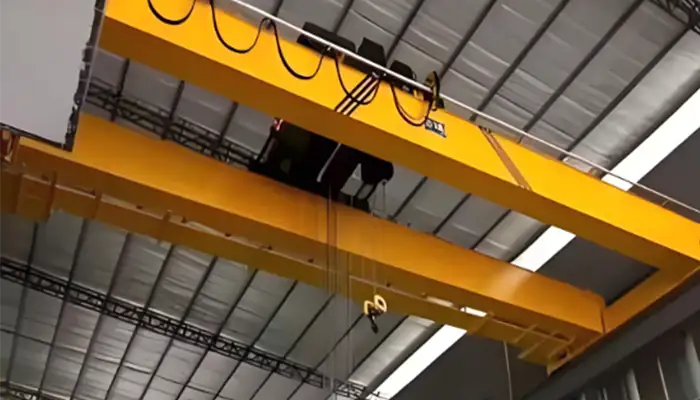
European style overhead crane for sale
Key Practical Benefits of VFD Overhead Cranes:
- Smooth and controlled motion: Gradual starts and stops prevent jerks, protecting hoist gears, brakes, and wire ropes.
- Precise load positioning: Makes it easier to handle delicate or irregular-shaped materials, such as machinery parts, molds, or steel plates.
- Reduced mechanical wear: Less stress on motors and brakes translates to longer service life and fewer maintenance interventions.
- Energy efficiency: VFDs adjust motor speed according to load requirements, cutting electricity use during lighter lifts or slower operations.
- Enhanced safety in repetitive operations: When moving the same load repeatedly, VFDs reduce sway and unexpected movements, helping operators maintain control.
For anyone managing a busy production floor or warehouse, a VFD overhead crane isn’t just a nice addition—it’s a practical upgrade that saves money, reduces downtime, and improves safety day-to-day. Even for lighter loads, the smooth motion and energy control can make a noticeable difference in workflow and worker confidence.
Typical Applications
VFD overhead cranes aren't limited to one type of industry—they are versatile tools for any operation that requires controlled, precise lifting. From small workshops to large-scale industrial plants, these cranes make repetitive lifting safer, smoother, and more efficient.
In modern production lines, components often need to be moved from one station to another with exact placement. A VFD crane allows operators to lift and position machine parts or molds with minimal sway or sudden stops. This reduces the risk of damage to the product or surrounding equipment.
- Smooth starts and stops help prevent misalignment during placement.
- Repeatable accuracy ensures consistent workflow and reduces rework.
- Suitable for both light machinery components and medium-duty industrial equipment.
Handling pallets, steel plates, or bundled goods can be risky with traditional cranes, especially when loads are uneven or heavy. VFD overhead cranes provide controlled motion that protects both materials and operators.
- Load movement is precise, minimizing collisions and accidental drops.
- Easier handling of mixed pallet sizes or irregular loads.
- Ideal for both high-frequency warehouse operations and occasional heavy lifts.
Complex assemblies, sensitive equipment, and irregular-shaped components require careful lifting. VFD cranes give operators the control needed for delicate handling without stopping production.
- Fine control over hoist, trolley, and bridge speeds.
- Reduced load sway for sensitive or fragile assemblies.
- Supports ergonomic operation, reducing operator fatigue.
For large-scale operations, such as steel plants, shipbuilding, or automotive workshops, VFD cranes can handle heavier loads, up to 50 tons, with consistent performance. They ensure that large molds, steel plates, and heavy machinery parts are lifted safely and positioned with repeatable precision.
- Supports long-span, double-girder configurations for large facilities.
- Smooth operation reduces wear on mechanical components despite heavy-duty use.
- Enables safer and more efficient workflow even in demanding industrial environments.
Typical Capacities
VFD overhead cranes are designed to cover a wide range of lifting needs, from small workshop loads to heavy industrial components. Choosing the right capacity is key not only for safety but also for operational efficiency and long-term reliability.
Light to Medium Duty: 1–20 Tons
For most factories, warehouses, and machine assembly workshops, cranes in the 1–20 ton range provide reliable lifting without over-investing in heavy machinery. These cranes are perfect for daily operations where loads vary in size and weight but don’t exceed medium industrial demands.
- Ideal for moving pallets, machinery parts, or molds in production lines.
- Supports frequent lifting cycles without putting excessive strain on motors or brakes.
- Provides flexibility for mixed-use operations, from light assembly tasks to standard storage handling.
Heavy-Duty Options: 20–80 Tons
In steel mills, shipbuilding workshops, and automotive plants, loads are larger, heavier, and often require precise placement over long spans. Heavy-duty VFD overhead cranes can handle these requirements while maintaining smooth, controlled motion that protects both the crane and the load.
- Suitable for lifting large steel plates, molds, or heavy machinery components.
- Double-girder top-running designs provide extra stability for long-span operations.
- Smooth acceleration and deceleration reduce mechanical wear and improve operator control, even under full load.
Common Configurations
Choosing the right configuration for a VFD overhead crane is crucial for both safety and efficiency. The crane's structure and mounting style determine how it handles loads, fits within your workspace, and performs over time.
Single girder cranes are popular for light to medium-duty applications. They are cost-effective, easier to install, and require less headroom. However, their lifting capacity and span are limited. Double girder cranes, on the other hand, are designed for heavier loads and longer spans. They provide extra stability and can handle demanding industrial environments, like steel mills or shipbuilding workshops.
- Single Girder: Best for 1–20 ton loads, smaller factories, or warehouses. Easy to maintain and install.
- Double Girder: Handles heavier loads, longer spans, and provides greater hook height. Ideal for industrial workshops or heavy-duty operations.
The choice between top-running and under-running cranes depends largely on building layout and available headroom. Top-running cranes run on rails mounted above the workspace, maximizing hook height and stability. Under-running cranes, mounted below the runway or on the ceiling, are ideal for facilities with limited headroom or lower building heights.
- Top-Running: Maximizes lifting height, supports long spans, and reduces sway under heavy loads.
- Under-Running: Fits smaller spaces and low ceilings, suitable for light to medium-duty lifting.
The hoist is the part of the crane that lifts and lowers the load. With VFD control, the hoist starts and stops gradually, reducing load swing and mechanical stress. This allows for precise placement of steel plates, machinery parts, pallets, or molds, even in repetitive operations.
- Smooth acceleration and deceleration protect the load and crane components.
- Enables accurate, repeatable positioning, which is critical in assembly lines and storage operations.
- Reduces brake wear and extends the service life of mechanical and electrical parts.
Selecting the right configuration ensures your crane matches your workspace, handles your intended load safely, and maintains smooth, controlled operation for years to come.
Typical Loads Handled
VFD overhead cranes are versatile tools that can manage a wide variety of materials in industrial and warehouse settings. Knowing the types of loads, and matching them with the right crane configuration and capacity, is key for safe, efficient operation.
Steel plates and slabs are heavy, dense, and sometimes irregular in shape. Moving them safely requires a crane that can provide smooth acceleration and precise placement. A VFD overhead crane reduces load sway and minimizes the risk of damage to both the material and the surrounding workspace.
- Typical Configuration: Double girder, top-running crane for maximum hook height and stability.
- Suggested Capacity: 10–30 tons, depending on slab size and bundle weight.
- Why it works: Supports long spans in steel workshops and repetitive handling without overloading the crane.
Machine components can be bulky, delicate, or irregularly shaped. VFD cranes allow operators to lift and position these items with high accuracy, reducing the risk of misalignment or damage during assembly or installation.
- Typical Configuration: Single or double girder, top- or under-running depending on workshop ceiling height.
- Suggested Capacity: 5–20 tons for most machine parts; up to 30 tons for heavier industrial equipment.
- Why it works: Smooth hoist and trolley motion ensures delicate parts remain stable and reduces maintenance needs on hoists and brakes.
Molds and dies are often heavy and require precise positioning in production lines. VFD control enables careful, repeatable placement, which is critical for quality control and minimizing operational errors.
- Typical Configuration: Double girder top-running crane for stability, especially for heavier molds.
- Suggested Capacity: 5–15 tons for small to medium molds; 20 tons or more for large automotive or industrial molds.
- Why it works: Reduces sudden load swings, allows accurate placement, and supports repetitive lifting without extra wear.
Palletized loads are common in warehouses and storage facilities. These loads vary in size, weight, and stability. A VFD overhead crane ensures safe lifting, even when the weight distribution is uneven.
- Typical Configuration: Single girder under-running or top-running crane, depending on headroom.
- Suggested Capacity: 1–10 tons for standard pallets; up to 15 tons for mixed or heavy bundles.
- Why it works: Precise motion reduces tipping risk, improves operator control, and supports high-frequency warehouse operations.
Frequently Asked Questions (Crane Buyers' Perspective)
When selecting a VFD overhead crane, even experienced buyers often have questions about compatibility, efficiency, and operational performance. Here's a practical guide addressing the most common concerns.
Not always. Most industrial motors need to be compatible with inverters to handle VFD control safely. If your crane uses a standard fixed-speed motor, it may require rewiring or a replacement motor rated for VFD operation. This ensures smooth acceleration and prevents overheating or reduced motor life.
Quite a bit. VFDs control most deceleration electronically, so the mechanical brakes are used mainly for parking or emergency stops. This reduces stress on brake components and extends their service life, which means fewer replacements and lower maintenance costs over time.
Yes. When you need to move the same load multiple times a day, a VFD crane provides consistent, smooth motion. Controlled acceleration and deceleration reduce load sway, improve placement accuracy, and make repetitive lifts safer for both the operator and the materials.
It depends on your workload. For most production lines, machine assembly workshops, or storage facilities, light to medium-duty VFD cranes in the 1–20 ton range are sufficient. For heavier items like large steel plates or machinery, a double-girder, top-running crane with 30–50 ton capacity is recommended to handle long spans and high loads safely.
Absolutely. VFDs reduce the power surge during startup and adjust motor speed according to the load. This not only saves electricity but also reduces motor wear, contributing to lower operational costs and longer equipment life. Over time, the savings on energy and maintenance can be noticeable, especially in facilities with frequent lifts.
Conclusion
VFD overhead cranes offer a practical and reliable solution for modern industrial lifting needs. By providing smooth acceleration and deceleration for hoists, trolleys, and bridges, they reduce mechanical wear and improve safety for both operators and materials. Precision positioning makes handling steel plates, molds, machinery parts, or pallets easier and more efficient, even in repetitive operations.
- Operational efficiency: Smooth and controlled motion keeps production lines running without unnecessary downtime.
- Lower maintenance costs: Reduced stress on brakes, hoists, and motors extends equipment life and cuts long-term repair expenses.
- Scalable performance: From light-duty warehouse lifts to heavy industrial loads, VFD cranes can be adapted to a range of capacities and configurations.
- Energy savings: Variable speed operation reduces electricity use and protects motors from overheating.
For industrial operators, investing in a VFD overhead crane is about more than lifting—it’s about improving workflow, protecting materials, and creating a safer, more reliable working environment. With the right capacity, configuration, and VFD setup, these cranes can handle the diverse demands of production, assembly, and storage operations while delivering measurable operational benefits.