How to Choose the Right Gantry Crane in South Africa
Choosing the right gantry crane for your workshop isn’t always straightforward. This article aims to guide workshop managers and industrial buyers through the key factors that matter when selecting a crane. We’ll focus on practical advice you can apply directly to your operations, helping you make an informed decision that fits your workflow and lifting needs.
- Understand the main specifications to consider before buying.
- Learn how different crane designs affect daily operations.
- Avoid common mistakes that can lead to installation or safety problems.
Relevance to South Africa
South African workshops have their own set of challenges. Electrical standards, ceiling heights, and workshop layouts vary across industries, from manufacturing plants to steel workshops. Choosing a crane that fits both the workshop environment and the local power supply ensures smooth installation and reliable operation.
- Local voltage is typically 380V, 50Hz, 3-phase, so compatibility is essential.
- Many workshops have limited space, requiring careful measurement of crane span and lifting height.
- Heavy loads like steel plates or machinery parts demand cranes built for medium-duty industrial use.
Target Audience
This guide is written for professionals who are directly involved in industrial lifting solutions:
- Workshop Engineers: Responsible for planning workflow, crane placement, and safe operations.
- Procurement Managers: Need to evaluate cost, performance, and supplier reliability before purchasing.
- Industrial Buyers: Seeking practical insights into crane capacity, span, height, and power compatibility.
The goal is to provide clear, actionable guidance so that readers can choose a gantry crane that truly meets their operational needs.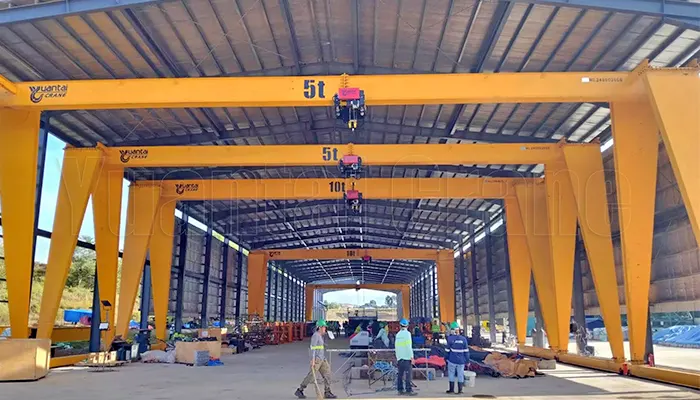
single girder gantry crane for sale
Gantry Crane Types
Single Girder vs. Double Girder
When choosing a gantry crane, one of the first decisions is whether to go with a single girder or double girder design. Each has practical advantages depending on your workshop needs.
Single Girder:
- Ideal for lighter loads, usually up to 10 tons.
- Lower initial cost and simpler installation.
- Easier to maintain due to fewer components.
- Best suited for workshops with limited headroom.
Double Girder:
- Designed for heavier loads, greater lifting heights, and longer spans.
- More stable and durable for frequent or industrial-scale lifting.
- Slightly higher installation and maintenance effort.
- Suitable for steel plants, manufacturing, and high-capacity workshops.
Choosing the right girder type depends on the weight of your loads, frequency of use, and available workshop space.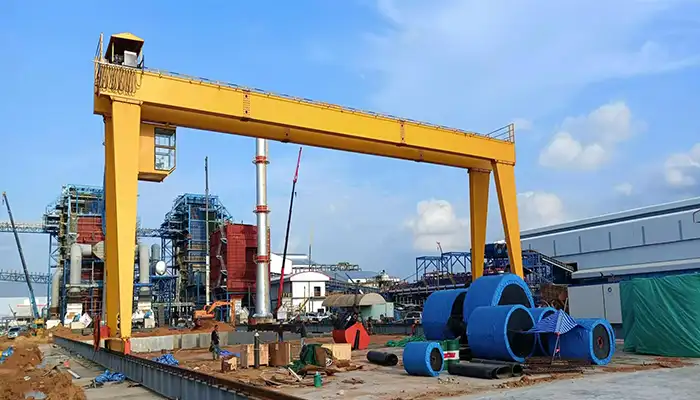
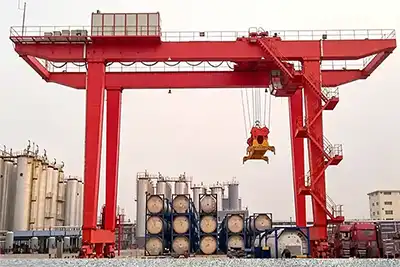
double girder gantry crane for sale South Africa
European Style vs. Local Designs
European style gantry cranes are widely used for their reliability, precision, and safety. While local or generic designs might be cheaper, they often lack the same long-term performance.
European Style:
- Smooth and precise trolley and bridge movement.
- Built-in safety devices like limit switches and overload protection.
- Ergonomic operator controls for easier handling.
- Generally lower maintenance and longer service life.
Local Designs:
- Cost-effective upfront but may require more frequent maintenance.
- May lack advanced safety features or smooth operation.
- Suitable for simple or occasional lifting tasks.
For workshops where safety, reliability, and consistent operation are critical, a European style crane is often worth the investment.
Key Selection Criteria
Choosing the right gantry crane depends on four key factors: lifting capacity for safe handling, span to cover the required workspace, lifting height for proper clearance, and power compatibility with local supply. Balancing these ensures safe, efficient, and cost-effective operation.
The first thing to consider when choosing a gantry crane is its lifting capacity. Selecting the right tonnage ensures safe operation and efficiency in your workshop.
- Determine the Right Tonnage: Calculate the heaviest load you expect to lift, including any additional attachments or fixtures. Always account for weight variations.
Practical Tips:
- Add a 10–15% safety margin above your maximum load to prevent overloading.
- Consider potential future growth in workload—choosing slightly higher capacity can avoid the need for a new crane later.
Typical Applications in South Africa:
- 2–5 tons: Small machinery, automotive parts, and light steel bundles.
- 5–10 tons: Steel plates, larger machinery components, and medium-size industrial loads.
A properly selected lifting capacity not only protects staff and equipment but also ensures smooth and reliable operations.
The span refers to the width the crane covers across your workshop. Getting this right is crucial to ensure the crane can reach all required points without obstruction.
Measure Workshop Width and Clearances: Verify distances between walls, support beams, and other equipment.
Practical Tips:
- Allow extra space at each end to avoid collisions with walls or columns.
- Consider any walkways, doors, or areas where materials need to be loaded or unloaded.
Why it Matters: A correctly sized span ensures smooth material transport and minimizes the risk of accidents.
The lifting height is the vertical distance from the floor to the hook when the crane is at its highest point. Correct evaluation is essential for safe stacking and lifting tall objects.
Evaluate Ceiling Height and Overhead Clearance: Measure from the floor to any beams, lighting, or ceiling obstacles.
Practical Considerations:
- Ensure the crane can handle the tallest loads you plan to lift.
- Include extra clearance for safe movement and attachments.
- For stacked materials, consider the total combined height.
Proper lifting height prevents collisions and allows operators to handle loads efficiently.
Ensuring the crane matches your electrical supply is critical to avoid operational issues and additional costs.
- Check Voltage and Phase Requirements: Most South African workshops use 380V, 50Hz, 3-phase power. Confirm that the crane supports this.
- Stabilizers and Circuit Protections: If voltage fluctuates, consider adding stabilizers to protect the crane's motor and electronics.
- Avoid Extra Costs: Choosing a crane compatible with your existing power prevents unnecessary expenses on transformers or rewiring.
Matching the crane to local power conditions ensures reliable operation and reduces maintenance problems over time.
Additional Practical Considerations
When selecting a gantry crane, buyers should look beyond capacity and price—practical aspects like safety, ease of operation, maintenance, and future scalability are equally important. Built-in safety features such as emergency stops, limit switches, and overload protection safeguard operators and materials. User-friendly controls and proper training enhance efficiency and accuracy during daily operations. Regular, easy-to-perform maintenance keeps the crane reliable and cost-effective, while considering future expansion—like capacity upgrades or modular extensions—ensures long-term value and adaptability.
Safety should always be the top priority when operating a gantry crane. Modern cranes come equipped with multiple protective devices to prevent accidents and protect both operators and materials.
- Emergency Stops: Allow the operator to immediately halt the crane in case of unexpected issues.
- Limit Switches: Prevent the crane from lifting beyond safe heights or moving beyond its designated span.
- Overload Protection: Stops the crane from lifting loads that exceed its rated capacity, reducing the risk of mechanical failure.
Implementing these safety features ensures that your workshop complies with regulations and minimizes the risk of injury or damage.
A crane that is easy to operate improves efficiency and reduces operator fatigue. Ergonomic and user-friendly designs make a noticeable difference in daily operations.
- Ergonomic Controls: Smooth, intuitive controls allow operators to position loads accurately with minimal effort.
- Operator Training: Staff should receive hands-on training for safe and efficient crane operation, including emergency procedures.
When operators are comfortable and confident, productivity improves and the risk of mishandling heavy loads is significantly reduced.
Regular maintenance is crucial to keep the crane running reliably over the long term. Choosing a design that allows easy servicing saves both time and money.
- Lubrication Points: Accessible lubrication spots ensure smooth movement of the trolley and bridge.
- Modular Design: Simplifies replacement of parts like wheels, motors, or electrical components without dismantling the entire crane.
- Routine Checks: Inspect wire ropes, brakes, and electrical systems regularly to prevent unexpected downtime.
A maintenance-friendly crane reduces operational disruptions and extends the life of the equipment.
When investing in a gantry crane, consider potential future growth in your workshop or production needs.
- Adaptable Capacity: Select a crane that can handle slightly heavier loads in the future.
- Expandable Span: Some cranes allow adjustment or modular extensions for longer spans as your workflow changes.
- Upgrade Options: Features like additional trolleys, hoists, or remote operation systems can be added later.
Planning for future expansion ensures your investment remains useful even as operational demands increase.
Industry-Specific Recommendations
Gantry cranes enhance efficiency across various industries. In manufacturing workshops, they handle machinery parts and molds with precision. Steel plants benefit from heavy-duty double-girder cranes for plates and billets. Automotive workshops use smaller cranes for engines and chassis, while warehouses gain flexible material movement and space optimization. Selecting the right type ensures safety, accuracy, and workflow efficiency.
In manufacturing settings, a gantry crane can significantly streamline material handling and assembly processes.
- Typical Loads: Machinery parts, molds, and heavy equipment components.
- Benefits: Reduces manual lifting, speeds up production lines, and ensures precise placement of materials.
- Practical Tip: Choose a crane with moderate lifting capacity and smooth trolley control for accurate positioning.
Steel workshops and fabrication facilities often deal with extremely heavy and awkwardly shaped materials. A robust gantry crane is essential.
- Typical Loads: Steel plates, billets, and bundled metal products.
- Benefits: Improves handling efficiency, minimizes damage to materials, and increases operator safety.
- Practical Tip: Opt for a double-girder design if handling consistently heavy loads, and ensure the crane has overload protection.
In automotive production or repair workshops, gantry cranes can simplify assembly and maintenance tasks.
- Typical Loads: Engines, chassis, or large automotive components.
- Benefits: Reduces manual handling risks, speeds up assembly, and improves safety during lifting operations.
- Practical Tip: A smaller, single-girder crane may be sufficient for engine lifts, but ensure the crane has precise positioning controls.
Warehouses benefit from gantry cranes by enabling smooth movement of heavy storage items without disrupting workflow.
- Typical Loads: Large boxes, storage racks, or bundled inventory.
- Benefits: Increases material handling efficiency, minimizes labor requirements, and optimizes space usage.
- Practical Tip: Consider a freestanding gantry crane if flexibility or relocation within the warehouse is needed.
Steps to Get Your Customized Gantry Crane Solution
Getting a customized gantry crane involves four key steps: First, evaluate your workshop and workflow to measure space, understand material flow, and assess load types. Next, determine exact crane specifications for capacity, span, height, and power compatibility. Then, discuss optional features and safety devices like overload protection, ergonomic controls, or dual trolleys. Finally, obtain a quotation and plan installation, including delivery, assembly, and operator training. Following these steps ensures a safe, efficient, and tailored crane solution.
Before contacting a supplier, take a careful look at your workshop layout and how materials move through the space.
- Measure Available Space: Include width, length, and ceiling height to determine the ideal crane span and lifting height.
- Analyze Material Flow: Identify where loads are picked up and dropped off to position the crane for maximum efficiency.
- Consider Load Types: Note the weight, size, and frequency of materials handled daily.
A thorough evaluation helps ensure the crane fits seamlessly into your operations.
Once you understand your workshop needs, translate them into clear crane specifications.
- Lifting Capacity: Match or slightly exceed the heaviest expected loads.
- Span (Width): Ensure the crane covers all necessary areas without obstruction.
- Lifting Height: Allow enough clearance for tall items or stacked materials.
- Power Requirements: Confirm voltage, frequency, and phase compatibility with your electrical supply (e.g., 380V/50Hz/3P in South Africa).
Clear specifications allow suppliers to provide the most accurate and practical crane solution.
Customizable features can make your crane safer and more efficient.
- Safety Devices: Emergency stops, overload protection, and limit switches.
- Operational Enhancements: Ergonomic controls, remote operation options, or dual trolleys.
- Maintenance Considerations: Modular design or easy access to lubrication points for smoother long-term servicing.
This discussion ensures the crane fits both your workflow and safety requirements.
Finally, work with your supplier to get a tailored quote and plan the installation process.
- Quotation: Should include all components, optional features, delivery, and any installation costs.
- Installation Plan: Consider on-site assembly, electrical connections, and alignment checks.
- Operator Training: Schedule staff training to ensure safe and efficient use from day one.
Conclusion
Choosing the right gantry crane for your workshop requires careful consideration of several key factors. Start by evaluating your workshop layout, material flow, and load types. Then, determine the crane specifications such as lifting capacity, span, lifting height, and power compatibility. Don’t forget to consider safety features, ease of operation, and maintenance requirements to ensure smooth daily operations.
- Match lifting capacity to current and future workloads.
- Measure available space and ceiling height carefully.
- Confirm electrical compatibility with local power supply.
- Prioritize cranes with built-in safety devices and ergonomic controls.
Importance of Careful Planning
Taking the time to plan and evaluate your needs upfront can prevent costly mistakes. Incorrect crane selection or insufficient site preparation can lead to installation delays, safety risks, and additional expenses. A well-chosen crane, on the other hand, improves efficiency, enhances safety, and offers long-term reliability.
If you are looking for a 5-ton gantry crane or other industrial lifting solutions in South Africa, reach out to a trusted supplier. Providing your workshop details and operational requirements allows them to offer a customized crane solution that fits your needs, budget, and workflow perfectly.
- Share your workshop dimensions and lifting requirements.
- Discuss optional safety features and operational enhancements.
- Plan installation and operator training for smooth deployment.