
Top Five Most Popular Overhead Cranes in Oman
Most Requested EOT Cranes in Oman and Their Best Use CasesIntroduction
Oman’s industrial sectors are growing rapidly, and with that growth comes the need for reliable and efficient overhead cranes. Whether in manufacturing plants, construction sites, or logistics hubs, having the right crane can make a big difference in daily operations. It helps improve safety, speeds up work, and ensures heavy loads are handled properly.
This article highlights the top five overhead cranes that are most commonly used in Oman today. From the popular 5-ton single girder cranes to the more heavy-duty 20-ton gantry cranes, we’ll explain where these models fit best and why so many local businesses rely on them.
Understanding which types of overhead cranes are widely used in Oman’s industries helps buyers make smarter choices. Instead of guesswork, you can base your decision on cranes proven to perform well in similar settings. This guide aims to help you find the right crane that meets your specific needs without hassle or extra cost.
Overview of Oman’s Industrial Landscape
Oman’s economy relies heavily on industries that require heavy lifting and material handling, which explains the strong demand for overhead cranes. Key sectors such as manufacturing, logistics, construction, and steel processing form the backbone of this demand.
- Manufacturing: From factories producing machinery parts to assembly lines in various sectors, manufacturing plants use overhead cranes daily. These cranes help move heavy equipment, raw materials, and finished goods efficiently within the workspace.
- Logistics and Warehousing: With Oman’s strategic location near major shipping routes and ports, logistics companies handle large volumes of cargo. Overhead cranes play a vital role in loading and unloading containers, moving goods across warehouses, and organizing materials for transport.
- Construction: The construction boom in Oman, including large infrastructure and industrial projects, requires cranes to handle steel beams, concrete slabs, and heavy machinery. Overhead cranes help speed up construction processes by allowing heavy parts to be lifted and positioned safely.
- Steel Processing: Steel mills and fabrication workshops demand robust overhead cranes to handle heavy steel coils, plates, and structural components. The precision and strength of cranes used here are critical to maintain production efficiency and safety.
In addition to industry type, several environmental and operational factors influence which crane is best suited for a particular job in Oman:
- Climate Conditions: Oman’s hot climate, combined with occasional dust and humidity, means cranes must be designed or protected to withstand these elements. Corrosion-resistant materials and proper maintenance become essential.
- Workshop or Plant Size: Smaller workshops may prefer compact, single girder cranes that fit limited space and lighter loads. Larger factories and outdoor yards often need double girder or gantry cranes to cover wide spans and heavier lifting requirements.
- Load Requirements: The weight and frequency of loads influence the crane capacity and design. Frequent heavy lifting demands cranes with higher load ratings and durable components to ensure safety and longevity.
- Operational Needs: Factors like lifting height, span length, speed of movement, and automation features also play a role in choosing the right crane. Some operations may require simple manual controls, while others benefit from advanced remote or automated systems.
By understanding these key industries and factors, buyers can better match crane types to their real-world needs in Oman’s unique industrial environment.
Criteria for Popularity
Several practical factors influence which overhead cranes become popular choices in Oman’s market. Buyers want equipment that not only meets their lifting needs but also fits well within their budgets and operational setups.
- Load Capacity: One of the first things buyers consider is how much weight a crane can safely lift. Cranes that offer the right capacity for common tasks—like 5 tons, 10 tons, or 20 tons—naturally become more popular because they cover the majority of everyday industrial needs.
- Ease of Installation: Time is money, especially when setting up new equipment. Cranes that are straightforward to install, with modular parts or simple designs, reduce downtime and save on labor costs. This is a big selling point for many Omani businesses, especially those looking to get projects running quickly.
- Maintenance Requirements: Overhead cranes that are easier to maintain and have readily available spare parts tend to be favored. Maintenance-friendly cranes help reduce long-term costs and prevent unexpected breakdowns that can disrupt operations.
- Cost Efficiency: Buyers always balance upfront investment with operating costs. Cranes that offer a good mix of reliability, performance, and affordable pricing are naturally more attractive. This is especially true for small to medium-sized enterprises working within tight budgets.
Beyond these factors, buyer preferences and specific project needs play a key role in crane selection. For example:
- Some buyers prioritize compact designs because they work in smaller workshops with limited space.
- Others need cranes with higher precision and smooth operation for delicate or frequent lifting tasks.
- Projects with outdoor or harsh environment conditions push buyers toward cranes with extra protection and durability.
- Certain industries might demand customized features like explosion-proof components or remote controls.
In the end, what makes a crane popular is a combination of how well it matches the practical demands of the buyer and how it fits the project’s unique requirements. Successful crane suppliers understand these preferences and offer options that cater to different needs across Oman’s diverse industrial sectors.
Top Five Most Popular Overhead Cranes in Oman

5-Ton Single Girder EOT Cranes
Description and Key Features:
The 5-ton single girder electric overhead traveling (EOT) crane is one of the most common cranes used in Oman’s smaller workshops and light manufacturing plants. It consists of a single main beam (girder) that carries the hoist and trolley. This design is compact and fits well into facilities with limited ceiling height or space.
- Typically equipped with an electric wire rope hoist or chain hoist
- Simple structure, making it easier to install and maintain
- Designed for lifting loads up to 5 tons, perfect for medium-weight tasks
Common Industries and Applications:
- Small fabrication workshops
- Light manufacturing facilities
- Maintenance shops and repair centers
- Warehousing and material handling for moderate loads
Benefits:
- Cost-effective: Lower purchase and installation costs compared to double girder cranes
- Easy to install: Lightweight and modular, so installation is faster and less labor-intensive
- Versatile: Ideal for a range of small to medium lifting needs without over-specifying equipment
10-Ton Double Girder EOT Cranes
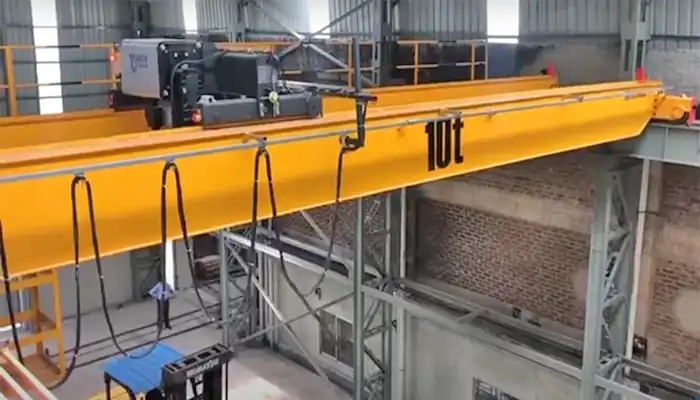
Description and Key Features:
The 10-ton double girder EOT crane features two main girders that provide a stronger, more stable framework for lifting heavier loads. This type of crane is widely used in larger factories and steel fabrication shops in Oman.
- Supports heavier lifting with better load distribution
- Can cover longer spans, suitable for wide workshop floors
- Typically comes with a heavy-duty wire rope hoist and advanced control systems
Typical Use Cases:
- Steel fabrication and processing plants
- Heavy machinery manufacturing and assembly
- Large workshops handling bulky and heavy materials
- Construction equipment manufacturing
Advantages:
- Higher load capacity: Safely lifts heavier weights up to and beyond 10 tons
- Better stability: Dual girders reduce sway and improve safety during lifting
- Longer spans: Can cover wider areas, giving more flexibility in large facilities
20-Ton Gantry Cranes
Description and Key Features:
20-ton gantry cranes are heavy-duty cranes with a bridge supported by legs running on wheels or rails at ground level. These cranes are ideal for outdoor use where fixed overhead cranes are not practical.
- Can be semi-gantry (one side supported by legs, the other by a building) or full gantry
- Built for heavy loads and harsh outdoor environments
- Often equipped with weather-resistant components and protective coatings
Applications:
- Port terminals and shipping yards
- Large logistics and storage yards
- Outdoor heavy manufacturing sites
- Steel mills and construction material yards
Benefits:
- Mobility: Can be moved along rails or wheels to cover large outdoor areas
- Heavy load handling: Designed for very heavy loads up to 20 tons and more
- Suitable for large spans and outdoor use: No need for permanent overhead runway structures
3-Ton Electric Hoist Cranes for Light-Duty Lifting

Description and Key Features:
3-ton electric hoist cranes are compact cranes often mounted on single girders or used as portable overhead cranes. They are best for light-duty applications requiring frequent lifting of smaller loads.
- Simple and lightweight design
- Electric hoist with easy controls
- Ideal for workshops with limited lifting needs
Common Uses:
- Small repair shops
- Assembly lines with lighter components
- Maintenance areas and parts handling
Benefits:
- Affordable and easy to operate
- Flexible and quick installation
- Suitable for light manufacturing and service environments
Explosion-Proof Overhead Cranes
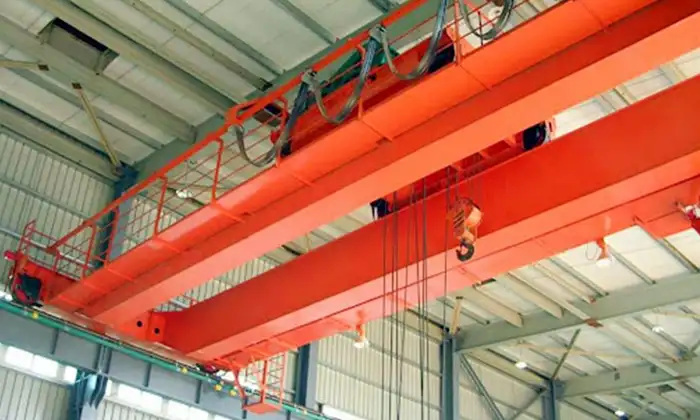
Explosion proof overhead cranes
Description and Key Features:
Explosion-proof overhead cranes are specially designed for hazardous industrial environments where flammable gases, dust, or chemicals are present. These cranes are built to meet strict safety standards to prevent sparks and electrical hazards.
- Equipped with explosion-proof motors, control panels, and wiring
- Certified to comply with international safety regulations for hazardous areas
- Designed for safe operation in petrochemical, oil and gas, and chemical plants
Typical Applications:
- Petrochemical plants in Oman
- Oil refineries and gas processing facilities
- Chemical manufacturing units
- Any industrial setting with potential explosive atmospheres
Benefits:
- Ensures safety in high-risk environments
- Reduces risk of accidents and downtime
- Built to withstand harsh industrial conditions without compromising performance
Why Matching Crane Type to Industry Needs Matters
Choosing the right overhead crane isn’t just about picking a machine that lifts heavy things. It’s about finding the right fit for your specific industry, your daily tasks, and your working environment. When the crane matches your needs well, it can make a big difference in how smoothly your operations run.
Impact on Operational Efficiency and Safety
A crane that suits your industry and workload helps keep everything moving without unnecessary delays. For example, a crane with the right load capacity and speed can cut down the time it takes to move materials, boosting productivity. On the other hand, if a crane is too small or underpowered, it can slow down work or even risk overloading.
Safety is another major factor. Using the correct crane reduces the chance of accidents. Cranes designed for your specific loads and environment are less likely to suffer mechanical failures or cause dangerous situations. For example, an explosion-proof crane in a petrochemical plant protects workers from sparks that could cause fires or explosions.
- Faster material handling means less downtime
- Proper crane capacity prevents overloads and breakdowns
- Safety features aligned with the industry reduce accidents and injuries
Long-Term Cost Savings from Using the Right Crane
While the initial purchase price matters, long-term costs are often more important. The right crane lowers maintenance expenses because it isn’t overworked or forced to handle loads beyond its design. It also reduces energy consumption by operating efficiently for your typical lifting tasks.
A crane built for your environment lasts longer. For instance, cranes designed for outdoor use in Oman’s harsh climate withstand corrosion and dust better, avoiding costly repairs or early replacements. Moreover, cranes that fit well with your workflow require less operator training and fewer adjustments, saving time and money.
- Reduced repair and replacement costs over the crane’s lifetime
- Energy-efficient operation suited to regular load profiles
- Lower labor and training expenses thanks to ease of use
Examples of Mismatches and Their Consequences
Mismatching a crane to an industry’s needs can lead to many problems. For example, using a small single girder crane in a heavy steel fabrication plant can cause frequent overloads, leading to mechanical failures and unsafe working conditions.
In another case, a crane not designed for outdoor use might rust quickly and break down when exposed to Oman’s heat and dust, forcing unplanned shutdowns and expensive repairs. Similarly, ignoring the need for explosion-proof cranes in hazardous environments can put workers’ lives at risk and cause severe legal and financial consequences.
- Overloading causes breakdowns and safety hazards
- Inadequate protection leads to faster wear and costly downtime
- Lack of industry-specific features risks accidents and regulatory issues
Matching the crane type to your industry needs isn’t just a technical detail — it’s key to keeping your business running smoothly, safely, and cost-effectively. Taking time to select the right crane upfront saves headaches and expenses down the road.
Buyer’s Specification Checklist
Before purchasing an overhead crane, having a clear set of specifications is not just helpful—it’s necessary. Many delays and unexpected costs in crane projects come from missing or inaccurate details at the beginning. Whether you're buying a full crane or just a crane kit, the following checklist will help you organize the key information needed to move forward smoothly.
Crane Span, Lifting Height, and Travel Length
These three dimensions are the foundation of your crane system. They determine how much area your crane can cover and what kind of structure is required.
Details to confirm:
- Crane span: the distance between the two runway beams, measured center to center
- Lifting height: the distance from the floor to the highest point the hook needs to reach
- Travel length: how far the crane needs to move along the building or track
It’s best to measure directly on-site instead of relying only on drawings. Building modifications, uneven floors, or structural changes can make older plans inaccurate.
Building Layout and Structural Conditions
The shape, strength, and layout of your workshop or yard will influence what type of crane can be installed. A poor match between crane and structure often leads to reinforcement costs or redesigns.
Points to assess:
- Height of the runway beam and usable vertical clearance
- Any roof braces, lights, ducts, or existing installations that may obstruct crane movement
- Whether your columns or frames can support a top-running crane, or if a self-standing system is needed
- Whether the floor can accommodate rail installation for gantry cranes
If possible, prepare a basic sketch of the side elevation of your workshop or share some site photos. This makes it easier for your supplier to understand your space.
Full Crane System or Crane Kit
Decide early on whether you need a complete crane or just a crane kit. This affects price, lead time, and how much work will need to be done on-site.
Choose a crane kit if:
- You can fabricate the main girder locally
- You want to lower international shipping costs (especially for longer spans)
- You already have a steel workshop or a local contractor assisting with fabrication
Choose a full crane system if:
- You prefer a plug-and-play solution
- You don’t have in-house fabrication capability
- You want to reduce installation time and on-site modifications
Crane kits are a good choice for buyers in regions like Sohar, Duqm, and Nizwa where local fabrication resources are available.
Installation and Commissioning Services
Make sure you know who will install and test the crane once it arrives. Without proper assembly and testing, even the best-designed system may not perform correctly.
Things to arrange:
- Whether experienced local installers are available and familiar with the crane type you’re buying
- If the supplier provides installation supervision or step-by-step guidance
- Whether welding, rigging, or heavy equipment is needed on-site
- If the crane will be load tested and commissioned after installation
Some crane manufacturers offer full installation and commissioning packages in Oman. If you're short on time or resources, consider choosing a supplier who can handle delivery, assembly, and testing for you.
Conclusion: Choosing the Right Overhead Crane for Oman
To wrap up, selecting the right overhead crane in Oman comes down to understanding your specific industrial needs and site conditions. The most common crane types each have their ideal use cases:
- Single girder cranes work best for light to medium loads, perfect for small workshops and maintenance centers, especially in Muscat and Al Batinah North.
- Double girder cranes handle heavier loads and longer spans, making them well-suited for steel fabrication yards and logistics hubs in Al Batinah South.
- Gantry cranes shine in outdoor or coastal environments like ports and open yards, where flexibility and durability are critical.
- Special-purpose cranes serve niche industries requiring explosion-proof designs or specialized handling, such as chemical plants or steel mills.
Using proven crane designs and models that have been tested in similar industrial setups can save you time and reduce risk. These tried-and-true systems offer reliability and easier maintenance, ensuring your investment performs smoothly over the years.
Reach out to reliable overhead crane suppliers who understand Oman’s market. Get expert advice, request detailed quotations, and find a crane that fits your needs perfectly. Don’t hesitate—starting the conversation now will save you time and money later.