Case Study: 2 Ton Freestanding Workstation KBK Crane USA
Efficient, modular 2-ton KBK crane installed for light-duty lifting in a U.S. workshop, boosting safety & productivity. Get 2 ton freestanding kbk crane.
2 Ton Freestanding KBK Crane Project Overview
Client Profile: Small Equipment Manufacturer in Ohio
The client is a small-to-medium manufacturing company based in Columbus, Ohio, focused on producing precision metal components for agricultural machinery and small-scale construction tools. Their production line includes cutting, drilling, and light assembly, all housed within a single-floor workshop facility with limited overhead clearance.
For years, the team handled material transfers manually or used basic carts, which slowed down production and raised safety concerns—especially when lifting awkward or heavier components across workstations.
Project Location: Columbus, Ohio, USA
The crane system was delivered and installed at the company’s main production site, a 1,200 m² facility located in an industrial zone of Columbus, Ohio. The building has a low roof structure (about 4.5 meters high), making ceiling-mounted cranes or overhead systems difficult to integrate.
Local building regulations also limited structural modification, pushing the team to find a fully self-supporting lifting solution that wouldn't interfere with the building’s layout.
Project Goal: Safer, Faster Lifting in a Defined Work Cell
The main goal was clear: speed up the handling of finished and semi-finished parts within a 6 × 8 meter work area while reducing worker strain and improving safety. The company didn’t need a heavy-duty crane, but something light, easy to use, and capable of lifting up to 2 tons.
Here’s what they were looking for:
- Independent structure: No modifications to the building’s roof or walls
- Compact footprint: Fit into a single work cell without interrupting adjacent operations
- Reliable lifting range: Must lift 2-ton parts to 3.5 meters height and move them between two workbenches
- Easy integration: Minimal installation time and no need for custom floor reinforcement
- Expandable design: Optional for future extension of the runway or span, if needed
This freestanding KBK workstation crane was a perfect match for their goals. Not overengineered. Just efficient, modular, and made to get work done.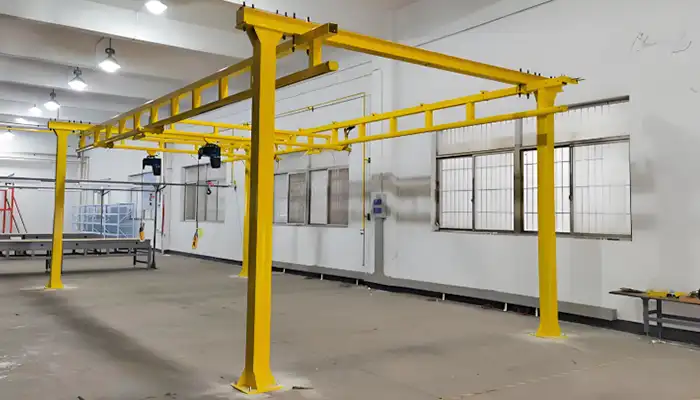
2 ton free standing kbk workstation for your reference - Yuantai KBK Crane for Sale
Background and Challenges
Existing Conditions: Tight Space and No Overhead Support
Before the crane system was installed, the client's workshop was facing several physical and operational limitations. The facility, although functional, had a few notable restrictions that made lifting and moving materials difficult.
- Limited Ceiling Height: With only about 4.5 meters of vertical space from floor to ceiling, installing a ceiling-hung or top-running crane was out of the question.
- Restricted Floor Area: The production layout was tight, with multiple machines and assembly tables leaving just enough room for essential workflows.
- No Structural Support: The building was not equipped with existing beams or columns that could support an overhead crane. Reinforcing the roof was also not feasible due to cost and permit restrictions.
- Manual Lifting Methods: Most lifting was done using carts, dollies, and sheer manpower—often by two or three workers handling one load.
- Inefficiency in Transfers: Parts frequently needed to be moved between machines and benches 4–6 meters apart, slowing down processes and introducing unnecessary risk.
These conditions were not just inconvenient—they were starting to impact productivity and morale.
Client Pain Points: Frustration on the Floor
The team had become increasingly frustrated with the slow pace of material movement. Even more importantly, safety incidents and fatigue were becoming real concerns.
- Wasted Time: Moving large or heavy parts across the floor with no mechanical aid caused delays during busy shifts.
- Worker Fatigue: Employees were physically strained by the repeated lifting, bending, and transporting, especially for heavier components.
- Injury Risk: The lack of mechanical assistance raised the risk of strain injuries, particularly to the back and shoulders.
- No Room for Large Equipment: A forklift or mobile crane was not a viable option due to space limits and the need for precision.
- Need for a Better Way: The client needed a solution that could be installed quickly, wouldn’t require modifying the building, and could easily fit into their current layout.
They weren’t asking for anything fancy—just something that worked, made the job safer, and helped the team focus on what they do best: building good products.
Proposed Solution
Crane Type: 2 Ton Freestanding Workstation KBK Crane
After reviewing the client’s site conditions and lifting needs, a 2-ton freestanding KBK workstation crane was selected as the best fit. This type of crane offers an efficient and non-intrusive solution for light to medium-duty lifting—perfect for small parts handling, sub-assembly stations, or maintenance areas. The freestanding design means it doesn’t rely on any existing building structure, which solved one of the client’s major concerns right away.
System Configuration: Modular, Compact, and Easy to Install
The KBK system was designed with flexibility in mind. Its modular structure allows it to be installed directly on the shop floor without any welding or structural changes to the building.
- Structure:
Modular steel columns and pre-engineered runway beams form a rigid but easily reconfigurable system. The frame is completely self-supporting and bolted to the floor with anchor bolts. - Span and Coverage:
The crane was configured with a 6-meter span, 7-meter travel length, and a 3.5-meter lifting height. This provided enough coverage for the designated work area where parts are received, processed, and transferred between stations. - Crane Profile Design:
The main bridge beam used KBK-style steel profiles—lightweight yet strong. Depending on client preference, the crane could be configured with manual push travel or motorized electric travel for smoother operation.
This setup made the crane compact, efficient, and easy for a single operator to use with minimal physical effort.
Customization Options: Tailored for Workflow and Site Conditions
Every workstation is different, so the crane system was customized to match the exact workspace layout and handling requirements.
- Electric Chain Hoist: Fitted with a reliable 2-ton electric chain hoist, complete with pendant control, overload protection, and smooth lifting motion.
Adjustable Features:
The crane offered several field-adjustable options:
- Column Spacing: Customized to avoid machinery and maximize working area
- Anchor Type: Chemical or expansion anchors depending on the floor type
- Height Adjustment: Available with different column heights to fit ceiling constraints
This level of adaptability made the crane future-proof, too—it can be extended or relocated if the production line is upgraded later on.
Installation and Implementation
Timeline: Fast Delivery and Minimal Disruption
From the moment of design approval to full system installation, the project was completed within 3–4 weeks, including:
- Design confirmation and drawing submission
- Fabrication and hoist assembly
- Delivery and on-site setup
Site Preparation Requirements
Before installation, the client only needed to ensure:
- Floor flatness within ±10 mm for proper leveling
- Anchor bolt placement per the foundation layout provided (no pits or embedded beams required)
This minimized preparation time and allowed installation to begin immediately upon delivery.
Installation Highlights
- No Impact on Building Structure:
The freestanding columns were anchored directly to the floor—no reinforcement of walls or roof structure was needed. - Quick Assembly:
The modular steel frame and KBK rails were pre-fabricated for bolt-together assembly, allowing full setup within 1.5 days with just a small crew. - Minimal Downtime:
The work zone remained operational during installation, with zero disruption to surrounding equipment.
Safety and Commissioning
- Load Testing: Crane passed a full 125% rated load test in compliance with ASME and local standards
- Operator Training: Instructed staff on safe operation, daily checks, and pendant control use
- Inspection Protocols: Initial inspection log completed and maintenance schedule provided
Results and Benefits
Operational Impact
The new crane delivered immediate and measurable improvements:
- 30–50% Faster Handling: Compared to manual handling or carts
- Improved Safety & Ergonomics: Workers no longer lifted heavy parts manually
- Better Efficiency: One operator could now handle tasks previously requiring two
Flexibility Gains
- Modular and Relocatable:
The crane can be dismantled and reinstalled in another area as workflows change - No Structural Modifications Required:
Avoided costly building changes, permits, or engineering reviews
Customer Feedback
“This crane solved our handling bottleneck without any building changes. Setup was smooth, and our team adapted quickly.”
— Production Manager, Small Parts Assembly Plant, USA
The client expressed satisfaction with both the system’s performance and its expandability—planning to add a second system in the near future.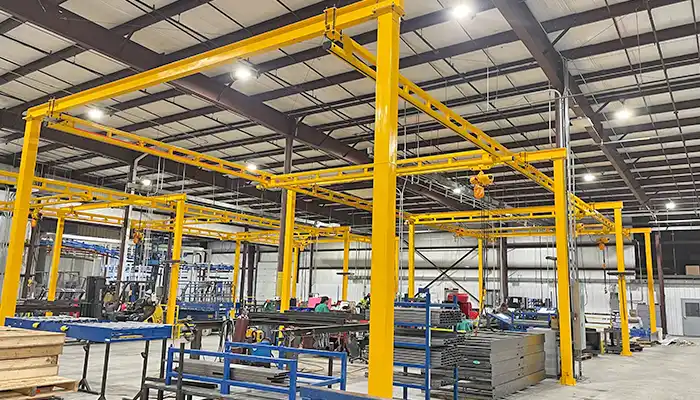
2 ton floor mounted freestanding kbk crane for reference
Why Choose This KBK Crane System
A Practical Fit for American Workshops
This 2-ton freestanding KBK crane is an ideal choice for U.S. facilities that don’t have existing overhead structures. Since it doesn’t rely on your building’s support beams, installation is fast and doesn’t require structural changes.
Modular, Flexible, and Easy to Expand
One of the biggest advantages is its modular setup. You can start small and expand later. As your production area grows or shifts, the crane can be relocated, extended, or reconfigured without major hassle.
- Works well for changing floor layouts
- Scalable system with modular columns and runways
- Compatible with different hoist types or lifting points
Budget-Friendly and Compliant with U.S. Standards
This system offers solid performance without pushing your budget. It meets OSHA, ANSI, and ASME codes, giving you peace of mind for safety and regulatory inspections.
- Lower installation costs compared to overhead cranes
- No extra investment needed in building reinforcement
- Long service life with minimal maintenance
Fast Delivery and Minimal Downtime
The crane kit can be designed, delivered, and installed quickly. Most setups can be completed within a few weeks, allowing your team to get up and running without long delays.
Send Us an Inquiry for a 2 Ton Freestanding Workstation Crane
Looking for a lifting solution that’s easy to install, reliable, and tailored to your workshop?
We specialize in supplying custom KBK workstation cranes across the U.S., especially for light-duty applications like assembly lines, parts handling, and tool transport.
When you contact us, we’ll help you:
- Review your workshop layout and lifting needs
- Choose the right span, lifting height, and hoist type
- Get a detailed quotation and layout drawing—fast
Send us a message today. Our engineering team is ready to help with a free layout review and technical consultation. Let’s find the right crane system for your workspace.