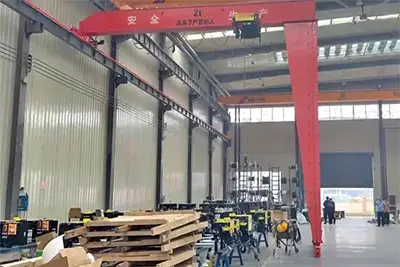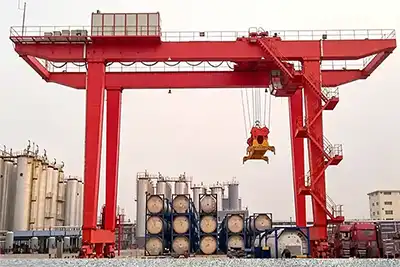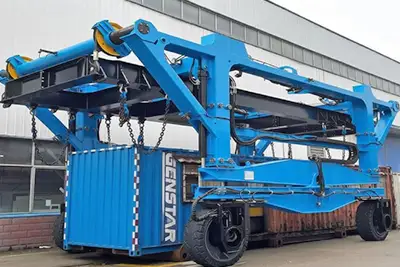
2 Ton Freestanding Bridge Crane vs Free standing KBK Cranes
2 ton freestanding bridge vs KBK cranes for indoor workshops—space, cost, flexibility & load handling differences explained. Get your freestanding cranes!
2 Ton Freestanding Bridge Cranes vs 2 Ton Freestanding KBK Cranes for Indoor Workshops and Workstations
Introduction
Freestanding cranes are a popular solution for indoor material handling where permanent ceiling support or existing building structures cannot accommodate overhead lifting equipment. These cranes come with their own support columns and framework, which means they can be installed almost anywhere inside workshops or workstations without major building modifications.
Choosing the right freestanding crane is essential because it directly affects how efficient your workspace will be. The right crane helps you maximize floor space, improve safety, and reduce operational costs. On the other hand, picking the wrong type may lead to problems like difficult installation, poor workflow, or increased maintenance.
Why Selecting the Right Crane Matters
Selecting the best crane for your indoor facility involves several practical considerations:
- Space availability: How much floor area and ceiling height do you have?
- Load requirements: What is the maximum weight and frequency of lifting?
- Workflow: Will the crane be used for fixed paths or need flexibility?
- Budget: What are your upfront costs and ongoing maintenance budgets?
- Installation conditions: Can the site support heavy foundations or is a lighter system needed?
Taking time to match these factors to your crane choice saves you from costly adjustments later on.
Purpose of This Guide
This guide compares two common types of 2-ton freestanding cranes used indoors:
- 2 Ton Freestanding Bridge Cranes — These are robust steel-frame cranes designed for heavier loads and wider spans.
- 2 Ton Freestanding KBK Cranes — These use modular aluminum profiles, are lighter, and more flexible, suited for smaller or more dynamic workspaces.
By understanding their key differences, advantages, and limitations, you’ll be better equipped to choose a crane that fits your specific workshop or workstation needs.
Overview of Crane Types
When deciding between freestanding cranes for indoor use, it’s important to understand the basic design and typical uses of each type. Both 2 Ton Freestanding Bridge Cranes and 2 Ton Freestanding KBK Cranes are popular, but they serve different needs depending on your workshop layout and lifting requirements.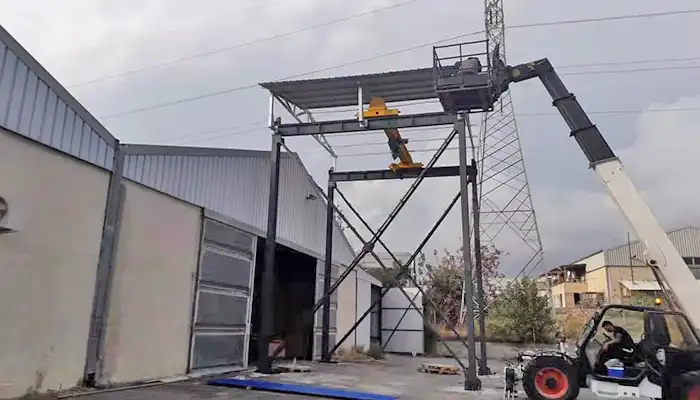
2 ton freestanding overhead bridge crane
2 Ton Freestanding Bridge Crane
A 2 Ton Freestanding Bridge Crane is a heavy-duty lifting system designed to handle loads up to 2 tons with a strong, rigid steel frame. It features a large overhead girder (bridge) supported by vertical columns on both sides, creating a self-supporting structure that does not rely on walls or ceilings.
Typical Applications and Industries
- Manufacturing plants and assembly lines with medium to heavy lifting needs
- Metal fabrication workshops requiring stable and precise load movement
- Warehouses handling bulky or heavy parts regularly
- Automotive and machinery repair shops with fixed overhead lifting points
Key Features
- Large Span Coverage: Can cover wide indoor areas, ideal for bigger workshops
- High Rigidity: Steel structure minimizes deflection under load, ensuring safe and smooth operation
- Heavy-Duty Performance: Designed for continuous, reliable use in industrial environments
- Fixed Path Movement: Travels along a straight runway, providing consistent positioning
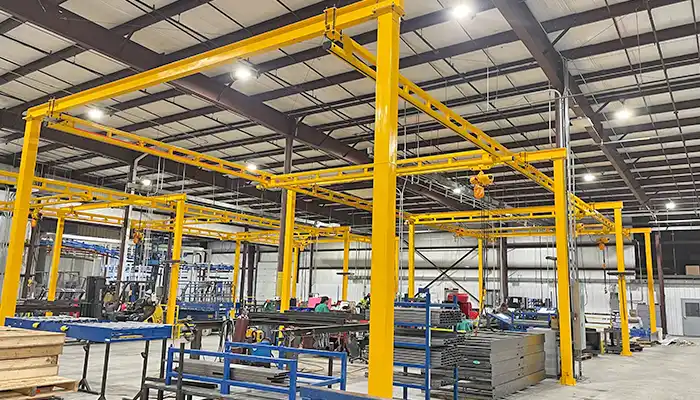
2 Ton Freestanding KBK Crane
The 2 Ton Freestanding KBK Crane is based on a modular, lightweight design using aluminum profiles for rails and supports. It is a flexible and compact lifting system, suitable for smaller or more dynamic workspaces where frequent layout changes may be needed.
Typical Applications and Industries
- Electronics and small parts assembly workstations requiring precise but light lifting
- Laboratories and clean rooms with space and contamination constraints
- Light manufacturing and packaging lines with variable production layouts
- Workshops where quick installation or reconfiguration is necessary
Key Features
- Lightweight Construction: Aluminum profiles reduce the weight of the crane structure, easing installation
- Modular and Flexible: Components can be easily added, removed, or rearranged to adapt to changing workspace needs
- Compact Footprint: Smaller columns and rails save floor space and allow better workspace utilization
- Easy Installation: Faster assembly with minimal foundation work compared to steel bridge cranes
Structural and Design Differences
Understanding how these two crane types are built helps clarify their best uses and installation needs.
Support and Frame
The 2 Ton Freestanding Bridge Crane is built around a strong, rigid steel framework. It has heavy-duty vertical columns that support the overhead bridge girder. These columns stand firmly on the floor and are designed to handle substantial loads and resist bending or shaking.
- Constructed with thick steel beams for strength and durability
- Columns anchored securely to foundations to maintain stability
- Designed for long-term, heavy industrial use
On the other hand, the 2 Ton Freestanding KBK Crane uses a modular aluminum profile system for both rails and supports. These profiles are lightweight but strong enough for moderate loads, offering more flexibility in installation and layout changes.
- Aluminum rails and supports keep the structure light and easy to handle
- Modular parts allow quick assembly and disassembly
- Supports usually smaller in size, minimizing floor space usage
Span and Coverage Area
One key difference is the size of the working area each crane covers. The bridge crane typically supports longer spans, making it suitable for larger workshops.
- Bridge cranes can cover spans ranging from 6 meters up to 30 meters or more
- Ideal for facilities with wide open floor areas and longer travel paths
In contrast, KBK cranes usually cover shorter spans and are better suited for compact workstations.
- Span lengths typically max out around 10 meters due to aluminum profile limitations
- Perfect for small to medium indoor areas or tight work zones
Installation Requirements
Installing a freestanding bridge crane requires more groundwork and time. The steel columns need strong, level foundations, often involving concrete pads or footings.
- Requires heavy foundation work to secure steel columns
- Longer installation time due to welding, bolting, and alignment processes
- Usually needs specialized cranes or equipment for assembly
KBK cranes, with their modular aluminum design, are faster and easier to install. They often require minimal foundation work.
- Lightweight components reduce the need for heavy foundation work
- Assembly is mostly bolted or clipped together, speeding up installation
- Easier to relocate or expand without major construction
Load Handling and Performance
Now, let’s look at how these cranes perform when it comes to moving your 2-ton loads.
Load Capacity and Safety Factors
Both cranes are rated for a maximum load of 2 tons, but their structural differences affect how that load feels in real use.
- Bridge cranes have a higher structural rigidity, meaning less sway or deflection under load
- This improves load stability, especially for heavier or awkward items
- KBK cranes have adequate strength for 2-ton loads but may have slightly more flex under stress
- Safety margins are carefully calculated in both, but bridge cranes often have higher factors of safety due to their robust build
Movement and Speed
Bridge cranes usually support faster trolley and bridge travel speeds, making them suitable for moving loads across longer distances efficiently.
- Trolley speeds can be adjusted for faster or slower operation
- Bridge travel covers longer runway beams, allowing wide coverage
- KBK cranes prioritize smoothness and precision over speed, designed for shorter distances
- Movement is typically slower but highly controlled, which is great for delicate or precise tasks
Operational Flexibility
Once installed, bridge cranes generally follow a fixed travel path defined by their runway beams.
- Less adaptable if you want to change workshop layout later
- Designed for consistent, repetitive lifting and moving along the same route
KBK cranes shine in flexibility due to their modular design.
- Rails and supports can be added, removed, or relocated without major effort
- Great for workshops or workstations where workflows change frequently
- Easier to expand or modify as your needs evolve
Space Optimization and Footprint
When working with indoor cranes, making the best use of your available space is crucial. The crane’s design can either help you save valuable floor area or end up taking more room than you want.
Workshop Layout Impact
A 2 Ton Freestanding Bridge Crane has a larger physical footprint due to its heavy steel columns and wide girder. These columns must be firmly anchored to the floor and spaced to support the crane’s span, which sometimes gets in the way of floor operations.
- Steel support columns can limit how you arrange workstations or equipment underneath
- Requires careful planning to avoid obstructing walkways, forklifts, or other machinery
- Suitable for larger, more open workshops where space isn’t as tight
In contrast, the 2 Ton Freestanding KBK Crane is designed with a compact frame and slim supports. Its minimal footprint means it interferes less with floor activities.
- Small column bases reduce obstruction on the floor
- Rails mounted on slim aluminum profiles can sometimes be integrated along existing workstations
- Well suited for crowded or busy workshops with limited space
Ceiling Height and Overhead Clearance
Ceiling height plays a big role when choosing a freestanding crane. The bridge crane’s design usually demands more vertical clearance to accommodate its girder and trolley.
- Needs sufficient height above the crane to allow smooth trolley and hoist movement
- Taller steel columns add to the overall height requirement
- May not be suitable for low-ceiling buildings or workshops with height restrictions
The KBK crane’s slim profile is an advantage in areas with limited overhead space.
- Compact aluminum rails and smaller hoists fit better in lower-ceiling environments
- Allows cranes to be installed in workshops where traditional bridge cranes simply won’t fit
Cost Comparison
Cost is always a key consideration. It’s not just the upfront price, but also what you pay over time for maintenance and operation.
Initial Investment
The 2 Ton Freestanding Bridge Crane typically requires a larger initial investment. The cost of heavy steel materials, foundations, and installation labor all add up.
- Steel girders and columns are more expensive than aluminum profiles
- Foundation work and professional installation increase upfront expenses
- More suitable when your budget allows for a long-term, durable investment
On the other hand, the 2 Ton Freestanding KBK Crane offers a lower initial price tag thanks to its modular, lightweight components.
- Aluminum parts are less costly and easier to ship
- Faster installation cuts down labor costs
- Attractive choice for small businesses or projects with tighter budgets
Maintenance and Operating Costs
Bridge cranes usually come with higher maintenance costs over their lifetime. The heavier structure and more complex mechanical parts require regular inspection and occasional repairs.
- Steel columns and girders may need painting and corrosion protection
- Mechanical wear parts like wheels and motors often require servicing
- Maintenance tends to involve specialized technicians
KBK cranes are designed for easier upkeep with modular parts that can be quickly replaced or upgraded.
- Aluminum rails are less prone to corrosion and easier to clean
- Modular components simplify troubleshooting and part replacement
- Lower ongoing costs make KBK cranes economical for many workshops
Safety Considerations
Safety is a top priority when selecting and operating any type of crane. Both 2 Ton Freestanding Bridge Cranes and KBK Cranes must meet strict requirements to protect operators, equipment, and the facility.
Structural Integrity Under Load
- Both cranes are engineered to handle their rated 2-ton capacity safely.
- Bridge cranes feature heavy steel frameworks designed to minimize sway and structural fatigue under continuous heavy use.
- KBK cranes, while lighter, use high-quality aluminum profiles tested for strength and durability to maintain safety during everyday operations.
- Regular inspections of the structural components ensure ongoing reliability and prevent unexpected failures.
Operator Safety Features
- Both crane types are equipped with controls designed for ease of use and operator comfort.
- Safety interlocks, overload sensors, and limit switches help prevent accidents during lifting and movement.
- Ergonomic control options include pendant controls, remote radios, or cabin controls depending on application.
Emergency Stops and Controls
- Emergency stop buttons are mandatory on both cranes to immediately halt operations if hazards arise.
- Clear, accessible control panels allow quick response in urgent situations.
- Operators receive training on emergency procedures to handle unexpected events safely.
Compliance With Standards (ISO, CE, OSHA)
- Both cranes must comply with regional and international safety standards such as ISO 9001, CE marking (for Europe), and OSHA regulations (in the US).
- Compliance ensures that cranes meet minimum safety, performance, and quality criteria.
- Choosing certified cranes reduces risks and liability for workshop owners.
Typical Use Case Scenarios
Knowing when to choose each crane type helps you match your workspace and lifting needs to the right equipment.
When to Choose a 2 Ton Freestanding Bridge Crane
- Your workshop or production area is large with wide open spaces that need heavy-duty lifting.
- You require reliable, continuous use with consistent travel over long spans.
- The workflow demands faster travel speeds and precise load placement.
- You have the budget and facility conditions to support heavier steel foundations and longer installation times.
When to Choose a 2 Ton Freestanding KBK Crane
- Your workspace is compact or has limited floor space requiring a smaller footprint crane.
- Workstations may change often, so you need a crane system that is easy to reconfigure or expand.
- Lifting tasks are lighter in frequency and may involve more precise or delicate handling.
- You prefer faster installation with minimal foundation work and lower upfront costs.
| Feature | 2 Ton Freestanding Bridge Crane | 2 Ton Freestanding KBK Crane |
|---|---|---|
| Structural Strength | Very strong, supports heavy loads | Moderate strength, best for lighter duty |
| Installation Time | Longer and complex | Quick and modular |
| Space Efficiency | Requires more floor space | Compact footprint |
| Cost | Higher initial and maintenance costs | Lower initial and maintenance costs |
| Flexibility | Limited layout changes | Highly modular and flexible |
Conclusion
Choosing the right 2 Ton freestanding crane for your indoor workshop or workstation comes down to understanding your space, load needs, and workflow. Bridge cranes offer strength, long spans, and heavy-duty performance but require more space and upfront investment. KBK cranes provide flexibility, a compact footprint, and easier installation, making them ideal for smaller or frequently changing work areas.
Before making a final decision, it’s a good idea to consult with crane specialists who can assess your specific requirements and recommend the best solution tailored to your facility.
We invite you to take advantage of our free consultation and custom quotation service to find the perfect crane for your needs. Reach out today to discuss your project and get expert advice.