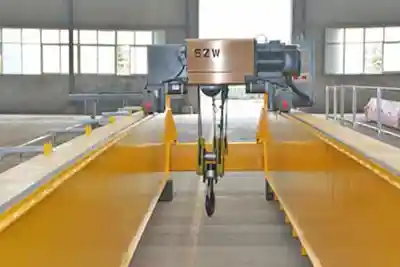
Overhead Crane Market Trends: Why Buyers Choose China
Overhead Crane Market Trends: Why International Buyers Choose China
Global demand, pricing trends, and product reliability — a buyer’s guide
The overhead crane market is evolving quickly, shaped by new industrial projects, global logistics shifts, and the constant search for reliable yet affordable lifting solutions. Today, more international buyers—from steel mills to machinery workshops—are turning their eyes toward China. Why? Because Chinese crane manufacturers have become not just competitive in price, but also dependable in quality, service, and technical support.
Let’s break down the market landscape and explore what’s driving this global trend—and what smart buyers should keep in mind before making their next purchase decision.
A Global Market on the Rise
Overhead cranes are essential for industries that move heavy loads daily—steel, construction, manufacturing, mining, and logistics. Global demand has been growing steadily, supported by infrastructure expansion in developing countries and equipment renewal in established markets.
Key trends shaping global demand include:
- Infrastructure investment: Rapid urbanization and industrial growth in Asia, the Middle East, and Africa continue to boost demand for material handling systems.
- Automation & modernization: Factories are replacing old cranes with automated or semi-automatic systems to reduce downtime and labor dependency.
- Safety and efficiency regulations: More buyers are demanding cranes that comply with ISO, CE, and local safety standards to avoid future compliance issues.
- Energy sector projects: Renewable energy and oil & gas facilities both require specialized overhead cranes for turbine and component handling.
These trends show that the demand is not slowing down—it’s simply shifting to smarter, safer, and more cost-efficient cranes.
Why International Buyers Are Choosing China
Chinese crane suppliers have built strong reputations in the global market through consistent exports, factory audits, and transparent service. Buyers from Southeast Asia, the Middle East, Africa, and even Europe often highlight three main reasons for their preference: cost, customization, and reliability.
- Chinese manufacturers maintain large-scale production and localized supply chains for motors, steel, and electrical components, keeping prices stable.
- Most suppliers can provide factory-direct pricing—reducing the need for middlemen and extra fees.
- Even when shipping and tariffs are considered, total project costs often remain 10–30% lower than local procurement in many countries.
- Buyers can specify span, lifting height, duty class, and working environment (indoor, outdoor, high-temperature, or explosion-proof).
- Options include imported electrical parts, remote control systems, and smart monitoring functions.
- Custom cranes can often be designed, produced, and tested within 30–45 days depending on capacity.
- Most established Chinese suppliers hold CE, ISO, SGS, and BV certifications.
- Each crane undergoes factory acceptance testing (FAT) and detailed quality inspection before shipment.
- Steel structures use high-grade Q235B or Q345B materials, and key parts like hoists or inverters can come from Siemens, Schneider, or SEW brands.
This combination of practical engineering and cost efficiency is why Chinese cranes now operate in thousands of workshops and steel plants across the world.
How This Affects Global Buyers
Choosing the right crane supplier is not just about finding the lowest quote—it’s about long-term reliability and total cost of ownership. Many international buyers now look at factors like lead time, after-sales support, and spare parts availability before signing a deal.
Here’s what smart buyers usually check:
- Lead time: Standard cranes (like 5–20 ton single girders) typically deliver in 25–40 days. Customized cranes may take longer.
- Service network: Reputable suppliers offer remote support and can send technicians abroad for installation and commissioning.
- Spare parts: Availability of motors, hoists, and electrical components ensures smooth maintenance after installation.
- Warranty: A minimum one-year warranty on mechanical and electrical systems is standard, often extendable through service contracts.
By evaluating these points, buyers can ensure that they’re not just getting a “cheap crane,” but a dependable long-term lifting solution.
The overhead crane market is shifting toward smarter, safer, and more efficient equipment—and China is leading that shift. Buyers gain the advantage of cost savings, flexible design, and reliable performance, supported by growing global service capability.
When you plan your next purchase, think beyond the price tag. Review factory certifications, check quality assurance documents, and discuss technical details directly with the manufacturer. A well-chosen Chinese crane isn’t just a product—it’s a partnership that keeps your operations running smoothly for years to come.
Executive Summary
The global overhead crane market continues to expand steadily as industries push for higher efficiency, automation, and safer material handling solutions. From steel production lines to logistics terminals, demand for durable and cost-effective cranes is on the rise. Many international buyers are now shifting toward direct procurement from Chinese manufacturers—driven by strong value for money, faster production cycles, and increasingly reliable product quality.
Market Direction:
Industrial growth in Asia, the Middle East, and Africa is fueling new investments in workshop cranes, gantry cranes, and EOT cranes. At the same time, mature markets in Europe and North America are upgrading older cranes with modern control systems and automation. Raw material costs, energy prices, and shipping logistics remain the main factors influencing global crane pricing.
Why Buyers Choose China:
- Competitive Pricing: Chinese suppliers offer factory-direct quotes and efficient production that reduce project costs by 10–30% compared to many regional markets.
- Manufacturing Scale & Customization: From 1-ton hoists to 100-ton double girder cranes, Chinese factories can tailor cranes for diverse industrial conditions.
- Improved Quality Assurance: CE, ISO, and SGS certifications, plus third-party inspections, ensure consistent quality and export readiness.
Recommendation for Buyers:
When sourcing from China, buyers should balance cost with reliability—request factory audits, detailed specifications, and acceptance test reports. This approach helps secure not just a crane, but a long-term lifting solution built for safety and performance
Market Overview: Global Demand Drivers
The global overhead crane market is shaped by a mix of broad industrial forces and specific sector-needs. Understanding how these forces play together gives you insight into where demand is headed — and where your next opportunity or risk might lie.
Overhead cranes become essential when heavy loads must move reliably day after day. Here are some of the main macro-drivers:
- The ongoing industrialisation of emerging markets means more manufacturing plants, steel mills, and heavy fabrication units needing lifting systems.
- Reshoring and near-shoring trends (companies moving production closer to end-markets) are creating demand in regions previously underserved.
- Massive infrastructure and construction programmes — roads, bridges, ports, power plants — all need overhead crane systems for building, maintenance and operations.
- As factories upgrade, older cranes are being replaced with higher-capacity, more reliable systems to support productivity and safety.
Different industries pull overhead-crane demand for their own reasons:
- Steel and metals: In steel mills, heavy slab handling, coil management and continuous casting lines demand high-duty double girder cranes with robust hoists and runways.
- Ports and shipyards: Large spans, heavy lift requirements (containers, ship blocks, modules) drive heavy-duty overhead or gantry cranes.
- Manufacturing: From automotive to plastics to heavy machinery, manufacturing plants invest in workshop cranes (5 ton, 10 ton, 15 ton etc.) for part handling, tooling changes and movement of assemblies.
- Energy (oil & gas, renewables): Turbine components, large modules, maintenance lifts in power plants or offshore platforms all call for reliable overhead systems.
- Construction & infrastructure: On-site lifting of precast elements, beams, panels; inside prefabrication factories; adding renovation of existing facilities with new cranes.
Geography matters a lot — where growth is, where buying power is, and where risk is.
- Asia-Pacific: Dominating the market by volume. For example, one report shows the global overhead crane market size at ~USD 5.18 billion in 2023, with Asia-Pacific the largest region.
- Africa & Latin America: These regions are building up heavy-industry, infrastructure and mining projects. Although unit sizes may be smaller, the growth potential is significant.
- Europe/North America: Demand is more selective — often upgrading or replacing older cranes, integrating automation, focusing on safety/compliance. While growth is slower, value per unit may be higher.
- Insert up-to-date stats here: (e.g., percentage CAGR by region, spending on industrial cranes by region, etc.)
- Global overhead crane market size ~ USD 5.18 billion in 2023.
- Forecast to reach ~ USD 8.20 billion by 2030 according to one estimate.
- Asia-Pacific region held roughly ~ 30-40% share of the global market in recent years.
- Infrastructure investment gap (one indicator) for 56 global countries was USD 15 trillion in one estimate, suggesting large potential for heavy equipment including cranes.
In sum: the demand for overhead cranes is being pulled by heavy-industry growth, infrastructure build-out, factory upgrades, and the need for safer and more productive lifting solutions. For you — as a crane kit or hoist supplier — this overview helps highlight where and why the opportunities are, and also what kinds of cranes buyers will be looking for in different regions and sectors.
Pricing Trends & Cost Structur
Pricing remains one of the most practical—and deciding—factors for international buyers when sourcing overhead cranes. The cost difference between local and Chinese suppliers can be significant, often ranging from 10% to 30% savings, depending on the crane type, order quantity, and customization level. But the story behind these numbers is more than just cheaper labor. It's about how China's manufacturing system is structured for efficiency, scale, and flexibility.
Chinese crane manufacturers have built their advantage through a combination of smart production management and regional clustering.
- Economies of Scale: Many Chinese factories produce hundreds or even thousands of cranes yearly, allowing shared production lines, bulk material purchasing, and streamlined testing processes.
- Supply-Chain Density: Components such as motors, gearboxes, control panels, and steel structures are produced locally, often within the same province. This reduces logistics costs and lead times.
- Lower Labor and Overhead Costs: Skilled labor costs remain moderate compared to Europe or North America, allowing for more flexible pricing without sacrificing craftsmanship.
- In-House Fabrication: Most suppliers handle design, fabrication, assembly, and testing within one site—eliminating subcontracting margins.
These factors combine to create a stable and cost-effective production environment that benefits buyers directly through competitive factory pricing.
When you receive a quotation from a crane supplier, it's useful to understand where each dollar goes. A transparent breakdown helps you compare suppliers more accurately and identify potential cost-saving areas.
Typical price structure for an overhead crane includes:
- Steel Structure (40–55%) – main girders, end trucks, runway beams, trolleys.
- Electrical System (10–15%) – control panels, wiring, inverter, limit switches.
- Hoisting Mechanism (15–25%) – electric hoist or winch, motor, gearbox, rope drum, hook assembly.
- Controls and Automation (5–10%) – radio remote, pendant control, frequency converter, safety monitoring.
- Transport & Packaging (5–10%) – sea freight, inland trucking, insurance, export packaging.
- Tariffs, Customs, and Documentation (3–5%) – depending on destination country and import policy.
Buyer note: Some suppliers include electrical installation kits, rails, and spare parts in their quote, while others list them separately. Always confirm inclusions before comparing prices.
While Chinese cranes are generally stable in cost, several external factors can cause short-term fluctuations.
- Steel Price Volatility: Steel is the single largest material cost in a crane. When global steel prices rise by 5–10%, total crane prices may increase proportionally.
- Shipping Rates: Freight costs can swing sharply. For instance, container rates from China to the Middle East or Africa can double during port congestion periods.
- Exchange Rate Movements: Fluctuations in USD/RMB affect export pricing—stronger yuan can slightly raise overseas costs.
- Tariffs & Import Duties: Certain markets (like the U.S.) apply higher tariffs on steel machinery, while most Asian and African countries remain favorable or duty-exempt for industrial imports.
- Energy & Power Costs: Temporary spikes in electricity or raw material shortages can marginally affect manufacturing expenses and delivery timelines.
Keeping track of these factors helps buyers lock in better contract timing or negotiate fixed-price terms.
A well-detailed quotation should separate equipment cost, shipping, installation assistance, and optional items. This transparency helps buyers calculate Total Cost of Ownership (TCO) — the true lifetime cost of a crane.
TCO includes:
- Initial Price: Equipment, shipping, and import costs.
- Installation & Commissioning: Local labor, runway preparation, and power connection.
- Maintenance & Spare Parts: Lubrication, wire rope replacement, control upgrades over 10–15 years.
- Operational Downtime: Choosing a reliable crane reduces long-term losses from unplanned stoppages.
Product Reliability & Quality Improvements
Not long ago, Chinese overhead cranes were known mainly for being affordable. Today, they’re also recognized for being reliable, compliant, and export-ready. The shift from low-cost production to international-grade quality has been steady and deliberate, backed by improved materials, stricter quality management, and third-party verification. For buyers, this means they can now get cranes that meet not only budget expectations but also long-term safety and performance standards.
In the early export years, many Chinese cranes were designed for domestic or regional use—simple structures with basic control systems. Over the last decade, however, the market has matured.
- International Standards: Leading manufacturers now comply with CE, ISO 9001, ISO 14001, OHSAS 18001, and sometimes ASME standards.
- Third-Party Testing: Certification bodies like SGS, BV, and TÜV regularly conduct independent inspections on welding quality, load testing, and electrical safety.
- Engineering Upgrades: Today's cranes use high-strength steels (Q345B or Q355), laser cutting, automatic welding, and modular electrical designs that allow easier maintenance and replacement.
- Performance Improvements: Modern Chinese cranes come with frequency converters, limit protection, anti-sway systems, and overload alarms—features once seen only in premium European models.
This evolution has transformed the perception of Chinese cranes from "low-cost alternatives" to trusted industrial equipment capable of running in demanding environments such as steel mills, ports, and heavy manufacturing plants.
Reliability is the outcome of consistent control, not chance. Buyers should always review documentation and inspection results before shipment.
Key quality checks include:
- Material Traceability: Ensure every steel component and weld joint is traceable to its batch certificate and supplier.
- NDT Reports (Non-Destructive Testing): Confirms weld integrity and absence of internal cracks in load-bearing parts.
- Motor and Gearbox Brands: Reputable brands (e.g., Siemens, SEW, ABM, or Nanjing High-Tech) ensure long service life and available spare parts.
- Electrical Protection: Verify IP protection class (typically IP54–IP65) for motors and control cabinets, especially for outdoor or dusty environments.
- Load Testing Certificates: Require both static and dynamic load test reports, usually 125% and 110% of rated capacity, respectively.
Requesting these documents is standard practice in export projects and helps confirm that the crane was built and tested according to proper procedures.
Every minute of crane downtime costs money. A reliable crane means consistent uptime, lower maintenance, and safer operations.
Practical impacts of reliability:
- Uptime: Reduced production interruptions during peak operation hours.
- Safety: Stable load control prevents accidents and material loss.
- Insurance & Compliance: Certified equipment often reduces insurance premiums and inspection frequency.
- Lifecycle Costs: Fewer repairs and extended component life lower total ownership cost over 10–15 years.
Buyers in industries like steel, logistics, and manufacturing now calculate long-term performance metrics—meaning reliability is as valuable as price.
Even the best cranes need thorough validation before they reach the worksite. A structured inspection plan ensures no step is missed.
Recommended acceptance and inspection steps:
Factory Acceptance Test (FAT):
- Visual inspection of welds, dimensions, and painting quality.
- Electrical test for control panel, limit switches, and motion performance.
- Load test (static and dynamic) to verify hoisting, traveling, and braking.
Third-Party or Buyer Witness Test: Independent witness (SGS/BV or buyer representative) verifies FAT results and signs inspection report.
Pre-Shipment Check: Verify marking, packaging, documentation (manuals, certificates, drawings). Confirm spare parts and toolkits are included.
Site Acceptance Test (SAT): Conducted after installation to verify correct assembly, alignment, and operational safety.
Chinese overhead cranes have evolved from being low-cost options to globally trusted lifting systems. Consistent quality control, certified components, and transparent testing have made them suitable for demanding industries worldwide.
Buyers who understand and verify these quality checkpoints not only secure a safer investment but also gain peace of mind—knowing their crane will keep lifting, year after year, with minimal downtime and maintenance cost.
Customization & Technical Capability
One of the biggest reasons international buyers continue to choose Chinese overhead crane manufacturers is their flexibility in customization. Unlike many Western suppliers who focus on standardized models, Chinese factories are structured to handle diverse orders—from a single 5-ton workshop crane to dozens of double girder systems for a new steel plant. This adaptability makes it easier for buyers to get exactly what they need without inflated engineering costs or long lead times.
Strengths of Chinese Suppliers
Chinese crane makers have developed a strong technical foundation that balances mass production efficiency with tailored engineering. Here’s where they truly stand out:
- Flexible Customization: Factories can adjust span, lifting height, duty class, and control systems based on the buyer’s layout or operational load cycle. Whether it’s a compact single girder for light manufacturing or a heavy-duty double girder for steel handling, each crane can be tuned for performance and safety.
- Small-to-Large Batch Capability: Production lines are designed for both small export orders (1–2 cranes) and large industrial batches (50–100 cranes) without major retooling.
- Rapid Prototyping: For new design requirements, such as explosion-proof or remote-operated cranes, 3D modeling and finite element analysis (FEA) allow quick design validation before fabrication.
- Integrated Manufacturing: Most suppliers handle everything in-house—from electrical wiring to sandblasting and painting—so technical coordination is seamless.
This level of manufacturing agility helps international buyers meet tight project timelines without compromising quality or function.
Typical Custom Options Available
Chinese overhead crane suppliers can tailor a wide range of parameters and configurations to match project or industry-specific needs. Below are some of the most common customization options buyers request:
- Span and Bridge Length: Adjusted to fit existing workshop columns or runway beams, typically ranging from 5 to 35 meters.
- Duty Class (A3–A8): Based on operation frequency—A3 for light manufacturing, A5–A6 for steel plants, and A7–A8 for continuous heavy-duty cycles.
- Explosion-Proof Design: Certified cranes equipped with flameproof motors, enclosures, and wiring for use in hazardous zones such as petrochemical or coal environments.
- Outdoor/Corrosion Protection: Includes galvanized components, special coating systems, and IP65 electrical protection for cranes used near coastal or humid areas.
- Automation & ACCS (Automatic Crane Control System): Integration of load sensors, anti-sway control, auto-positioning, and remote operation—especially popular in modern logistics and port projects.
- Low-Headroom or Compact Design: Custom-built for workshops with limited space or low ceilings.
Buyers can mix and match these configurations to create cranes that fit their facilities precisely while maintaining compliance with international standards.
How to Capture Custom Requirements in an RFQ
Getting the right quote starts with a clear Request for Quotation (RFQ). When buyers provide detailed technical and operational data, manufacturers can respond with accurate pricing and production timelines.
Recommended details to include in an RFQ:
- Crane Type: Single girder, double girder, gantry, or underslung.
- Lifting Capacity: e.g., 10 tons, 15 tons, or 20 tons.
- Span & Lifting Height: Provide actual workshop dimensions or layout drawings if available.
- Duty Class / Working Frequency: Continuous, intermittent, or low-duty operation.
- Working Environment: Indoor/outdoor, temperature range, humidity, or hazardous area classification.
- Power Supply: Voltage and frequency (e.g., 380V 50Hz 3-phase).
- Control Mode: Pendant, remote control, cabin, or fully automated.
- Special Requirements: Explosion-proof, automation, outdoor protection, or specific brand components.
- Project Timeline: Required delivery date and site location (for shipping estimation).
Pro Tip: Attach photos or a simple workshop layout drawing if possible. Visual details help engineers confirm hook coverage, clearances, and travel distances—avoiding design changes later.
Customization is not just about features—it’s about fit and function. Chinese suppliers excel because they listen carefully to buyer needs and translate them into practical designs without unnecessary cost. Whether it’s adapting an existing model or developing a fully automated crane system, their technical flexibility and production strength make them a reliable partner for projects of all scales
Supply Chain, Lead Times & Logistics
The supply chain is one of the strongest factors influencing overall project schedules and costs when buying overhead cranes from China. Understanding production and delivery timelines helps buyers plan installation and commissioning efficiently.
Lead times vary depending on crane type, size, and customization level:
- Standard single-girder cranes (1–10 tons): typically 30–45 days from order confirmation to shipment.
- Double-girder cranes (10–50 tons): around 45–60 days, depending on steel structure and hoist configuration.
- Customized cranes (special duty class, explosion-proof, automation features): can extend to 75–90 days or more due to specialized component sourcing and factory testing.
Tip: Buyers should request a production Gantt chart or manufacturing schedule to track progress and identify any early risks of delay.
When shipping cranes internationally, delivery terms play a major role in both cost and risk distribution.
- FOB (Free on Board): Buyer handles sea freight and insurance. Best for experienced importers who work with their own freight agents.
- CIF (Cost, Insurance & Freight): Supplier covers freight and insurance up to the destination port. Common choice for new buyers.
- DDP (Delivered Duty Paid): Supplier handles all shipping and customs clearance. Convenient but costlier.
Packaging and Handling Notes:
- Structural components are usually shipped in containers or on flat racks, with protective coating against moisture and corrosion.
- Electrical parts, hoists, and control systems are crate-packed and labeled for quick assembly on-site.
- For inland transport at destination, trailer compatibility and lifting equipment must be confirmed in advance.
Even well-managed projects face occasional bottlenecks. The key is early preparation.
- Component shortages: mitigate by locking in critical parts (motors, inverters) during quotation.
- Port congestion: check vessel schedules and plan for alternate ports if necessary.
- Documentation issues: verify all export/import papers (packing list, bill of lading, certificates) before shipment to avoid customs hold-ups.
Successful international buyers often apply a mix of proactive and flexible strategies:
- Buffer planning: include 10–15 days buffer between estimated delivery and installation.
- Staggered deliveries: for multi-unit orders, ship cranes in batches to avoid warehouse congestion.
- Local partnerships: work with a local installation team or service agent familiar with Chinese equipment assembly.
- Progress monitoring: request regular photo updates and factory inspection reports before dispatch.
In short, while China's overhead crane industry offers strong supply chain capacity and competitive delivery cycles, buyers can gain additional security by combining clear delivery terms, early documentation review, and on-site readiness checks. A well-managed logistics plan ensures your cranes arrive safely, on time, and installation-ready.
Risks, Compliance & How to Reduce Them
Buying overhead cranes across borders comes with both opportunity and risk. While Chinese manufacturers offer strong value, buyers need to manage technical compliance, communication gaps, and delivery expectations carefully. The goal isn't to overcomplicate — it's to prepare. A little diligence early can prevent big headaches later.
Even reputable suppliers can face production or coordination issues. The most frequent risks include:
- Mismatched specifications: Occurs when technical details like voltage, runway size, or hook travel aren't clearly confirmed in the RFQ or drawing stage.
- Inadequate installation support: Some suppliers only provide remote guidance; buyers should confirm whether on-site supervision or local partners are available.
- After-sales response delays: Time zone differences can slow warranty communication — clarify contact windows and escalation routes.
- Warranty and dispute handling: Ambiguity around who pays for replacement parts or technician visits can cause tension.
- Hidden costs: Adapting cranes to local electrical codes, repainting for coastal environments, or modifying rail spacing can add unexpected expenses.
Practical note: Always ensure the supplier provides a technical confirmation sheet before production begins — both sides should sign off on it.
Every country has its own standards and regulatory expectations. Buyers must verify that both the equipment and documentation align with local requirements.
- Local standards: Check alignment with EN, ISO, or FEM standards for Europe, ASME/OSHA for the U.S., and local inspection codes for the Middle East or Southeast Asia.
- Electrical codes: Confirm compatibility of voltage (e.g., 400V/415V/440V), frequency (50/60Hz), and grounding systems.
- Export controls: Some electrical or automation components are subject to export regulations; the supplier should provide HS codes and origin certificates.
- Tariffs and duties: Changes in trade policy (e.g., U.S. or EU tariff adjustments) can influence final landed cost.
Buyers can minimize exposure and maintain confidence with a structured approach.
Before Production
- ✅ Conduct factory audits (on-site or virtual) to verify production capacity, certifications, and QC systems.
- ✅ Confirm engineering drawings and specifications in writing.
- ✅ Use escrow or milestone payments — for example, 30% deposit, 60% after inspection, 10% after delivery.
During Production
- ✅ Schedule a Factory Acceptance Test (FAT) or real-time video inspection to verify dimensions, load tests, and motor performance.
- ✅ Engage a third-party inspection company (SGS, BV, TÜV, or local agencies).
Before Shipment
- ✅ Verify export documentation (packing list, bill of lading, CE/ISO certificates).
- ✅ Confirm surface treatment and packaging standards — particularly for outdoor or coastal use cranes.
After Delivery
- ✅ Work with local installation contractors familiar with overhead crane assembly and wiring.
- ✅ Include service level agreements (SLAs) or penalty clauses for warranty delays.
Risk in international crane procurement is manageable — not unavoidable. With structured communication, clear contracts, and certified inspection steps, buyers can safeguard both quality and delivery. Reliable suppliers in China welcome such processes because they build long-term trust and repeat business.
A disciplined approach doesn't slow down the purchase — it makes it smoother, safer, and more predictable.
Buyer Decision Framework (Step-by-Step)
Selecting an overhead crane isn’t just about comparing prices — it’s a structured decision that blends technical understanding, supplier evaluation, and long-term planning. Below is a clear, five-phase framework international buyers can use to manage the full procurement cycle efficiently.
Before sending inquiries, define exactly what your plant or workshop needs.
- Duty cycle: Determine how often and how long the crane will operate each day (light, medium, or heavy duty).
- Maximum load: Identify both average and peak loads; always add a 20–30% safety margin.
- Operating environment: Consider temperature, humidity, dust, and explosion risk zones.
- Future expansion: Plan for possible capacity or span upgrades — it's easier to scale up on paper than after installation.
- Installation conditions: Verify runway beam strength, available headroom, and access paths for maintenance.
Tip: Many Chinese suppliers can provide pre-design sketches if you share your layout early.
Finding the right supplier can make or break your project. Focus on credibility and capability, not just price.
- Check credentials: Look for manufacturers with CE, ISO 9001, or SGS certifications.
- Verify references: Ask for recent export projects — especially similar tonnage or industry.
- Review sample projects: Photos, drawings, or case studies show real experience.
- Confirm production scope: Some "traders" outsource manufacturing, so check whether they have in-house production and testing facilities.
Pro tip: Choose at least three suppliers for initial comparison — you'll quickly see who understands your requirements best.
Once suppliers are shortlisted, focus on technical verification.
- Drawings and data sheets: Ensure clarity on crane span, lifting height, hook travel, and control method.
- Materials: Confirm main girder steel grade, wheel hardness, and rope specifications.
- Control architecture: Specify whether it's cab, pendant, or remote control, and confirm inverter or soft-start systems.
- Safety features: Include overload limiters, emergency stop circuits, limit switches, and thermal protection for motors.
- Documentation: Request manufacturer's test reports and component brand lists (motors, gearboxes, electricals).
Note: Any uncertainty here can lead to rework or compliance issues later — resolve it before signing the contract.
A technically sound offer still needs clear business terms to avoid disputes.
- Payment terms: Commonly 30% down payment, 60% after factory inspection, and 10% after delivery or installation.
- Lead time: Agree on production duration and shipping schedule.
- Warranty coverage: Typically 12–24 months from installation; confirm inclusion of parts and labor.
- Spare parts plan: Ask for a recommended list of consumables (contactors, limit switches, ropes) with prices.
- Training: Some suppliers include operator and maintenance training, either onsite or online.
Practical advice: Put everything in writing — including verbal assurances — before confirming the order.
Before final payment, verify that what you received matches what was promised.
- Factory Acceptance Test (FAT): Conducted before shipment to check lifting, trolley travel, and control functions.
- Shipping inspection: Ensure all parts, manuals, and certificates are packed and labeled.
- On-site commissioning: Supplier or local technician should supervise installation and load testing.
- Performance Acceptance Test (PAT): Final verification at your facility under actual working conditions.
This five-phase approach helps buyers turn a complex procurement process into a predictable, transparent project.
When each step — from technical review to acceptance — is well-documented, you protect both your investment and your timeline.
In short: Plan precisely, confirm early, verify often. That's how professional crane buyers manage successful international purchases.
Practical Tools & Takeaways for Buyers
Buying an overhead crane from China involves more than just selecting a supplier—it requires practical tools and strategies to ensure smooth procurement, installation, and long-term operation. The right preparation can save time, reduce risk, and maximize the value of your investment.
Quick Procurement Checklist
Keep these items ready to simplify communication and decision-making with suppliers:
- Technical documents: RFQ, layout drawings, load specifications, duty cycle, and environmental conditions.
- Acceptance tests: Factory Acceptance Test (FAT) plan, static and dynamic load test reports, third-party inspection certificates.
- Spare parts list: Recommended consumables and critical components with pricing and delivery times.
- Contact information: Supplier project manager, technical engineer, logistics coordinator, and local installation team.
- Certifications: CE, ISO, SGS, or other required quality and safety certificates.
Having these items organized ensures suppliers can respond quickly and reduces miscommunication during production.
Negotiation Levers for Buyers
Chinese suppliers are often flexible when buyers leverage strategic negotiation points:
- Bulk orders: Ordering multiple cranes together can reduce unit cost and shipping expenses.
- Long-term service contracts: Combining purchase with maintenance agreements may lower total lifecycle cost.
- Local subcontracting for installation: Using your local team or pre-approved contractors can cut travel and lodging costs for supplier technicians.
- Component brand choices: Selecting preferred brands for motors, hoists, or control systems can optimize reliability without significantly raising costs.
These levers give buyers control over price, quality, and operational convenience.
Suggested Contract Clauses
A clear contract protects both parties and minimizes potential disputes:
- Delivery milestones: Specify production and shipping schedules, including expected shipment date.
- Penalty for late delivery: Encourage supplier accountability and timely production.
- Spare-part lead-time guarantees: Ensure critical parts are available quickly when needed.
- Commissioning scope: Define responsibilities for installation, FAT, PAT, and operator training.
- Warranty terms: Include coverage for parts, labor, and any modifications needed to meet local codes.
Well-defined clauses reduce ambiguity and protect project timelines and budgets.
The most successful buyers don’t just chase the lowest price—they focus on total lifecycle value. By combining careful planning, thorough technical vetting, and smart contractual terms, you can leverage the cost, production scale, and technical capabilities of Chinese overhead crane manufacturers. The result: reliable, efficient, and long-lasting cranes that serve as assets for years to come.