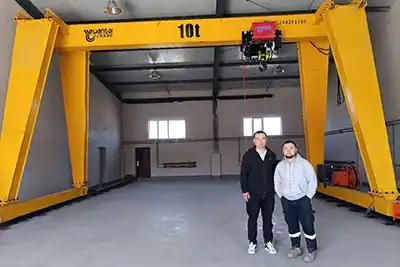
15 Ton Gantry Crane Kits | Local Assembly & Bulk Orders
Gantry crane kits are becoming a common choice for industrial operations that need reliable lifting solutions but also value flexibility. Unlike fully assembled cranes, these kits arrive in manageable components—including main girders, end trucks, hoists, and electrical parts—that can be assembled locally. This modular setup not only makes transport easier but also gives buyers control over the assembly process and site-specific adjustments.
For many workshops, fabrication yards, and steel plants, a 15-ton gantry crane strikes the right balance. It provides enough lifting capacity for heavy materials like steel plates, machinery parts, and construction components, without requiring oversized foundations or specialized transport. It’s strong, practical, and widely applicable across industries that handle mid-to-heavy loads.
The real advantage comes when buyers can assemble these cranes locally. This approach allows companies to save on shipping costs, reduce dependence on overseas technical teams, and make adjustments to fit their site’s specific needs. For bulk orders, these benefits multiply, offering operational efficiency, standardization, and cost savings across multiple units.
Why 15-ton gantry crane kits appeal to buyers:
- Local Assembly Flexibility: Buyers can modify span, height, and hoist setup to match their facility and workflow.
- Cost Efficiency: Lower shipping costs, fewer import fees, and reduced downtime compared to fully assembled cranes.
- Bulk Order Advantages: Easier maintenance, uniform performance across multiple units, and potential volume discounts.
- Versatile Capacity: 15 tons covers a wide range of industrial lifting tasks without overcomplicating the installation process.
Choosing a 15-ton gantry crane kit for local assembly and bulk procurement is a practical strategy. It allows buyers to plan operations efficiently, save money, and ensure cranes are tailored to the actual needs of the site.
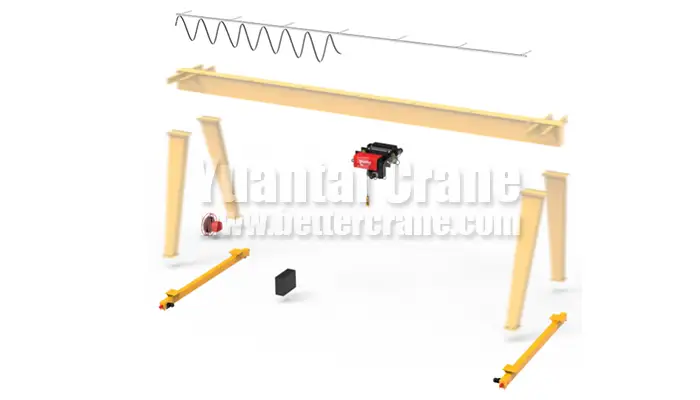
Gantry Crane Kits
Gantry crane kits are designed to make lifting solutions more practical and adaptable for buyers who can assemble locally. Instead of receiving a fully assembled crane, buyers get all the necessary components in a modular form, ready to be put together on-site. This approach not only simplifies transport but also gives more control over installation and adjustments according to specific operational needs.
Definition and Components
A standard gantry crane kit typically includes:
- Main Girders: The primary support beams that determine the crane’s span and load capacity.
- End Trucks: Wheels and frame assemblies that allow the crane to move along the runway or floor.
- Hoisting Mechanisms: Either manual or electric hoists, depending on lifting requirements.
- Electrical System: Controls, wiring, and motors for electric hoists.
- Bolts & Fasteners: Essential hardware to assemble all components securely.
Practical tip: Buyers can choose between manual or electric hoists depending on lifting frequency, operational speed, and budget. Manual hoists work well for light-duty or occasional use, while electric hoists provide efficiency for frequent or heavier lifts.
Key Differences from Fully Assembled Cranes
- Modular Design: Components are shipped separately, making transport easier, especially for large spans or remote locations.
- Local Adaptability: Assembly on-site allows adjustments to fit your workshop, yard, or production line, which is not possible with pre-assembled cranes.
Why this matters for buyers:
- Lower shipping costs because oversized pre-assembled cranes are expensive to transport.
- Flexibility to adapt crane specifications to your exact needs without waiting for factory customization.
- Easier handling and storage of components before assembly.
Advantages of Local Fabrication
One of the main reasons buyers choose 15-ton gantry crane kits is the ability to assemble them locally. This approach brings multiple advantages that go beyond simple cost savings. It allows companies to adapt cranes to their unique site conditions, take advantage of local skills, and speed up project timelines.
Assembling cranes locally significantly reduces overall costs:
- Lower Shipping Costs: Smaller, modular components are easier and cheaper to transport than fully assembled cranes.
- Reduced Import Duties: Many countries levy lower fees on parts compared to complete machinery.
- Avoid Heavy-Lifting Equipment Fees: On-site assembly eliminates the need for large cranes to offload and install a fully pre-assembled unit.
Local assembly allows buyers to tailor the crane to their exact operational needs:
- Adjust the span to fit between workstations or production lines.
- Modify the height to clear ceilings, pipes, or other overhead obstacles.
- Configure trolley placement or hoist types to match workflow and lifting frequency.
Practical tip: Even small adjustments can make a big difference in daily efficiency and safety. Buyers can ensure the crane matches their workflow rather than forcing operations to adapt to the crane.
Compared to fully pre-assembled cranes, local assembly shortens lead times:
- Components can be shipped as soon as production is complete.
- On-site assembly can often be completed within days rather than weeks.
- Less dependency on specialized installation teams from abroad.
Local engineers and technicians bring valuable knowledge to the assembly process:
- Familiarity with local standards, infrastructure, and safety regulations ensures proper installation.
- Ability to troubleshoot minor issues on-site, avoiding delays.
- Opportunity to train your own staff for future maintenance and minor upgrades.
By choosing local fabrication, buyers not only save money but also gain flexibility and control over the crane installation. It's a practical approach that combines efficiency, safety, and cost-effectiveness, especially for facilities ordering multiple units or working with unique site conditions.
Ideal Use Cases for Bulk Orders
For buyers considering multiple 15-ton gantry crane kits, there are several scenarios where ordering in bulk makes practical and financial sense. Bulk procurement is not just about getting a better price—it also streamlines operations, ensures consistency, and reduces long-term maintenance headaches.
Facilities that handle heavy materials on a large scale can benefit the most:
- Steel Mills: Consistent lifting capacity for slabs, coils, and machinery parts across the production line.
- Warehouses: Streamlined material handling for multiple storage zones.
- Shipyards: Coordinated crane operations for moving large ship components safely.
- Construction Yards: Handling heavy prefabricated structures and equipment efficiently.
When a facility needs more than one crane, bulk orders bring operational advantages:
- Uniform Equipment: Standardized components make maintenance easier and reduce spare parts variety.
- Simplified Training: Operators can learn on one crane and apply the same skills to all units.
- Consistent Performance: Multiple cranes perform predictably across different areas, improving workflow efficiency.
Buying in bulk isn't just convenient—it's economical:
- Volume Discounts: Suppliers often offer reduced rates for multiple units.
- Economies of Scale: Ordering several kits together lowers per-unit shipping, handling, and installation costs.
- Reduced Downtime Costs: With multiple units, operations can continue smoothly even when one crane undergoes maintenance.
Bulk procurement of gantry crane kits is ideal for large-scale operations or facilities that want uniform performance across multiple workstations. It ensures cost savings, operational efficiency, and easier long-term management, making it a smart choice for industrial buyers.
Step-by-Step Guide to Local Assembly
Assembling a 15-ton gantry crane kit locally may sound daunting at first, but with proper planning and organization, it can be done efficiently and safely. This guide breaks down the process into practical steps that buyers can follow.
Before unpacking the components, it's essential to prepare the site:
- Site Inspection: Check for level ground, sufficient clearance, and any overhead obstacles such as pipes or beams.
- Foundation or Runway Beam Setup: Ensure foundations or rails are properly aligned and capable of supporting the crane's weight and load.
- Safety Checks: Confirm that lifting equipment, tools, and personal protective gear are ready and comply with local regulations.
Practical tip: Taking the time to inspect and prepare the site can save days of rework later.
Once the site is ready, you can start assembling the crane components:
- Installing Main Girders and End Trucks: Position and secure the main beams to the end trucks, ensuring they are level and properly aligned.
- Mounting the Hoist and Trolley System: Attach the hoist (manual or electric) and ensure the trolley moves smoothly along the girder.
- Electrical Wiring and Testing: Connect motors, controls, and safety systems according to the wiring diagram. Test all circuits before load testing.
Practical tip: Work in small, manageable sections and double-check alignment at each stage. Even minor misalignments can affect crane operation and safety.
Before putting the crane into regular use, perform thorough checks:
- Load Testing: Use test weights to verify that the crane can safely lift its rated capacity.
- Operational Checks: Ensure smooth movement of the hoist and trolley, proper braking, and emergency stop functions.
- Certification Considerations: Depending on local regulations, some installations may require inspection and certification by a licensed engineer.
- Leverage Local Resources: Use local welding teams, lifting equipment, and skilled manpower to speed up assembly.
- Recommended Timeline: For a 15-ton crane kit, assembly can typically be completed in 3–5 days with a small skilled team. Larger sites or multiple units may take longer but planning ahead reduces delays.
- Documentation: Keep manuals, diagrams, and supplier guidance accessible on-site. It helps avoid mistakes and ensures future maintenance is straightforward.
Buyer Considerations
When planning to purchase a 15-ton gantry crane kit, buyers need to think ahead. Making the right choices at this stage ensures the crane meets operational needs, stays safe, and remains adaptable for future requirements.
Before requesting a quotation, gather key details about your site and operational needs:
- Span: Measure the distance the crane needs to cover. Ensure it fits your workshop, yard, or production line.
- Lifting Height: Determine the maximum height the hoist must reach, including clearance for ceilings or overhead obstacles.
- Power Supply: Confirm voltage, phase, and frequency available at your site, as this affects hoist motor selection.
- Frequency of Use: Heavy-duty, daily operations may require an electric hoist, while occasional lifts can rely on a manual hoist.
- Operating Environment: Consider indoor vs. outdoor use, exposure to heat, moisture, dust, or corrosive materials, which may affect protective coatings and maintenance schedules.
Practical tip: Providing complete site and operational details upfront allows suppliers to offer accurate, safe, and cost-effective solutions.
Selecting a reliable supplier is as important as choosing the crane itself:
- Certifications: Look for CE or ISO-certified manufacturers to ensure quality and compliance.
- Experience with Bulk Orders: Suppliers familiar with multiple-unit projects can provide better guidance and support.
- Assembly Support: Choose a supplier who provides detailed manuals, diagrams, and remote or on-site assembly guidance to simplify local installation.
A good crane kit should not be a one-time solution:
- Flexibility for More Units: Plan your layout so additional cranes can be added as operations grow.
- Upgrade Options: Some kits allow upgrading hoist capacity or modifying trolley configurations, keeping your equipment future-ready.
Thinking through these considerations helps buyers avoid costly mistakes, ensures smooth installation, and provides flexibility for future needs.
Conclusion
15-ton gantry crane kits provide a practical and cost-effective solution for buyers who have the capability to assemble locally. By shipping in modular sections, these kits reduce transportation challenges, allow on-site customization, and give buyers more control over installation and operational setup.
For companies ordering multiple units, bulk procurement offers clear advantages:
- Reduced Costs: Volume discounts, lower shipping fees, and minimized import duties make bulk orders economical.
- Standardization: Using identical cranes across a facility simplifies maintenance, operator training, and spare parts management.
- Faster Deployment: With local assembly, multiple units can be installed and put into operation quickly, keeping production on schedule.
To get the most accurate and efficient solution, buyers should provide detailed site and operational information when requesting quotations. Details like crane span, lifting height, frequency of use, and environmental conditions help suppliers design a kit that fits perfectly and performs reliably from day one.