
Workshop Design Considerations for Overhead Cranes in Qatar
Workshop Design Considerations for Overhead Cranes in Qatar
Optimize ceiling height, span & hook approach when planning an overhead crane for low-ceiling workshop Qatar installations.Get workshop overhead crane!
Introduction
Qatar has seen rapid growth in manufacturing, fabrication, and heavy equipment servicing over the last decade. As new workshops rise in cities like Doha, Al Rayyan, and Al Wakrah, more industrial builders are paying closer attention to the practical aspects of overhead crane installation—especially in facilities with limited ceiling height. Whether it's for plastic molding, die and tool repair, or general mechanical work, having the right crane system in place can make or break your workshop's efficiency.
But here’s the thing: crane integration isn’t something you should leave for later. By the time the roof is built and machines are installed, it’s often too late—or at least more expensive—to adapt the layout for proper crane operation. That’s why planning for crane requirements should be part of the initial design process, not a last-minute fix.
Overhead cranes are not all the same. If you’re working in a low-ceiling workshop in Qatar, for example, you need to think carefully about three key things: ceiling height, span, and hook approach. These aren’t just technical terms—they directly affect how well the crane will serve your daily lifting tasks and whether you’re going to hit limitations that could have been avoided from the start.
Here’s how each factor plays into the overall workshop design:
- Ceiling height: Determines the available lifting height and whether a standard or low-headroom hoist is needed.
- Span: Refers to the distance between crane runways; this affects the structural requirements of the workshop and what crane type is best suited.
- Hook approach: Impacts how close the crane’s hook can get to the walls or ends of the bay—critical for small or narrow workspaces.
If your workshop is already built and you're struggling with limited lifting clearance or restricted movement, these issues often tie back to these three fundamentals. Planning ahead not only saves you from costly retrofits but also helps your operations run smoother from day one.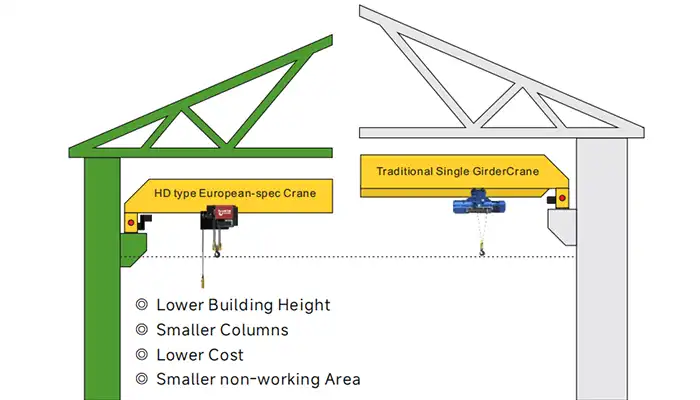
European style single girder overhead cranes for loads handling with capacity from 1 ton to 20 ton which can be used to increase lifting height in lower height workshop
Ceiling Height and Crane Selection
When you're working with a low-ceiling workshop in Qatar, ceiling height isn’t just a number—it’s one of the biggest factors that determines whether your overhead crane setup will actually do what you need it to do. Many buyers overlook this during early planning, only to find out later that the hook doesn't lift high enough, or the crane scrapes too close to lighting fixtures, ducts, or roof structures.
Let’s break it down into real challenges and how to work around them.
Challenges in Low-Ceiling Workshops
In compact industrial spaces, there are two main issues that come up again and again: limited lifting height and restricted headroom.
- Lifting height constraints: If the ceiling is low, your hook might not rise high enough to lift molds, dies, or tooling equipment above other machines or storage racks.
- Obstruction hazards: HVAC ducts, lighting, cable trays, or roof trusses may block the crane’s movement, creating safety and collision risks.
- Reduced hook travel: The hook can’t move far enough up or to the sides, which limits how you handle materials in tight work zones.
- No room for error: When the crane fits just beneath the roof with only a few centimeters of clearance, any misalignment during installation can lead to major operational problems.
In workshops where every inch counts—like in mold repair or part maintenance facilities—you can’t afford these limitations.
Solutions
Luckily, there are smart crane designs that help make the most out of limited vertical space.
- Low headroom electric hoists: These are designed to keep the hoist drum and motor close to the beam, reducing the overall height of the system.
- Compact trolley configurations: Side-mounted or integrated trolleys reduce the space taken up by the hoist and improve both vertical and horizontal travel.
- Single girder cranes with short end carriages: These allow for a smaller footprint on both ends of the crane, giving more usable space along the runway.
- European-style cranes: Typically use compact and lightweight components. Their low-profile hoist and smooth movement help maximize lifting height without needing to raise the roof.
This kind of setup is especially useful for industries like plastic injection or light fabrication, where the roof isn’t very high but the need for precision lifting is constant.
Practical Tips
If you're building or retrofitting a workshop in Qatar, here are a few real-world planning numbers and reminders:
Minimum ceiling height by tonnage:
- 3.5–4 meters for 1-ton to 3-ton cranes
- 4.5–5 meters for 5-ton cranes
- 5.5–6.5 meters for 10-ton cranes
- Add 1–1.5 meters clearance for future upgrades or load variations
Allow for safety clearance:
- At least 0.5 meters between the highest crane point and the roof or ceiling
- Don’t forget ventilation, lighting, and fire suppression systems
Double-check hook-to-floor distance:
- This is often called “true lift” or “net lift”—make sure your hoist has enough to lift your tallest item completely clear
Ask for low-headroom options upfront:
- Don’t assume the default crane design will fit—tell your supplier the actual ceiling height from floor to lowest obstruction
Planning with these in mind can save you time, money, and frustration. Want help? A qualified crane supplier can run a quick layout check and tell you exactly what configuration suits your workshop best.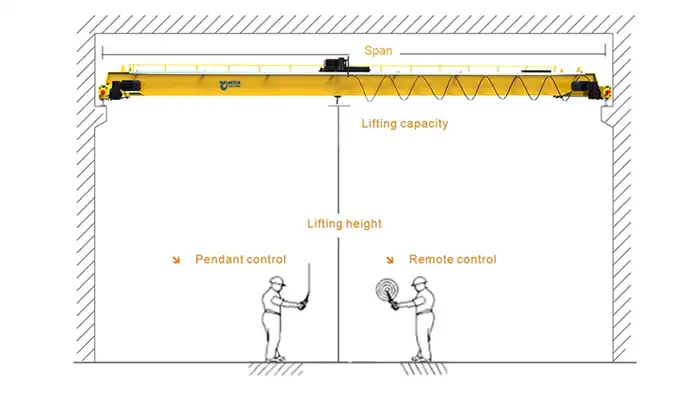
crane span and lfiting height of dobule girder overhead crane with European style
Workshop Span and Crane Configuration
The span of your workshop—the clear width between the runway beams—is another critical piece of the puzzle when selecting an overhead crane. In Qatar, where workshops are often custom-built or retrofitted in industrial zones, getting the span right from the beginning helps avoid unnecessary structural changes later. It also ensures that the crane operates safely and efficiently across the entire workspace.
How Span Affects Crane Type
The type of overhead crane you choose depends heavily on how wide your workshop is. Span directly affects not only the type of girder but also the cost, support structure, and even the type of hoist that can be used.
Short span (up to 12–15 meters)
- Best suited for single girder cranes
- Economical and easier to install
- Ideal for smaller workshops handling light to moderate loads
- More compact and suitable for low ceiling heights
Medium to long span (15 meters and above)
- Requires double girder or box girder cranes for added stiffness and load capacity
- Better for workshops with large work areas or where heavy tools/molds need to be moved across a wide bay
- Provides more hook height and longer trolley travel
In simple terms, single girder cranes are great when you don’t need to cover a wide area. But once your building starts stretching beyond the basics, it’s time to look at heavier-duty options.
Design Considerations
Span isn’t just about how wide your building is—it also ties into the overall structure of the workshop. If your building can’t support the crane, the whole system falls apart, literally and financially.
Runway beam placement
- Needs to be perfectly level and aligned across the entire length of the span
- Usually supported by columns, steel frames, or concrete walls—depending on the crane size
- Inaccurate placement can cause misalignment, excessive wear, or unsafe operation
Column spacing
- Needs to match the selected crane’s span and girder type
- Wider spacing often demands stronger, heavier beams (costlier)
- Tight spacing may require special bracket support or building reinforcement
Structural compatibility
- Some workshops are built for gantry cranes or jib arms, not overhead cranes—verify roof structure load capacity before installing
- The heavier the crane (especially double girder types), the more stress is applied to the support beams and joints
If you’re planning from scratch, always involve both the crane supplier and the civil engineer to make sure the span and crane type match the building’s real-world limits.
Local Examples
In Qatar’s mold and light machinery sectors, spans vary depending on the size and layout of production equipment. Here are some common ranges:
- 8–12 meters: Typical for small mold repair workshops, often using 2–3 ton single girder cranes. These setups prioritize maneuverability and lifting precision in tight bays.
- 12–18 meters: Common in plastic mold factories with multiple workstations. Usually equipped with 5-ton overhead cranes, either single or light double girder based on lifting height needs.
- 18–25 meters: Found in larger mechanical service plants or machine assembly workshops. These require 10-ton or 15-ton double girder cranes for better lifting stability and broader coverage.
In each case, knowing your workshop’s span early on allows you to select the right crane design, avoid structural issues, and reduce total installation cost. A little upfront planning goes a long way.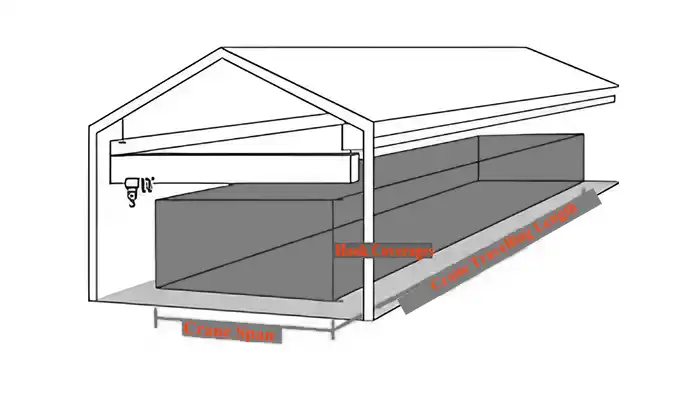
Hook Approach and Usable Coverage
In a small or tightly packed workshop, every bit of space counts. That’s where hook approach becomes an essential factor—not just a technical detail. If your overhead crane can't bring the hook close enough to the walls or ends of the runway, you lose valuable floor space and waste time shifting loads manually.
For buyers in Qatar who often work with compact workshops—like tool shops, mold repair stations, or light machinery units—understanding and optimizing hook approach can save hours of labor each week.
What is Hook Approach?
Hook approach refers to how close the crane’s hook can move toward the side walls (cross travel) and toward the ends of the crane runway (long travel).
- Side hook approach: The shortest distance between the hook and the side wall of the workshop.
- End hook approach: The distance between the hook and the end of the runway track.
- These measurements determine the usable coverage area of the crane and how much floor space you can actually reach during lifting and positioning.
If the hook can’t reach a load near a wall or tucked in a corner, it forces your team to reposition the item using forklifts or manual effort—which slows down work and increases risk.
Importance in Compact Workshops
Hook approach is especially important in workshops where space is already tight. If the hook stops too far from the wall or tool station, your workflow becomes less efficient.
Maximizes usable floor area
- In low-ceiling workshops, every centimeter of reach matters
- A good hook approach lets you use space right up to the edge of the building
Reduces manual repositioning
- You can lift directly from benches, storage areas, or machines without needing to pull the item into open space first
Improves workflow in narrow bays
- When machinery is packed close together, better hook travel helps move tools and parts without awkward lifting angles
In short: poor hook approach equals lost time and frustrated workers.
Design Adjustments
To get the best hook approach in a low-ceiling or compact workshop, certain crane design features can make a big difference.
Short end truck designs
- Reduces the size of the crane’s end carriages, allowing the hook to get closer to the runway ends
- Especially useful when the runway is installed wall-to-wall in a narrow building
Side-mounted or compact hoists
- Instead of sitting directly under the beam, the hoist is offset to the side
- This design gives you extra horizontal hook travel, improving side hook approach without raising the roof height
Precise runway placement
- Align the runway as close to the workshop walls as safely possible
- Even a 200–300mm gain in placement can expand your crane’s coverage noticeably
- Also helps avoid dead zones—those unreachable areas near the walls or under beams
If you’re designing a new workshop or retrofitting an existing one in Qatar, it’s worth asking your crane supplier to calculate actual hook approach for your layout. Small tweaks in girder length, hoist positioning, or runway spacing can add up to major gains in usable lifting coverage.
Integrated Planning Tips for Workshop Owners in Qatar
When it comes to setting up an overhead crane in your workshop, it's not just about picking a crane and calling it a day. Especially in Qatar—where climate conditions, electrical standards, and building types vary from one industrial zone to another—it pays to think ahead. A well-planned crane system will save you time, money, and plenty of operational headaches in the long run.
Here are some practical planning tips that every workshop owner in Qatar should keep in mind:
Align Crane Specifications with Machinery Layout and Material Flow
Before choosing the crane, take a good look at your workshop’s layout.
- Map out major equipment like CNC machines, injection molding units, assembly tables, or repair benches.
- Identify load pick-up and drop-off points—this tells you where the crane needs to reach.
- Make sure the hook path doesn’t interfere with high equipment or building columns.
- If you have workstations along the walls, ensure the crane’s hook approach gets close enough to them (see Section IV).
- Plan for material movement: raw material in, finished goods out—can the crane help both processes?
You don’t want a crane that moves beautifully in theory but gets blocked by a machine corner in practice.
Account for Regional Conditions: Heat, Humidity, and Dust
Qatar’s climate is hot, dry, and often dusty—especially in industrial areas near construction or open yards. That’s not just uncomfortable for workers; it also affects crane components.
- Choose motors and control systems rated for high ambient temperatures (45–55°C).
- Make sure the crane is IP-rated or protected against fine dust—this can clog motors, limit hoist life, or damage electronics.
- Use sealed electrical enclosures or weatherproof panels where needed.
- Consider stainless steel or anti-corrosion finishes if you're near coastal zones like Mesaieed or Ras Laffan.
These small upgrades extend crane lifespan and reduce breakdowns—especially during Qatar’s intense summer months.
Plan for Future Expansion—Consider Modular Crane Structures
Your first crane may not be your last. So build in some flexibility from the start.
- Use modular crane kits or extendable runways that can be lengthened later.
- Make sure your building columns or trusses can support added capacity (e.g., upgrading from 5 tons to 10 tons later).
- Consider adding side bays for a second crane or monorail in the future.
- Leave space for electrical panel expansion and extra control wiring if needed later.
Even if you don’t plan on expanding now, laying the groundwork makes upgrades faster and more affordable when business grows.
Include Local Electrical Requirements and Approvals
Don’t skip the paperwork—Qatar has strict rules when it comes to industrial power and electrical safety.
- Confirm your workshop’s power supply (typically 415V, 3-phase, 50Hz).
- Verify that your crane control panel complies with Kahramaa electrical standards.
- Include circuit breakers, ELCBs, and grounding systems per local code.
- If your crane is large (10 tons and above), check whether an engineering approval or municipality inspection is required before commissioning.
- Ask your supplier to include full electrical schematics, cable layout drawings, and load calculations.
Getting these things sorted early can prevent project delays and safety issues during installation.
In short: Good crane planning isn’t just technical—it’s practical. Think about your layout, plan for the climate, keep future needs in mind, and stay compliant with local standards. If you’re unsure where to start, a professional crane supplier in Qatar can guide you through a site assessment and help you make the right calls.
Case Reference: Overhead Crane for Low-Ceiling Workshop in Qatar
To see how smart planning makes a difference, let’s look at a real-world example from Doha. One of our customers, a mid-sized plastic mold and tool maintenance company, was struggling with limited ceiling height and awkward load handling in their 14-meter span workshop. They needed a crane that could lift and move heavy mold bases and tooling parts—but their ceiling was barely 4.2 meters from floor to truss.
Project Overview
- Crane Type: 5-ton single girder overhead crane
- Hoist: Low-headroom wire rope hoist with compact side-mounted trolley
- Span: 14 meters
- Lifting Height: Net lift of 3.5 meters within a total ceiling height of 4.2 meters
- Location: Doha Industrial Area
- Application: Lifting plastic mold bases, core inserts, and heavy repair tools
Before: Space Wasted and Limited Reach
Before the crane installation, the workshop relied on a combination of jib cranes and forklifts. This setup created several workflow issues:
- Mold bases had to be manually shifted to open zones where forklifts could access them.
- Jib cranes couldn’t reach across the full width of the workspace, leaving some zones completely unused.
- Frequent repositioning slowed down operations and created safety hazards when moving loads through narrow aisles.
- Operators had to schedule lifting jobs around available space instead of lifting loads directly where they were used.
After: Space Optimization and Better Coverage
Once the low-headroom 5-ton overhead crane was installed, the improvements were immediate and noticeable.
- Improved hook approach: The side-mounted hoist allowed the hook to reach within 350mm of the wall—far better than standard trolleys.
- Reduced dead zones: With full-span coverage and precise trolley movement, previously unused corners of the shop floor became active work areas.
- No need for repositioning: Loads could be picked up and dropped directly at mold repair benches and inspection tables.
- Streamlined layout: Removing the jib cranes opened up more floor space, improving workflow paths and safety.
Customer Feedback
“We were honestly surprised by how much usable space we gained. It’s not just about lifting the weight—it’s about lifting it where we actually need it. The low-headroom crane solved that perfectly.”
The customer also noted that average job time on mold servicing dropped by 20–25%, and workers found the new setup easier to control thanks to the remote pendant system and smooth trolley travel.
This case is a strong reminder: even in workshops with low ceilings, the right crane design can dramatically improve efficiency—without the need for structural changes.
Conclusion & Recommendation
When it comes to installing an overhead crane for a low-ceiling workshop in Qatar, success starts with smart planning. As we've seen, three main design pillars—ceiling height, span, and hook approach—will determine whether your crane system works efficiently or causes costly limitations down the line.
- Ceiling height dictates your lifting capacity and hoist configuration.
- Span influences your choice between single or double girder designs and affects your building structure.
- Hook approach determines how much of your workshop floor is actually usable during lifting operations.
These aren’t just technical specs—they directly impact daily productivity, space utilization, and worker safety.
If you’re building a new workshop or upgrading an existing one, get your crane supplier involved early in the design phase. A proper consultation can help match your workflow needs with the right crane configuration, saving you time, money, and unnecessary retrofits later.
At the end of the day, the crane isn’t just a lifting tool—it’s part of your workshop’s working heart. Design it right from the beginning, and it’ll support your operations for years to come.
Need help with your workshop layout or crane selection in Qatar?
Send us your ceiling height, span, and lifting needs—we’ll offer a solution that fits your space, budget, and workflow.