Transformer Yard Gantry Cranes 20–120 Tons: Selection Guide
Introduction
Transformer yards in power plants and energy projects are busy and often exposed to harsh environmental conditions. These yards handle some of the heaviest electrical equipment, including transformers, switchgear, and auxiliary components. Proper material handling is not just about moving equipment—it’s about safety, efficiency, and protecting expensive assets.
Gantry cranes are the backbone of transformer yard operations. They allow teams to move heavy transformers quickly, position them accurately, and perform maintenance without unnecessary delays or risks. Choosing the right type and capacity of crane ensures that every lift is smooth, precise, and safe.
Typical Load Range:
- 20–120 tons for standard transformer and switchgear handling.
- Some yards may require multiple cranes or high-capacity models for oversized transformers.
Practical Notes for Buyers:
- Identify the heaviest load you need to lift before specifying crane capacity.
- Consider environmental conditions: rain, wind, and dust can affect crane performance.
- Plan the layout for multiple lifts if the yard is large or the equipment needs frequent movement.
Related Keywords: transformer yard gantry crane Uzbekistan, outdoor gantry crane Uzbekistan, heavy-duty gantry crane, power plant material handling crane
Types of Transformer Yard Gantry Cranes
Rail-Mounted Gantry Cranes
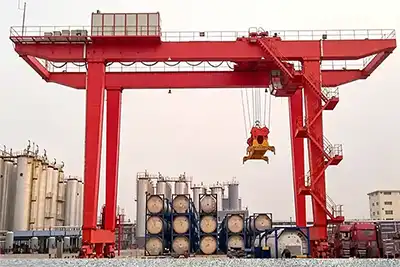
Rail-mounted gantry cranes run on fixed rails installed along the transformer yard. They are ideal for repeated, precise lifting operations where equipment locations are fixed and predictable.
 U Frame Gantry Crane with ground rail travelling
 Advantages:
- Stable operation with minimal sway, even under full load.
- High precision for placing transformers or switchgear exactly where they need to go.
- Suitable for long-term, fixed layouts with frequent heavy lifts.
Typical Use Cases:
- Standard transformer installation in large outdoor yards.
- Heavy switchgear placement and alignment.
- Projects where repeated lifting along the same path is required.
Rubber-Tired Gantry Cranes
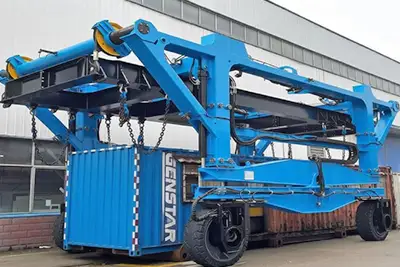
Rubber-tired gantry cranes are mobile cranes that can move freely across transformer yards without rails. They are useful for yards with changing layouts or temporary installation projects.

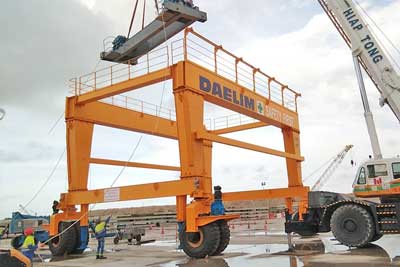 U frame gantry crane with rubber tyred wheel travelling
 Advantages:
- Mobility across uneven surfaces and areas without permanent tracks.
- Flexible for yards where equipment locations are not fixed.
- Can handle multiple types of heavy electrical equipment with minimal setup.
Typical Use Cases:
- Temporary transformer handling sites or flexible yard layouts.
- Outdoor yards with varying equipment sizes and frequent reorganization.
- Projects requiring quick repositioning of the crane for different lifts.
Typical Transformer Sizes, Handling Requirements, and Gantry Crane Selection
This section summarizes typical transformer capacities, weights, handling requirements, and recommended gantry crane types commonly used in power plants, substations, and energy projects.
Typical Capacity: 1–10 MVA
Typical Weight: 5–20 tons
Typical Handling Requirements
- Single-point or four-point lifting using standard lifting lugs
- Moderate positioning accuracy
- Frequent lifts during routine maintenance
- Limited yard space; short travel distances
- Normal wind tolerance
Suggested Gantry Crane Types
- Single Girder Gantry Crane
- Rubber Tyred Gantry (RTG) Crane (for flexible yard layouts)
Typical Crane Capacity: 10–30 tons (with 20–30% safety margin)
Why Suitable: Economical, easy installation, low foundation requirement, sufficient precision for auxiliary equipment.
Typical Capacity: 10–100 MVA
Typical Weight: 30–100 tons
Typical Handling Requirements
- Four-point lifting with spreader beam
- Controlled lifting speed to reduce mechanical stress
- Precise alignment onto foundation plinths
- Outdoor operation with wind speed limits
- Occasional heavy lifts rather than daily operation
Suggested Gantry Crane Types
- Double Girder Gantry Crane
- Rail-Mounted Gantry Crane (RMG)
Typical Crane Capacity: 40–120 tons
Why Suitable: Higher structural rigidity, better load control, suitable for longer spans and larger transformer footprints.
Typical Capacity: 100–500+ MVA
Typical Weight: 150–400+ tons
Typical Handling Requirements
- Multi-point lifting using custom spreader beams
- Extremely low lifting and lowering speed (creep mode)
- High positioning accuracy (±5 mm often required)
- Lifting usually performed without oil, followed by onsite filling
- Strict wind, ground bearing, and safety management requirements
Suggested Gantry Crane Types
- Heavy-Duty Double Girder Gantry Crane
- Twin-Gantry Crane System (synchronous lifting)
Typical Crane Capacity: 120–300+ tons (single crane)
or tandem gantry cranes with synchronized control
Why Suitable: Provides high stability, redundancy, and precise synchronized movement for ultra-heavy and high-value equipment.
Typical Capacity: 500–1,200 MVA
Typical Weight: 400–800+ tons
Typical Handling Requirements
- Sectional lifting or staged assembly
- Synchronized lifting systems with load monitoring
- Very low wind tolerance (often ≤6–8 m/s)
- Structural verification of ground, rails, and foundations
- Dedicated lift plans and third-party inspection
Suggested Gantry Crane Types
- Custom-Engineered Heavy Gantry Crane System
- Multiple Rail-Mounted Gantry Cranes with Synchronous Control
- Hydraulic Jacking + Gantry Combination Systems
Typical Crane Capacity: 300–800+ tons (system capacity)
Why Suitable: Only custom solutions can meet the structural, safety, and precision demands at this scale.
| Transformer Category | Weight Range | Key Handling Requirement | Recommended Gantry Crane Type | Typical Capacity |
|---|---|---|---|---|
| Auxiliary Transformer | 5–20 t | Frequent lifts, compact yard | Single girder / RTG | 10–30 t |
| Medium Power Transformer | 30–100 t | Spreader beam, precise placement | Double girder / RMG | 40–120 t |
| Main Power Transformer | 150–400 t | Ultra-slow lift, high precision | Heavy double girder / Twin gantry | 120–300+ t |
| Ultra-Large Transformer | 400–800+ t | Synchronous lift, staged handling | Custom multi-gantry system | 300–800+ t |
Buyer and Engineer Considerations — Often Overlooked but Critical
Many procurement decisions fail because crane capacity is matched only to the transformer nameplate weight, not the actual lifting system weight.
What Must Be Included in Rated Load Calculations
Total lifting load =
- Transformer dry weight (or maximum transport weight)
- Spreader beam / lifting frame
- Slings, shackles, hooks, lifting eyes
- Optional lifting fixtures (tilting beams, turning devices)
- Dynamic load factors (starting, stopping, wind, micro-movements)
- Mandatory safety margin (typically 15–30%)
Practical Example
- Transformer weight: 80 tons
- Spreader beam + rigging: 8–10 tons
- Safety margin (20%): ~18 tons
Minimum crane capacity required: 110–120 tons
Common Buyer Mistake
Ordering a 100-ton gantry crane for an 80-ton transformer, leaving no margin for safe operation.
A gantry crane that is structurally strong but poorly controlled can still damage transformers.
Why Control Matters in Transformer Handling
- Transformers contain delicate internal windings and insulation
- Sudden acceleration or micro-shock can cause internal displacement
- Re-positioning accuracy is often within ±5–10 mm
Key Control Features Buyers Should Specify
Inverter (VFD) Drives
- Smooth acceleration and deceleration
- Eliminates mechanical shock loads
- Reduces stress on transformer structure
Creep Speed / Micro-Movement Control
- Typical creep speed: 0.2–0.4 m/min
- Essential for precise foundation placement
- Often underestimated in specifications
Synchronized Lifting (for twin or multi-gantry systems)
- Load deviation control (≤5%)
- Real-time load monitoring on each hoist
- Automatic correction when imbalance occurs
Common Buyer Mistake
Specifying only "VFD included" without defining:
- Speed ranges
- Synchronization accuracy
- Redundancy or monitoring requirements
Transformer yards are typically open, civil-engineering-driven spaces, not industrial workshops.
Rail Alignment Issues
Slight rail deviation causes: Uneven wheel load distribution, Increased structural stress on gantry legs, Risk of skewing during lifting
Typical Alignment Tolerance
- Lateral deviation: ≤1/1000 of span
- Height difference: ≤5 mm
- Parallelism over full travel length
Ground Bearing Capacity
- Heavy gantry cranes may impose: 200–500 kN per wheel or more
- Poor ground preparation can result in: Rail settlement, Crane instability during lifting, Long-term structural deformation
Buyer Responsibility Often Missed
- Ground and rail preparation is not included in most crane supply scopes
- EPCs must coordinate civil + crane design early
Power plants evolve. Transformer sizes and ratings increase with capacity upgrades and grid requirements.
Why Future-Proofing Matters
- Replacing a gantry crane is far more expensive than initial oversizing
- Cranes have a service life of 20–30 years
- Transformers are often upgraded within 10–15 years
Smart Buyer Strategies
Capacity Reserve
- Select crane with 20–30% capacity buffer beyond current transformer
- Upgrade-friendly hoist and structure design
Structural & Span Considerations
- Allow extra hook height for taller future units
- Design rail span for larger transformer footprints
- Ensure crane legs allow wider clearance
Electrical & Control Scalability
- Control system ready for: Additional hoists, Synchronized lifting, Remote or automated control upgrades
Common Buyer Mistake
Ordering the lowest-cost crane that just meets today's transformer, forcing full crane replacement during plant expansion.
In transformer yard projects, most risks do not come from lifting capacity alone, but from underestimated loads, inadequate control precision, insufficient civil coordination, and lack of long-term planning.
A well-selected gantry crane:
- Handles more than the transformer weight
- Moves loads slowly, smoothly, and synchronously
- Operates on properly designed rails and foundations
- Remains suitable for future plant upgrades
Key Specifications and Selection Criteria
Selecting the right gantry crane for a transformer yard starts with understanding the specific requirements of your equipment and yard layout. Each factor—from weight to environmental conditions—can affect performance, safety, and efficiency.
Key Specifications to Consider:
- Crane Capacity: Match the crane to the heaviest transformer or switchgear, typically 20–120 tons.
- Span and Lifting Height: Ensure the crane can cover the full yard and lift equipment with adequate clearance.
- Travel Distance: Decide between single or multiple gantry setups depending on yard size and workflow.
- Environmental Considerations: Account for outdoor exposure, wind, dust, and corrosion; protective coatings may be necessary.
- Load Handling Features: Look for dual hoists, precise positioning, and anti-sway systems to ensure safe and accurate lifts.
Safety and Redundancy Considerations
Safety is a top priority in transformer yards, where cranes handle extremely heavy and valuable equipment. Proper safety measures and redundancy features not only protect personnel but also ensure uninterrupted operations.
Essential Safety and Redundancy Features:
- Dual Hoists or Backup Motors: Provide redundancy for critical lifts, so operations can continue even if one hoist fails.
- Overload Protection, Emergency Stops, and Limit Switches: Prevent equipment damage and reduce the risk of accidents.
- Regulatory Compliance: Ensure cranes meet Uzbekistani regulations as well as international standards like ISO and CE.
- Operator Training and Safety Protocols: Well-trained operators and clear procedures are essential for safe handling of heavy loads.
Implementing these safety features reduces operational risks and ensures that crane performance remains reliable under demanding conditions. Regularly reviewing and updating safety protocols can prevent costly downtime and maintain compliance with standards.
Best Practices for Operation and Maintenance
Proper operation and maintenance are key to keeping transformer yard gantry cranes safe, reliable, and efficient. A well-maintained crane reduces unexpected downtime, extends equipment lifespan, and ensures every lift is smooth and precise.
Practical Maintenance Practices:
- Inspection Schedules: Conduct daily visual checks, monthly detailed inspections, and annual comprehensive evaluations of critical components.
- Lubrication and System Checks: Regularly lubricate moving parts, inspect ropes or chains, and test electrical systems to prevent failures.
- Handling Techniques: Use proper lifting practices to minimize load swing and prevent damage to transformers and switchgear.
- Documentation and Logs: Maintain records of inspections, repairs, and maintenance activities to track performance and plan future service.
Typical Project Locations in Uzbekistan (Industrial Zones)
Transformer yard gantry cranes are widely used across Uzbekistan’s major industrial zones. Each zone has its own operational focus and equipment needs, which affects the type and capacity of cranes used. Understanding typical project locations helps buyers plan for the right crane type and configuration.
Common Industrial Zones and Crane Applications:
- Tashkent Industrial Zone: Rail-mounted gantry cranes for fixed transformer handling and precise positioning.
- Navoi Industrial Zone: Rubber-tired gantry cranes for flexible movement across outdoor yards and uneven surfaces.
- Samarkand Industrial Zone: Medium-capacity transformer handling, suitable for moderate loads and maintenance tasks.
- Bukhara Industrial Zone: Heavy-duty gantry cranes for large transformers and high-capacity outdoor lifts.
Buyer Tips and Practical Guidance
Choosing the right gantry crane goes beyond just capacity—it’s about matching the crane to your yard, equipment, and operational needs. Careful planning upfront can save time, reduce risks, and ensure smooth operations.
Practical Tips for Crane Buyers:
- Confirm Transformer Dimensions and Weight: Make sure the crane can safely handle the heaviest transformers and switchgear in your yard.
- Evaluate Yard Layout and Span Requirements: Check the crane’s reach and travel distance to cover all areas without obstruction.
- Consider Environmental Factors: Assess exposure to wind, rain, dust, and sunlight. Protective coatings and weatherproof designs may be necessary.
- Plan for Redundancy: Discuss whether dual crane setups or backup hoists are needed for critical equipment handling.
FAQ for Transformer Yard Gantry Cranes
1. What crane capacities are typical for transformer handling in Uzbekistan?
- Transformer yard gantry cranes usually range from 20–120 tons, depending on the size and weight of the transformers or switchgear.
- Heavy-duty models may be needed for oversized or unusually heavy equipment.
2. How often should gantry cranes be inspected and maintained?
- Perform daily visual checks, monthly detailed inspections, and annual comprehensive inspections of critical components like hoists, brakes, and motors.
- Regular maintenance helps prevent unplanned downtime and ensures safe operations.
3. What safety features should I prioritize when buying a gantry crane?
- Dual hoists or backup motors for redundancy.
- Overload protection, anti-sway systems, and emergency stops.
- Compliance with Uzbekistani regulations and international standards such as ISO and CE.
- Proper operator training and safety protocols are equally important.
4. How do I choose between rail-mounted and rubber-tired gantry cranes?
- Rail-mounted cranes: Ideal for fixed transformer yards with repetitive, precise lifts.
- Rubber-tired cranes: Better for flexible or temporary layouts, uneven surfaces, or yards where equipment locations frequently change.
- Consider yard size, equipment weight, and operational flexibility when deciding.
Conclusion
Choosing the right transformer yard gantry crane is about more than lifting heavy equipment—it’s about safety, efficiency, and long-term reliability. Proper selection and operation reduce downtime, protect staff, and ensure that transformers and switchgear are handled correctly.
Key Takeaways for Crane Buyers:
- Match Capacity to Load: Select cranes capable of handling your heaviest transformers and switchgear, typically 20–120 tons.
- Consider Yard Layout: Plan crane span, travel distance, and layout to cover all operational areas efficiently.
- Prioritize Safety: Include dual hoists, anti-sway systems, overload protection, and emergency stops.
- Maintain and Inspect: Follow daily, monthly, and annual maintenance routines to keep cranes reliable.
- Work with Certified Suppliers: Customized solutions ensure compatibility with your yard, environmental conditions, and operational needs.