Ethiopia Case: 15 Ton+ 4 Ton Gantry Cranes & Hoists
Project Overview
Location: Ethiopia
This project is based in an industrial area in Ethiopia, where reliable and safe material handling is a top priority. The client required cranes capable of handling a mix of heavy and mid-sized loads, while ensuring smooth workflow in a busy workshop environment.
Industry/Application: Steel workshop / manufacturing plant
The cranes are primarily used for moving steel plates, coils, and other heavy components between storage areas, processing lines, and assembly zones. The mix of crane types allows operators to handle different lifting tasks without interrupting ongoing production.
Purpose: Efficient material handling with mixed crane types and hoists
The main goal of this setup was to improve operational efficiency. By using a combination of MGO and MHO gantry cranes with European-style hoists, the facility can:
- Handle heavy loads without relying on forklifts or manual labor
- Operate in multiple zones with overlapping workflow needs
- Reduce downtime due to limited lifting equipment
The combination of cranes was chosen to meet both high lifting capacity and high lifting height requirements, giving the facility flexibility to handle a wide range of materials.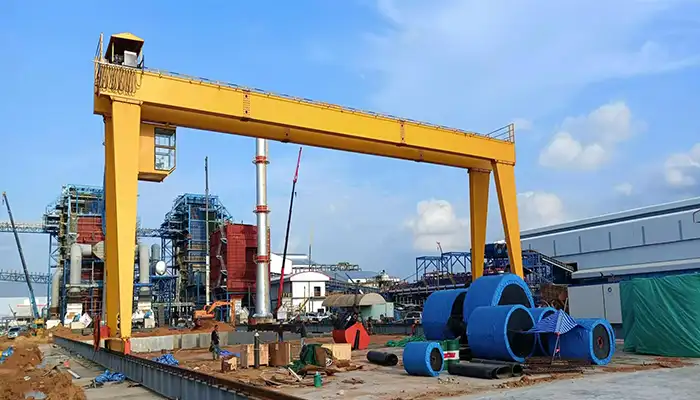 Double girder gantry crane fo sale
Equipment Supplied
This section covers the gantry cranes supplied for the project, including detailed specifications, hoist and control features, and safety considerations.
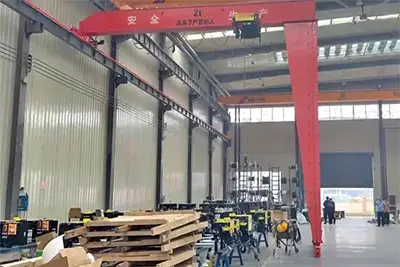
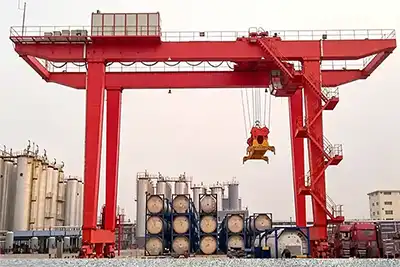
This crane is the workhorse for heavier loads. With a 15-ton capacity, it handles the bulk of steel plates, structural components, and machinery parts with ease. Its 16.5-meter span allows coverage over a wide area, and the 6.5-meter lifting height ensures that stacked materials can be reached safely.
Specifications:
- Capacity: 15 tons
- Span: 16.5 meters
- Lifting Height: 6.5 meters
- Hoist Type: European-style hoist
- Voltage/Power: 380V, 50Hz, 3-phase
The European-style hoist provides smooth lifting and lowering, precise positioning, and long service life, which is particularly important in industrial settings where downtime is costly.
For lighter and taller lifting tasks, the 4-ton MHO crane is ideal. Its 11-meter lifting height allows operators to reach higher storage racks or stack items safely, while the 8.4-meter span makes it easy to maneuver in tighter areas.
Specifications:
- Capacity: 4 tons
- Span: 8.4 meters
- Lifting Height: 11 meters
- Hoist Type: European-style hoist
- Voltage/Power: 380V, 50Hz, 3-phase
This crane complements the heavier MGO crane, giving the workshop flexibility without overloading a single piece of equipment.
The European-style electric hoists installed on both cranes bring several practical advantages:
- High precision lifting: Operators can position loads exactly where needed, reducing handling errors
- Long service life: Designed for frequent industrial use, minimizing maintenance costs
- Energy efficiency: Uses less power compared to older hoist models
Control options:
- Pendant control for close-up operation
- Remote control for larger span coverage
Safety features:
- Overload protection to prevent accidents
- Emergency stop buttons for immediate shutdown
- Upper and lower limit switches to avoid hoist collisions or over-lifting
These features make daily operation safer, more efficient, and easier for the workforce to manage without specialized training.
Project Challenges
Even with well-planned equipment, every project has its hurdles. In this Ethiopia installation, several challenges had to be addressed to make the cranes work efficiently and safely in real conditions.
The workshop had limited floor space, and the layout wasn't designed around crane operations. Uneven ground and narrow passages made positioning and moving the gantry cranes more difficult than in a standard facility.
- Limited clearance in corners and near storage areas
- Uneven floor levels affecting crane stability and alignment
- Need to plan crane travel paths carefully to avoid collisions
Operators and engineers had to coordinate closely to ensure that both the 15-ton and 4-ton cranes could operate without interfering with each other or the workflow.
The cranes were designed for 380V, 50Hz, 3-phase power (3P), but the local supply in the industrial zone required careful verification. Ensuring stable voltage and proper grounding was crucial to prevent damage to the European-style hoists and electrical systems.
- Confirming local 3-phase supply matched crane requirements
- Installing surge protection and voltage stabilizers
- Checking wiring routes to prevent accidental overloads
This step is often overlooked, but mismatched power can cause downtime, hoist malfunction, or even safety risks.
The project involved lifting materials of different weights to different heights. The 15-ton crane handled heavier loads at moderate heights, while the 4-ton crane was expected to reach higher storage racks. Managing multiple lifting heights required careful coordination.
- Avoiding collisions between hoist hooks at different levels
- Adjusting lifting speeds for high vs. low lifts
- Ensuring rigging and load distribution matched each crane's capacity
Operators needed training to understand when to use each crane for different tasks to avoid overloading or inefficient handling.
Using both MGO and MHO cranes in the same facility brought its own set of challenges. They had different spans, lifting heights, and load capacities, which required a workflow plan to maximize efficiency.
- Scheduling crane operations to prevent downtime
- Coordinating travel paths for overlapping working areas
- Standardizing control methods for easier operator training
The goal was to make the two types of cranes work together seamlessly, providing full coverage without operational bottlenecks.
Practical Benefits for the Buyer
Choosing the right crane setup isn't just about lifting capacity. In this Ethiopia project, the combination of MGO and MHO gantry cranes with European-style hoists delivered real, practical benefits that the buyer can see every day on the shop floor.
Gantry cranes are inherently mobile, and this project made the most of that. The cranes can cover multiple zones within the workshop, allowing operators to move heavy items from storage to production areas without needing extra equipment.
- Wide spans and adjustable lifting heights cover large areas efficiently
- Easy repositioning of cranes for different tasks or workflow changes
- Supports both heavy and light loads without switching equipment
This flexibility is particularly important in facilities where space is limited or material flow changes frequently.
The European-style hoists add a layer of precision that makes a noticeable difference, especially when handling sensitive materials or uneven loads. Operators can lift, move, and position items accurately without risking damage.
- Smooth lifting and lowering reduces impact on materials
- Precise load placement improves workflow efficiency
- Handles both heavy and delicate components safely
For workshops dealing with steel plates, machinery, or parts with tight tolerances, this accuracy saves time and prevents costly mistakes.
Using these cranes reduces the need for extra labor and secondary handling equipment. The MGO and MHO combination streamlines operations, meaning less downtime and fewer bottlenecks.
- Minimizes manual handling, reducing labor costs
- Faster cycle times improve overall production efficiency
- Lower maintenance compared to older, less precise equipment
Over time, the investment pays off by cutting operating costs while improving output consistency.
Both cranes are built for continuous industrial use, designed with safety in mind. For buyers, this means fewer interruptions, fewer accidents, and long-term reliability even in a busy Ethiopian workshop.
- Overload protection and limit switches prevent accidents
- Emergency stop and control options improve operator safety
- Durable European-style hoists withstand frequent industrial use
With these features, the buyer gains confidence that the cranes will operate safely and reliably for years, without compromising workflow or worker safety.
 15 ton electric hoist for double girder crane
  4 ton electric hoist for single girder crane
 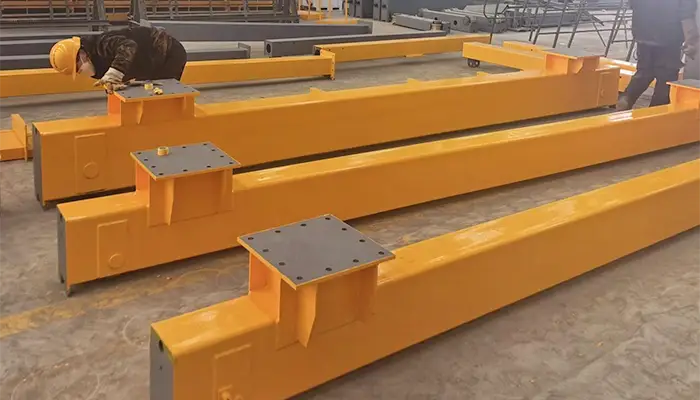 gantry crane steel structure
  Supporting legs of gantry cranes
Key Technical Insights
Understanding the technical details behind this crane setup can help buyers make informed decisions. The Ethiopia project highlights several lessons that are directly applicable to other industrial facilities.
Not all cranes are created equal, and choosing the right type for specific tasks is critical. In this project:
- MGO 15T Gantry Crane handled the heaviest loads, making it suitable for steel plates, machinery, and bulky components.
- MHO 4T Gantry Crane focused on lighter or taller lifts, reaching high storage racks or narrow areas without overloading the main crane.
The takeaway is simple: pairing cranes based on capacity and lifting height reduces wear, prevents delays, and keeps operations smooth. Buyers should assess load weights, frequency, and lifting height before specifying cranes.
Power compatibility is often underestimated, but it's crucial. Both cranes required 380V, 50Hz, 3-phase power. Ensuring proper alignment with the local power supply prevents:
- Hoist malfunctions or electrical damage
- Unexpected downtime due to voltage fluctuations
- Safety hazards for operators and equipment
Practical advice: check local voltage stability, use surge protection, and ensure proper grounding before installation.
Cranes need to cover the workspace efficiently without creating blind spots or obstacles. In this project:
- The 16.5-meter span of the MGO crane provided wide coverage for heavy loads
- The 8.4-meter span of the MHO crane allowed maneuverability in tighter areas
- Lifting heights were adjusted to match storage racks and production flow
Optimizing span and lifting height ensures maximum operational efficiency, avoiding unnecessary repositioning and reducing collision risks.
Long-term reliability depends on practical maintenance planning. Both cranes were installed with maintenance in mind:
- European-style hoists with easy access points for inspection and lubrication
- Standardized parts that are easy to source locally
- Safety checks and simple component replacements to reduce downtime
For buyers, thinking about maintenance before purchase prevents unexpected costs and ensures consistent performance over the crane's lifetime.
Buyer Takeaways
Choosing the right crane setup is more than picking the heaviest or tallest equipment. The Ethiopia project shows that thoughtful planning and practical decisions make a big difference in everyday operations.
Before placing an order, carefully assess the actual lifting needs of your facility. Ask yourself:
- What is the heaviest load I'll lift regularly?
- How far does the crane need to reach across the workspace?
- What lifting height is required for stacked materials or storage racks?
Matching the crane type and capacity to real-world requirements prevents under- or over-specification, reducing costs and improving efficiency.
European-style electric hoists are reliable and precise. They handle repeated lifts smoothly and can last for years with proper care.
- Smooth operation reduces material damage
- Long service life lowers maintenance and replacement costs
- Compatible with multiple crane types, making integration easier
For buyers, investing in quality hoists upfront avoids operational headaches later.
Power supply issues and installation limitations can delay projects if not addressed early. Check your site for:
- Voltage stability and compatibility (e.g., 380V, 50Hz, 3-phase)
- Physical space for crane spans and movement
- Foundation or runway beam requirements
Early planning ensures that cranes operate safely and efficiently from day one.
Cranes perform best when their maintenance and workflow are planned from the start. This includes:
- Easy access for inspections and lubrication
- Sourcing standard spare parts locally
- Training operators on crane coordination and safe load handling
Thinking about workflow and maintenance ahead of time keeps the cranes running reliably and reduces unexpected downtime.