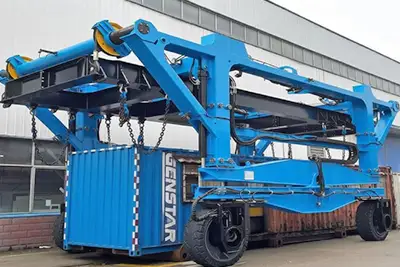
70 Ton Straddle Carrier Case in Indonesia Precast Yard
Project Overview (Indonesia Precast Yard Case)
- Project location: Indonesia (precast bridge construction yard)
- Application: I-girder (bridge beam) production and handling
- Equipment supplied: 2 sets of 70T straddle carriers
- Project nature: High-frequency lifting in a precast yard environment
- Buyer expectation: Stable operation, fast turnover, and long-term reliability—key values often emphasized by Indonesian contractors focusing on project continuity and trust-based cooperation.
Project Location
- The project is located in Indonesia
- It is a precast bridge construction yard
- The site is used for daily production of bridge components
The working environment is open-yard type. Materials are produced, stored, and moved inside the same area. The flow of work is continuous and follows a clear production sequence.
- Main material: I-girders (precast concrete bridge beams)
- These are long and heavy structural components
- Used in highway and bridge construction projects
After casting and curing, the beams must be lifted and transported carefully. Any imbalance during handling can affect quality, so stable lifting is important.
- 2 sets of 70-ton straddle carriers
- Designed for heavy precast beam handling
- Used for internal yard transportation and lifting
The equipment is not fixed on rails. It moves freely across the yard, which allows flexible operation between different working zones.
Project Nature
- High-frequency lifting operation
- Continuous daily production environment
- Repeated cycle: lift → move → place → return
This is not occasional lifting work. The equipment is expected to run throughout the day with repeated load handling. Stability and consistency are more important than speed alone.
Buyer Expectations (Indonesia Market Reality)
- Stable and uninterrupted operation
- Fast movement of precast beams within the yard
- Reliable performance under daily heavy-duty use
- Long-term equipment durability
In many Indonesian infrastructure projects, practical performance is valued more than complex design. Contractors usually prefer equipment that works steadily without frequent adjustment or downtime.
Trust also plays an important role in business decisions. Once a supplier proves reliable, long-term cooperation is often preferred, especially in ongoing bridge and infrastructure projects.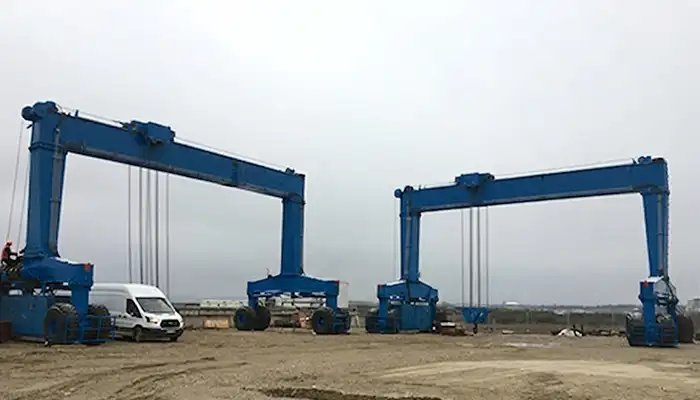
70 ton rtg gantry crane with T frame design for precasting yard
Customer Background
In this Indonesia precast bridge project, the customer is not a general equipment buyer. They are part of an active construction and infrastructure supply chain, where production speed and project timing directly affect downstream bridge installation work. Every decision on equipment is linked to whether the project can stay on schedule.
Understanding the buyer's background helps explain why certain equipment choices are made. It is less about specifications on paper, and more about how the machine behaves in daily operation inside a working yard.
- Precast concrete bridge manufacturing
- Infrastructure contractors involved in road and bridge projects
These companies usually work on government or large-scale infrastructure projects. Their work includes producing, handling, and supplying precast bridge components such as I-girders and segments.
- Engineering contractors responsible for bridge construction
- Civil infrastructure developers managing large projects
- Precast yard operators handling daily production output
These buyers are usually experienced in heavy lifting operations. They already understand site risks and tend to focus on practical performance rather than theoretical advantages.
- Focus on project efficiency and meeting strict delivery deadlines
- Prefer proven and stable equipment instead of experimental designs
- Expect equipment to run continuously with minimal downtime
- Strong emphasis on supplier reliability and long-term cooperation
In daily work, what matters most is whether the equipment can keep production moving without interruption. Even small delays in beam handling can affect the whole project timeline.
In simple terms, this type of customer is highly practical. They choose equipment that has already been tested in similar working conditions, and they value long-term stability more than short-term cost savings or complex features.
Material Handling Requirements
In this Indonesia precast bridge project, the material handling task is centered on large concrete bridge beams. These components are heavy, long, and require controlled movement from production to storage. The whole process must be safe and steady, because any damage at this stage will affect the final bridge installation quality.
The handling work is not occasional. It is part of a continuous production flow inside the yard, where beams are produced daily and moved step by step.
- Precast I-girders (bridge beams)
- Large reinforced concrete structural elements
- Used for highway and bridge construction projects
These beams are long and rigid, so they cannot tolerate uneven lifting or sudden movement during transport.
- Up to 70 tons per piece
Each beam is very heavy, which requires stable lifting equipment with strong load control. Safety margin and balanced lifting are important during every operation.
- Safe lifting of long and heavy concrete beams
- Smooth transfer inside the casting yard without sudden movement
- Precise positioning for stacking and curing areas
In practice, this means the equipment must move slowly and steadily. The beams need to be placed accurately, especially when stacking multiple units in storage areas.
- Outdoor precast yard environment
- Exposure to weather and open working space
- Continuous production cycle with repeated lifting tasks
The operation runs throughout the day. Beams are cast, lifted, moved, and stored in a repeated cycle. Because of this, equipment stability and consistency are more important than speed alone.
In this type of yard, handling is not just about lifting weight. It is about moving large concrete beams safely through every stage without stopping production flow. Each movement must be controlled, predictable, and repeatable under daily working conditions.
Key Technical Challenges
In this Indonesia precast yard project, the main difficulty is not only lifting heavy loads, but keeping control of long concrete beams during repeated daily operations. The working environment is open, and the beams are large, which makes stability and precision very important in every movement.
- I-girders are long and heavy, up to 70 tons
- Uneven force during lifting can affect balance
- Both ends of the beam must stay level during hoisting
In practice, even a small imbalance can create stress inside the concrete structure. So the lifting system must keep the beam stable from start to finish.
- Movement inside the yard must be smooth and controlled
- Sudden acceleration or braking can cause swinging
- Swinging increases stress on both the beam and lifting system
This is especially important when transporting beams over longer distances inside the yard. The goal is simple: keep the beam as steady as possible while moving.
- Different stages require different lifting heights
- Storage, stacking, and transport all need accurate positioning
- Height control must be consistent every cycle
In real yard work, small height errors can lead to alignment issues during stacking. That is why control accuracy matters more than speed.
- The equipment must move across different zones
- Includes casting area, storage area, and loading area
- Space is shared with other yard operations
Because of this, the movement path is not always straight. Operators need smooth coordination when turning, positioning, and aligning loads.
- Operation runs continuously throughout the day
- Same lifting steps are repeated many times
- Fatigue and mechanical wear must be controlled
Over time, repeated lifting puts pressure on both equipment and operators. The system must remain stable and safe even after long working hours.
The real challenge in this project is not just lifting 70-ton beams. It is keeping every lift stable, every movement controlled, and every cycle safe—day after day, in a busy precast yard environment.
Proposed Solution
To meet the working conditions of the Indonesia precast yard, the solution is designed around flexibility, stability, and continuous operation. The focus is not only on lifting capacity, but also on how smoothly the equipment fits into the daily production flow.
- 2 × 70-ton straddle carriers
- Heavy-duty lifting and transport equipment for precast yards
- Designed for handling large bridge girders in open working areas
The two units work together within the yard to support continuous beam production and movement.
- Heavy-duty precast yard handling equipment
- Straddle-type structure with free movement capability
- No fixed rail system required
This structure allows the equipment to operate across different zones in the yard without being limited by tracks or fixed paths.
- Lift precast I-girders safely from casting position
- Transport heavy beams across the yard
- Stack and place beams in storage or curing areas
- Support repeated daily production cycles
Each function is part of a continuous workflow. The equipment is not used for single lifts only, but for ongoing material circulation throughout the yard.
- No rail dependence, so layout changes are easier
- Suitable for flexible yard planning and expansion
- Supports smooth movement between multiple working areas
- Designed for repeated lifting without interruption
In real operation, this means the yard does not need to adjust its infrastructure to fit the crane. Instead, the equipment adapts to the site layout.
The solution is straightforward. Two 70-ton straddle carriers handle the full cycle of lifting, moving, and stacking I-girders inside the precast yard. It keeps the production flow moving without being restricted by fixed rail systems, which is important for flexible and fast-paced infrastructure projects like those commonly seen in Indonesia.
Equipment Specification Overview
The equipment is designed for heavy precast bridge beam handling in an outdoor yard environment in Indonesia. It focuses on stable lifting performance, flexible movement, and reliable operation under continuous working cycles.
- Rated capacity: 70 tons
- Quantity: 2 units
- Application: Precast bridge girder yard handling
These two units are planned to work together to support daily production and movement of large I-girders within the yard.
- Cummins engine (international brand configuration)
- Stable power output for continuous yard operation
- Suitable for outdoor working conditions
The power system is selected to ensure reliable performance under long working hours, especially in warm and humid climates common in Indonesia.
- Straddle-type lifting frame design
- High-clearance structure for passing over long beams
- Stable load distribution during lifting and transport
This structure allows the equipment to move directly over precast girders without needing separate transfer systems.
- Precast bridge girder lifting
- Internal yard transport
- Beam stacking and storage handling
It is mainly used in precast production yards where large concrete beams are produced and moved repeatedly during the day.
- Precision lifting and travel control system
- Smooth start and stop operation
- Controlled movement during transport
The control system is designed to reduce sudden movement, helping maintain beam stability during lifting and relocation.
Each project is adjusted according to site conditions and working layout:
- Span design based on yard width and beam size
- Lifting height adjusted for stacking and storage requirements
- Travel path adaptation according to yard layout
- Special safety requirements based on operational risk level
These parameters are confirmed after technical communication with the client to ensure the equipment matches real site conditions.
This equipment is not standard off-the-shelf machinery. It is configured based on actual yard requirements in Indonesia, especially for handling long and heavy bridge beams safely and repeatedly in daily production work.
Key Features & Advantages
In this Indonesia precast yard project, the equipment is selected not only for lifting capacity, but also for how it performs in daily production conditions. The working environment is continuous, with repeated movement of long and heavy concrete beams. So the design focuses on stability, flexibility, and long-term reliability in real yard operations.
Below are the main features that support smooth and practical use in this type of project.
- High stability for long concrete girder lifting
- No rail system required → flexible yard operation
- High mobility across precast production zones
- Strong load distribution structure
- Suitable for high-frequency bridge component production
- International-grade power and key components
- Designed for continuous industrial operation
Each of these features is directly related to real working conditions in precast yards. The equipment is expected to handle heavy I-girders safely while moving across different areas of the site without interruption.
For example, the stable lifting performance is important because the beams are long and sensitive to uneven force. At the same time, the rail-free design allows the yard layout to remain flexible, especially when production areas are adjusted or expanded.
Mobility is another key point. In daily operation, the equipment must move between casting zones, storage areas, and loading points. Smooth movement helps maintain production flow without delay.
The strong structural design helps distribute heavy loads evenly, which reduces stress on both the equipment and the concrete beams during lifting and transport. This is especially important for maintaining product quality.
In addition, the system is built for repeated use. Precast production is not a one-time operation. It runs continuously, often in multiple shifts, so the equipment must support high-frequency lifting without performance drop.
The use of international-grade power and key components also improves reliability, especially in outdoor environments where temperature and working load can vary during the day.
Finally, the overall design is intended for continuous industrial operation. It is not just for occasional lifting, but for long-term daily use in a real production environment.
In simple terms, these features work together to ensure the equipment can keep precast beam production in Indonesia running smoothly, safely, and without unnecessary interruption.
On-Site Installation & Commissioning Support
For this Indonesia project, installation support is not just a delivery step. It is part of ensuring the equipment can actually work smoothly in the real yard conditions. Since precast yards operate under tight schedules, the start-up phase needs to be stable and well guided from the beginning.
In many cases, local teams are experienced in construction work, but heavy lifting equipment like straddle carriers still requires proper setup and adjustment before full operation begins.
- Engineer dispatched to Indonesia project site
- Direct supervision during installation process
- Step-by-step commissioning support provided
The purpose is to make sure the equipment is installed correctly and safely according to the actual yard layout.
- Installation guidance during assembly
- Commissioning and full system testing
- Operator training for daily use
The focus is not only on machine setup, but also on helping the local team understand how to operate the equipment in a practical and safe way.
- Lifting accuracy calibration
- Speed control adjustment
- Angle stability fine-tuning
These adjustments are made on-site based on actual working conditions. Small differences in yard layout or load handling can be corrected during this stage to ensure smoother operation later.
After commissioning, the equipment is ready for regular use by the local team. The goal is simple: reduce confusion during early operation and help the yard start production without unnecessary delay.
In projects like this in Indonesia, a smooth start-up is important. Once the equipment runs correctly from the beginning, the rest of the production cycle becomes more stable and predictable.
FAQ – Practical Problem Solving
In real precast yard work, most concerns from buyers are not about theory, but about daily operation. Especially in Indonesia projects, where production runs continuously, the key questions are usually about safety, stability, and whether local teams can operate the equipment smoothly.
Below are the common questions raised during this type of project.
A: The straddle carrier uses a balanced load structure. This helps distribute weight evenly across the beam during lifting. With stable hoisting control, the beam stays level, reducing swing and internal stress during movement.
A: Precision is achieved through controlled lifting speed, proper operator training, and on-site calibration. These three elements work together to keep height and positioning consistent, even in open-yard environments.
A: The first step is to stop operation immediately. After that, the system is checked by technical staff. Adjustments are made if needed before restarting. This prevents small issues from turning into equipment or material damage.
A: Yes. The equipment is designed for repeated lifting cycles in bridge beam production. It can support daily high-frequency operation without affecting stability, as long as normal maintenance is followed.
A: Yes. After installation, on-site training is provided. Operators are guided step by step during commissioning, so they can understand practical operation under real working conditions.
Final Indonesia Buyer Insight
For infrastructure contractors in Indonesia—especially in busy industrial and construction regions such as Jakarta, Bekasi, or other developing industrial islands—project schedules are usually tight and closely managed. In these projects, equipment selection is rarely decided by capacity alone.
Most buyers look at how the equipment will perform over time inside a real working yard, not just its rated specification on paper.
In daily decision-making, several practical factors often come first:
- Trust in long-term supplier support
- Practical performance in real precast yard conditions
- Low risk of unexpected downtime during production
- Reliable after-sales and engineering response when needed
In many Indonesian construction projects, relationships between contractor and supplier are built step by step. If the equipment runs steadily and support is responsive, cooperation is often continued for future projects.
Simply put, stability in operation and reliability in partnership often carry the same weight as technical data in the final decision.
Inquiry Checklist
To prepare an accurate quotation and technical solution, please provide the following project details. These help ensure the equipment design matches real site conditions and working requirements.
- Project type (bridge / precast / infrastructure)
- Maximum girder weight
- Girder dimensions (length, width, height)
- Yard layout and available working space
- Required span and lifting height
- Daily production cycle and working hours
- Power preference (diesel / hybrid / electric if applicable)
- Safety requirements or special site conditions
The more accurate the project information, the more practical and suitable the final equipment solution will be for your yard operation.