Why Ladle Handling Cranes Require Class A7/A8 Duty
Most Important Takeaway
A ladle handling crane must be designed for fatigue, frequency, and failure consequence—not just lifting capacity.: For molten steel handling, Class A7 or A8 working duty is not optional; it is the minimum requirement to ensure safety, regulatory acceptance, and long-term operational reliability.
- Ladle handling cranes are classified as Class A7 or A8 due to high-frequency lifting and extreme safety risk
- A5 or A6 overhead cranes are not suitable for molten steel handling, even if capacity appears sufficient
- Crane working class directly impacts fatigue life, brake reliability, and wire rope safety
- Higher duty class increases initial price but reduces downtime, maintenance cost, and liability exposure
- Incorrect duty class selection often leads to inspection failure, insurance issues, or premature crane replacement
Why Working Class Matters More Than Rated Capacity in Ladle Crane Selection
When selecting a ladle handling crane, many buyers start with a simple comparison:
50-ton vs. 100-ton lifting capacity.
That comparison is necessary—but it is not enough.
Rated capacity only tells you what the crane can lift once.
Working class tells you whether the crane can lift that load repeatedly, safely, and over years of operation in a steel mill.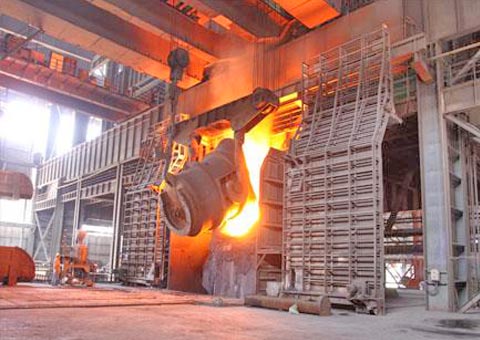
Ladle handling overhead bridge cranes
Ladle cranes do not work under occasional or light-duty conditions. In normal steel mill operation, they face:
- Loads that are close to rated capacity on most lifts
- High lifting frequency tied directly to production rhythm
- Constant exposure to radiant heat from molten steel
- Safety conditions where any failure is unacceptable
These factors act together and place continuous stress on the crane.
A crane may be rated for 100 tons and still be unsuitable for ladle service.
Why? Because capacity measures strength at a single moment.
It does not measure:
- Fatigue resistance over thousands of lifting cycles
- Brake performance under repeated thermal stress
- Long-term wear on wire ropes, drums, and gearboxes
In ladle handling, fatigue—not peak load—is the dominant failure risk.
Crane working class defines how the equipment behaves over time, not just at commissioning.
It determines:
- Allowable load cycles over the crane's service life
- Design stress levels in the hoisting mechanism
- Heat tolerance of braking and electrical systems
- Predictability of maintenance and inspection intervals
This is why ladle handling cranes are designed to higher working classes such as A7 or A8.
Two cranes can share the same rated capacity.
- A6-class crane: suitable for intermittent heavy lifting
- A7/A8-class crane: designed for continuous, fatigue-critical operation
Both may pass initial load tests.
Only one is designed to survive long-term molten steel handling without rising risk and maintenance cost.
What Crane Working Class (A5, A6, A7, A8) Actually Means
Crane working class is often mistaken for a simple strength rating.
In practice, it has little to do with how much weight a crane can lift once.
Working class defines how the crane is designed to survive repeated loading over time. It reflects fatigue life, operating intensity, and long-term reliability under real working conditions.
Crane working class is based on how the crane is actually used in daily operation, not on laboratory conditions or one-time tests. Standards focus on the combined stresses the crane experiences throughout its service life.
The main factors considered are:
- Load spectrum: This describes how often the crane lifts loads close to its rated capacity. Frequent high-load lifting places much greater fatigue stress on the structure and hoisting mechanism.
- Lifting frequency: This includes how many lifts occur per hour and per shift. A crane lifting continuously ages much faster than one lifting occasionally, even if both have the same rated capacity.
- Total load cycles over service life: Working class is ultimately linked to the number of load cycles the crane is designed to endure before fatigue becomes a concern. This is a long-term design calculation, not a short-term performance measure.
International crane standards such as ISO, FEM, DIN, and GB use the factors above to classify cranes into duty classes.
In practical industrial terms:
- A5 and A6 cranes: These are designed for moderate to heavy industrial applications where high loads occur regularly but not continuously.
- A7 and A8 cranes: These are designed for very heavy-duty or continuous operation, where loads are frequent, near rated capacity, and failure carries high safety and production risk.
As working class increases, fatigue design becomes more conservative and component life expectations increase.
Ladle handling cranes are treated differently because their operating conditions combine several high-risk factors at once.
In real steel mill operation, ladle cranes typically face:
- Loads that remain close to rated capacity for most lifts
- Repetitive lifting that follows the production cycle
- Thermal stress from molten steel and radiant heat
- Safety conditions where any failure has severe consequences
Because of this combination, ladle handling cranes naturally fall into the A7 or A8 working class range under recognized crane standards, regardless of capacity size.
What Working Class Is Mandatory for Ladle Handling Cranes?
When it comes to molten steel handling, not all cranes are created equal. It's not enough to just meet the rated lifting capacity—working class is the real deciding factor for safe and reliable operation.
Steel mill experience and international standards set clear expectations for ladle handling cranes:
- Class A7: This is the minimum acceptable working class for standard ladle handling operations. It ensures that the crane can handle repetitive lifts, thermal stress, and the high-risk nature of molten steel safely.
- Class A8: Required for more demanding operations such as high-frequency ladle transfers, continuous casting lines, and heavy processes in EAF (Electric Arc Furnace), BOF (Basic Oxygen Furnace), or LF (Ladle Furnace) environments.
These requirements are independent of crane capacity or lifting height. Even a high-capacity crane still needs the correct working class for safe, long-term operation.
The requirement for A7 or A8 is not arbitrary. It is based on practical, safety-focused reasons that affect both design and operation:
- Fatigue failure prevention: Hoisting mechanisms, gearboxes, and wire ropes are subject to continuous high-stress cycles. A higher working class ensures the crane is built to withstand this fatigue over years of operation.
- Safety management systems: Metallurgical plants operate under strict safety protocols. A properly classified crane reduces the risk of accidents and aligns with plant safety policies.
- Third-party inspection standards: Many steel mills require inspection and certification according to ISO, FEM, DIN, or GB standards. Using a lower-class crane may fail these inspections.
- Insurance and risk control: Insurance policies and liability coverage often depend on using equipment designed for the intended duty class. Choosing a lower-class crane can expose the plant to legal and financial risk.
In short: For ladle handling, A7 is the baseline, and A8 is required for high-frequency or critical operations. Selecting the correct working class ensures safety, compliance, and predictable long-term performance.
What Happens If A5 or A6 Cranes Are Used for Ladle Handling?
Using a lower-duty crane, like A5 or A6, for molten steel operations may seem like a way to save cost initially. In reality, it introduces serious mechanical, safety, and legal risks. The problems usually build up over time and often appear suddenly.
Cranes not designed for heavy-duty ladle handling experience accelerated wear on critical components. Common issues include:
- Wire rope fatigue: Repeated high-load lifts cause faster stretching, fraying, or breakage.
- Brake overheating and loss of redundancy: Lower-class cranes often lack the heat-resistant design needed for frequent lifts, increasing failure risk.
- Gearbox wear beyond design limits: Continuous lifting cycles at high loads strain gear teeth and bearings.
- Motor insulation degradation: Heat and overload shorten motor life, leading to sudden electrical failures.
These failures are cumulative, meaning the crane may appear fine initially but deteriorates quietly until a serious incident occurs.
The risks of using an under-classified crane go beyond equipment wear. They affect compliance, liability, and insurance:
- Failure during load testing or acceptance inspection: A5/A6 cranes may pass basic lifting tests but fail more comprehensive fatigue or duty cycle inspections.
- Insurance coverage rejection: If an incident occurs with an under-specified crane, insurers can refuse to pay, leaving the plant financially exposed.
- Liability falls on the buyer or plant: Any accident, damage, or injury can legally be traced back to poor equipment selection.
In molten steel handling, even a single failure can have catastrophic consequences, including plant downtime, equipment damage, and serious safety hazards.
Practical takeaway: Choosing A5 or A6 for ladle operations may save money upfront but greatly increases long-term risk, maintenance costs, and liability exposure. For safety and reliability, A7 or A8 working class is the proper standard.
How Duty Class Impacts Ladle Handling Crane Price
When selecting a ladle handling crane, many buyers focus on initial purchase cost. It's true that higher duty class cranes—A7 or A8—cost more upfront. But that cost reflects real engineering requirements, not arbitrary pricing.
The price difference comes from design features required to handle repeated heavy loads safely. These include:
- Hoisting mechanism design stress levels: Components are built stronger to withstand continuous high-load operation.
- Brake system redundancy and heat resistance: Brakes must operate reliably under frequent lifting and thermal stress.
- Wire rope diameter and safety factor: Thicker ropes with higher safety margins are used for fatigue resistance.
- Gearbox service factor: Gearboxes are oversized or reinforced to endure high-frequency operation.
- Electrical insulation class and protection: Motors and control systems are rated for heat, dust, and continuous duty.
These are not optional upgrades; they are essential to ensure long-term reliability and safety.
While A7 or A8 cranes may have a higher initial cost, they provide measurable benefits over the life of the crane:
- Longer service life: Components last longer under repeated stress.
- Lower maintenance frequency: Less downtime for inspections, lubrication, and part replacement.
- Reduced unplanned downtime: Fewer failures mean smoother production schedules.
- Improved audit and inspection outcomes: Compliant cranes pass regulatory and third-party inspections without issues.
In contrast, choosing a lower duty class crane may save money upfront but dramatically increases maintenance, operational risk, and potential liability.
Practical takeaway: Investing in the correct duty class—A7 or A8—is an investment in safety, reliability, and total cost of ownership, not just the purchase price.
How Duty Class Influences Service Life and Maintenance Cost
Duty class is not just a specification—it directly affects how long a ladle handling crane can operate safely and how much it costs to maintain over its lifetime.
Choosing the correct working class ensures the crane's components are designed to handle the repetitive, high-stress environment of molten steel handling.
A higher duty class delivers tangible benefits for critical crane systems:
- Wire ropes last longer: Thicker, fatigue-resistant ropes reduce replacement frequency and downtime.
- Brakes maintain reliability under heat: Properly designed braking systems handle repeated thermal stress without performance loss.
- Gearboxes and motors stay within fatigue limits: Reinforced gearboxes and high-class motor insulation prevent early wear and unexpected failures.
- Maintenance becomes predictable: With components rated for duty cycles, inspection and maintenance schedules can be planned instead of reacting to failures.
Selecting the correct duty class directly impacts long-term operational cost:
- Less frequent repairs and replacements
- Fewer unplanned production stoppages
- Lower overall lifecycle cost
In short, working class selection is the single most important factor that determines a ladle crane's safety, reliability, and total cost of ownership.
Choosing the proper duty class upfront is an investment in safety, predictable maintenance, and cost efficiency. Cutting corners on class may save money now but leads to higher repair costs, unexpected downtime, and potential liability later.
How Buyers Should Specify Duty Class in Ladle Crane RFQs
When requesting a ladle handling crane, it's easy to focus only on lifting capacity or price. However, accurate duty class specification is critical for safety, reliability, and long-term performance. Providing the right operational data upfront allows manufacturers to determine whether an A7 or A8 crane is required.
Before issuing an RFQ, buyers should collect and share the following details with the crane manufacturer:
- Ladle weight (full and empty): Exact weight determines the load spectrum the crane must handle.
- Molten steel temperature: Thermal conditions affect wire rope, brakes, and motor insulation.
- Lifting frequency per hour: Shows how often the crane will be operating at or near full capacity.
- Operating shifts per day: Daily operating time affects fatigue and component wear.
- Annual operating days: Total usage per year contributes to lifetime load cycle calculations.
- Required lifting speed and height: Impacts hoist selection, motor sizing, and brake performance.
Providing this data ensures the manufacturer can accurately classify the crane as A7 or A8, rather than relying on assumptions.
Many buyers make simple but costly errors when specifying ladle cranes:
- Copying standard overhead crane specifications: Generic specs often ignore the unique conditions of molten steel handling.
- Selecting crane class based on price: Lower-cost A5/A6 cranes may fail under actual duty cycles.
- Ignoring thermal and dynamic loading effects: Heat from molten steel and rapid lifting cycles are critical factors.
- Assuming higher tonnage compensates for lower duty class: Lifting capacity alone does not prevent fatigue or ensure component reliability.
These mistakes often result in under-classified, unsafe crane designs that risk downtime, costly repairs, and safety incidents.
Providing complete operational data and specifying duty class upfront is essential. It ensures the manufacturer designs an A7 or A8 ladle crane that meets safety standards, maximizes service life, and avoids costly mis-specifications.
Why Reputable Ladle Crane Manufacturers Insist on A7/A8
Ladle handling is not a typical lifting application. It is both fatigue-critical and safety-critical, and mistakes can have serious consequences. Experienced steel mill crane manufacturers understand this and design their cranes accordingly.
Manufacturers who insist on A7 or A8 duty class do so for practical, real-world reasons:
- Protect the buyer's operation: High-duty cranes reduce the risk of unexpected downtime and maintain consistent production.
- Reduce long-term liability: Using a crane designed for the actual duty cycle helps avoid accidents, insurance issues, and regulatory problems.
- Design for real operating conditions: A7/A8 cranes account for frequent lifts, thermal exposure, and high-stress cycles—conditions that theoretical or lower-class designs do not fully consider.
Suppliers willing to sell A5 or A6 cranes for ladle handling are often shifting risk to the buyer. The crane may meet rated capacity, but it is not engineered for repeated heavy lifts under molten steel conditions, which increases fatigue, maintenance costs, and safety hazards.
Practical takeaway: Choosing a reputable manufacturer who specifies A7 or A8 ensures long-term safety, reliability, and compliance, rather than short-term cost savings.
Questions Solved
Molten steel handling is a continuous, high-risk operation. This section explains:
- Minimum requirement: Class A7 for standard ladle handling
- High-frequency or critical operations: Class A8 for continuous casting lines, EAF, BOF, or LF operations
- Why capacity or lifting height alone is not sufficient to define safe operation
- How working class ensures components can handle repeated lifts and thermal stress over the crane's full service life
Ladle cranes face fatigue-critical and safety-critical conditions that make lower-class cranes unsuitable. Key points include:
- The combination of high load ratios, frequent lifting, and heat exposure that defines ladle crane duty
- How standards (ISO, FEM, DIN, GB) classify cranes based on repeated load cycles, duty frequency, and safety consequences
- Why A7 and A8 cranes are designed to handle continuous operation with reduced fatigue risk, ensuring reliability in molten steel environments
Choosing a lower-duty crane may seem cost-effective but introduces serious mechanical and operational risks:
- Accelerated wire rope fatigue, brake overheating, gearbox wear, and motor insulation degradation
- How failures accumulate over time and often appear without warning
- Safety and compliance risks, including inspection failure, insurance rejection, and liability falling on the plant
- Why even a single failure in molten steel handling can have catastrophic consequences
This section shows how duty class influences both initial cost and total lifecycle cost:
- Why A7/A8 cranes cost more upfront: stronger hoisting mechanisms, heat-resistant brakes, reinforced gearboxes, higher safety factors, and better insulation
- Benefits over time: longer wire rope life, fewer breakdowns, predictable maintenance schedules, reduced downtime, and compliance with inspection standards
- How selecting a lower duty class increases long-term operating costs, maintenance frequency, and production risk
Practical guidance for buyers to ensure accurate crane specification:
- Operational data to provide: ladle weight (full/empty), molten steel temperature, lifting frequency, operating shifts, annual usage, and lifting speed/height
- Common mistakes to avoid: copying generic specs, selecting by price alone, ignoring thermal and dynamic effects, and assuming higher tonnage offsets lower duty class
- Providing this data upfront allows manufacturers to correctly classify the crane as A7 or A8 and design for safe, reliable long-term operation
In short: This section equips buyers with the knowledge to choose the right working class, avoid unsafe designs, and plan for both short-term operation and long-term lifecycle efficiency.
Conclusion
Ladle handling cranes are classified as Class A7 or A8 because handling molten steel is a high-risk, fatigue-intensive operation. These cranes must deliver reliability, safety redundancy, and long-term performance, not just lifting capacity.
Choosing the correct duty class is not about saving upfront cost—it is a decision that impacts safety, compliance, and total lifecycle cost. For steel mills, specifying the right working class ensures:
- Inspection approval under ISO, FEM, DIN, or GB standards
- Predictable maintenance and reduced unplanned downtime
- Long-term operational stability with lower risk of fatigue failure
Before issuing a crane RFQ, buyers should verify the actual duty cycle for their ladle handling operations. Providing this information allows manufacturers to correctly classify the crane as A7 or A8, ensuring safe and reliable service over its full operational life.