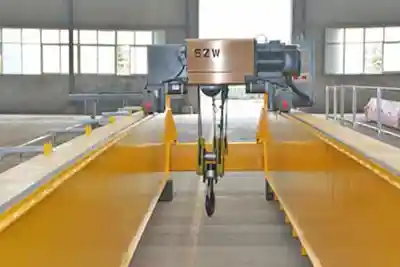
Flexible Billet Crane for Mixed-Load Operations | Buyer Guide
Flexible Billet Crane for Mixed-Load Operations – A Buyer’s Guide
Why This Crane Matters
Handling billets of varying weights is one of the common headaches in steel shops. Many facilities rely on multiple cranes: one for standard 5–10 ton billets and another for heavier 15-ton loads. This approach increases costs, uses up valuable floor space, and complicates scheduling.
A flexible double girder overhead crane can solve this problem. With interchangeable attachments, it lets your operators switch between magnetic clamps for lighter billets and hooks for heavier billets quickly. Essentially, one crane can do the job of two.
What buyers gain:
- Lower overall equipment costs and maintenance
- Better use of floor space for production or storage
- Simplified scheduling and faster material handling
- Safer operation thanks to attachments designed for specific billet weights
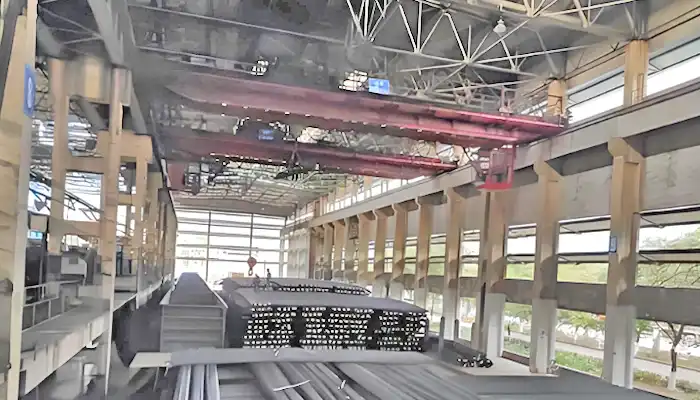
Crane Setup for Mixed Loads
Selecting the right crane configuration is key to running a steel shop efficiently. The ideal choice here is a double girder overhead crane designed for indoor operations, which provides stability for heavy lifts without sacrificing speed or safety for standard loads.
Key Setup Features:
- Crane Type: Double girder overhead crane, suitable for indoor steel shops
- Lifting Capacity: 50 tons, covering both standard and occasional heavy billets
- Attachments: Quick-switch magnetic clamps and hooks for versatile handling
- Trolley Mobility: Smooth trolley system, optimized for short-distance, frequent movements
Why this setup works for your shop:
- Adjustable attachments allow safe handling of billets of different sizes
- Smooth trolley movement keeps production flowing efficiently
- One crane handles mixed-load operations, giving flexibility for varying production schedules
Key Advantages of a Flexible Double Girder Overhead Crane
This crane brings measurable benefits to steel shops handling mixed-load billets, from cost savings to enhanced workflow and safety.
- No need to buy or maintain separate cranes
- Frees up shop floor space and reduces congestion
- Cuts maintenance time and long-term operational costs
Production schedules change constantly. Some days you lift 5-ton billets, other days up to 15 tons. This crane adapts without slowing you down.
- Handles standard 5–10 ton and heavier 15-ton billets safely
- Supports mixed-load operations without requiring extra equipment
- Allows quick adjustments for variable production schedules
Lifting heavy billets carries risks, but the right crane design keeps operators and materials safe.
- Adjustable attachments ensure proper gripping for every billet size
- Minimizes risk of accidents during heavy-lift operations
- Helps meet safety regulations for steel shop environments
Efficiency isn't just about lifting capacity—it's about moving billets quickly and accurately.
- Smooth trolley allows fast positioning of billets
- Reduces downtime between lifts
- Keeps production flowing even during frequent, short-distance moves
Key Measurable Results for Crane Buyers
From operational flexibility to ROI, a single flexible crane makes a significant difference in shop performance.
- One crane manages both standard (5–10 ton) and heavy (up to 15 ton) billets
- Frees up floor space for other equipment or processes
- Reduces the need to shuffle materials between different cranes
- Material handling becomes faster and more predictable
- Fewer bottlenecks in the workflow, even during mixed-load operations
- Short-distance moves are faster thanks to the smooth trolley system
- Saves money by avoiding the purchase of extra cranes
- Lowers long-term maintenance and repair expenses
- Improves overall productivity and throughput in the shop
Critical Checks Before Buying a Flexible Crane
These considerations help steel shop buyers select the right crane for their operational and safety requirements.
- Verify that the crane's rated capacity covers both standard 5–10 ton billets and any heavier 15-ton billets
- Factor in a safety margin to account for potential overloads or bundled lifts
- Check that magnetic clamps and hooks can be swapped quickly for your specific billet sizes
- Ensure attachments meet your shop's operational needs without slowing down production
- Evaluate trolley speed to match your material handling requirements
- Map the travel path across the shop to prevent collisions and bottlenecks
- Consider frequent short-distance moves for high-throughput operations
- Confirm the crane meets local safety regulations and lifting codes
- Ensure attachments and operations comply with industry safety requirements
- Regular inspections and maintenance should be easy to perform with your chosen crane
Conclusion – Why Buyers Choose This Crane
For steel shops handling a mix of standard and heavy billets, a flexible double girder overhead crane is more than just lifting equipment—it’s a tool that improves operations across the board.
With this crane, you can:
- Replace multiple cranes with a single versatile solution
- Handle both 5–10 ton and occasional 15-ton billets safely
- Streamline material handling for smoother, faster workflows
- Free up floor space and reduce operational complexity
In short, this crane delivers practical benefits that matter to buyers: lower costs, improved safety, and higher productivity. It’s a smart choice for any steel shop looking to simplify operations while maintaining flexibility for mixed-load tasks.