Hybrid Overhead Cranes in Indonesia | Local + Chinese Components
Introduction
Indonesia’s industrial sector has been growing steadily over the past decade. From steel production and heavy manufacturing to construction and machinery plants, the demand for reliable material handling solutions is rising. Factories and workshops are constantly looking for cranes that are not just strong, but also flexible and affordable.
In this context, a new trend has emerged: hybrid overhead cranes. These cranes are a mix of locally fabricated steel structures and Chinese-made core components such as hoists, motors, and control systems. This combination allows industrial facilities in Indonesia to get the best of both worlds—customized solutions that fit their workshops and proven mechanical and electrical components from trusted Chinese manufacturers.
Overhead cranes for sale Indonesia
For crane buyers in Indonesia, understanding why hybrid cranes are gaining popularity is essential. It’s not just about cost savings; it’s about tailoring cranes to local conditions, improving delivery time, and ensuring long-term reliability in everyday operations.
Key Points:
- Indonesia’s industrial growth drives higher crane demand.
- Hybrid cranes combine local fabrication with imported Chinese components.
- Benefits include cost-effectiveness, faster delivery, and reliability.
What is a Hybrid Crane?
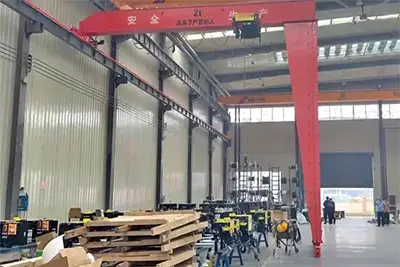
A hybrid crane is essentially a combination of two elements: a locally built crane framework and imported core components. In practice, this means the crane’s main steel structure—like the girders, end trucks, and runway beams—is fabricated by local workshops in Indonesia. Meanwhile, the lifting mechanisms, electric hoists, motors, and control systems are sourced from Chinese manufacturers known for their quality and certifications.
This model has become increasingly popular because it allows factories to maintain a high standard of performance without paying the premium for fully imported cranes.
Key Features of Hybrid Cranes:
- Cost Efficiency: Local fabrication reduces shipping costs and import duties, while still using reliable Chinese hoists and motors.
- Customizability: Steel structures can be designed to fit specific workshop dimensions, lifting heights, and span requirements.
- Reliability of Chinese Components: Hoists, motors, and electrical controls from established Chinese suppliers come with CE, ISO, or third-party inspections, ensuring long-term performance.
- Ease of Maintenance: Local workshops can handle steel repairs or modifications, while standardized Chinese components simplify spare parts and service.
In short, hybrid cranes are practical for Indonesian buyers who want cranes that match their operational needs and local conditions, without compromising on quality or safety.
Advantages of Hybrid Overhead Cranes for Indonesian Buyers
Hybrid overhead cranes are becoming a practical choice for factories and workshops across Indonesia. They offer a balance between affordability, flexibility, and reliability, making them suitable for a wide range of industrial operations. Here's why buyers are increasingly choosing them.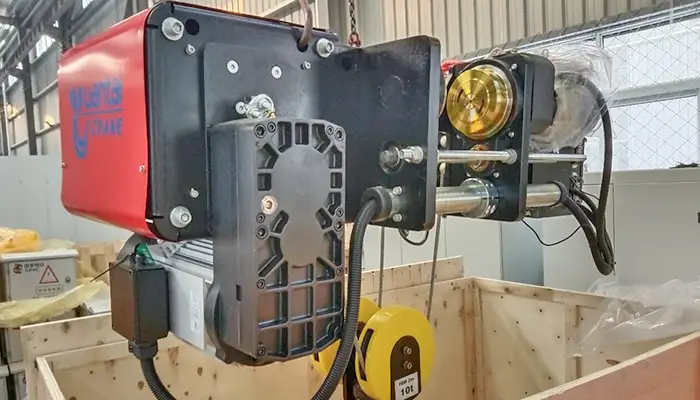 Advanced Electric Hoists
One of the main reasons hybrid cranes are popular is their cost efficiency. By combining locally fabricated steel structures with Chinese hoists and motors, factories can significantly reduce overall expenses.
- Local fabrication reduces shipping costs compared to importing a full crane.
- Avoids high import duties on complete overhead cranes.
- Buyers can invest more in quality core components without exceeding budgets.
This approach allows workshops to get a high-performance crane at a fraction of the cost of a fully imported solution.
Every workshop has unique space, workflow, and lifting requirements. Hybrid cranes give Indonesian buyers the flexibility to adapt designs to their local conditions.
- Steel girders, end trucks, and runway beams can be tailored to fit exact span and lifting height requirements.
- Modifications for low ceilings, narrow aisles, or irregular floor layouts are easier to implement.
- Local fabrication teams can handle adjustments or repairs quickly, reducing downtime.
The result is a crane that works efficiently in its specific environment rather than a one-size-fits-all imported solution.
Even though the steel structure is local, the critical parts—hoists, motors, and control systems—come from Chinese manufacturers with a proven track record. This ensures long-term reliability.
- Certified hoists and motors built to international standards (CE, ISO).
- Third-party inspections provide additional assurance of safety and quality.
- Standardized electrical and mechanical components simplify maintenance and replacement.
Buyers get the confidence that their crane will perform consistently under industrial workloads.
Hybrid cranes also reduce the overall delivery time for industrial facilities.
- Local workshops fabricate the steel structure while Chinese suppliers provide hoists and control systems, allowing parallel production.
- Standardized components from China are readily available, avoiding long wait times for custom machinery.
This means factories can get cranes installed and operational much faster than fully imported units.
Choosing a hybrid crane also benefits the local economy and workforce.
- Local fabrication businesses receive more contracts, helping them grow.
- Encourages skills development in welding, steel assembly, and crane installation.
- Promotes collaboration between local workshops and international suppliers.
Common Applications of Hybrid Overhead Cranes in Indonesia
Hybrid overhead cranes have found their place across a wide range of Indonesian industries. Their flexibility, affordability, and reliable Chinese components make them suitable for both heavy and medium-duty operations. Here's a closer look at where these cranes are commonly used.
In steel production facilities, cranes need to handle heavy billets, slabs, and coils safely and efficiently. Hybrid cranes are ideal because they can be designed for the exact weight and size of the steel products.
- Double girder or single girder hybrid cranes handle loads from a few tons to several dozen tons.
- Chinese hoists ensure smooth lifting and precise control.
- Locally fabricated structures can be customized for long spans and high lifting heights.
These cranes help steel mills optimize workflow, reduce downtime, and improve safety during material handling.
Factories that manufacture or assemble machinery often need cranes that fit into compact workshops and handle a variety of lifting tasks.
- Hybrid cranes can be designed for irregular floor layouts and lower ceiling heights.
- Lifting heights and spans can be tailored to workshop specifications.
- Chinese hoists and control systems offer reliable operation for repeated daily use.
This makes them suitable for workshops producing engines, industrial equipment, or mechanical components.
Not all factories require massive cranes. Many small and medium-sized industrial facilities need overhead cranes that match their specific production needs.
- Hybrid cranes can be customized for moderate loads, low-to-medium lifting frequency, and specialized attachments.
- Local steel fabrication allows for quick modifications if workflow or product dimensions change.
- Standardized Chinese components simplify maintenance and spare parts replacement.
This ensures that even smaller operations can benefit from high-quality lifting equipment without over-investing.
Some industrial processes do not require continuous lifting but still need reliable cranes when the workload arises. Hybrid cranes are well-suited for these scenarios.
- Cost-effective for intermittent use, avoiding the expense of fully imported heavy-duty cranes.
- Can be configured for both manual and semi-automated operations.
- Chinese hoists provide consistent performance even under occasional heavy loads.
These cranes offer the right balance of performance, flexibility, and cost for facilities with less frequent lifting demands.
Key Buyer Considerations for Hybrid Overhead Cranes
When investing in a hybrid overhead crane in Indonesia, buyers need to carefully consider both the imported components and the locally fabricated structure. Making the right choices ensures safety, long-term reliability, and smooth daily operations.
The performance of a hybrid crane largely depends on the quality of the imported core components.
- Hoist Capacity: Ensure the hoist can handle both regular and occasional maximum loads. Consider safety margins of 20–30% above your typical lift weight.
- Motor Specifications: Check motor power, duty cycle, and compatibility with the crane's lifting frequency.
- Control System Type: Choose between pendant, radio remote, or cabin-operated systems depending on workshop layout and operational needs.
Selecting reliable Chinese components with CE or ISO certifications provides confidence in long-term operation and reduces downtime.
The locally fabricated steel structure must be designed and built to match both the imported components and the workshop's requirements.
- Ensure the steel quality, welding, and assembly meet industrial standards.
- Verify that girder span, end trucks, and runway beams are compatible with the hoist and trolley system.
- Maintain clear communication between component suppliers and local fabricators to avoid misalignment or installation issues.
A well-coordinated fabrication process ensures structural safety and simplifies installation.
Hybrid cranes often combine Chinese electrical systems with local power grids, so it's crucial to check compatibility.
- Confirm voltage, phase, and frequency match local supply.
- Plan for surge protection or voltage stabilization if the workshop has fluctuating power conditions.
- Ensure control systems are compatible with local wiring standards and safety requirements.
Proper planning prevents electrical issues and ensures smooth, safe operation.
Maintenance should be practical and cost-effective over the crane's lifecycle.
- Choose components that have readily available spare parts in Indonesia.
- Local workshops should be able to service the steel structure, while Chinese hoist parts should be easy to source.
- Plan a preventive maintenance schedule for both electrical and mechanical components to avoid unexpected downtime.
This approach saves time, reduces costs, and prolongs crane life.
Safety and regulatory compliance cannot be overlooked.
- Verify that both the imported components and the locally fabricated structure meet Indonesian industrial safety standards.
- Look for CE, ISO, or other third-party certifications for the hoist, motors, and control systems.
- Ensure proper documentation for inspection, testing, and future audits.
Compliance ensures a safer workplace and protects your investment.
Case and Success Stories of Hybrid Overhead Cranes in Indonesia
Seeing real-life examples can help crane buyers understand how hybrid overhead cranes perform in Indonesian industrial settings. These case studies highlight practical benefits like cost savings, faster delivery, and improved workflow.
Local Workshop with a 10-Ton Hybrid Overhead Crane
A medium-sized machinery workshop in Java needed a crane that could handle heavy equipment components without disrupting tight floor space. They chose a 10-ton hybrid overhead crane with locally fabricated girders and a Chinese-made electric hoist.
- The steel structure was customized to fit the workshop layout and ceiling height.
- The Chinese hoist provided smooth lifting and precise load control.
- Installation was completed faster than a fully imported crane would have allowed.
Results:
- Reduced overall cost by 25–30% compared to a fully imported crane.
- Lead time shortened by several weeks.
- Daily operations became safer and more efficient.
Steel Mill Integrating Hybrid Cranes for Billet Handling
A steel mill in Sumatra needed overhead cranes capable of handling irregular-size billets for production and storage. They implemented hybrid cranes combining local steel structures with Chinese hoists and motors.
- Girders and end trucks were fabricated locally to meet the exact span and lifting height requirements.
- Hoists and control systems were standardized, reducing the complexity of maintenance.
- Multiple cranes were installed in parallel, allowing for simultaneous operations.
Results:
- Flexible handling of different billet sizes without needing multiple cranes.
- Operational efficiency increased due to precise hoist control and shorter installation times.
- Maintenance became easier, with spare parts for hoists readily available from Chinese suppliers.
Key Takeaways for Buyers
- Hybrid cranes offer real cost savings while maintaining quality and safety.
- Local fabrication ensures custom fit for workshops and industrial facilities.
- Reliable Chinese components provide consistent performance and easy maintenance.
- Faster installation and lead times make hybrid cranes a practical choice for both small workshops and large steel mills.
Challenges and Solutions for Hybrid Overhead Cranes
While hybrid overhead cranes offer many benefits, buyers in Indonesia need to be aware of potential challenges. Understanding these issues early and planning for solutions ensures smooth installation, safe operation, and long-term reliability.
Sometimes the imported hoists, motors, or control systems may not perfectly match the locally fabricated steel structure. Misalignment can cause operational issues, reduce crane life, or create safety risks.
- Differences in dimensions or mounting points between hoist and girder.
- Variations in local welding or assembly standards.
Solution:
- Prepare detailed technical specifications for both the steel structure and the imported components.
- Use pre-fabrication drawings to ensure all parts fit together correctly before shipment.
- Coordinate closely between Chinese suppliers and local fabrication teams to avoid surprises during installation.
Even the best hybrid crane cannot perform reliably without proper installation. Lack of experience in aligning imported hoists with local structures can lead to downtime or accidents.
- Improper leveling or alignment of girders.
- Incorrect installation of electrical or control systems.
Solution:
- Hire or train skilled installation teams familiar with both local fabrication and Chinese crane components.
- Conduct on-site supervision during assembly and initial testing.
- Provide clear manuals and installation guidelines from the supplier.
- Conduct a site survey before fabrication and procurement.
- Plan for preventive maintenance and inspection routines.
- Keep spare parts for Chinese hoists readily available locally.
Conclusion
Hybrid overhead cranes have proven to be a practical and cost-effective choice for industrial facilities across Indonesia. By combining locally fabricated steel structures with reliable Chinese components, these cranes offer a balance of performance, flexibility, and safety that fully imported or fully local cranes cannot always achieve.
- Flexible designs tailored to workshop layouts and operational requirements.
- Efficient operations with reliable hoists, motors, and control systems.
- Faster lead times and lower overall costs compared to fully imported cranes.
- Support for the local fabrication industry, creating skilled jobs and encouraging collaboration.
For buyers, hybrid cranes are not just a purchase—they are an investment in a safer, more efficient, and adaptable industrial workflow.
Get Your Tailored Solutions
For Indonesian crane buyers looking to explore hybrid overhead cranes:
- Consult certified suppliers who specialize in hybrid crane solutions.
- Request technical advice to determine the right hoist capacity, lifting height, and span for your facility.
- Arrange site surveys to ensure the crane will fit your workshop layout and local conditions.
- Get free quotations to compare options and plan your budget effectively.