How Clamp Weight Affects Crane Capacity & Rail Loads
Introduction
Mechanical and Hydraulic Clamp Cranes in Steel Handling
Clamp cranes are widely used in steel mills, workshops, and metal processing plants. They allow safe lifting and handling of heavy steel products like billets, blooms, slabs, and steel plates.
Why Clamp Weight Matters
The weight of the clamp itself affects the crane’s effective lifting capacity and the loads transmitted to crane rails. Overlooking this can lead to:
- Overloading the crane
- Increased wear on runway rails and beams
- Reduced operational safety
- Higher maintenance costs
Who Should Read This
- Crane buyers and procurement managers
- Plant engineers and workshop supervisors
- Steel mill operators looking to optimize crane usage
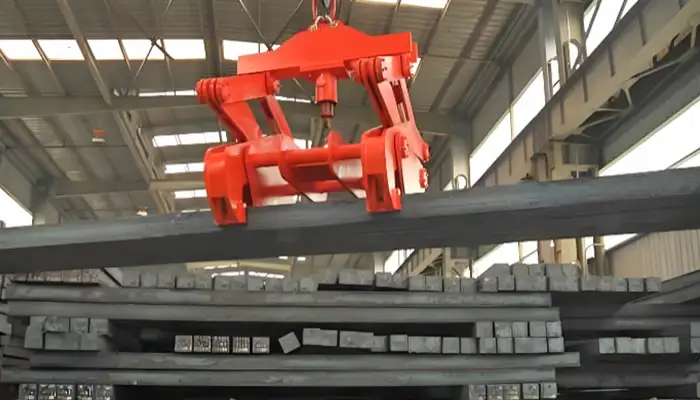
Clamp Weight
Clamp weight is a critical factor for crane buyers. It represents the total weight of the lifting device mounted on the crane, affecting lifting capacity, rail loads, and overall safety.
- The clamp body
- Hydraulic or mechanical system
- Grips or jaws
- Any attachments used for specific loads
| Clamp Type | Weight Range (kg) | Typical Use |
|---|---|---|
| Billet Clamp | 800–2,500 | Steel billets |
| Bloom Clamp | 1,500–3,500 | Blooms |
| Slab Clamp | 2,000–6,000 | Steel slabs |
| Plate Clamp | 500–1,500 | Steel plates |
- Material Type: Heavier steel alloys increase clamp weight.
- Design Type: Single jaw, double jaw, or multi-arm designs differ in mass.
- Lifting Capacity: Higher rated clamps are naturally heavier.
- Application Frequency: High-frequency operations may require reinforced clamps, adding weight.
- Reduces the effective lifting capacity of the crane.
- Impacts crane rail loads and structural stress.
- Affects safety, maintenance planning, and future upgrades.
How Clamp Weight Reduces Crane Capacity
Every crane has a rated lifting capacity, but adding a clamp reduces the effective lifting capacity. Understanding this relationship is crucial for safe operations.
Effective Crane Capacity Formula:
Effective Crane Capacity = Rated Crane Capacity − Clamp Weight
For example, a 20-ton overhead crane using a 2-ton clamp can lift only 18 tons safely.
- Overloading the crane, potentially damaging hoists, trolleys, and bridge structures.
- Unexpected downtime due to mechanical failures or safety interventions.
- Increased safety risks for operators and plant personnel when lifting beyond safe limits.
- Maintain a safety margin of 10–15% below effective lifting capacity.
- For overhead cranes, ensure runway beams can handle combined clamp and load weight.
- For gantry cranes, carefully evaluate wheel loads and foundation strength.
- For EOT cranes, account for dynamic effects such as acceleration, deceleration, and swinging loads.
Clamp Weight Effects on Crane Rail Loads
Clamp weight affects not only the crane's lifting capacity but also wheel loads, structural stress, and mill infrastructure. Buyers need to understand these impacts to ensure safety and longevity.
- Heavier clamps increase wheel pressure, potentially exceeding design limits.
- Runway beams may bend or deform if loads are underestimated.
- Continuous overload accelerates wear on crane wheels, rails, and support structures.
- Single girder cranes: Concentrated load can create higher stress on the rail, requiring stronger beams and careful wheel load calculation.
- Double girder cranes: Load is distributed across two girders, reducing stress on individual rails, but the crane structure must still support the added clamp weight.
- Evaluate rail load distribution to prevent bending or uneven wear.
- Check foundation strength to ensure long-term stability.
- Plan maintenance schedules based on extra stress caused by heavy clamps.
Selecting the Right Clamp-Crane Combination
Selecting the right crane for a clamp is more than matching capacities. Buyers must consider clamp weight, operation frequency, and manufacturer guidance to ensure safe, efficient lifting.
- Calculate effective lifting capacity by subtracting clamp weight from the crane's rated capacity.
- Leave a safety margin of 10–15% instead of barely meeting the load.
- Factor in future upgrades for heavier clamps to avoid limitations later.
- Low-frequency operations: Standard clamps and lighter cranes are sufficient.
- High-frequency operations: Reinforced cranes and clamps are recommended to withstand repeated cycles.
- Consider dynamic effects such as acceleration, deceleration, and load swinging for crane and rail longevity.
- Verify clamp weight, crane rated capacity, and rail load with the supplier.
- Ask for guidance on safety margins, suitable crane type, and structural requirements.
- Request technical drawings or calculations for the combined system before purchasing.
Buyer Checklist: Clamp Weight and Crane Load Considerations
Ensuring safe and efficient crane operation requires careful consideration of clamp weight, crane capacity, infrastructure, and dynamic effects. Use this checklist before making a purchase.
- Request detailed clamp weight specifications, including attachments and hydraulic components.
- Double-check weights for different clamp models if planning multiple lifting applications.
- Calculate effective crane capacity: Rated capacity − clamp weight.
- Maintain a safety margin of 10–15% for unforeseen variations.
- Consider the heaviest load you might lift, not just the average.
- Assess rail load distribution and potential deflection.
- Check the strength of support beams and runway structure.
- Ensure the foundation can sustain additional static and dynamic loads.
- Factor in start-stop motions during lifting and lowering.
- Consider side-to-side swinging loads, especially for heavy slabs and billets.
- Adjust safety margins to account for dynamic impact forces.
- Select a crane that can handle slightly heavier clamps than currently used.
- Keep space for upgraded rails or reinforced beams if loads increase.
- Maintain a record of all capacity calculations for future reference.
Conclusion
Clamp Weight Directly Impacts Crane Performance
The weight of the clamp is not just an accessory—it plays a critical role in determining the crane's effective lifting capacity and the loads applied to rails and supporting structures. Ignoring this factor can lead to overloading, accelerated wear, or even safety incidents.
- Clamp weight reduces the effective crane capacity.
- Heavier clamps increase rail stress, wheel loads, and structural strain.
Importance of Safe Lifting and Accurate Calculations
Proper planning and calculations are essential for safe and efficient crane operation. Buyers must ensure that every lifting scenario is evaluated, including the combined weight of the clamp and the load.
- Always apply safety margins to account for uncertainties.
- Consider dynamic forces such as acceleration, deceleration, and swinging loads.
- Verify that runway, support beams, and foundations can handle the combined weight.
Collaborate with Suppliers and Manufacturers
Working closely with crane and clamp suppliers ensures that your calculations are accurate and the system is compatible. This collaboration helps prevent costly mistakes and ensures long-term reliability.
- Confirm clamp specifications and crane rated capacities.
- Request technical documentation or load calculations for approval.
- Plan for future upgrades or heavier clamps to maintain operational flexibility.
Takeaway for Buyers
Proactive attention to clamp-crane compatibility is key for safe, efficient, and long-lasting crane operation. By understanding the impact of clamp weight, planning carefully, and consulting with suppliers, buyers can optimize their steel handling operations and protect their investment.