Explosion-Proof Overhead Cranes UAE Buyers Guide
Explosion-Proof Overhead Cranes: What UAE Buyers Must Know
Introduction
Explosion-proof overhead cranes are essential for industries where flammable gases, vapors, or combustible dust are present. Using a standard crane in such environments is risky. Even a small spark could trigger accidents, causing serious damage to people and property.
In the UAE, the need for explosion-proof cranes is particularly strong. The country has a high concentration of oil refineries, chemical plants, petrochemical facilities, and offshore platforms. These industries operate under strict safety rules, and cranes used in hazardous zones must comply with both international and local regulations.
When planning a purchase, buyers should focus on four main points:
- Certification: Ensuring cranes meet international (ATEX, IECEx) and local UAE standards.
- Maintenance: Regular inspection and servicing to maintain safety and reliability.
- Design: Choosing hoist types, enclosures, and crane configuration suited for hazardous zones.
- Compliance: Meeting UAE safety codes and industry-specific regulations.
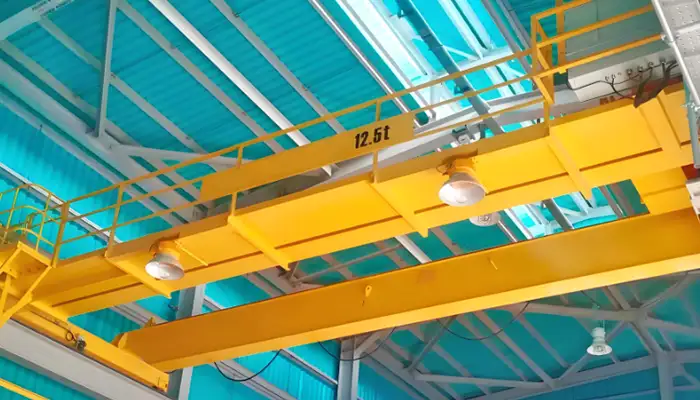
Explosion proof overhead crane for sale UAE
What Is an Explosion-Proof Overhead Crane?
At first glance, an explosion-proof crane may look like a regular overhead crane. But the differences are critical—these cranes are specifically designed to operate safely in hazardous environments.
Key Features
- Sealed Electrical Components
Motors, wiring, and control panels are fully enclosed to prevent sparks from escaping. This protects flammable atmospheres from ignition. - Flameproof Hoists and Motors
The lifting mechanism is built to operate without producing heat or sparks that could ignite flammable materials. - Special Enclosures to Prevent Sparks
Even small moving parts that could generate friction or heat are enclosed or coated, providing an extra layer of safety.
Typical Applications
Explosion-proof cranes are used in environments where safety cannot be compromised:
- Oil Refineries & Petrochemical Plants: Handling flammable gases, liquids, and high-risk materials.
- Chemical Factories: Manufacturing acids, solvents, or powders that ignite easily.
- Paint & Coating Facilities: Managing volatile vapors during production or storage.
- Offshore Platforms: Remote locations with limited emergency access, where risk management is critical.
For UAE buyers, understanding the application is key. The correct explosion-proof crane must match the zone rating, lifting capacity, and design requirements. Choosing the wrong crane can result in non-compliance, operational delays, or even accidents.
Why UAE Buyers Must Prioritize Explosion-Proof Cranes
For buyers in the UAE, explosion-proof overhead cranes are not just an option—they are often a requirement. Several factors make them critical for safe and efficient operations in high-risk industries.
- Cranes are used to move flammable liquids, gases, and hazardous powders.
- Standard cranes can create sparks from motors, electrical systems, or friction.
- Explosion-proof cranes are specifically designed to operate safely in such high-risk areas, reducing the chance of ignition.
- Local regulations: UAE authorities such as ESMA (Emirates Authority for Standardization and Metrology), DEWA, and ADNOC have specific safety codes for hazardous operations.
- International standards: ATEX and IECEx certifications are recognized benchmarks for explosion-proof equipment.
- Fires caused by sparks or overheating.
- Explosions triggered by flammable gases, vapors, or dust.
- Workplace accidents that can harm staff or damage equipment.
Certification and Standards Buyers Should Check
When buying an explosion-proof overhead crane, certification is not just a formality—it's proof that the crane is safe to use in hazardous environments. UAE buyers must pay close attention to both international and local standards to ensure compliance and safety.
- ATEX (Atmosphères Explosibles): European standard for equipment used in explosive atmospheres. It specifies requirements for electrical and mechanical safety in hazardous zones.
- IECEx: International certification covering equipment for explosive atmospheres. Recognized worldwide and often required for export and offshore operations.
- ISO Standards: Provide general quality and safety requirements for crane manufacturing, including design, testing, and performance.
- CE Marking: Indicates compliance with EU safety and quality standards. While not mandatory in the UAE, it demonstrates the crane meets recognized safety requirements.
- ESMA (Emirates Authority for Standardization and Metrology): Requires conformity with UAE safety and technical standards.
- ADNOC & DEWA Codes: Specific safety protocols may apply to cranes operating in oil, gas, or electrical facilities.
- Documentation: Buyers should request official certificates, inspection reports, and detailed technical specifications for UAE authorities.
- Request scanned copies of certificates and confirm their validity with issuing bodies.
- Check that the certifications match the crane model and configuration.
- Work with suppliers who have a track record of supplying certified cranes to UAE hazardous zones.
- Ask for reference installations in similar industries to verify compliance in practice.
Choosing the Right Explosion-Proof Crane
Selecting the right explosion-proof overhead crane goes beyond simply picking a model from a catalog. Buyers in the UAE must consider how the crane will be used, the environment it will operate in, and the specific requirements of their industry. Making the wrong choice can compromise safety, efficiency, and compliance.
- Crane Capacity: Choose a crane that can handle the maximum weight of your heaviest loads, plus a safety margin of 20–30%. Underestimating capacity can lead to mechanical failure or unsafe lifting.
- Span and Coverage: The crane should cover the full area where materials need to be moved. A span that is too short will require additional cranes or manual handling, reducing efficiency.
- Lifting Height: Ensure the crane's hook can reach the necessary height for stacking, storage, or loading operations.
- Heavy-Duty: Continuous use in demanding industrial environments, such as large refineries or chemical plants.
- Medium-Duty: Suitable for moderate usage, such as maintenance workshops or medium-scale chemical processing facilities.
- Light-Duty: Ideal for low-frequency lifting, smaller workshops, or storage areas handling lighter flammable materials.
- Zone Ratings: UAE facilities may have Zone 1 or Zone 2 classifications for flammable gases or vapors. Ensure the crane is rated for the correct zone.
- Temperature and Weather: Offshore or outdoor facilities may require corrosion-resistant coatings or weatherproof enclosures.
- Special Features: Explosion-proof limit switches, anti-sway devices, and controlled acceleration mechanisms can enhance both safety and precision.
- Wire Rope Hoists: Best for heavy-duty applications and longer lifts. Durable and reliable for industrial environments.
- Chain Hoists: Suitable for lighter loads and frequent stopping/starting operations.
- Motorized vs. Manual: Motorized hoists increase speed and reduce manual labor, while manual hoists may be sufficient for small workshops with lighter loads.
Maintenance and Safety Practices
Owning an explosion-proof crane is only part of the safety equation. Regular maintenance and inspections are critical to ensure the crane continues to operate safely in hazardous environments. Neglecting these practices can lead to mechanical failures, safety risks, or regulatory violations.
- Electrical Systems: Verify that wiring, motors, and control panels are intact and free from damage that could generate sparks.
- Mechanical Components: Inspect gears, bearings, hooks, and hoist mechanisms for wear or deformation.
- Structural Integrity: Examine beams, trolleys, and supports for cracks, corrosion, or other signs of weakening.
- Lubrication: Properly lubricate moving parts to prevent friction and heat buildup.
- Enclosure Integrity: Ensure all flameproof covers, seals, and housings are intact and properly secured.
- Wiring and Electrical Checks: Look for frayed wires, loose connections, or corrosion that could compromise safety.
- How to safely work with cranes in explosive atmospheres.
- Proper inspection and maintenance procedures for sealed electrical components and flameproof hoists.
- How to respond quickly to minor issues before they become safety hazards.
- Record all inspections, maintenance, and repairs.
- Include dates, personnel responsible, and specific actions taken.
- Keep documentation available for regulatory audits, insurance claims, and internal safety reviews.
Common Mistakes UAE Buyers Should Avoid
Buying an explosion-proof overhead crane is a significant investment. Making the wrong choice can lead to safety risks, compliance issues, and unexpected costs. Here are some common mistakes UAE buyers should be aware of:
- Non-certified cranes may not be safe in hazardous zones.
- Insurance coverage could be denied in case of an accident.
- Regulatory authorities may impose fines or halt operations.
- A Zone 2-rated crane in a Zone 1 area may fail to contain sparks or explosions.
- Misclassification can compromise worker safety and lead to non-compliance.
- Failing to budget for regular inspections and preventive maintenance.
- Choosing a supplier who does not provide spare parts readily in the UAE.
- Ignoring the importance of trained personnel for maintenance tasks.
- Delays in technical assistance or spare parts can halt operations.
- Local service providers familiar with UAE regulations and hazardous zones can prevent mistakes.
- Working with experienced suppliers ensures proper installation, testing, and ongoing maintenance.
Practical Tips for Buyers
Purchasing an explosion-proof overhead crane in the UAE is not just about lifting heavy loads—it's a long-term commitment to safety, efficiency, and regulatory compliance. Smart buyers consider practical factors that go beyond specifications. Here's a detailed guide to help make the right choice:
- Full ATEX, IECEx, and ISO certifications to confirm the crane meets international safety standards.
- Zone ratings documentation, indicating the crane's suitability for specific hazardous areas (e.g., Zone 1, Zone 2, Zone 21, Zone 22).
- Validation for the exact crane model and configuration, not just general certifications, to ensure it is truly compliant for your facility.
- Supplier references or past installations in similar UAE facilities to verify real-world compliance.
- Local spare parts availability to prevent extended downtime in case of component failure.
- Technical support for installation, testing, and troubleshooting specific to hazardous zones.
- Maintenance guidance for trained personnel on inspections, preventive maintenance, and emergency procedures.
- Training services if your staff need hands-on guidance on operating and maintaining explosion-proof equipment.
- Potential expansion of hazardous zones, which might require cranes with higher capacities or different configurations.
- Scalability of the crane system, such as the ability to add longer spans, higher lifting heights, or additional hoists in the future.
- Flexibility for diverse materials if operations shift to heavier or bulkier loads.
- Routine maintenance and inspections required for safety and compliance.
- Replacement parts and consumables over the crane's lifetime.
- Training and labor costs for personnel handling explosion-proof equipment.
- Downtime costs if the crane fails or is inadequate for hazardous zone operations.
Conclusion
Explosion-proof overhead cranes are not just equipment—they are a critical part of safety and operational efficiency in hazardous industries. In the UAE, where oil, gas, petrochemical, and chemical facilities dominate, using the right crane can prevent accidents, protect personnel, and ensure compliance with strict local and international safety standards.
Summary
- Explosion-proof cranes are designed to operate safely in environments with flammable gases, vapors, or dust.
- Choosing the correct capacity, span, duty classification, and hoist type is essential for both safety and productivity.
- Regular inspections, preventive maintenance, and proper documentation are vital for maintaining safety and meeting UAE regulatory requirements.
Actionable Advice for Buyers
- Verify Certifications: Always confirm ATEX, IECEx, ISO, and local UAE approvals before purchase.
- Select Zone-Appropriate Designs: Ensure the crane matches your facility’s hazardous zone rating (Zone 1, Zone 2, or dust zones).
- Plan Maintenance: Establish routine inspections and preventive maintenance schedules with trained personnel to keep the crane safe and reliable.
- Check Supplier Support: Ensure spare parts, technical guidance, and local service are readily available.
For UAE buyers, working with experienced suppliers is key. Choose manufacturers who understand hazardous environments, have proven installations in UAE facilities, and can provide ongoing support. A trusted supplier helps you not only comply with regulations but also maintain safe, efficient, and uninterrupted operations.