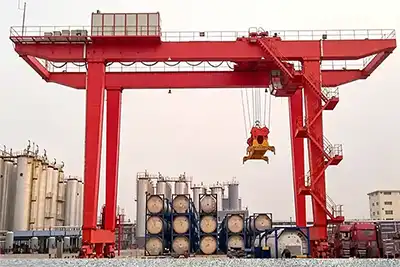
Rail Mounted Gantry Crane | Tailored to Your Load & Uses
Rail Mounted Gantry Crane | Tailored to Your Load & Uses
Yuantai Crane – BetterCrane Solution: Lifting Made Safer, Smarter, Stronger
Selecting the right rail mounted gantry crane (RMG crane) begins with a clear understanding of the loads you handle and how they are managed in daily operations. Industrial buyers should first evaluate load weight, shape, size, material behavior, and handling frequency before defining crane configuration.
At Yuantai Crane, our BetterCrane Solution approach ensures that once load conditions are clear, the crane system—including span, lifting height, trolley arrangement, hoist type, drive system, and lifting attachments—is engineered precisely to meet your operational and site requirements.
This structured approach ensures long-term efficiency, reduces operational risk, and delivers maximum return on investment for industrial lifting operations.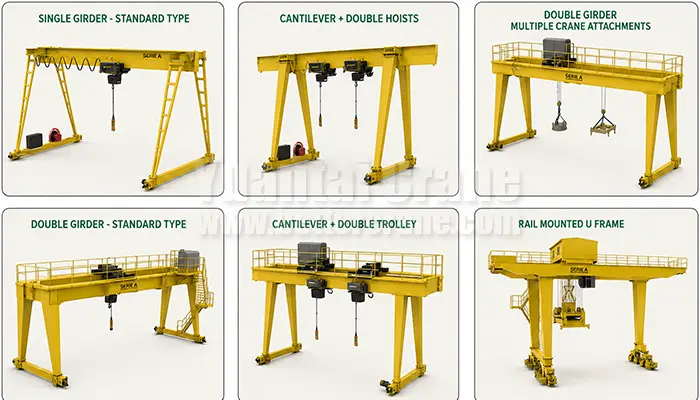
All Types of Rail Mounted Gantry Cranes Tailored for Industrial Material Handling Needs
Contact Us to Get Your Tailored Solustion: WhatsApp: + 86 150 3834 6929
Load Characteristics
Choosing the right rail mounted gantry crane starts with knowing exactly what you’ll lift. The weight, shape, and behavior of your load directly affect crane type, hoist, attachments, and safety. Here’s a clear, easy-to-follow breakdown.
Weight Range
| Load Type | Typical RMG Crane | Capacity | Configuration | Recommended Below-Hook Devices | Notes |
|---|---|---|---|---|---|
| Light | Single-girder, light-duty RMG | 1–20 tons | Single trolley, single hoist | Standard hook, small clamp, pallet hook, light vacuum lifter | Workshops, small assembly areas |
| Medium | Double-girder, medium-duty RMG | 20–80 tons | Single/dual trolley, single/dual hoist | C-hooks (coils), spreader beams, container spreaders | Fabrication plants, precast yards |
| Heavy | Heavy-duty double/multiple gantry RMG | 80–300 tons | Dual trolley, dual hoist, synchronized lifting | Multi-point frames, heavy spreader beams, large C-hooks, vacuum lifters | Steel mills, shipyard sections |
| Oversized | Tandem or multiple gantry cranes | 300+ tons | Tandem cranes, multiple synchronized hoists | Custom spreader beams, multi-hoist lifting rigs | Ship modules, oversized precast elements |
Tip: Always plan a 10–20% safety margin over max load for long-term operation.
FAQ: Load Characteristics for Rail Mounted Gantry Crane Selection
The first step in RMG crane selection is always the maximum load weight you plan to lift. This determines crane structure, hoist size, and duty class. In most industrial applications, rail mounted gantry cranes are grouped into four practical capacity ranges:
- Light load (1–20 tons): used in workshops, small yards, and general fabrication
- Medium load (20–80 tons): common in precast yards and steel handling
- Heavy load (80–300 tons): used in steel mills and large industrial logistics
- Oversized load (300+ tons): for ship modules, large bridge sections, and tandem lifting systems
In industrial projects, it is common practice to design the crane with a 10–20% safety margin above the maximum expected load, especially when lifting frequency is high or loads are not perfectly consistent.
For light industrial lifting, a single-girder rail mounted gantry crane is usually enough. It is simple, cost-efficient, and easy to operate.
- Typical capacity: 1–20 tons
- Configuration: single trolley, single hoist
- Common applications: workshops, small warehouses, maintenance areas
- Below-hook devices: standard lifting hook, small lifting clamp, pallet hook, light vacuum lifter
This type is often chosen when lifting is occasional rather than continuous.
Medium-duty lifting is one of the most common RMG crane applications in fabrication and precast industries. A double-girder rail mounted gantry crane is typically used.
- Typical capacity: 20–80 tons
- Configuration: single or dual trolley, single or dual hoist depending on load shape
- Common applications: precast concrete yards, steel fabrication plants, container handling zones
- Below-hook devices: C-hooks for steel coils, spreader beams for long materials, container spreaders
This category often balances flexibility and lifting efficiency in daily operations.
Heavy-duty lifting requires stronger structure and more stable control systems. In most cases, a heavy-duty double girder or multiple gantry RMG crane is selected.
- Typical capacity: 80–300 tons
- Configuration: dual trolley system, dual hoist, synchronized lifting control
- Common applications: steel mills, shipbuilding sections, heavy machinery assembly
- Below-hook devices: multi-point lifting frames, large spreader beams, heavy C-hooks, industrial vacuum lifters
These systems are designed for controlled lifting where load balance is critical during movement.
When loads exceed 300 tons, a single crane is usually not enough. The solution is a tandem rail mounted gantry crane system or multiple synchronized gantry cranes.
- Typical capacity: 300+ tons (combined lifting)
- Configuration: multiple cranes working in synchronization
- Common applications: ship modules, large bridge segments, oversized precast structures
- Below-hook devices: custom-designed spreader beams, multi-hoist lifting rigs, modular lifting frames
This type of system requires precise synchronization to ensure safe load distribution across multiple lifting points.
In industrial industrial operations, loads are not always static or perfectly balanced. That is why engineers usually apply a 10–20% safety margin above the maximum expected load.
This helps to:
- Reduce stress on structural components
- Improve long-term crane lifespan
- Handle unexpected overload situations
- Maintain stable operation under frequent lifting cycles
It is a standard practice in rail mounted gantry crane design and industrial lifting system engineering.
The most important rule is simple:
Start with the heaviest load, then define crane capacity, configuration, and below-hook device accordingly.
Once the load range is clear, the crane system can be properly matched in terms of:
- Structure (single girder, double girder, or multiple gantry)
- Hoist system (single or dual)
- Trolley arrangement
- Lifting attachments (hook, spreader, C-hook, grab, or vacuum system)
This approach ensures safer operation, better efficiency, and more predictable long-term performance in rail mounted gantry crane applications.
Shape & Size
| Shape | Typical RMG Crane | Capacity | Configuration | Recommended Below-Hook Devices | Notes |
|---|---|---|---|---|---|
| Regular (pallets, containers, boxes) | Single/double-girder | 5–40 tons | Single trolley, single hoist | Standard hooks, container spreaders, fork-style hooks | Easy handling |
| Long/Irregular (beams, pipes, timber, precast) | Double-girder, multiple gantry | 20–200 tons | Dual trolley, dual hoist | Adjustable spreader beams, multi-point slings, beam clamps | Balance load to prevent tipping |
| Flat/Fragile (glass, precast slabs) | Double-girder | 10–80 tons | Single/dual trolley, anti-sway | Vacuum lifters, multi-point lifting frames, anti-sway clamps | Handle gently to avoid damage |
| Cylindrical (coils, pipe rolls) | Single/double-girder | 20–150 tons | Single/dual trolley, single/dual hoist | C-hooks, coil grabs, anti-rotation devices | Ensure secure gripping and stability |
Tip: Always check length and width of the load against crane span and trolley travel.
FAQ: Load Shape & Size for Rail Mounted Gantry Cranes
The shape of the material you plan to lift determines crane type, span, trolley configuration, and below-hook attachments. Long, irregular, or fragile loads require more careful planning than regular, uniform items. Using the wrong crane or lifting device can cause swinging, tipping, or damage during handling.
The shape of the material you plan to lift determines crane type, span, trolley configuration, and below-hook attachments. Long, irregular, or fragile loads require more careful planning than regular, uniform items. Using the wrong crane or lifting device can cause swinging, tipping, or damage during handling.
Regular, uniform loads are the easiest to handle and allow for light to medium-duty RMG cranes.
- Typical RMG Crane: Single or double-girder
- Capacity: 5–40 tons
- Configuration: Single trolley, single hoist
- Recommended Below-Hook Devices: Standard hooks, container spreaders, fork-style hooks
- Practical Notes: Easy handling in warehouses or light industrial yards. Standard attachments are usually sufficient.
Tip: Even with regular loads, verify that container or pallet dimensions fit within crane span and trolley travel.
Long or irregular loads require double-girder or multiple gantry RMG cranes for stability and safe lifting.
- Typical RMG Crane: Double-girder or multiple gantry cranes
- Capacity: 20–200 tons
- Configuration: Dual trolley, dual hoist for better load balance
- Recommended Below-Hook Devices: Adjustable spreader beams, multi-point slings, beam clamps
- Practical Notes: Proper load distribution is critical. Use anti-sway systems or multiple lifting points to prevent tipping.
Tip: Measure total length carefully; even if weight is within capacity, excessive length may exceed safe travel or trolley limits.
Flat and fragile items are prone to cracking or breaking if lifted improperly. Medium-duty double-girder RMG cranes with anti-sway controls are ideal.
- Typical RMG Crane: Double-girder
- Capacity: 10–80 tons
- Configuration: Single or dual trolley with anti-sway system
- Recommended Below-Hook Devices: Vacuum lifters, multi-point lifting frames, anti-sway clamps
- Practical Notes: Move slowly and avoid sudden stops or starts. Handle with care to prevent damage.
Tip: Anti-sway or soft-grip attachments are critical for long, flat surfaces.
Cylindrical or round loads can roll or shift if not properly secured. Both single and double-girder RMG cranes can be used depending on weight.
- Typical RMG Crane: Single or double-girder
- Capacity: 20–150 tons
- Configuration: Single or dual trolley, single or dual hoist
- Recommended Below-Hook Devices: C-hooks, coil grabs, anti-rotation devices
- Practical Notes: Always confirm the coil diameter and weight. Secure gripping is key to prevent rotation or swinging.
Tip: Ensure attachment design accounts for the weight distribution along the cylinder.
Always check load dimensions (length, width, diameter) against crane span, trolley travel, and lifting height. Even when the weight is within capacity, long or wide loads can exceed safe operating limits. Proper below-hook attachment selection ensures safety, stability, and material integrity.
Material Behavior
| Material | Crane Type | Capacity | Below-Hook Devices | Practical Notes |
|---|---|---|---|---|
| Rigid (steel, machinery) | Double-girder or heavy-duty gantry | 20–300 tons | Hooks, lifting clamps, spreader beams | Predictable handling, but check alignment |
| Fragile (glass, precast concrete) | Double-girder, medium-duty | 10–80 tons | Vacuum lifters, multi-point frames, soft clamps | Anti-sway devices recommended |
| Flexible / Deformable (bundles, wire coils) | Medium/heavy-duty double-girder | 20–100 tons | Adjustable clamps, spreader beams, slings | Avoid load shift during travel |
| Bulk (scrap, ore, aggregates) | Heavy-duty RMG or multiple gantries | 50–300+ tons | Grab buckets, magnets, clamshell grabs | Plan for spillage, dust, and swing control |
Tip: Consider surface conditions (wet, oily, hot) when choosing lifting attachments.
FAQ: Material Behavior in Rail Mounted Gantry Crane Selection
Material behavior affects how a load reacts during lifting, travel, and positioning. It influences crane type, lifting speed, stability control, and below-hook attachments.
In industrial projects, two loads with the same weight can require completely different handling systems if their material properties are different. That is why rail mounted gantry crane selection always goes beyond just tonnage.
Material behavior affects how a load reacts during lifting, travel, and positioning. It influences crane type, lifting speed, stability control, and below-hook attachments.
In industrial projects, two loads with the same weight can require completely different handling systems if their material properties are different. That is why rail mounted gantry crane selection always goes beyond just tonnage.
Rigid materials are stable in shape, so they are easier to control during lifting. However, they are often heavy and require precise positioning.
- Crane Type: Double-girder or heavy-duty gantry crane
- Capacity Range: 20–300 tons
- Below-Hook Devices: Standard hooks, lifting clamps, spreader beams
Practical Notes:
- Load movement is predictable
- Alignment between hook and lifting point must be accurate
- Suitable for steel components, industrial machinery, and fabricated structures
Tip: Even rigid loads need careful positioning to avoid uneven stress during lifting.
Fragile materials require controlled lifting because even small impact or vibration can cause damage. These applications usually rely on medium-duty double-girder RMG cranes with anti-sway control.
- Crane Type: Double-girder, medium-duty RMG crane
- Capacity Range: 10–80 tons
- Below-Hook Devices: Vacuum lifters, multi-point lifting frames, soft-grip clamps
Practical Notes:
- Smooth acceleration and deceleration is important
- Anti-sway systems reduce swinging during travel
- Common in precast yards and glass handling operations
Tip: Avoid sudden stops. Even small shocks can damage fragile surfaces.
Flexible loads do not keep a fixed shape, so they may shift during lifting or transport. This requires stronger control and proper load balancing.
- Crane Type: Medium or heavy-duty double-girder RMG crane
- Capacity Range: 20–100 tons
- Below-Hook Devices: Adjustable clamps, spreader beams, slings
Practical Notes:
- Load movement must be controlled during travel
- Risk of shifting increases with speed
- Often used in steel distribution yards and coil handling areas
Tip: Always check bundle tightness before lifting to avoid deformation mid-air.
Bulk materials behave differently because they are loose, heavy, and often uneven in distribution. They require specialized grabbing systems instead of standard hooks.
- Crane Type: Heavy-duty RMG crane or multiple gantry crane system
- Capacity Range: 50–300+ tons
- Below-Hook Devices: Grab buckets, electromagnetic lifters, clamshell grabs
Practical Notes:
- Spillage control is important during lifting and unloading
- Dust and material flow must be considered
- Common in ports, steel plants, and bulk storage yards
Tip: Choose attachment based on material density and moisture level.
Always consider surface condition and environment in addition to material type. Wet, oily, hot, or dusty surfaces can change how a load behaves during lifting.
This directly affects:
- Grip strength of lifting attachments
- Safety of lifting operation
- Stability during travel
A correct match between material behavior, crane type, and below-hook device is essential for safe and stable rail mounted gantry crane operation.
Crane Type & Configuration
Choosing the right type of rail mounted gantry crane depends on the load weight, size, frequency, and operational environment. Each crane type has its practical advantages, typical capacities, and suitable below-hook devices. Below is a breakdown to help you quickly understand which crane fits your application.
Single Girder RMG Crane
Single-girder RMG cranes are ideal for light-duty operations in workshops, small fabrication yards, or compact storage areas. They are cost-efficient and easy to install, requiring less structural support and smaller foundations.
| Feature | Details |
|---|---|
| Typical Capacity | 1–20 tons |
| Typical Span | 10–25 m |
| Lifting Height | 6–12 m |
| Trolley & Hoist | Single trolley, single hoist |
| Common Below-Hook Devices | Standard lifting hooks, pallet hooks, small vacuum lifters, light clamps |
| Practical Uses | Light machinery, pallets, small containers, workshop components |
Tip: Single-girder RMGs are great for low-frequency lifting, but may not suit very long or unbalanced loads.
Double Girder RMG Crane
Double-girder RMG cranes handle medium-duty to heavy loads and are widely used in industrial environments like steel mills, precast factories, and container yards. They provide higher stability, greater lifting capacity, and longer span options.
| Feature | Details |
|---|---|
| Typical Capacity | 20–80 tons |
| Typical Span | 20–35 m |
| Lifting Height | 6–15 m |
| Trolley & Hoist | Single or dual trolley, single or dual hoist |
| Common Below-Hook Devices | C-hooks (steel coils), spreader beams (long loads), vacuum lifters (fragile panels), container spreaders |
| Practical Uses | Steel coils, precast panels, timber bundles, medium containers |
Tip: Dual-trolley or dual-hoist options allow for longer or unbalanced loads, reducing sway and improving safety.
Multiple Gantry Crane System
For heavy or oversized loads, multiple gantry cranes working in tandem are the go-to solution. This setup is common in shipyards, large bridge sections, or oversized precast modules. Synchronized lifting ensures maximum safety and precise load handling.
| Feature | Details |
|---|---|
| Typical Capacity | 80–300+ tons |
| Typical Span | 30–45 m (customizable for long loads) |
| Lifting Height | 10–15 m (adjustable) |
| Trolley & Hoist | Dual or multiple synchronized hoists |
| Common Below-Hook Devices | Multi-point lifting frames, tandem spreader beams, modular lifting rigs |
| Practical Uses | Ship modules, bridge sections, oversized steel structures |
Tip: Tandem or multiple crane operation requires careful synchronization and planning of lifting points.
Span & Travel
- Typical Span: 20–45 m for most RMG cranes; can be customized based on yard width.
- Rail Alignment: Precision rails ensure smooth travel and reduce wear on the trolley and hoist system.
Practical Note: Longer spans may require dual or multiple cranes to maintain safe load distribution.
Lifting Height
- Range: 6–15 m, adjustable for stacking operations, site clearance, and material flow.
- Consideration: Ensure lifting height matches both load size and storage requirements.
Trolley & Hoist Options
- Single Trolley: Standard lifts, suitable for most medium-duty operations.
- Dual Trolley: For long, unbalanced, or irregular loads; reduces load sway.
- Single Hoist: General lifting operations.
- Dual Hoist: Synchronized heavy lifting; ideal for oversized or heavy-duty materials.
Tip: Matching trolley and hoist configuration to your load shape, weight, and frequency is critical for safe and efficient operations.
Crane Type & Configuration (FAQ Format)
This section explains rail mounted gantry crane types in a practical FAQ format. It helps buyers quickly match RMG crane configuration, capacity, and below-hook devices with industrial industrial applications such as steel yards, precast plants, ports, and shipyards.
A single girder rail mounted gantry crane is mainly used for light-duty material handling in compact industrial areas such as workshops, small warehouses, and light fabrication yards. It is designed for simple lifting tasks where high-speed or heavy-cycle operation is not required.
- Typical capacity: 1–20 tons
- Span range: 10–25 m
- Lifting height: 6–12 m
- Configuration: Single trolley, single hoist
Common below-hook devices:
- Standard lifting hook
- Small lifting clamps
- Light vacuum lifters (for panels or sheets)
- Pallet hooks
Practical note: This type is often selected when budget control and simple installation are priorities, especially for low-frequency lifting.
A double girder RMG crane is the most commonly used configuration for industrial-grade material handling, especially where loads are heavier, longer, or require stable movement.
It is widely used in steel yards, precast concrete plants, logistics hubs, and container handling areas.
- Typical capacity: 20–80 tons
- Span range: 20–35 m
- Lifting height: 6–15 m
- Configuration: Single or dual trolley, single or dual hoist
Common below-hook devices:
- C-hooks for steel coils
- Spreader beams for long beams or pipes
- Container spreaders for logistics operations
- Vacuum lifters for precast panels
- Multi-point lifting frames
Practical note: Dual hoist systems are often used when loads are long, unbalanced, or require controlled lifting on both ends.
A multiple gantry crane system is designed for very heavy or oversized lifting tasks, where a single crane is not enough to safely handle the load. These systems are commonly used in shipyards, bridge construction, and large structural assembly projects.
- Typical capacity: 80–300+ tons (system-based lifting)
- Span range: 30–45 m or customized
- Lifting height: 10–15 m or higher depending on project
- Configuration: Tandem cranes with synchronized control
Common below-hook devices:
- Modular lifting beams
- Multi-point lifting frames
- Tandem spreader systems
- Custom rigging structures
Practical note: Proper synchronization between cranes is critical. Even small timing differences can affect load balance.
The span and rail travel distance depend on yard layout, storage pattern, and material flow design.
- Typical span range: 20–45 meters
- Rail travel: Fully customized based on yard length
Design focus:
- Smooth trolley movement
- Accurate rail alignment
- Reduced wheel wear and structural stress
Practical note: Longer spans often require stronger girder design or dual crane coordination for stability.
Lifting height is selected based on stacking height, material size, and clearance requirements.
- Standard range: 6–15 meters
- Low clearance yards: 6–10 m
- High stacking applications: 10–15 m+
Practical note: In precast yards and container terminals, lifting height directly affects stacking efficiency and yard capacity.
Trolley and hoist selection depends on load shape, lifting precision, and operational complexity.
- Single trolley:
Used for standard lifting tasks and regular loads - Dual trolley:
Used for long, irregular, or unbalanced loads such as beams or ship sections - Single hoist:
Standard lifting operations with moderate complexity - Dual hoist:
Synchronized lifting for heavy, long, or precision-balanced loads
Practical note: Dual systems improve load control but require higher operator coordination or automated control systems.
The selection usually follows a simple engineering logic:
- Light loads → Single girder RMG crane
- Medium industrial loads → Double girder RMG crane
- Heavy or oversized loads → Multiple gantry crane system
- Long or irregular loads → Dual trolley or dual hoist setup
- High precision lifting → Synchronized control systems
Practical note: In industrial projects, load shape is often more important than weight alone when choosing configuration.
Lifting Devices & Attachments (Rail Mounted Gantry Crane)
| Load Type | Typical Lifting Devices & Attachments | Application Notes |
|---|---|---|
| Containers | Telescopic spreaders, twist-lock systems, twin-lift spreaders | Standard solution in ports and container yards. Ensures fast locking and safe stacking/unstacking. |
| Steel Coils | C-hooks, coil grabs, anti-rotation devices | Prevents coil rolling and maintains balance during lifting and transport. |
| Long Materials | Adjustable spreader beams, multi-point lifting frames | Used for beams, pipes, timber bundles; ensures load balance across multiple points. |
| Precast Panels | Vacuum lifters, multi-point frames, anti-sway systems | Reduces surface damage and improves stability for fragile concrete elements. |
| Bulk Materials | Grab buckets, electromagnetic lifting systems | Suitable for scrap, ore, aggregates; allows continuous loading and unloading. |
FAQ Format (Practical Buyer Questions)
Container handling in rail mounted gantry crane systems relies on high-speed, standardized lifting attachments designed for repeated port operations.
- Typical Devices: Telescopic spreaders, twist-lock systems, twin-lift spreaders
- Typical Crane Type: Port RMG cranes, double-girder high-duty cranes
- Capacity Range: 30–80+ tons depending on container size and lifting mode
- Twist-lock system ensures secure engagement with container corner castings
- Telescopic spreaders adjust for different container lengths (20ft, 40ft, 45ft)
- Twin-lift spreaders improve efficiency in high-volume container yards
Key point: Container spreaders are designed for speed, safety, and repetitive lifting cycles in logistics terminals.
Steel coils require controlled lifting because they can roll or shift easily during handling. Specialized below-hook devices are used.
- Typical Devices: C-hooks, coil grabs, anti-rotation systems
- Typical Crane Type: Medium to heavy-duty double girder RMG crane
- Capacity Range: 20–150 tons
- C-hooks support coils from the inner diameter
- Coil grabs provide stronger grip for heavy or tight coils
- Anti-rotation systems prevent swinging during crane travel
Key point: Coil stability is critical—rotation control is as important as lifting capacity.
Long materials are not heavy in one point, but their length creates balance challenges. Multi-point lifting is usually required.
- Typical Devices: Adjustable spreader beams, multi-point lifting frames
- Typical Crane Type: Double girder or multiple gantry RMG cranes
- Capacity Range: 20–200 tons depending on load size
- Load must be distributed evenly across lifting points
- Dual trolley systems are often used for balance control
- Prevents bending stress during lifting
Key point: Length, not just weight, determines the lifting system design.
Precast panels are fragile and surface-sensitive, so lifting must avoid pressure points and sudden movement.
- Typical Devices: Vacuum lifters, multi-point frames, anti-sway systems
- Typical Crane Type: Medium-duty double girder RMG crane
- Capacity Range: 10–80 tons
- Vacuum systems reduce direct mechanical contact
- Multi-point frames distribute load evenly
- Anti-sway control improves positioning accuracy
Key point: Surface protection is as important as load capacity in precast handling.
Bulk materials like scrap, ore, or aggregates require continuous grabbing and releasing rather than fixed-point lifting.
- Typical Devices: Grab buckets, electromagnetic lifting systems
- Typical Crane Type: Heavy-duty RMG cranes or multiple gantry crane systems
- Capacity Range: 50–300+ tons
- Grab buckets handle loose materials like coal or sand
- Electromagnets are used for steel scrap and metal waste
- Designed for high-cycle, continuous operation
Key point: Bulk handling focuses on flow efficiency, not precision positioning.
The correct lifting device depends on material type, shape, and handling frequency, not just crane capacity.
In practical rail mounted gantry crane applications:
- Containers need speed and standardization
- Coils need rotation control
- Long loads need balance
- Precast requires surface protection
- Bulk materials require continuous flow handling
Matching the correct attachment ensures safer operation, lower damage risk, and more stable crane performance in industrial environments.
Site & Operational Conditions (Rail Mounted Gantry Cranes)
| Consideration | Key Details | Practical Notes |
|---|---|---|
| Indoor vs Outdoor | Indoor: controlled environment; Outdoor: exposure to wind, rain, dust | Outdoor cranes may need weatherproofing, higher duty class, and wind monitoring systems. |
| Rail Foundation & Ground Capacity | Ensure rails are supported by strong foundations, adequate load-bearing soil or reinforced concrete | Prevents uneven crane travel, structural damage, and unsafe lifting conditions. |
| Yard Layout, Width & Stacking Clearance | Analyze span, travel length, stacking height, and aisle width | Adequate clearance ensures smooth trolley movement, reduces collision risk, and improves stacking efficiency. |
| Wind Exposure & Environmental Conditions | Wind speed, coastal exposure, temperature, dust, humidity | High wind areas require anti-sway systems and reduced lifting speeds; extreme temperatures may require specialized motors or lubrication. |
| Future Expansion Planning | Plan for future yard growth, higher load requirements, or automation upgrades | Avoid costly modifications later; reserve space for longer rails or higher stacks. |
| Automation Level | Manual, semi-automatic, or fully automated RMG systems | Automation affects crane control system, safety devices, and required operator training. |
FAQ Format (Practical Buyer Questions – Site & Environment)
It depends on your operational environment:
Indoor Installation:
- Controlled environment
- Less exposure to wind, rain, dust
- Lower duty class may suffice
Outdoor Installation:
- Exposed to weather conditions
- May require weatherproof components, wind monitoring, and higher duty rating
- Critical for port, steel yard, or precast outdoor operations
Practical Tip: Even light-duty indoor cranes should be checked for condensation or humidity, which can affect electrical systems over time.
The crane's safety and smooth operation rely heavily on the foundation:
- Ensure rails are on strong, level, and reinforced support
- Ground must handle maximum crane wheel loads without settlement
- Poor foundation can lead to rail misalignment, uneven travel, and mechanical wear
Tip: Conduct soil and structural assessment before installation. Reinforced concrete or steel-reinforced pads are standard in heavy-duty yards.
Yard geometry directly impacts crane travel, stacking, and efficiency:
- Sufficient span and travel length to cover material positions
- Aisle width must allow trolley movement and clearance for long loads
- Proper stacking height ensures safe lifting and visibility
Practical Tip: Plan the yard as if you are running the crane at full capacity every day. Even small obstructions can slow operations and create safety hazards.
Outdoor cranes face natural forces that can affect safety and efficiency:
- Wind can sway loads, especially high or long items
- Dust, sand, or moisture can impact motors, brakes, and electrical systems
- Extreme cold or heat can affect lubrication and wire ropes
Practical Tip: In windy areas, consider anti-sway systems, speed restrictions, or full automation to stabilize loads.
Industrial yards evolve:
- You might need longer rails, higher stacking, or heavier loads in the future
- Space reservation avoids expensive retrofits or relocation
- Automation upgrades are easier when expansion is considered during initial layout
Practical Tip: Always leave extra rail length and clearance to accommodate growth without major redesigns.
Automation level influences crane selection, safety, and operational workflow:
- Manual RMG: Operator directly controls all movement; simple and cost-effective
- Semi-automatic: Certain functions automated (e.g., positioning, speed control), reduces operator workload
- Fully automated: High-speed operation with minimal human intervention; requires precise rail alignment, sensors, and control systems
Practical Tip: Choose automation based on material type, frequency of lifts, and operational complexity. For busy container yards or steel distribution yards, semi or fully automated RMG cranes often improve efficiency and safety.
Duty Classification & Cycle Frequency (Rail Mounted Gantry Cranes)
| Duty Class | Typical Application | Lift Frequency | Typical RMG Crane | Practical Notes |
|---|---|---|---|---|
| Light Duty | Workshops, maintenance areas | Occasional lifts | Single-girder, light-duty RMG | Handles low-volume, non-continuous operations. Simple crane setup and standard hoist sufficient. |
| Medium Duty | Fabrication plants, precast yards | Moderate cycles | Double-girder, medium-duty RMG | Frequent but not continuous lifting; dual trolley may be used for balance on long loads. |
| Heavy Duty | Steel mills, ports | Frequent lifts | Heavy-duty double-girder or multiple gantry RMG | Requires robust structure, dual hoists, anti-sway systems for repetitive heavy lifting. |
| Continuous Duty | Automated container terminals | High-intensity, 24/7 | Fully automated RMG, heavy-duty double/multiple gantries | Cranes operate continuously with high-speed trolleys, automated positioning, and advanced safety systems. |
Tip: Duty class impacts motor sizing, gearbox rating, and maintenance schedule—always match crane design to actual cycle frequency.
FAQ Format (Practical Buyer Questions – Duty Classification)
Light-duty RMG cranes are designed for occasional lifting in workshops or maintenance areas.
- Lift Frequency: Low, occasional lifts per hour
- Typical Crane Type: Single-girder, light-duty RMG
Practical Notes:
- Easy to install and operate
- Standard hoists and simple trolleys are sufficient
- Ideal for small workshops, assembly areas, or light material handling
Key point: Best for low-volume operations where efficiency is secondary to flexibility.
Medium-duty cranes handle moderate lifting cycles in industrial settings like fabrication plants or precast yards.
- Lift Frequency: Moderate, multiple lifts per hour
- Typical Crane Type: Double-girder, medium-duty RMG
Practical Notes:
- Often equipped with single or dual trolleys for load stability
- Handles heavier or longer loads than light-duty cranes
- Maintenance schedule should reflect moderate use
Key point: Medium-duty RMG cranes are the "workhorse" in many industrial yards.
Heavy-duty cranes are built for frequent lifting of heavy loads in steel mills, ports, or large industrial yards.
- Lift Frequency: High, repeated lifts per hour
- Typical Crane Type: Heavy-duty double-girder or multiple gantry RMG
Practical Notes:
- Dual hoists and anti-sway systems improve control for repetitive lifting
- Designed for heavy or oversized items like steel coils, machinery, or containers
- Structure must withstand long-term stress
Key point: Heavy-duty cranes balance strength, stability, and operator control under continuous high loads.
Continuous-duty cranes operate at very high frequency, often fully automated in container terminals or logistics hubs.
- Lift Frequency: 24/7 operation, high-intensity cycles
- Typical Crane Type: Fully automated heavy-duty double or multiple gantry RMG cranes
Practical Notes:
- High-speed trolleys and precise automated controls
- Sensors, anti-sway, and safety interlocks ensure stability and minimize downtime
- Maintenance and monitoring systems are critical for uninterrupted operation
Key point: Continuous-duty RMG cranes are designed for speed, precision, and reliability in high-volume industrial logistics.
Customized RMG Crane Options – Yuantai BetterCrane Solution
| Customization Type | Key Options | Practical Notes |
|---|---|---|
| Structural | Adjustable span, modular girder design; variable lifting height; reinforced structures; modular for transport | Allows cranes to fit tight yard layouts, long spans, or multi-site relocation. Modular systems reduce installation time. |
| Operational | Variable speed drives; anti-sway/load stabilization; operator cabin, remote, or fully automated; PLC-based smart control | Matches your workflow and load types. Enables precise positioning, smoother lifting, and automation integration. |
| Lifting System | Single/dual hoist; tandem synchronized lifting; specialized hooks (C-hooks, spreader beams, coil grabs, vacuum lifters); automatic container spreaders with twist-locks | Supports a variety of materials from steel coils and long beams to containers and precast panels. Synchronized systems improve safety for heavy or oversized loads. |
| Environmental | Windproof systems; anti-corrosion for coastal areas; cold-resistant/high-temperature electrical systems; dust-proof and explosion-proof solutions | Ensures safe, reliable operation in harsh conditions such as ports, steel mills, or outdoor precast yards. |
Tip: Every Yuantai RMG crane is designed as a BetterCrane Solution, meaning the structure, lifting system, and control features are fully tailored to your load, site layout, and operational workflow.
FAQ Format (Practical Buyer Questions)
Yes. Structural customization is a core part of the BetterCrane Solution:
- Options: Adjustable span, modular girder design, variable lifting height, reinforced structures
Practical Benefits:
- Fits irregular or confined yard layouts
- Reduces installation time with modular systems
- Supports long-term expansion or multi-site relocation
Key point: Structural customization ensures the crane matches your exact space and operational requirements.
Absolutely. Operational customization ensures cranes match your workflow:
- Options: Variable speed drives, anti-sway/load stabilization, operator cabin, remote operation, fully automated operation, PLC-based smart controls
Practical Benefits:
- Smooth lifting for fragile loads
- Precise positioning for long, irregular items
- Automation reduces labor and improves efficiency in high-volume yards
Key point: Operational customization is essential when working with mixed materials, frequent lifts, or automated container handling.
Yes. Yuantai RMG cranes support a wide range of lifting devices to match your materials:
- Options: Single or dual hoist, tandem synchronized lifting, C-hooks, spreader beams, coil grabs, vacuum lifters, automatic container spreaders with twist-locks
Practical Benefits:
- Handles steel coils, containers, precast panels, and long beams safely
- Synchronized systems allow heavy or oversized loads to be lifted safely and efficiently
- Specialized hooks ensure secure grip and load stability
Key point: Matching the lifting device to load type is critical for safety and operational efficiency.
Yes. Environmental customization is available for challenging industrial sites:
- Options: Windproof systems for outdoor yards, anti-corrosion coatings for coastal sites, cold-resistant or high-temperature electrical systems, dust-proof and explosion-proof solutions
Practical Benefits:
- Reliable operation in ports, steel mills, precast yards, or outdoor installations
- Reduces downtime and maintenance in extreme weather or dusty environments
Key point: Environmental customization ensures the crane works safely and consistently, no matter the site conditions.
The BetterCrane Solution means your RMG crane is fully engineered for your industrial load, site layout, and operational workflow:
- Combines structural, operational, lifting system, and environmental customization
- Ensures maximum safety, efficiency, and ROI
- Supports long-term industrial growth with modular and upgrade-ready design
Key point: With Yuantai, you're not just buying a crane—you're getting a tailored solution that works for your specific materials, workflow, and environment.
Integrated Buyer Decision Path – Yuantai BetterCrane Solution
| Decision Factor | What to Consider | Practical Outcome / Selection |
|---|---|---|
| Load Weight | Total weight per lift, safety margin (10–20%) | Determines crane capacity, structural class (light, medium, heavy, continuous) |
| Load Shape & Size | Regular, long, fragile, cylindrical; dimensions | Guides span, trolley configuration, hoist setup, and lifting attachments |
| Material Behavior | Rigid, fragile, flexible, bulk | Determines lifting devices, anti-sway or load stabilization systems, grip method |
| Cycle Frequency / Duty | Occasional, moderate, frequent, continuous | Influences motor type, drive system, duty classification, maintenance plan |
Tip: Following this path ensures you select the right crane structure, attachments, and operational setup for both safety and efficiency.
FAQ Format (Practical Buyer Questions)
Load weight is the first factor in determining crane type:
- Considerations: Total lift weight plus safety margin (usually 10–20%)
- Outcome: Determines crane capacity and structural class—light, medium, heavy, or continuous duty
- Practical Tip: Never design exactly to maximum load. Extra margin ensures long-term durability and safety.
The shape and dimensions of the material affect the crane span, trolley configuration, and lifting setup:
- Considerations: Regular pallets vs long beams, flat panels, or cylindrical coils
- Outcome: Guides span length, number of trolleys, hoist configuration, and below-hook devices
- Practical Tip: Long or irregular loads often require dual trolleys or spreader beams to maintain balance.
Material type influences how the load must be gripped and stabilized:
- Considerations: Rigid steel, fragile precast panels, flexible bundles, or bulk materials
- Outcome: Determines lifting attachments (C-hooks, vacuum lifters, coil grabs, spreader beams) and anti-sway/load stabilization
- Practical Tip: Fragile or deformable materials require gentle acceleration/deceleration and properly distributed lifting points.
Lift frequency or duty class determines mechanical and electrical design:
- Considerations: Occasional (workshops) vs continuous (automated container terminals)
- Outcome: Influences motor type, gearbox, drive system, and duty classification
- Practical Tip: High-frequency lifts require robust motors, advanced drives, and scheduled preventive maintenance to ensure safety and efficiency.
Following this step-by-step path ensures that every component of the RMG crane matches your operational requirements:
- Load Weight → selects the structural class and overall capacity
- Load Shape/Size → determines crane span, trolley, and hoist layout
- Material Behavior → selects lifting attachments and stabilization systems
- Cycle Frequency → defines motor, drive, and duty class
Key Point: Using this integrated approach prevents overbuilding, under-specifying, or unsafe operation, and maximizes efficiency and ROI.
Practical Selection Examples – Rail Mounted Gantry Crane Applications
25-Ton Steel Coil Handling (Steel Yard / Processing Line)
In steel coil handling yards, the main concern is load stability, rotation control, and safe positioning during frequent lifting and stacking. A rail mounted gantry crane in this range is usually used for coil storage, loading, and transfer between processing stations.
- Load Type: Steel coils (cylindrical, high-density, rolling risk)
- Typical RMG Crane: Medium-duty double-girder rail mounted gantry crane
- Capacity: 20–40 tons (commonly configured around 25 tons working load)
- Configuration: Single or dual trolley system, single or dual hoist depending on yard layout
- Below-Hook Device: C-hook, coil grab, anti-rotation device
Practical Operation Notes:
- C-hook is commonly used for inner diameter lifting of coils
- Dual trolley configuration helps balance long or heavy coil sets
- Anti-rotation control is important to prevent swinging during travel
- Moderate cycle operation fits fabrication plants and steel distribution yards
Key point: The focus here is not only lifting capacity, but controlled coil handling without rotation or edge damage.
150-Ton Ship Module Handling (Shipyard / Heavy Assembly Zone)
Ship module lifting is a high-precision operation involving very heavy, oversized, and often irregular structures. In many cases, a single crane is not sufficient, so a synchronized multiple gantry system is used.
- Load Type: Ship modules / large welded sections (oversized, uneven load distribution)
- Typical RMG Crane: Heavy-duty multiple rail mounted gantry cranes
- Capacity: 120–200+ tons (system-based lifting capacity)
- Configuration: Dual or multiple cranes working in synchronization, dual hoist system, low-speed precision control
- Below-Hook Device: Custom spreader beams, multi-point lifting frames, synchronized lifting rigs
Practical Operation Notes:
- Load balancing is critical due to uneven weight distribution in ship modules
- Dual hoist synchronization ensures stable lifting across multiple points
- Low-speed operation is required for precise alignment during assembly
- Anti-sway and positioning systems reduce lateral movement during long travel distances
Key point: In shipyard applications, the priority is controlled precision lifting of oversized structures rather than lifting speed.
Key Practical Insight for Both Cases
Although both applications fall under rail mounted gantry crane systems, their design logic is very different:
- Steel coils: Focus on rotation control, handling frequency, and safe gripping
- Ship modules: Focus on load balance, synchronization, and structural precision
This is why load type always defines the crane configuration, not just tonnage.
Start with your load, then match crane design and operational conditions. Yuantai Crane’s BetterCrane Solution ensures maximum safety, efficiency, and ROI for every rail mounted gantry crane application.
Yuantai Crane – Lifting Made Safer, Smarter, Stronger.