Rail-Free Semi Gantry Crane: When to Choose It
Introduction: Understanding Rail-Free Semi Gantry Cranes
What is a Rail-Free Semi Gantry Crane?
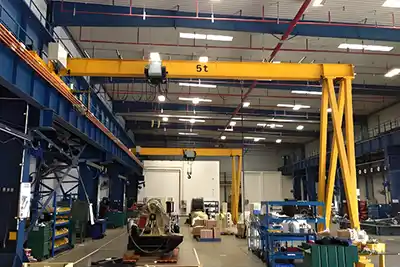
A rail-free semi gantry crane is a lifting crane that moves on wheels directly on the workshop floor. It does not need ground rails.
It is also called a mobile semi gantry crane or floor traveling gantry crane.
In simple terms: one side runs on a fixed beam or wall support, and the other side moves on the ground with wheels.
- No rail tracks on the floor
- One side fixed, one side moving on wheels
- Can work indoors or outdoors
- Easy to install and move
This type is often used when a full rail system is not available or not needed.
How It Is Different from Other Gantry Cranes
To choose correctly, it helps to compare it with other common crane types.
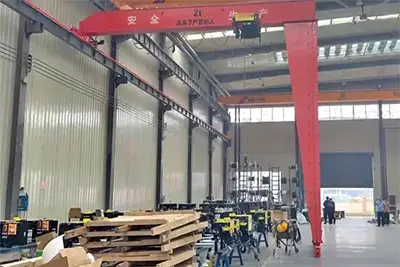
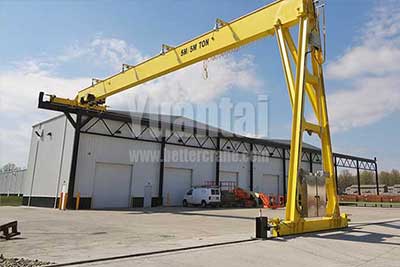
Rail-mounted semi gantry crane
Runs on fixed rails on the ground
Works best in fixed production lines
Movement is limited to one path
Full gantry crane
Has two legs running on rails
Used for heavy outdoor work and large yards
Needs strong civil foundation
Rail-free semi gantry crane
No ground rails needed
One side runs on wheels on the floor
Easy to move and adjust layout
In short, rail-based cranes follow a fixed path. Rail-free cranes do not.
Why Rail-Free Design Matters in Industrial Projects
In many real workshop or job site situations, layouts are not fixed. Machines move. Work zones change. Sometimes the project itself is temporary.
This is where rail-free semi gantry cranes are useful.
Main practical points:
- No need to build runway beams or install rails
- Faster setup for new workshops or job sites
- Can be moved to different working areas
- Good for places where layout changes often
Typical use cases include:
- Steel fabrication workshops
- Precast concrete yards
- Maintenance and repair areas
- Construction and temporary projects
In simple terms, this crane is chosen when you need lifting help, but you do not want to build a fixed rail system first.
Core Decision Factors for Selecting Rail-Free Configuration
A rail-free semi gantry crane is often chosen when there is no existing crane runway beam or ground rail system in the workshop or yard.
In many real projects, installing rails is not the starting point. The site may already be built, or the budget does not allow civil modification at the early stage. In these cases, a rail-free system becomes the practical option.
Typical situations include:
- New workshops where crane rails were not included in the building design
- Old factories upgrading material handling without rebuilding structures
- Temporary production areas where long-term infrastructure is not justified
- Rental facilities where permanent installation is not allowed
Key practical points:
- No need for rail alignment or foundation embedding
- Avoids cutting or modifying existing concrete floors
- Reduces installation time from weeks to days in many cases
- Allows crane deployment without waiting for civil construction approval
In simple terms, if the site is “already finished” and you still need lifting capacity, rail-free design is usually the first workable solution.
Some workshops do not stay the same for long. Workstations move. Production flow changes from one project to another. In this type of environment, fixed rail systems often become a limitation.
A rail-free semi gantry crane fits better when the layout is flexible and frequently adjusted.
Common situations include:
- Steel fabrication shops working on different structures every week
- Job-based manufacturing where each order has a different workflow
- Assembly yards where work zones shift depending on project size
- Storage areas where material stacks are rearranged regularly
Why rail-free works better here:
- The crane can be repositioned as the layout changes
- No fixed track forces material to follow one direction
- Helps reduce congestion between work areas
- Supports multiple small production zones instead of one fixed line
In practice, operators often say it simply: “We move the work, so we need a crane that can move with it.”
Many projects do not last forever. Some run for months, others for a specific construction phase. In these cases, investing in full rail systems is often not efficient.
Rail-free semi gantry cranes are commonly used in temporary or semi-permanent setups such as:
- Construction sites for bridges, buildings, or industrial plants
- Ship repair yards where lifting areas change per vessel
- Modular assembly yards for prefabricated structures
- Short-term production lines set up for a specific contract
Why this matters:
- Fast installation and commissioning
- Easy relocation when the project moves
- No permanent civil foundation required
- Can be reused in the next project site
Practical benefit:
- One crane can serve multiple project phases
- Equipment investment stays flexible, not locked into one site
In short, when the project has a beginning and an end, rail-free systems usually match the timeline better.
Some workplaces are not organized in a single straight production line. Instead, they have multiple zones that all need lifting support. This is where rail-free semi gantry cranes become useful.
Typical applications include:
- Steel structure yards with separate cutting, welding, and storage areas
- Precast concrete yards with molding, curing, and stacking zones
- Logistics and storage yards with multiple loading points
- Fabrication workshops with scattered heavy equipment zones
Why rail-free design helps:
- One crane can serve different bays without being limited to one rail path
- Operators can move across open yard areas more freely
- Reduces the need to install multiple fixed cranes
- Improves coverage of large working space with fewer machines
Practical effect in daily operation:
- Material can be picked up from one zone and delivered to another without switching systems
- Less waiting time between lifting points
- Better use of open space, especially in irregular workshop layouts
In real industrial use, this is often described as “one crane covering multiple working spots without being locked to a track.”
Industrial Application of Rail-Free Semi Gantry Crane
A rail-free semi gantry crane or wheel travelling semi gantry crane is commonly used in steel fabrication workshops where production flow is not fixed.
This type of semi gantry crane (also called half gantry crane or single leg gantry crane system) is suitable for handling steel plates, H-beams, welded structures, and fabricated steel components.
In many steel workshops, the layout changes depending on project orders. One week it may be beam fabrication, the next week it may be structural assembly. Because of this, a fixed rail system is often not practical.
Typical applications:
- Lifting steel plates from cutting machines to assembly zones
- Moving H-beams and structural parts between welding stations
- Feeding materials into different fabrication bays in a flexible workflow
- Adjusting crane working positions when workshop layout is updated
Why buyers choose rail-free semi gantry crane in this case:
- No need for rail-mounted gantry crane runway beams
- Suitable for semi-permanent or upgraded workshops
- Works well when crane coverage must follow changing production lines
- Provides flexible movement compared with rail mounted semi gantry crane systems
In real steel fabrication projects, this wheel travelling semi gantry crane is often selected as a practical first-stage lifting solution before investing in a full rail-mounted system.
In precast concrete production yards, a rail-free semi gantry crane is widely used for handling heavy concrete elements and molds.
This includes precast beams, slabs, wall panels, and steel-reinforced molds, which require stable lifting but also flexible positioning across open yard space.
Compared with a fixed rail mounted semi gantry crane, the wheel travelling semi gantry crane allows operators to adjust lifting zones as production and curing areas change.
Typical operations:
- Moving concrete molds from casting area to curing zones
- Transporting cured precast beams to storage stacks
- Loading heavy precast components onto transport vehicles
- Reorganizing stacking areas based on delivery schedules
Why rail-free semi gantry crane is preferred:
- No fixed rail gantry crane layout required on ground
- Suitable for outdoor precast yards with changing storage zones
- Easier to reposition than a standard semi gantry crane system
- Works well in seasonal or project-based precast production
In many precast plants, buyers prefer a single leg gantry crane / half gantry crane structure with wheel travelling design to balance lifting capacity and layout flexibility.
In industrial maintenance workshops and repair facilities, a rail-free semi gantry crane is often selected because equipment locations change frequently.
These facilities handle motors, gearboxes, pumps, turbines, and large machine assemblies, which are not always positioned in fixed lifting points.
A semi gantry crane system (especially wheel travelling semi gantry crane type) allows operators to bring lifting equipment directly to the repair location.
Typical use cases:
- Lifting heavy machine parts during overhaul operations
- Removing and reinstalling industrial equipment components
- Supporting emergency repair work in different workshop zones
- Handling irregular heavy loads without fixed rail gantry crane paths
Why this matters in real projects:
- No dependency on rail mounted semi gantry crane runway systems
- Crane can be moved closer to the machine under repair
- Reduces manual handling of heavy parts
- Improves flexibility in multi-zone maintenance workshops
In practice, many maintenance facilities choose a mobile semi gantry crane / rail-free gantry crane system because it can adapt to unpredictable repair layouts.
In construction sites and outdoor industrial projects, a rail-free semi gantry crane is often used as a temporary lifting solution.
This includes bridge construction, steel structure erection, power plant installation, and infrastructure development projects.
Unlike a rail mounted gantry crane system that requires foundation and rail installation, a wheel travelling semi gantry crane can be deployed quickly and adjusted during different construction phases.
Typical applications:
- Lifting steel beams and structural sections during bridge assembly
- Supporting plant construction and equipment installation
- Moving materials between temporary work zones
- Assisting modular construction and site assembly work
Why rail-free semi gantry crane is chosen:
- No need for permanent crane runway beams or rails
- Fast installation and relocation between project phases
- Suitable for short-term or phased construction schedules
- Works as a flexible half gantry crane / single leg gantry crane system for site lifting needs
In many construction projects, contractors prefer a rail-free semi gantry crane solution because it allows lifting operations to start without waiting for civil rail infrastructure completion.
Technical and Operational Advantages of Rail-Free Semi Gantry Crane
A key advantage of a rail-free semi gantry crane, also called a wheel travelling semi gantry crane or mobile semi gantry crane, is that it does not rely on fixed ground rails.
In many industrial sites, rail installation becomes a limitation. It requires alignment, foundation work, and long preparation time. The rail-free semi gantry crane system (single leg gantry crane / half gantry crane design) avoids this completely.
Instead, the crane runs directly on wheels across the floor or yard surface.
Practical benefits:
- No crane runway beam or rail mounted gantry crane infrastructure needed
- Suitable for existing workshops where floors are already finished
- Can be used in semi-outdoor or yard environments
- Reduces dependency on civil construction conditions
Operational note:
- With proper wheel design (steel wheel or polyurethane wheel), the crane can operate on semi-prepared or uneven industrial ground
- Still requires basic floor strength and load-bearing verification
In real projects, this mobility is the main reason buyers choose a rail-free semi gantry crane over a fixed rail gantry crane system, especially when flexibility is more important than fixed-path precision.
Another major advantage of a rail-free semi gantry crane system is its simple installation process compared to traditional rail mounted semi gantry cranes.
Since there is no rail laying or runway beam alignment, the setup process becomes much faster and easier.
Typical installation differences:
- No ground rail installation or anchoring
- No long alignment process for crane tracks
- No heavy civil foundation for crane runway system
- Reduced need for precision civil engineering work
Practical impact on projects:
- Faster commissioning time (often significantly shorter than rail-based systems)
- Lower site preparation cost
- Reduced construction coordination between civil and crane installation teams
- Easier deployment in existing workshops or temporary yards
For many buyers, especially in steel fabrication workshops, precast concrete yards, and construction sites, this means the crane can start operation quickly without waiting for infrastructure completion.
In simple terms, a wheel travelling semi gantry crane allows lifting work to begin sooner, with fewer construction steps in between.
A rail-free semi gantry crane (also known as a semi gantry crane or single leg gantry crane system) is designed with flexibility in mind, especially for operations that may grow or change over time.
Unlike a fixed rail mounted gantry crane system, it is not locked into a permanent travel path.
Key expansion advantages:
- The crane can be relocated to a different working zone when production expands
- Additional units can be added without redesigning rail infrastructure
- Suitable for phased investment planning in growing workshops
- Works well when production capacity increases gradually
Practical application examples:
- A small steel workshop starts with one rail-free semi gantry crane, then adds more units as order volume increases
- A precast yard expands storage areas and simply moves or repositions the crane instead of rebuilding rails
- A construction project reuses the same crane in multiple phases by relocating it across different site zones
Modular structure benefit:
- Components can be disassembled and reinstalled in another location
- Supports temporary, semi-permanent, or multi-site operations
- Reduces risk of over-investing in fixed infrastructure too early
In real industrial planning, this flexibility is often the deciding factor when choosing a rail-free semi gantry crane over a traditional rail mounted semi gantry crane system.
Limitations and Constraints-Critical Buyer Considerations for Rail-Free Semi Gantry Crane
A rail-free semi gantry crane or wheel travelling semi gantry crane is generally designed for light to medium-duty lifting work, compared with heavy rail mounted gantry crane systems.
In most real industrial applications, the typical working range is around 1–20 tons, depending on structure design, wheel system, and supporting beam configuration. Some reinforced semi gantry crane (single leg gantry crane / half gantry crane type) designs may go higher, but this is not the main operating focus.
Key limitations in practice:
- Not suitable for ultra-heavy continuous lifting cycles
- Not designed for high-frequency heavy steel coil or container-level operations
- Long-term overload operation can reduce structural and wheel lifespan
Practical buyer note:
- If your operation involves steel coil handling, port logistics, or continuous heavy duty cycles, a rail mounted gantry crane or full gantry crane system is usually more appropriate
- Rail-free systems are better when flexibility is more important than maximum tonnage
In simple terms, this crane is flexible, but not the first choice for extreme heavy-duty production lines.
Compared with a rail mounted semi gantry crane, a rail-free semi gantry crane system has lower positioning accuracy because it runs on wheels instead of fixed rails.
In real workshop conditions, this means:
- Slight deviation during repeated lifting paths
- Less repeatable stopping points compared to rail-guided systems
- Dependence on operator experience for final load positioning
Practical impact:
- Operators may need to adjust load alignment manually during placement
- Not ideal for high-precision assembly lines requiring exact repeated positioning
- Better suited for general material handling rather than precision automation workflows
However, in many steel fabrication workshops and precast yards, this level of precision is still acceptable because the material flow is not strictly linear.
In short, a wheel travelling semi gantry crane trades precision for flexibility.
A rail-free semi gantry crane depends heavily on ground conditions because it travels directly on the floor instead of rails.
This makes floor strength and surface quality very important.
Key requirements:
- Stable and load-bearing concrete floor or yard surface
- Proper ground leveling to avoid uneven wheel stress
- No deep cracks, soft soil, or unstable base layers
- Suitable wheel design matched to ground type (steel wheel or polyurethane wheel)
Practical risks if ignored:
- Uneven travel movement
- Increased wheel wear and maintenance frequency
- Safety concerns during heavy load transfer
- Reduced lifting stability in long-term operation
In real projects, this is often checked before installation. Many buyers underestimate floor conditions when choosing a semi gantry crane system, which later affects performance.
A rail-free semi gantry crane (mobile semi gantry crane / wheel travelling semi gantry crane) is not designed for high-speed, fixed-path production flow.
Unlike a rail mounted gantry crane system, it does not follow a strict linear rail line, so travel efficiency can be lower in repetitive logistics environments.
Key limitations:
- Less efficient for continuous point-to-point material transfer
- Not optimized for high-frequency linear production lines
- Movement path may vary depending on operator routing
Where this becomes important:
- Steel coil yards with fixed loading/unloading points
- Automated or semi-automated production lines
- High-cycle logistics systems requiring fast repeated movement
Practical explanation:
- If your workflow is “same point A to point B, all day long,” rail-mounted systems perform better
- If your workflow changes by project or zone, rail-free systems are more suitable
In real industrial use, this is the main boundary between rail-free semi gantry crane flexibility and rail mounted semi gantry crane efficiency.
Comparison With Rail-Mounted Semi Gantry Cranes
When comparing a rail-free semi gantry crane (wheel travelling semi gantry crane / mobile semi gantry crane) with a rail mounted semi gantry crane system, the main difference is how the crane is guided during movement.
A rail-free system does not rely on fixed tracks. It runs directly on wheels along the workshop or yard floor. This gives it more freedom to adjust to different working zones.
Rail-free semi gantry crane
-
- No fixed ground rail required
- Movement can be adjusted based on site layout
- Suitable for changing or multi-zone working areas
- Often used as a flexible half gantry crane or single leg gantry crane solution
Rail-mounted semi gantry crane
-
- Runs on fixed crane runway rails
- Movement is restricted to a defined path
- Best for stable, repetitive production layouts
- Common in steel storage yards and structured production lines
In simple terms, rail-mounted systems follow a fixed route, while rail-free systems adapt to the site.
Cost is often one of the first factors buyers consider when choosing between a rail-free semi gantry crane and a rail mounted gantry crane system.
Rail-free semi gantry crane system
-
- Lower initial investment because no rail installation is needed
- No crane runway beam construction or rail alignment work
- Faster installation reduces labor and downtime cost
- Suitable for projects with limited civil engineering budget
Rail-mounted semi gantry crane system
-
- Higher upfront cost due to rail foundation and installation work
- Requires precise civil construction and alignment
- Better suited for long-term fixed production environments
- Lower operational disruption once system is fully installed
In practice, rail-free systems reduce early-stage costs, while rail-mounted systems invest more upfront but are stable for long-term fixed operations.
From an operational point of view, both systems are designed for different working logic.
Rail-mounted semi gantry crane
- High efficiency in repetitive lifting cycles
- Optimized for straight-line, fixed-path material flow
- Suitable for continuous production environments like steel coil yards or container handling zones
- Faster cycle time when working between fixed points
Rail-free semi gantry crane (wheel travelling semi gantry crane)
- More efficient in flexible or changing workflows
- Can serve multiple working zones within the same site
- Better for irregular lifting tasks and non-linear material flow
- Ideal for workshop environments where layout changes frequently
In real industrial applications, rail-mounted systems are chosen for speed and repetition, while rail-free systems are chosen for adaptability.
In many projects, the decision is not about which crane is “better,” but about how stable the workflow is.
- If the production line is fixed and repetitive → rail mounted semi gantry crane
- If the working layout changes or serves multiple zones → rail-free semi gantry crane
This is why both semi gantry crane types (rail-free and rail-mounted) continue to exist side by side in steel workshops, precast yards, and general industrial lifting environments.
Selection Decision Framework
A rail-free semi gantry crane (also called wheel travelling semi gantry crane, mobile semi gantry crane, or half gantry crane / single leg gantry crane system) is usually the more practical choice when the working conditions are flexible and not locked into a fixed production line.
If the workshop layout is still evolving, a rail-free semi gantry crane system is often the more practical option.
Typical situations:
- Steel fabrication workshop where cutting, welding, and assembly zones are rearranged often
- Precast yard where mold and stacking areas shift by project stage
- Multi-project workshop where each order has a different workflow
Why rail-free fits:
- No fixed crane runway rail restricts movement
- Crane can be repositioned as layout changes
- Supports flexible semi gantry crane operation across different zones
In simple terms, if the floor plan keeps changing, a rail-free system adapts better than a rail mounted semi gantry crane.
In many projects, time and civil work are major constraints. A rail-free semi gantry crane reduces both.
This is important when:
- The workshop is already built and cannot be modified easily
- The project timeline does not allow long civil construction
- The buyer wants to avoid crane runway beam installation or rail alignment work
Practical advantages:
- No ground rail installation required
- No long foundation or alignment process
- Faster commissioning compared with rail mounted gantry crane systems
This is often why many buyers choose a mobile semi gantry crane for early-stage production or temporary setups.
A key selection point is whether the operation is repetitive or project-driven.
Rail-free semi gantry crane is better when:
- Each project has different lifting requirements
- Work is not continuous in one fixed direction
- Equipment is used for job-based production rather than mass production
Typical industries:
- Steel structure installation projects
- Construction site lifting operations
- Repair and maintenance workshops
Why it matters:
- Rail mounted systems are more efficient for fixed, repetitive flow
- Rail-free systems handle irregular and changing workflows better
So, if work changes from project to project, a wheel travelling semi gantry crane is usually the more suitable option.
When a workshop or yard has several working areas, a rail-free semi gantry crane can cover them without being locked into a single rail path.
Common examples:
- Steel yards with separate cutting, welding, and storage zones
- Precast concrete yards with casting, curing, and stacking areas
- Maintenance workshops with different equipment repair stations
Advantages in this setup:
- One crane can serve multiple bays or zones
- No need for multiple rail mounted gantry crane systems
- Flexible movement across open floor or yard space
In real operations, this is often described as “one crane covering several working points without being tied to a rail line.”
A rail-free semi gantry crane system is generally designed for light to medium-duty lifting applications, often within the typical 1–20 ton range, depending on structure and wheel configuration.
Suitable conditions:
- General steel handling and fabrication work
- Precast concrete lifting and stacking
- Equipment maintenance and moderate industrial assembly
When not suitable:
- Very high-frequency heavy lifting cycles
- Ultra-heavy loads such as continuous coil handling or port container systems
In such cases, a rail mounted gantry crane or full gantry crane system is usually more appropriate.
A rail-free semi gantry crane (half gantry crane / single leg gantry crane / mobile semi gantry crane) is typically selected when:
- The layout is flexible or still changing
- Civil rail installation is not feasible or not needed
- The work is project-based rather than continuous production flow
- One crane must serve multiple working zones
- Load requirements stay within moderate industrial range
In short, it is chosen for flexibility and fast deployment, not for fixed high-speed production lines.
Send Us an Inquiry for a Tailored Rail-Free Semi Gantry Crane (Wheel Travelling Design)
Standard specifications rarely fit real industrial conditions perfectly. Many buyers request a customized rail-free semi gantry crane with wheel travelling system, designed based on:
- Workshop layout and working span
- Load type (steel plates, beams, precast elements, equipment parts)
- Indoor or outdoor working environment
- Floor strength and surface condition
- Required mobility range and lifting height
A tailored design ensures smooth operation without over-sizing or under-performance.
A rail-free semi gantry crane system is usually the right choice when:
- Working layout is flexible or frequently changing
- Rail installation is not practical or included
- Project requires fast installation and relocation
- One crane must serve multiple working zones
- Lifting duty is within light to medium industrial range
In such cases, wheel travelling semi gantry crane solutions are often more practical than fixed rail systems.
A rail-free semi gantry crane is not intended to replace all rail-mounted systems.
It is not suitable for:
- High-intensity continuous production lines
- Fixed-path, high-cycle logistics systems
- Ultra-heavy duty port or steel coil operations
It performs best where:
- Work is not repetitive in one direction
- Sites require flexible lifting coverage
- Deployment speed and adaptability outweigh maximum throughput
In real industrial use, the choice is simple:
- Fixed, repetitive, high-volume operations → rail-mounted semi gantry crane or full gantry crane system
- Flexible, changing, project-based operations → rail-free semi gantry crane (wheel travelling type)
To recommend a proper rail-free semi gantry crane solution, please provide:
- Load capacity requirement
- Span and lifting height
- Working environment (indoor / outdoor / mixed)
- Material type and handling method
- Site photos or layout (if available)
We can then help configure a suitable wheel travelling semi gantry crane system based on your actual industrial application.